一九五二年,二十三歲的阿農庫爾(Nikolaus Harnoncourt)進入維也納交響樂團擔任大提琴手。但是在維也納求學的時候,他同時對古樂演出產生興趣,認為當時「巴洛克音樂比較簡單」的普遍觀念是天大的誤解。他與巴洛克小提琴家妻子愛麗絲‧阿農庫爾(Alice Harnoncourt)、志同道合的樂團友人在一九五三年成立維也納音樂家合奏團(Concentus Musicus Wien),試著尋找他心目中詮釋巴洛克音樂應該有的態度。除了研究古樂演出,他也研究古樂器並研究修復的相關技術,並且從歷史角度提出一套完整的個人音樂美學觀點。在他倡導之下,引領了一派重視「忠實」呈現古樂演奏的風潮,也因為他對史料的研究成果,甚至影響到人們演奏古典樂派以後音樂的詮釋。他不只是指揮,也是古樂復興運動的重要推手,致力探索音樂本質的歷史學家。
從巴赫的作品開始,阿農庫爾與維也納音樂家合奏團為Telefunken錄製大量唱片,接著是蒙台威爾第的歌劇與莫札特的作品。或許是「古樂研究」的標籤深入人心,阿農庫爾自嘲他無論演奏什麼,外界都認定所有的音符背後一定都經過審慎考據與研究。其實阿農庫爾對音樂的心態十分開放,雖然本人偏愛古樂演出,但是他更相信藝術應著眼於當代需求,因為歷史情境無法重現。「真實性」不是單純模仿過去,而是了解音樂的內在邏輯和美學本質。他喜愛巴赫和蒙台威爾第不是因為他們屬於某個時代,而是因為他們的作品超越了時間;他的演出曲目、使用的樂器考量點不在於時代,而是能不能實現自己的音樂理念。所以阿農庫爾也和歐洲室內樂團、阿姆斯特丹大會堂管弦樂團等使用現代樂器的樂團合作,曲目也從十六世紀一路擴展到二十世紀的巴爾托克、貝爾格。甚至晚年還錄了蓋希文《波基與貝絲》。誰能想到,從事古樂研究的阿農庫爾對爵士樂、搖擺樂和即興演奏也有話要說?接受訪問時,阿農庫爾還提到他最想要的臨終音樂是「波基」演唱的歌曲〈上帝,我已經要上路了〉(Oh Lawd, I'm on my way!)。
In 1952, 23-year-old Nikolaus Harnoncourt joined the Vienna Symphony Orchestra as a cellist. However, during his studies in Vienna, he became deeply interested in historical performance practices, challenging the misconception that Baroque music was "simple". In 1953, he founded Concentus Musicus Wien with his wife, Baroque violinist Alice Harnoncourt, and like-minded colleagues. They sought an authentic approach to Baroque music interpretation. Harnoncourt also studied and restored historical instruments, creating a personal aesthetic grounded in historical research. His work profoundly influenced not only Baroque music performance but also interpretations of later classical and Romantic repertoires.
Harnoncourt was a key figure in the early music revival, blending his roles as conductor, historian, and advocate for historically informed performance. He believed in treating musicians as collaborators rather than subordinates and rejected the pursuit of flawless, mechanical precision, which he felt drained music of its beauty and risk.
In 1970, Harnoncourt left the Vienna Symphony Orchestra to focus entirely on Concentus Musicus Wien, which gained recognition for recordings of Johann Sebastian Bach, Claudio Monteverdi, and Wolfgang Amadeus Mozart. Despite his association with early music, Harnoncourt embraced a broad artistic philosophy, performing works from the 16th century to the 20th century, including Béla Bartók, Alban Berg, and even George Gershwin's Porgy and Bess. He emphasized understanding music's inner logic and aesthetic essence, rather than simply replicating historical conditions.
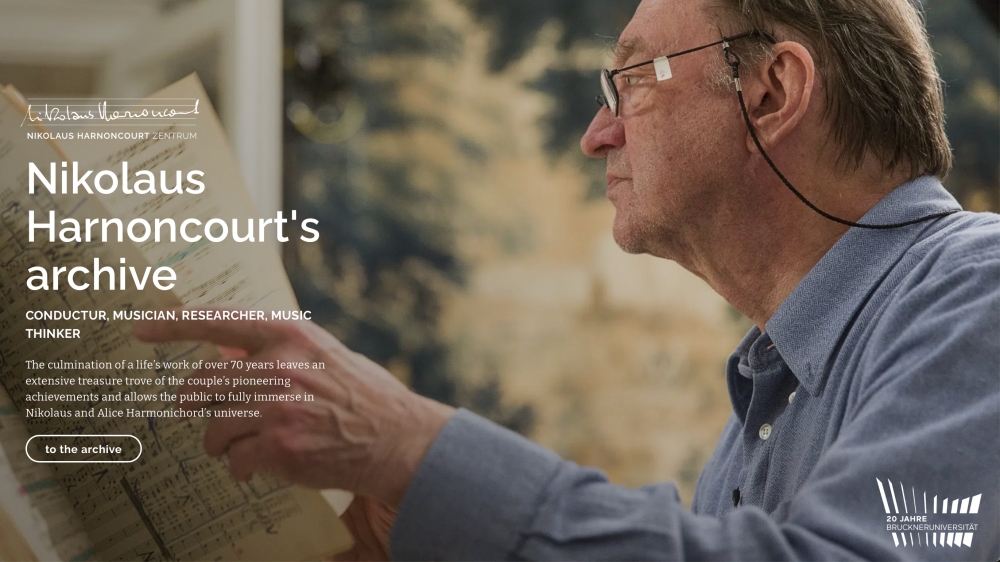
After his death in 2016, Harnoncourt's family donated his extensive archives—annotated scores, research notes, lectures, and teaching materials—to the Anton Bruckner Private University in Linz, Austria. The university established the Nikolaus Harnoncourt Center, which digitized much of this collection and made it accessible online at harnoncourt.org. This rich "Nikipedia" archive, named after his nickname "Niki," includes music scores, interpretive notes, concert programs, unpublished recordings, and more.
Harnoncourt's lifelong dedication to exploring music's origins has left an invaluable legacy, offering future generations insights into the history, interpretation, and spirit of music.
*This English version is a concise summary of the original Chinese article.*



 陳效真作品集
發表留言