賀夫的音樂時光機:昨日與今日的交響對話
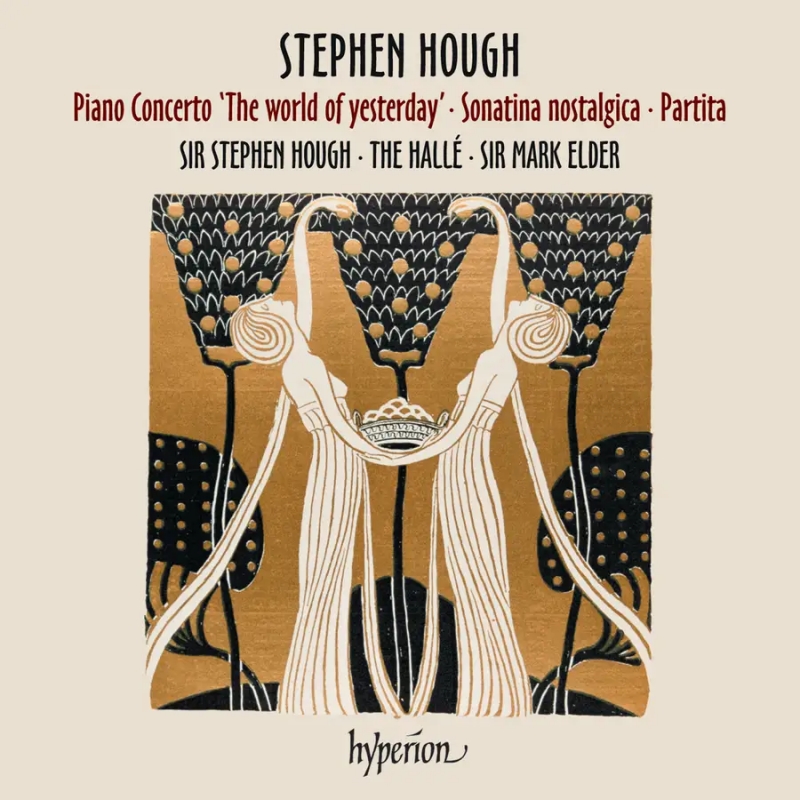
  賀夫(Stephen Hough)不僅是當代最著名的鋼琴家之一,同時也以作曲家的身分備受矚目。這張專輯收錄他的鋼琴協奏曲《昨日的世界》(The World of Yesterday)、鋼琴曲《懷舊小奏鳴曲》(Sonatina nostalgica)與《組曲》(Partita),宛如三扇時光之窗,帶著聽眾走進維也納的華麗舞廳、美國鄉村的開闊田野,以及英國柴郡林姆村(Lymm in Cheshire)的童年風景。

  「我從來沒想過要寫一首鋼琴協奏曲——該從哪裡開始呢?」賀夫在專輯解說冊中坦率地說。二○二一年,全球因新冠肺炎疫情封鎖期間,他接到洛杉磯一名電影導演的邀請,希望他能為籌備中的電影譜寫配樂。雖然電影計畫最終未能實現,卻意外點燃賀夫的創作靈感,成為《昨日的世界》鋼琴協奏曲的起點。他笑著說:「我手上有厚厚一疊草稿,還有電影角色的故事,這些元素讓音樂活了起來。」這張專輯也因此從這場未完成的電影夢中誕生。

  這部電影需要一首約十二分鐘的鋼琴協奏曲,既能融入影片作為配樂,又能獨立演出。電影最後一幕是四分鐘的高潮,描繪鋼琴家與樂團在舞台上演奏這首曲子。這讓人聯想到艾丁塞(Richard Addinsell)為電影《危險的月光》(Dangerous Moonlight )作的《華沙協奏曲》(Warsaw Concerto),或羅札(Miklós Rózsa)為希區考克(Alfred Hitchcock)電影《意亂情迷》(Spellbound)譜寫的《意亂情迷協奏曲》(Spellbound Concerto)。但是導演在Zoom會議中還提到西貝流士與蕭斯塔科維奇,表明他想要的不只是動聽或華麗的旋律,而是帶有古典交響樂的深度、力量與結構感的音樂。

  這部未完成的電影背景設定於一九三二年,劇情充滿懸疑與浪漫:執著的奧地利女爵,深信早逝妹妹未完成的樂譜是天才之作,於是高薪聘請美國作曲家赴阿爾卑斯山續寫。然而,作曲家發現作品平凡無奇,而此前多位音樂家的離奇失蹤更讓故事蒙上陰影⋯⋯最後女爵的悲劇與作曲家的逃亡,化為協奏曲中戲劇性的兩個對比主題。

  賀夫以兩種鮮明的音樂主題刻畫角色:女爵的旋律融入康果爾德(Erich Wolfgang Korngold)風格的維也納圓舞曲,華麗中透著舊時代的憂鬱;美國作曲家的主題則採用簡潔的白鍵音階,呼應柯普蘭(Aaron Copland)的直率風格,象徵宛如新大陸般的開闊。兩者在樂曲中交織出現,彷彿兩種對比文化與時代的對話。電影計畫後來停滯,雙方友好結束合作關係,但是賀夫把草稿發展成音樂會用的鋼琴協奏曲,並以褚威格(Stefan Zweig)回憶錄《昨日的世界》命名,向戰前維也納文化與「作曲─鋼琴家」的傳統致敬,融合懷舊情懷與歷史反思,宛如一場音樂中的「昨日回憶」。

  《昨日的世界》鋼琴協奏曲長約二十分鐘,分為三個連貫部分,宛如一場完整的音樂冒險。開場由管弦樂輕快展開,帶有柯普蘭的純真氣息,彷彿年輕的美國作曲家在訴說夢想。第二樂章轉為誘人的圓舞曲變奏,描繪女爵在維也納舞廳翩翩起舞,鋼琴與樂團交織出華麗的對話。最後,音樂化為熱烈的塔朗泰拉舞曲,鋼琴與樂團激情碰撞,號角齊鳴,帶領聽眾奔向振奮的結尾。

  賀夫坦言,在二十一世紀創作鋼琴協奏曲,就像站在音樂巨人的肩膀上:「如果一開始就為音樂會而寫,這首曲子可能會更沉重、冷峻,結構複雜且不易親近。但因為最初是為電影創作,我得為故事和角色服務,這反而讓音樂更具戲劇性、更平易近人,同時保留了協奏曲的魅力與娛樂性。」他透露,創作時參考了普羅科菲耶夫的第三號鋼琴協奏曲,但刻意避免過於繁複,確保鋼琴旋律清晰動人,同時不讓管弦樂蓋過鋼琴的光芒。賀夫幽默地說,他想盡辦法避免寫出「拉赫曼尼諾夫第五號鋼琴協奏曲」。這首曲子在二○二四年一月由猶他交響樂團首演,隨後與指揮馬克‧艾爾德(Mark Elder)與哈雷管弦樂團在曼徹斯特布里奇沃特廳(Bridgewater Hall)的演出,也就是這張唱片版本。

  除了鋼琴協奏曲,專輯還收錄了兩首鋼琴獨奏曲,延續懷舊的主題。《懷舊小奏鳴曲》是賀夫在二○一九年為好友菲利普‧福克(Philip Fowke)七十歲生日創作的禮物,短短五分鐘卻充滿溫情。這首曲子以賀夫童年故鄉柴郡林姆村為靈感,分為三個樂章:〈丹恩班克之路〉(The Road from Danebank)、〈水壩長椅〉(The Bench by the Dam)、〈十字架下的聚會〉(A Gathering at the Cross)。音符彷彿畫筆,描繪出鄉間小徑的寧靜與親友相聚的歡樂。

  《組曲》(Partita)則充滿活力,是賀夫二○一七年為瑙姆堡鋼琴大賽(Naumburg International Piano Competition)首獎得主阿爾貝‧卡諾‧斯密特(Albert Cano Smit)創作的作品。這首五樂章作品從巴洛克組曲汲取結構上的靈感,融入二十世紀的和聲與節奏,如同老幹新枝般展現出現代風貌。從氣勢恢宏的序曲到輕盈靈動的觸技曲,再到向西班牙作曲家蒙波(Federico Mompou)致敬的〈歌與舞〉(Canción y danza),每一樂章都帶來不同的音樂色彩。

  賀夫的音樂動人之處,在於他不只是回望過去,而是以現代的眼光重塑歷史。雖然以鋼琴家身分聞名,他從少年時期就開始創作自娛。美國作曲家柯瑞里亞諾(John Corigliano)聽了他改編音樂劇《旋轉木馬》(Carousel)的圓舞曲後,鼓勵他嘗試原創,開啟了他的作曲旅程。賀夫的作品涵蓋彌撒曲、鋼琴曲、室內樂與歌曲,這張專輯的三首曲子都以「懷舊」為核心,但他從不沉溺於感傷或模仿,而是用現代語言為歷史注入新意。

  對賀夫而言,這張專輯不僅記錄他的音樂創作,也是時光的情感標本。從未完成的電影夢中誕生的《昨日的世界》鋼琴協奏曲,到回味童年記憶的《懷舊小奏鳴曲》,再到融合巴洛克精神的《組曲》,每一首曲子都在懷舊與創新間找到平衡,也就是不落入模仿的窠臼,充滿了自創的音樂語言,卻始終閃爍著昨日世界的溫暖光輝。

Sir Stephen Hough is not only one of today's leading pianists but also an acclaimed composer. This album brings together three of his own works: Piano Concerto "The World of Yesterday", Sonatina nostalgica, and Partita. Each piece opens a different window into time, blending personal memories with musical traditions.

Hough never planned to write a piano concerto. But during the COVID-19 lockdown in 2021, he was invited by a film director in Los Angeles to compose music for a movie about a pianist writing a concerto. Although the film project was cancelled, Hough developed his early sketches into this concert piece.

The concerto takes its title from Stefan Zweig's memoir "Die Welt von Gestern" (The World of Yesterday), evoking the lost culture of pre-war Vienna. The story behind the music imagines a mysterious 1932 drama: an Austrian baroness invites an American composer to finish her late sister's unfinished music in the Alps. The result is a musical dialogue between old Europe and new America.

Hough uses two contrasting themes to represent these characters — a rich Viennese waltz in the style of Korngold for the baroness, and clear, open harmonies recalling Copland for the young composer. The three connected movements lead listeners through lively orchestral sounds, a beautiful waltz variation sequence, and an exciting tarantella finale.

Hough himself described the concerto as a balance between classical depth and cinematic drama: "Had I written it directly for the concert hall, it might have become darker or heavier. But because it started as film music, it needed to serve the story and characters — making the music more theatrical, approachable, and entertaining."

This piece was premiered in 2024 then recorded with conductor Sir Mark Elder and The Hallé Orchestra.

Sonatina nostalgica
This short, five-minute piano work was written in 2019 as a birthday gift for Hough's friend Philip Fowke. It captures the warmth of Hough's childhood memories in the village of Lymm, Cheshire. Its three movements are like musical sketches of quiet country roads, lakeside benches, and family gatherings.

Partita
Composed in 2017 for pianist Albert Cano Smit, "Partita" is a five-movement solo piano piece inspired by Baroque dance suites but filled with modern colours and rhythmic energy. It moves from a grand overture to playful dances, and ends with a sparkling toccata.

Hough's music blends tradition and originality. While rooted in past styles — waltzes, baroque suites, romantic harmonies — he never imitates or copies. Instead, he reshapes musical history through his own voice.

This album is a musical time capsule — a reflection of places, stories, and emotions from "the world of yesterday",  brought vividly into today.

*This English version is a concise summary of the original Chinese article.*
HOUGH Piano Concerto "The World of Yesterday"
Stephen Hough (piano)
Hallé Orchestra, Mark Elder
May 2024, live in The Bridgewater Hall, Manchester

HOUGH Sonatina nostalgica
Stephen Hough (piano)
June 2024, St Silas the Martyr, Kentish Town, London

HOUGH Partita
Stephen Hough (piano)
September 2023, St Silas the Martyr, Kentish Town, London

 陳效真作品集
發表留言