
長野健與漢堡愛樂:一座跨越傳統與未來之橋
二○一五年,美國指揮家長野健(Kent Nagano)來到德國漢堡,接掌漢堡國立歌劇院(Hamburgische Staatsoper)與漢堡愛樂(Philharmonisches Staatsorchester Hamburg),開啟一段改變這座港口城市音樂未來的旅程。十年後,他在漢堡易北愛樂廳(Elbphilharmonie)的舞臺上,指揮經典的布拉姆斯第四號交響曲,以及委託當代作曲家創作的交響曲《心輪》(Anahata),為任期畫下完美句點。長野健曾經說:「漢堡的音樂是跨接時光的橋樑。」(Musik in Hamburg ist wie eine Brücke, die Zeit und Raum verbindet)他不僅尊重漢堡的音樂傳統,也大膽擁抱新作與年輕聽眾,讓漢堡愛樂成為傳統與創新的交匯點。
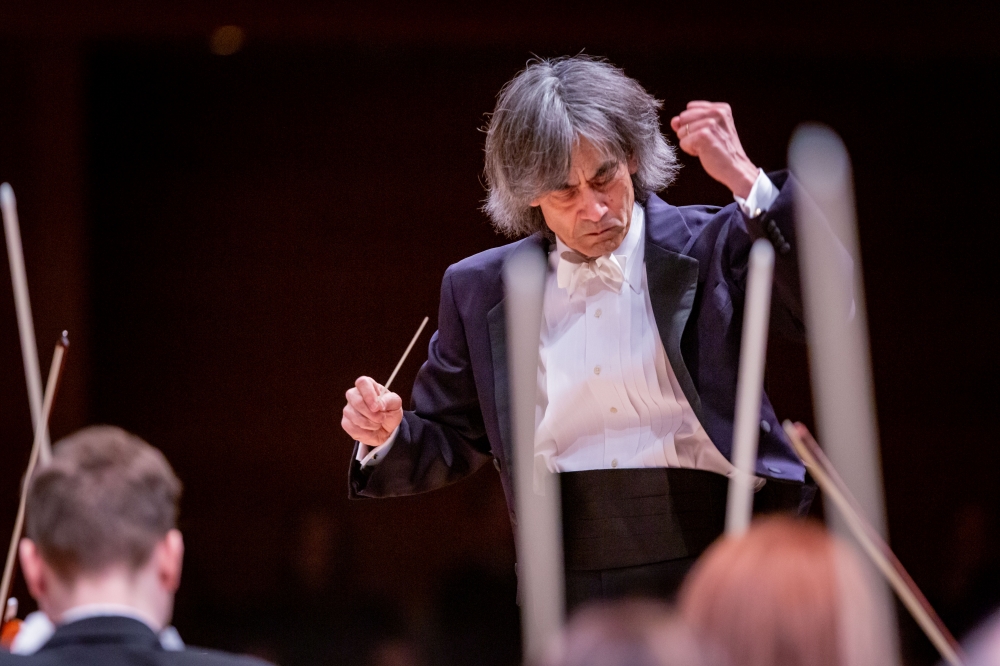
港口城市的共鳴:漢堡精神與領導風格

  長野健在美國加州沿海小鎮莫羅灣(Morro Bay)長大,與漢堡的易北河岸有著相似的開放氣息。人潮、貨物與文化交匯的港口城市特質,讓長野健對漢堡一見如故。正式上任前,他以兩年的時間研究漢堡的歷史,深入了解從泰勒曼到布拉姆斯的音樂傳統。他認為:「傳統不該只是回望過去,而是要像河流般向前流動。」這種理念成為他領導漢堡愛樂的基石。

  長野健把漢堡的開放精神融入樂團管理。他不僅保留樂團對經典曲目的精湛演繹,還鼓勵演奏家探索新音樂。例如,他帶領樂團重溫布拉姆斯的手稿,挖掘歷史細節,同時也支持年輕作曲家的創作。這種尊重傳統又擁抱創新的方式,讓漢堡愛樂的聲音既深植歷史,又充滿現代活力。長野健的曲目策劃如同一場跨越時代的對話。他一方面深耕傳統經典,另一方面積極委託新作,讓漢堡愛樂的演出吸引不同世代的聽眾。

重現經典:布拉姆斯的現代回響

  漢堡是布拉姆斯的故鄉,長野健對這位作曲家的作品情有獨鍾。他最著名的成績之一,是重現一八六八年布拉姆斯《德意志安魂曲》的布來梅首演。長野健研究古樂器的演奏方式,並結合易北愛樂廳的現代聲學技術,讓合唱與管弦樂的聲音更加立體,彷彿將聽眾帶回十九世紀,同時又滿足現代人對音響效果的期待。另一場令人難忘的演出,是他指揮的巴赫《馬太受難曲》,透過精準的節奏與情感表達,讓這部古老作品散發新生命。

新作委託:漢堡的現代故事

  長野健相信,古典音樂應該反映當代議題。他委託日本作曲家細川俊夫創作歌劇《靜海》(Stilles Meer),以福島災害為背景,呼應漢堡的海洋城市氣質。這部作品的旋律如海浪般起伏,讓聽眾感受到環境與人心的共鳴。另一部重要新作是阿根廷作曲家南特(Alex Nante)的第三號交響曲《心輪》,這部交響曲探索心靈與宇宙的連結,吸引許多首次走進音樂廳的年輕聽眾。這些新作不僅豐富了樂團的曲目,也讓古典音樂成為現代生活的對話。

易北愛樂廳:新地標與跨界實驗

  易北愛樂廳(Elbphilharmonie)在二○一七年落成,這座如水晶宮般的建成為城市音樂文化的新地標。為了紀念這重要的時刻,漢堡愛樂特別委託耶爾格‧韋德曼(Jörg Widmann)創作清唱劇《方舟》(Arche),由長野健指揮世界首演。韋德曼以「方舟」比喻音樂廳,象徵「保存」與「啟航」的雙重意涵。長野健強調「音樂廳不僅是演出場地,更應成為城市社會生活的一部分。」(Wenn ein Konzerthaus erfolgreich ist, ist es ein Ort der Begegnung für alle Generationen, für alle Teile der Gesellschaft. Das bedeutet auch, dass dieser Ort Teil der sozialen Identität ist – unserer Identität.")於是,長野健推出「音樂與科學」跨領域計畫。除了與專注於基礎科學研究的著名馬克斯·普朗克協會(Max Planck Society)合作,透過講座邀請科學家、音樂家與學者探討音樂的數理構造如何對應腦神經科學,並探討聲學原理如何影響音樂廳設計、音樂聲響對情緒的影響等,例如:《方舟》融入哲學與結構對稱、節奏序列、對位邏輯與空間聲學的精確設計。這些活動吸引了非傳統聽眾,讓音樂廳成為知識與藝術的交匯處。

青年與社區:培養下一代聽眾

  針對古典音樂面臨的「白髮症候群」(gray hair syndrome,即觀眾年齡逐漸偏高的現象),長野健相信激發年輕人的好奇心是關鍵。他上任後推出音樂教育項目「愛樂學院」(Philharmonic Academy),藉由公開排練、大師班及工作坊,為年輕音樂家提供實踐機會。除了小型室內音樂會和實驗性演出,提供音樂家更多機會表現個人風格和創意。長野健也把音樂帶進社區。樂團定期在學校與公共場所舉辦演出,例如在漢堡港口的露天音樂會吸引數千名年輕人,許多人因此首次接觸古典音樂。數位平台的推廣也讓演出觸及全球觀眾。雖然具體數據難得,但是這些活動顯著提升年輕聽眾的比例,為樂團注入新活力。

長野健的永恆印記

  長野健的十年任期,是把漢堡愛樂的歷史根基轉化為面向未來的能量。他以布拉姆斯與巴赫的經典奠定根基,用新作如《靜海》、《方舟》開拓視野;他讓易北愛樂廳成為城市的心臟,通過跨界計畫拉近音樂與生活的距離;他更以教育與社區項目,培養下一代聽眾與演奏家。他的努力讓漢堡愛樂成為全球矚目的現代樂團,也讓漢堡的音樂文化更具包容性。

  當聽眾在易北愛樂廳聽見布拉姆斯的雄渾交響與新作的創新旋律,長野健的願景已成為現實。他的十年證明了古典音樂不只屬於過去,更屬於每個人。未來,漢堡愛樂將繼續在這座「音樂之橋」上,連結歷史與無限可能。
Hamburg is the birthplace of Brahms, and Nagano held a special admiration for his music. One of his most renowned achievements was the recreation of the 1868 Bremen premiere of Brahms’ Ein deutsches Requiem. He studied historical performance practices and combined them with the modern acoustics of the Elbphilharmonie, resulting in a choral and orchestral sound that was both vivid and spatial—bringing listeners back to the 19th century while meeting contemporary sonic expectations. Another unforgettable performance was his rendition of Bach’s St. Matthew Passion, which came alive through precise rhythm and emotional depth.
Nagano believed that classical music should reflect contemporary issues. He commissioned Japanese composer Toshio Hosokawa to write the opera Stilles Meer (Silent Sea), inspired by the Fukushima disaster, resonating with Hamburg’s identity as a maritime city. The opera’s flowing melodies, like waves, conveyed the emotional and environmental connections felt by the audience. Another major commission was Argentine composer Alex Nante’s Symphony No. 3, Anahata, which explores the relationship between the human spirit and the cosmos. This work drew many young first-time concertgoers, expanding the orchestra’s reach and making classical music a platform for modern-day reflection.
The Elbphilharmonie opened in 2017, becoming a crystalline new symbol of the city’s musical culture. To mark the occasion, the Hamburg Philharmonic commissioned Jörg Widmann to compose the oratorio Arche, with Nagano conducting its world premiere. Widmann used the metaphor of an ark to represent the concert hall, symbolizing both preservation and departure. Nagano emphasized:
“Wenn ein Konzerthaus erfolgreich ist, ist es ein Ort der Begegnung für alle Generationen, für alle Teile der Gesellschaft. Das bedeutet auch, dass dieser Ort Teil der sozialen Identität ist – unserer Identität.”
“When a concert hall is successful, it is a place of encounter for all generations, for all parts of society. That also means it becomes part of the social identity—our identity.”
With this in mind, Nagano launched interdisciplinary projects like “Music and Science.” Collaborating with the prestigious Max Planck Society, known for fundamental scientific research, the initiative brought together scientists, musicians, and scholars for public lectures. Topics included how music’s mathematical structures correspond to neuroscience, how acoustics influence concert hall design, and how musical sound affects emotion. Arche, for instance, was built around philosophical ideas, symmetrical structures, rhythmic sequences, counterpoint logic, and spatial acoustics. These initiatives attracted non-traditional audiences and turned the concert hall into a hub for knowledge and art.
Nagano recognized the challenge of the “gray hair syndrome”—the aging classical music audience. He believed that the key to renewal was sparking curiosity in the young. Upon taking office, he launched the Philharmonic Academy, an educational initiative offering open rehearsals, masterclasses, and workshops that gave young musicians hands-on opportunities. In addition to small-scale chamber concerts and experimental performances, musicians were encouraged to express their individuality and creativity. Nagano also brought music into the community. The orchestra performed regularly in schools and public spaces—open-air concerts at Hamburg’s harbor, for example, attracted thousands of young listeners, many of whom experienced classical music for the first time. Digital platforms further extended their global reach. While exact numbers are hard to pinpoint, these efforts significantly increased the proportion of younger audiences and injected new energy into the ensemble.
Kent Nagano’s decade-long tenure transformed the Hamburg Philharmonic’s historical foundations into momentum for the future. He grounded the orchestra in the classics—Brahms and Bach—while expanding its horizons through new works like Stilles Meer and Arche. He made the Elbphilharmonie the heart of the city and bridged music with everyday life through cross-disciplinary projects. His educational and community initiatives nurtured the next generation of listeners and musicians. Through these efforts, Nagano elevated the Hamburg Philharmonic into a globally recognized modern orchestra, while making Hamburg’s musical culture more inclusive.
Today, when audiences hear Brahms’ majestic symphonies and the innovative melodies of new works in the Elbphilharmonie, Kent Nagano’s vision is no longer just an idea—it has become reality. His decade of leadership proved that classical music doesn’t just belong to the past. It belongs to everyone. And going forward, the Hamburg Philharmonic will continue crossing this “bridge of music,” linking history with infinite possibilities.


 陳效真作品集
發表留言