重現史克里亞賓神秘幽微的靈性世界:蘇德賓「朝向火焰」帶您一起探索
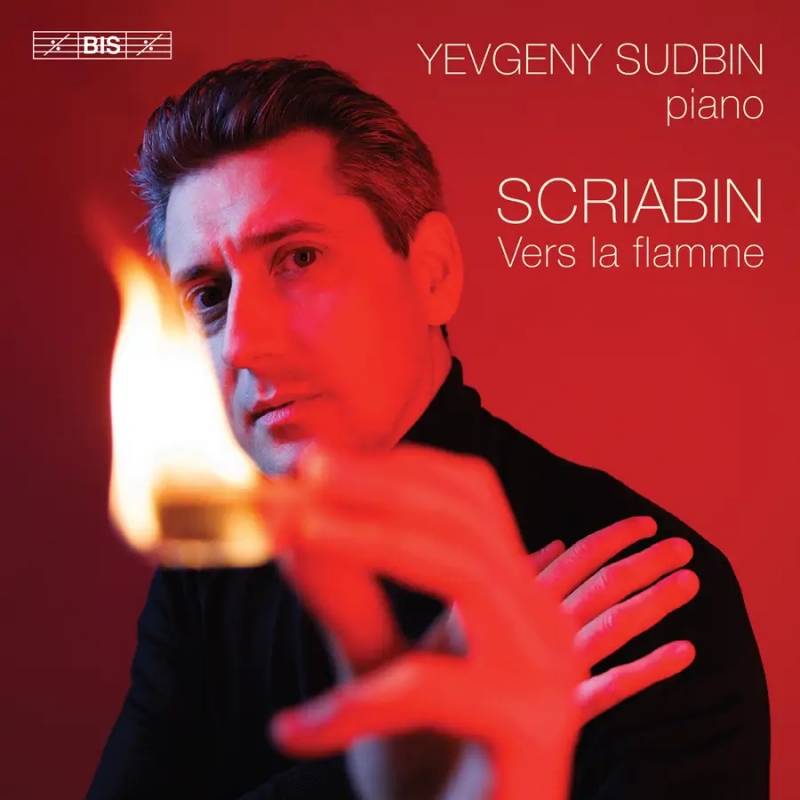
  與BIS合作初期,鋼琴家蘇德賓(Yevgeny Sudbin)在二○○六年錄製過一張史克里亞賓鋼琴獨奏作品,當時二十六歲的他獲得極高評價,樂評認為他生動呈現出史克里亞賓音樂的易變與張力。十多年來,雖然蘇德賓的出片量穩定,但除了與李頓(Andrew Litton)及水藍合作,錄製鋼琴協奏曲與第五號交響曲《普羅米修斯─火之詩》,並穿插錄製第五號鋼琴奏鳴曲之外,他一直沒有認真回到史克里亞賓的獨奏曲,直到二○二五年出版的「朝向火焰」(Vers la flamme)。

  在蘇德賓的眼中,史克里亞賓是一個帶有「救世主情結」的小巨人,沉迷於光、靈性與宇宙秩序的想像。他把音樂視為儀式,甚至是驅魔般的神秘行動,意圖直接喚起靈性體驗。在他的世界觀中,性與靈性融合、陰陽性別兩極性的結合是達到藝術與精神巔峰的途徑。晚期作品更趨於極端,推向接近瘋狂的邊緣,「溫柔的迷醉與吞噬一切的狂熱」之間的界線幾乎消失。蘇德賓形容史克里亞賓的音樂就像「銀河裡的超新星爆發」。雖然他的生命短短四十三年,卻耀眼到讓接觸過的人難以忘懷。

  自從錄製第一張史克里亞賓專輯後,蘇德賓對他的著迷愈陷愈深,甚至說自己想不到還有哪位作曲家能讓他持續有那麼直接、強烈的身體反應。不過,他也提醒「這種享受要小心,後果自負」。正因如此,即使史克里亞賓的音樂如此迷人,他還是很謹慎地挑時間進錄音室,耐心等到最佳時機才動手。蘇德賓認為,史克里亞賓的作品用現代鋼琴演奏,比作曲家生前的鋼琴更能發揮其預見性的直覺——不論是音色變化、泛音層次、聲部對比與和聲的進行,還是踏板效果與樂句張力,都可以被推到極致,更深入聽者感官。

  第一張史克里亞賓鋼琴獨奏作品的錄音時間只有幾天,符合蘇德賓偏好在短時間內密集完成錄製的習慣,用以保留演奏時的即興性與自然流露的情感。然而錄製「朝向火焰」卻是橫跨四年,分成三個階段才全部完成,我推測其中的原因或許與曲目的風格有關。早期的專輯主要收錄三首鋼琴奏鳴曲和幾首小型獨奏曲,「朝向火焰」則把範圍拉到史克里亞賓創作生涯的各個階段:早期受蕭邦影響,但是已經透露出個人式陰暗色調與和聲試探的《二十四首前奏曲》選段及兩首《練習曲》,到中期如:《幻想曲》、《第四號奏鳴曲》、《詩曲》、《升C小調練習曲》這些融合浪漫主義與自我風格的作品。最後是晚期充滿精神狂熱與音響實驗的篇章,也就是《第十號奏鳴曲》與專輯標題作品《朝向火焰》。這些曲目清楚呈現史克里亞賓的音樂如何從浪漫氣質走向神秘色彩,節奏與形式如何從抒情舞曲演變成帶有儀式感的氛圍,彷彿帶著聽眾走過他從內斂到熱烈毀滅邊緣的精神旅程。為求精準詮釋每個階段的音樂特質,這一套曲目需要花時間仔細琢磨與多次錄音。

  對蘇德賓而言,《朝向火焰》是史克里亞賓晚期象徵性極強的作品,描繪光與能量不斷累積,直至化為吞噬世界的「火之海」。他的詮釋保留了音響的爆發力,並著重於層層遞進的過程:從黑暗低溫的開端,逐步堆疊至炙熱失控的末日景象。他注重聲部平衡與動態細節,讓結構與情緒張力並行,而非僅以表面的速度與音量取勝。

  這張專輯是蘇德賓藝術哲學的完整寫照。他在詮釋中展現了大膽的冒險精神,勇於在速度、力度與節奏上挑戰發揮的臨界點,營造近乎不可預測的現場張力;同時,他以詩性的思維將史克里亞賓的宇宙觀、性別極性與神祕主義轉化為具象的音樂意象,使每首作品都帶有明確的敘事感與象徵性。加上對觸鍵細節與踏板運用的高度講究,他能在強烈情感與細膩質感之間取得精準平衡,將冒險、詩意與精緻音色融為一體,形成獨樹一格的演奏語言,忠實傳達史克里亞里賓作品中瞬息萬變、複雜幽微的樂念。

In the early days of his collaboration with BIS, pianist Yevgeny Sudbin recorded an album of Alexander Scriabin's piano solo works in 2006. At the age of 26, he received extremely high praise, with critics noting that he vividly captured the volatility and tension in Scriabin's music. Over the next decade or more, although Sudbin's recording output remained steady, apart from collaborating with Andrew Litton and Lan Shui to record the piano concerto and the Fifth Symphony Prometheus: The Poem of Fire, and interspersing recordings of the Fifth Piano Sonata, he did not seriously return to Scriabin's solo works until the 2025 release of Vers la flamme.

In Sudbin's view, Scriabin was a short-statured giant with a "Messiah complex", obsessed with imaginings of light, spirituality, and cosmic order. He regarded music as a ritual, even a mysterious act akin to exorcism, intended to directly evoke spiritual experiences. In his worldview, the fusion of sexuality and spirituality, along with the union of yin-yang gender polarities, was the path to achieving the pinnacle of art and spirit. His late works became more extreme, pushing toward the edge of madness, where the boundary between "gentle delirium" and "all-consuming madness" almost disappears. Sudbin describes Scriabin's music as "a supernova explosion to a galaxy". Although his life was only a short 43 years, it was dazzling enough to leave an unforgettable impression on those who encountered it.

Since recording his first Scriabin album, Sudbin's fascination with him has only deepened, to the point where he says he cannot think of any other composer who continues to elicit such direct and intense physical reactions from him. However, he also warns that "enjoy responsibly at your own peril". For this reason, even though Scriabin's music is so captivating, he is very cautious about choosing times to enter the recording studio, patiently waiting for the optimal moment to proceed. Sudbin believes that performing Scriabin's works on a modern piano can better realize his forward-looking intuition than the pianos of the composer's time—whether in terms of tonal variations, overtone layers, voice contrasts and harmonic progressions, or pedal effects and phrase tension, all can be pushed to the extreme, penetrating deeper into the listener's senses.

The recording of his first Scriabin piano solo album took only a few days, aligning with Sudbin's preference for completing recordings intensively in a short time to preserve the improvisatory quality and natural emotional flow in performance. However, the recording of Vers la flamme spanned four years and was completed in three stages, which I speculate may be related to the stylistic aspects of the program. The early album mainly included three piano sonatas and a few small solo pieces, while Vers la flamme extends across various stages of Scriabin's creative career: early selections from the 24 Preludes, influenced by Chopin but already revealing personal dark tones and harmonic explorations, and two Études; to mid-period works such as the Fantaisie, Fourth Sonata, Poème, and Étude, which blend Romanticism with his own style. Finally, the late period, filled with spiritual fervor and sonic experiments, namely the Tenth Sonata and the album's title work Vers la flamme. These pieces clearly present how Scriabin's music evolved from Romantic temperament to mystical colors, with rhythm and form shifting from lyrical dances to ritualistic atmospheres, as if guiding listeners through his spiritual journey from introspection to the edge of fervent destruction. To achieve precise interpretation of the musical characteristics at each stage, this set of pieces required time for careful refinement and multiple recordings.

For Sudbin, Vers la flamme is one of Scriabin's late works with extremely strong symbolism, depicting the continuous accumulation of light and energy until it transforms into an "ocean of fire" that engulfs the world. His interpretation retains the explosive power of the sound while emphasizing the layered progression: starting from a dark, low-temperature beginning, gradually building to a scorching, out-of-control apocalyptic scene. He focuses on voice balance and dynamic details, allowing structure and emotional tension to proceed in parallel, rather than relying solely on superficial speed and volume for effect.

This album is a complete portrayal of Sudbin's artistic philosophy. In his interpretation, he demonstrates a bold adventurous spirit, daring to challenge the limits of speed, dynamics, and rhythm to create an almost unpredictable live tension; at the same time, he uses poetic thinking to transform Scriabin's cosmic view, gender polarities, and mysticism into concrete musical images, giving each piece a clear narrative sense and symbolism. Combined with his high attention to touch details and pedal usage, he achieves a precise balance between intense emotions and delicate textures, integrating adventure, poetry, and refined timbre into one, forming a unique performance language that faithfully conveys the ever-changing and subtly complex musical ideas in Scriabin's works.
SCRIABIN Vers La Flamme
Yevgeny Sudbin (piano)
February 2020 at Sendesaal Bremen, GermanyJune 2021 at Västerås Concert Hall, Sweden
June 2024 at Västerås Concert Hall, Sweden
 陳效真作品集
發表留言