向走過時代滄桑的「酷阿伯」致敬:帕佛‧賈維錄製慶祝皮亞爾特九十歲生日專輯
  童年時期住在愛沙尼亞塔林(Tallinn)的時候,指揮家帕佛‧賈維(Paavo Järvi)家中經常出現一個酷阿伯:頭戴棒球帽、穿著蘇聯地區極難買到的牛仔褲和牛仔外套,還留著看起來超級時尚大鬍子,「和我們認識的『老人』完全不一樣」。

  其實這個酷阿伯當時還不到四十歲,是來找帕佛‧賈維的父親,也就是指揮家尼姆‧賈維(Neeme Järvi)聊天兼談公事。他是老賈維在愛沙尼亞廣播電台的同事,據老賈維的回憶:「那時我們都是年輕人,不知從何時開始交往的。或許是因為我得指揮他的作品,於是就這麼認識了。」這位小賈維眼中的酷阿伯,就是作曲家皮亞爾特(Arvo Pärt)。

  當時皮亞爾特以實驗性作品,例如以當時被視為「腐敗資產階級」的十二音技法寫成的《墓誌銘》(Nekrolog)嶄露頭角,老賈維則是愛沙尼亞電視廣播交響樂團(Estonian Radio Symphony Orchestra)首席指揮,積極推動本土作曲。老賈維形容當時的皮亞爾特「不是普通同事,而是充滿熱情的年輕人,總是想嘗試一切」,是「蘇聯樂壇的急先鋒」。如同帕佛‧賈維的說法:「電台是年輕作曲家的避風港,否則許多作品永遠見不得光。」職務之便讓老賈維可以透過電台錄音與內部演出來安排新作,暫時避開莫斯科的嚴格審查。再加上蘇聯允許各加盟共和國推廣地方民族文化以宣示聯盟友誼,態度中立的電台主管讓老賈維有安排實驗性作品的空間。皮亞爾特多部管弦樂曲、短片配樂便是透過老賈維得以首演或發表,皮亞爾特因此以第三號交響曲作為對老賈維一路支持的感謝。

  不過,這樣的關係在一九六八年出現變化。十一月十六日,老賈維在塔林指揮愛沙尼亞國家交響樂團(Estonian National Symphony Orchestra)與愛沙尼亞廣播合唱團(Estonian Radio Choir)演出皮亞爾特的新作《信經》(Credo)。這首長度不到十五分鐘的管弦樂曲是皮亞爾特首度以聖經文本創作的作品,結合尼西亞信經(Nicene Creed)片段與基督登山寶訓「勿以惡報惡」的精神,音樂採用多聲部拼貼(polystylistic collage)手法,以象徵真理與美的巴赫C大調第一號前奏曲,和象徵惡的無調性素材相互對比,形成樂曲的戲劇張力。高潮後歸於單音C,象徵救贖。首演結束,聽眾當下要求老賈維再重演一次。

  次年二月,作曲家聯盟為這部作品召開長達兩個半小時的評議會議,結論是作品禁演,老賈維和皮亞爾特雙雙被列入黑名單,皮亞爾特隨即進入生涯中的「沉默期」。十年後,老賈維在未經許可的情況下重演《信經》,直接導至他在一九八○年帶著家人定居美國,皮亞爾特則放棄蘇聯國籍,與家人移居維也納與柏林。離開愛沙尼亞後,老賈維終於得到自由的空間,繼續推廣與錄製皮亞爾特的作品。

  一九八五年,跟隨父親腳步進入樂壇的帕佛‧賈維在挪威特隆赫姆(Trondheim)首次登台指揮,曲目包括「酷阿伯」皮亞爾特的第一號交響曲。從此以後,皮亞爾特的作品成了帕佛‧賈維的曲目常客,陸續出版過幾張皮亞爾特的作品錄音。帕佛‧賈維很喜歡分享一個小故事:有一次在倫敦排練皮亞爾特第三交響曲,樂團已經非常熟練,但是皮亞爾特走上舞台,指著譜上一個和弦說:「我覺得,你們沒有真正去愛這個和弦。」團員們有些驚訝,但是當再次演奏的時候,他們真的用另一種心境去處理那個和弦,「結果完全不同。那是我第一次深刻理解,皮亞爾特的音樂不是要我們從外表分析結構,而是要我們用心去愛每一個音符。」帕佛‧賈維說。

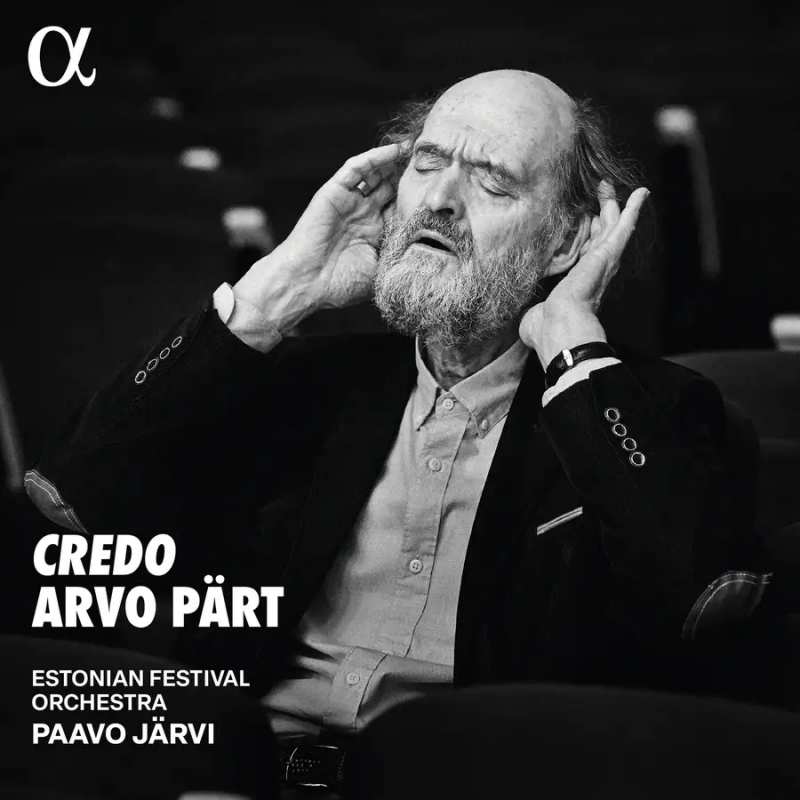
  為了慶祝皮亞爾特九十歲生日,帕佛‧賈維和愛沙尼亞音樂節管弦樂團(Estonian Festival Orchestra)於二○二五年七月錄製這張專輯,曲目包括對賈維家族意義重大的《信經》。這張專輯的藝術價值,在於帕佛‧賈維與愛沙尼亞節慶管弦樂團對皮亞爾特「鐘鳴」哲學的精準捕捉。鐘鳴風格強調音符的簡單純粹,如皮亞爾特所言:「一個美麗奏出來的音符,就已經足夠。」唱片在愛沙尼亞帕爾努音樂廳(Pärnu Concert Hall)錄製,帕佛‧賈維避免過度浪漫的處理,忠實再現皮亞爾特的「呼吸」意象:靜默後的爆發,和聲的漸層融合。

  專輯曲目包括皮亞爾特從異議時期轉型到西方冥想式風格的作品,除了《信經》,《紀念布瑞頓的歌》(Cantus in Memory of Benjamin Britten)是皮亞爾特沉默期後的轉型之作,以簡約卻深刻的結構營造悼念氛圍;《兄弟們》(Fratres)則以旋律與和聲的層層變奏,展現「鐘鳴」哲學的力量。

  《獻給連納特》(Für Lennart)悼念愛沙尼亞總統與異議作家梅里(Lennart Meri),他既是皮亞爾特與老賈維在電台的老同事,也是帕佛‧賈維自小敬重的長輩。其他作品如《剪影》(Silhouette)、《杜林裹屍布》(La Sindone)、《請賜平安》(Da pacem Domine)與《天鵝之歌》(Swansong),呈現皮亞爾特音樂世界的多樣面貌。特別是《天鵝之歌》,象徵靈魂的轉化與自由,也呼應波羅的海文化中天鵝的意象。

  幾十年過去,那個戴著牛仔帽的「酷阿伯」已成為世界矚目的作曲家。但在賈維家族眼中,他始終是親近的朋友與精神的同伴。這張專輯,正是對他最真誠的致意,也是記憶與信念的回聲。

When conductor Paavo Järvi was a child growing up in Tallinn, Estonia, a “cool uncle” often visited the family home — a man in a baseball cap, jeans, and denim jacket, sporting a stylish beard unlike any of the “old men” he knew.

That man was Arvo Pärt, who at the time was not yet forty. He would come by to chat and talk business with Paavo’s father, Neeme Järvi, then chief conductor of the Estonian Radio Symphony Orchestra. “We were both young back then,” Neeme recalled. “I can’t even remember when our friendship began — perhaps when I was asked to conduct one of his works. That’s how it started.”

At the time, Pärt was gaining attention for his avant-garde compositions, such as "Nekrolog" — the first Estonian work to use the twelve-tone technique, denounced by the Soviet authorities as “bourgeois decadence.” Neeme, meanwhile, was using his position at Estonian Radio to champion local composers. “He wasn’t an ordinary colleague,” Neeme said. “He was passionate, always eager to try everything — a real vanguard figure in the Soviet music world.”

As Paavo later explained, “The radio station was a haven for young composers. Otherwise, many of their works would never have seen the light of day.”

Because Soviet censorship was tight, Neeme used the radio’s internal recordings and studio performances to present new works beyond Moscow’s direct control. The Soviet policy of “promoting national cultures” also gave him room to include Estonian experimental music. Many of Pärt’s orchestral pieces and film scores were premiered thanks to Neeme’s support — and in gratitude, Pärt would later dedicate his Third Symphony to him.

But everything changed in 1968. On November 16, Neeme Järvi conducted the Estonian National Symphony Orchestra and the Estonian Radio Choir in the premiere of Pärt’s new work, "Credo", in Tallinn.

Lasting less than fifteen minutes, it was Pärt’s first composition based on a biblical text, combining lines from the Nicene Creed and the moral message from the Sermon on the Mount — “Do not repay evil with evil.”

Musically, it used a polystylistic collage, juxtaposing the serene C-major Prelude from Bach’s Well-Tempered Clavier (symbolizing truth and beauty) with dissonant, atonal eruptions representing evil.

After the climax, the work resolves into a single note — C — signifying redemption. The audience was so moved that they demanded an encore, and Neeme repeated the piece.

Three months later, however, the Union of Composers held a two-and-a-half-hour hearing. The verdict: the piece was banned, and both Pärt and Neeme were blacklisted.

Pärt withdrew into silence — his now-famous “period of reflection.” A decade later, in 1979, Neeme conducted "Credo" again without permission, triggering a political scandal that ultimately forced him to emigrate to the United States in 1980. Pärt, too, renounced his Soviet citizenship and moved with his family to Vienna, then Berlin.Once free, Neeme continued performing and recording Pärt’s music — this time without fear.

In 1985, following his father’s path, Paavo Järvi made his conducting debut in Trondheim, Norway, with a program that included “Uncle Arvo’s” Symphony No. 1. Since then, Pärt’s works have become a constant presence in Paavo’s repertoire, appearing on several of his recordings.

Paavo often tells a story from a London rehearsal of Pärt’s Third Symphony. The orchestra already knew the piece well when Pärt stepped onto the stage, pointed at a single chord, and said:

 “I feel you don’t love this chord enough.” The musicians were puzzled, but when they played it again — with love — “it sounded completely different,” Paavo recalled.  “That was the moment I truly understood: Pärt’s music is not something you analyze from the outside; it’s something you must love from within — every single note.”

To celebrate Arvo Pärt’s 90th birthday, Paavo Järvi and the Estonian Festival Orchestra recorded a new album in July 2025, featuring works deeply tied to the Järvi family’s history — including "Credo". The recording, made at the Pärnu Concert Hall, captures the essence of Pärt’s “tintinnabuli” philosophy — music reduced to pure sound, where, as the composer said, “It is enough when a single note is beautifully played.”

Paavo avoided overly romantic gestures, instead emphasizing Pärt’s “breathing” aesthetic — the tension between silence and resonance, and the seamless blending of harmonies.
The album traces Pärt’s evolution from the dissident years to his meditative Western style. "Cantus in Memory of Benjamin Britten" marks his transformation after the silent years, its simplicity concealing profound emotion. "Fratres", with its layered variations, embodies the spiritual unity of the tintinnabuli idea.

Other works include "Für Lennart" — written in memory of Estonia’s first president, Lennart Meri, who had been both Neeme’s and Pärt’s colleague at the radio and a close family friend of the Järvis. The album also features Silhouette (inspired by the Eiffel Tower and dedicated to Paavo and the Orchestre de Paris), "La Sindone" (about the Turin Shroud), "Da pacem Domine" (a prayer for peace), and "Swansong", a reflection on the Baltic symbol of spiritual freedom.

Decades have passed since that “cool uncle in denim” visited the Järvi home, yet for the family, Arvo Pärt remains not only a national icon but a beloved friend and a spiritual companion.

This album stands as their most sincere tribute — a resonance of memory and faith, offered in love and gratitude to the composer whose music continues to turn silence into truth.
PÄRT La Sindone, Fratres, Swansong, Für Lennart in memoriam, Da pacem Domine, Silhouette, Cantus in Memory of Benjamin Britten, Mein Weg, Credo, Estonian Lullaby
Kalle Randalu (Piano), Estonian Festival Orchestra, The Estonian National Male Choir, Ellerhein Girls' Choir, Ellerhein Alumni Choir, Paavo Järvi
July 2025, Pärnu Concert Hall (Estonia)


 陳效真作品集
發表留言