安德魯‧戴維斯向世界的最後告別:《萬王之王》以管弦樂重新詮釋巴赫管風琴音樂
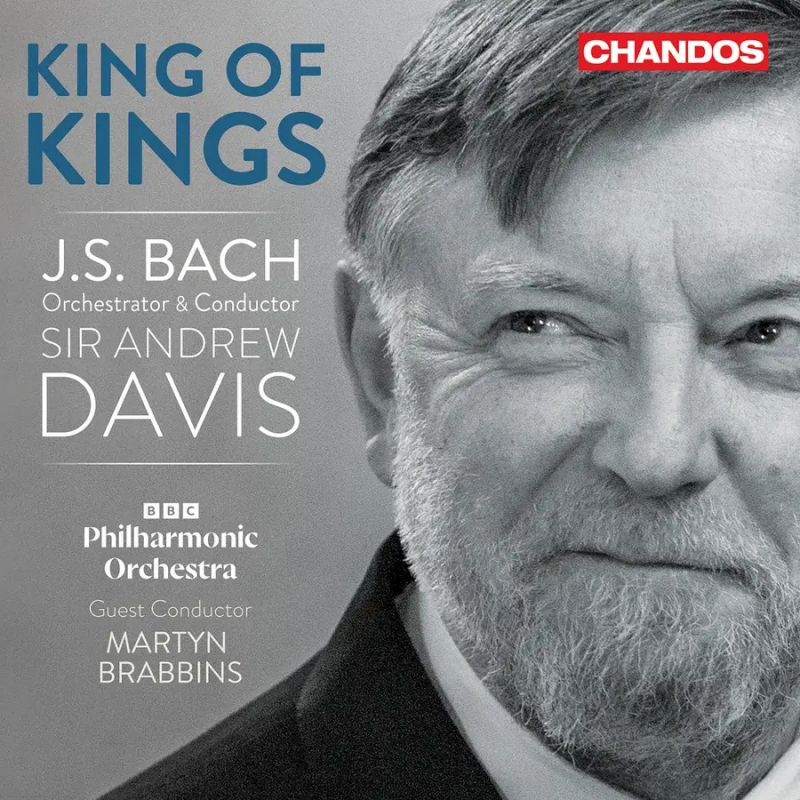
  這一張《萬王之王》(King of Kings)專輯,就像是英國指揮安德魯‧戴維斯(Andrew Davis)向世界的最後告別。唱片曲目全部是安德魯‧戴維斯生前最後為巴赫管風琴曲重新管弦樂配器的作品,原本的計畫也是由他親自指揮錄音。可惜二○二三年十一月底完成四首錄音後,安德魯‧戴維斯在五個月後因為血癌撒手人寰,只能由布拉賓斯(Martyn Brabbins)與BBC愛樂在二○二四年九月接續錄完整張錄音。

  安德魯‧戴維斯的音樂生涯可說是從風琴開始。他從少年時期就是教堂儀式的風琴手,這不僅培養他的即興演奏技巧,也讓他深入熟悉教堂音樂傳統。安德魯‧戴維斯一九六○年代初期向管風琴家赫福德(Peter Hurford)學習,一九六三年進一步渡海到荷蘭進修。進入劍橋大學國王學院(King's College, Cambridge)後,他擔任學校的管風琴學者(organ scholar)。「管風琴學者」傳統上是英國大學或特定音樂機構中的重要角色,尤其像國王學院這樣有悠久教堂音樂傳統的院校。它一般由具備一定管風琴演奏技巧的音樂系學生擔任,於在學期間擔任兼具演奏、禮拜服務與音樂行政訓練的職務。雖然安德魯‧戴維斯後來到羅馬聖塞西利亞音樂院(Accademia di Santa Cecilia)學習指揮,但鍵盤演奏家的背景始終影響他詮釋音樂的切入點。

  例如,安德魯‧戴維斯對巴赫音樂就有特別的領悟。他形容巴赫的音樂像是「多面鏡」,每次演奏都能映照出不同的光影。對他而言,風琴不只是一部鍵盤樂器,更是音樂結構與音色的實驗室。安德魯‧戴維斯在少年時期就嫻熟同時掌控多聲部線條,深入理解巴赫音樂的對位邏輯,也透過不斷調整音管組合、變化風琴音色,培養出對音色層次的敏銳感。在教堂禮拜中的演奏經驗,則讓他進一步體會巴赫音樂的信仰層面內涵。結構、音色與精神三面相並行,成為安德魯‧戴維斯日後詮釋與改編巴赫作品的核心基礎。

  安德魯‧戴維斯第一次改編巴赫作品是二○○三年。當時他和舊金山交響樂團演出自己改編的C小調為管風琴而寫的帕沙加利亞與賦格BWV 582,當成演出清唱劇《我滿足了》(Ich habe genug)的序曲。有趣的是,他在樂譜上寫上「voluptuous!」(嫵媚)或「proud!」(昂然)等表情提示,表示他不是只把原曲的音符改由樂團演奏,而是要求樂器演奏能模擬風琴轉換音管時的色彩和層次。也就是說,他希望樂團能像風琴一樣會呼吸、有變化,以音色忠實傳達情感。

  近二十年後,安德魯‧戴維斯的改編構想最終發展成BBC愛樂的完整專案錄音。雖然晚年體力漸衰,但是他仍親自在二○二三年十一月底和BBC愛樂錄下部分曲目。三個月後,安德魯‧戴維斯在二月二日八十歲生日當天寫訊息給製作人麥克‧喬治(Mike George),表示「我完成了《D小調觸技曲與賦格》。這個版本和史托科夫斯基(Leopold Stokowski)完全不一樣⋯⋯」與製作人討論錄音事宜後十週,安德魯‧戴維斯病逝。

  降E大調前奏曲與賦格與多首路德教會的聖詠前奏曲是最先改編的作品。安德魯‧戴維斯把樂團視為管風琴的「稜鏡」,通過木管樂器模擬音栓(registration)效果,力求保留原作精髓。二○二三年是改編的高峰期,在著名的《D小調觸技曲與賦格》裡,安德魯‧戴維斯刻意避免類似先前史托科夫斯基改編版本的華麗風格,而是利用打擊樂器製造輕盈與明亮的感覺。但是錄音期間,在單簧管首席布拉德伯里(John Bradbury)的建議下,安德魯‧戴維斯決定加入低音單簧管以強化低音部分,豐富管弦樂的層次感。《醒來吧,一個聲音在高喊》(Wachet auf, ruft uns die Stimme)則特意以顛覆傳統配器法則的手法表現出安德魯‧戴維斯想要的舞蹈感:他讓木管樂器主導旋律,小提琴僅在曲末短暫登場。

  因為音樂風格相近,布拉賓斯被選為完成這張錄音的指揮家。他刻意保持安德魯‧戴維斯對音樂結構與音色平衡的看法,讓整體風格延續前輩對巴赫音樂的信念與輝耀感,讓這張雖然遺憾成為「追念專輯」的唱片,有了一個美麗的句點。

  回顧整張專輯,不難察覺安德魯‧戴維斯對巴赫的理解並非停留在形式或華麗的改編,而是一種深思熟慮的重構。他繼承了艾爾加、雷史畢基與史托科夫斯基等人的改編經典作品傳統,但是手法上回歸英國學派特有的克制與理性,讓詼諧與節制並存於音色之間。他曾說過:「音色是結構的一部分,而不是裝飾。」這句話正好成為他整個改編態度的註腳,也就是透過聲響表現音樂的內在秩序,而不是外表的添妝加彩。

  安德魯‧戴維斯的兒子艾德‧弗雷澤‧戴維斯(Ed Frazier Davis)曾經形容,父親總是先告訴樂團心中的理想聲音與方向,但不會事事干預或強迫照做,而是相信每位音樂家都能用自己的方式實現這個目標。這樣的信任,使他的音樂總帶著一種自然的呼吸感,也讓樂團的表現充滿生命力。《萬王之王》正是這種音樂理念、信任與合作默契相結合的完美體現。


The album "King of Kings" stands as Sir Andrew Davis’s final farewell to the world. Every work on the recording consists of his orchestral transcriptions of Bach’s organ music—his last major creative project, originally intended to be conducted by Davis himself. Sadly, he passed away from leukemia in April 2024, only five months after completing four tracks in November 2023. The remaining pieces were recorded under Martyn Brabbins with the BBC Philharmonic in September 2024.

Sir Andrew Davis’s musical journey began with the organ. As a boy, he served as a church organist, an experience that developed both his improvisational skill and his deep familiarity with liturgical music traditions. In the early 1960s, he studied with Peter Hurford and later continued organ studies in the Netherlands before becoming Organ Scholar at King’s College, Cambridge. At institutions like King’s, the organ scholar occupies a key role—part performer, part liturgical musician, part administrator—immersed in the centuries-old English choral and organ tradition. Although Davis later studied conducting with Franco Ferrara at the Accademia di Santa Cecilia in Rome, his background as a keyboard player continued to shape his musical insight and interpretive approach throughout his career.

Davis had a special affinity for Bach. He once described Bach’s music as “a many-sided mirror” ,reflecting new light with every performance. To him, the organ was not just a keyboard instrument but a laboratory for sound and structure. From his youth he mastered the art of balancing multiple contrapuntal lines, gaining an intuitive grasp of Bach’s polyphony. Constantly adjusting organ stops and experimenting with colors, he developed an exceptional sensitivity to tonal nuance. His experience playing for church services also deepened his awareness of the spiritual dimension in Bach’s music. Structure, color, and faith thus became the three intertwined foundations of his lifelong approach to Bach.

Davis first orchestrated a Bach work in 2003, creating a version of the "Passacaglia and Fugue in C minor", BWV 582, for the San Francisco Symphony as a prelude to the cantata "Ich habe genug". In his score, he wrote expressive markings such as “voluptuous!” and “proud!”—not merely for effect but to remind players that the orchestra should emulate the shifting sonorities of an organ. For Davis, orchestration was not a matter of decoration; it was a way for the orchestra to "breathe like an organ", using instrumental color to convey emotion faithfully.

Nearly twenty years later, this concept evolved into a full BBC Philharmonic project. Despite declining health, Davis personally conducted several pieces in late November 2023. On his eightieth birthday, February 2, 2024, he messaged producer Mike George: “I finished the "Toccata and Fugue in D minor". Anything less like Stokowski is hard to imagine!” Ten weeks later, he was gone.

Among the first completed works were the "Prelude and Fugue in E-flat major" (“St Anne”) and several Lutheran chorale preludes. Davis treated the orchestra as a “prism” refracting the organ’s light, using the wind section to simulate registration changes while preserving Bach’s clarity and architecture. 2023 became the peak of his transcription work. In the "Toccata and Fugue in D minor", Davis deliberately avoided the flamboyance of Leopold Stokowski’s famous version, opting instead for a more transparent, rhythmically vivid sound. During recording sessions, at the suggestion of principal clarinetist John Bradbury, he added contrabass clarinet to enrich the lower register and strengthen the orchestral depth. For "Wachet auf, ruft uns die Stimme", Davis inverted traditional orchestration, assigning the melody to the woodwinds while letting the violins enter only at the very end — a small musical joke he noted in the score as “Optional. It’s a joke!”

Because of the stylistic continuity between the two conductors, Martyn Brabbins was chosen to complete the project. He carefully preserved Davis’s approach to structure and color balance, allowing the entire album to radiate the same sense of integrity and luminosity that Davis himself would have sought. Though it inevitably became a memorial, "King of Kings" ends with an eloquent sense of completion rather than loss.

Looking across the whole album, it is clear that Davis’s understanding of Bach transcended surface beauty or virtuosic display. He followed the grand line of orchestral transcriptions from Edward Elgar, Ottorino Respighi, and Stokowski, yet his methods reflected a distinctly British restraint and intellect, combining wit with discipline. He once said, “Tone color is part of structure, not decoration.” That statement perfectly sums up his philosophy in "King of Kings": sound was not an adornment to form—it "revealed" form.

His son, composer Ed Frazier Davis, once remarked that his father’s greatest quality was trust. “He would set the standards first,” he said, “then allow everyone the freedom to reach them in their own way.” That trust, in turn, gave Davis’s performances their natural sense of breathing and vitality. "King of Kings" embodies that spirit—an artistic synthesis of musical vision, faith in collaboration, and the living energy of shared creation.
King of Kings
Sir Andrew Davis, Martyn Brabbins & BBC Philharmonic Orchestra
November 2023 / September 2024, MediaCityUK, Salford, Manchester



 陳效真作品集
發表留言