
他不怪,只是安靜而特立獨行:塔羅《薩替:全新發現》
  巴黎蒙馬特(Montmartre)以自由不羈的波西米亞文化、藝術家聚落、歌舞表演聞名。法國作曲家薩替(Erik Satie)一生遊走於其中的夜生活圈、市井雅集的咖啡館文化與各種前衛藝術團體,留下不少有趣的逸聞,像是:拒絕外人進入自己的住所,生活作息混亂,在樂譜上寫下稀奇古怪的指示語。而他的作品標題,諸如:《喚醒猴子王的信號曲(仍然閉著一隻眼睛睡覺)》、《真正沒力的前奏曲(寫給小狗)》、《物自左右觀之(不用望遠鏡)》、《做夢的魚》、《讓你逃跑的音樂》⋯⋯莫名到讓人無法理解,因此長久以來,薩替身上一直被貼上「古怪」的標籤。對多數聽眾而言,薩替的形象往往只剩下《裸體歌舞》(Gymnopédie)與《玄祕曲》(Gnossienne)那幾段熟悉的旋律。其他的作品,以及他的個人生活、創作理念則被塵封在某個被遺忘的角落。

  薩替晚年在巴黎近郊阿爾屈伊(Arcueil)居住,一九二五年逝世後,友人走進那簡陋到像廢墟般的小房間,看見破舊的床架、從未穿過的天鵝絨外套、一大堆散落的手稿與兩台狀況堪慮的鋼琴,其中一台甚至用繩子固定踏板。這些景象印證並強化薩替「孤僻又怪誕」的形象,也難怪他似乎永遠站在主流之外。

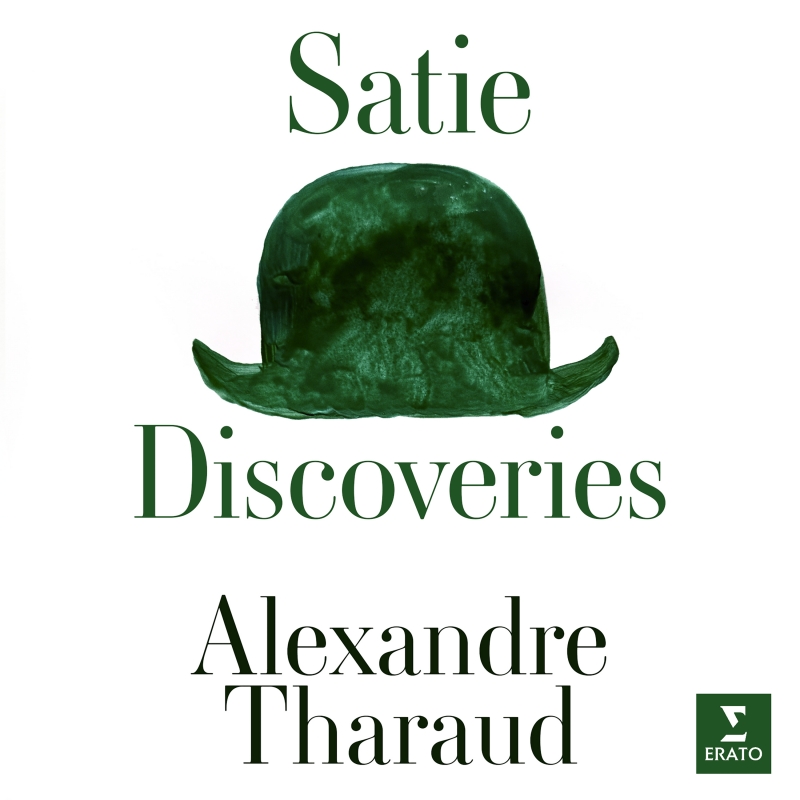
  然而,如果把目光從逸聞移轉到創作,會發現薩替的音樂並不是怪僻的產物,而是他刻意選擇在複雜與簡約之間保持距離的結果。他意識到十九世紀音樂的戲劇性已經走到極限,因此主動採取節制、留白與去除繁複裝飾的方式寫作。這些看似簡單的旋律與片段,實際上都經過他對聲音、形式與表達方式的反覆思考,是他對「音樂必須回到本質」這個觀念的回應。在薩替逝世滿百週年之際,鋼琴家塔羅(Alexandre Tharaud)推出的專輯《薩替:全新發現》(Satie Discoveries)提供現代愛樂者一個突破既定印象的機會。

  《薩替:全新發現》的曲目是日本作曲家松居里與英國音樂學者詹姆斯‧奈(James Nye)多年研究的成果。他們在巴黎國家圖書館與哈佛大學的手稿中,挖掘出大量薩替未完成的草稿、隨手記下的旋律、舞曲片段以及可視為初稿的材料,最後重建出二十七首過去從未公開的作品。這些作品短則三十秒,長則兩分鐘,卻組成一幅意想不到的圖景,愛樂者也得以一窺薩替在不同生活場景中的思考方式。

  當中有不少旋律,很可能是薩替每天從阿爾屈伊步行到巴黎市區途中所記下的靈感;部分歌舞作品預計由歌手演唱,但是歌詞已經失傳;還有一些樂曲,像《雙調素描》(Esquisses bitonales)則顯示薩替當時實驗中的和聲邏輯。這些重建並非替薩替「補完」未竟之作,而是讓他這些原本只能沉睡於檔案庫的樂念,轉化為可以被演奏與欣賞的聲音。

  塔羅對薩替的理解並非來自浪漫幻想,「我喜歡見到作品有生命,而不是被封存起來。」他更強調演奏者的職責不只在於詮釋作品,更包括推動被遺忘的作曲家,使作品能被重新看見。在《薩替:全新發現》中,塔羅的角色不是「復原者」,而是讓作品重新具有生命的人。大部分的曲目都是塔羅鋼琴獨奏,但是他也邀請小提琴家拉杜洛維奇(Nemanja Radulović)加入三首曲目,以小提琴代替失傳的歌者。至於來自芭蕾《遊行》(Parade)的〈中國魔術師〉(Prestidigitateur chinois),則與戈提埃‧卡普松(Gautier Capuçon)以四手聯彈呈現,讓作品在幽默與機敏間展現新的一面。

  塔羅以二十七首新作呈現出薩替的四個世界,詮釋手法不事誇張,也不刻意幫薩替柔化棱角。他讓作品維持原本短促、直白、片段化、卻極具個性的樣貌:

一、咖啡館的旋律:薩替的生活日常

  多首作品如《旋律》(Mélodie)、《安達魯西亞之歌》(Chanson andalouse)出自歌舞場情境。旋律鮮明直接,以幽默語氣描繪蒙馬特的日常。

二、另一種夜想:從《玄祕曲》延伸出的簡約語彙

  《第一號夜曲的周邊》(Autour du 1er Nocturne)與《夜之沉思》(Réflexions nocturnes)延續薩替著名的極簡語言:安靜、流動、節制。這些作品的光影變化雖然更為細緻,但是情緒並不複雜。

三、喜愛節奏的薩替:舞曲與重複的變化

  專輯中有多首舞曲,像是圓舞曲、布雷舞曲、小步舞曲,展現出薩替的節奏感。他常以重複的樂句推進音樂,不追求變化和發展,而是讓素材在一個空間循環移動,像是觀察著同一事物的不同角度。

四、前衛的轉身:雙調素描與迷你荒誕小品

  《雙調素描》是薩替少見的雙調實驗,而《凋萎的嘆息》(Soupirs fanés)中的〈頭髮〉(Poil)、〈塗鴉〉(Barbouillage)、〈家庭的絕望〉(Familial désespoir)等標題,透露怪誕詼諧又帶點神祕的氣味。這些小品更接近默片時代的視覺藝術精神,沒有固定的敘事內容,而是探索聲音的可能。

  這些「重建作品」的重要性不在於能否與《裸體歌舞》相比,而是在薩替逝世百年的時候,讓我們看見被忽略超過一世紀的薩替面貌:一個譜寫夜曲的詩人,一個咖啡館的樂手。他很注意音樂的結構與聲音色彩,並帶有一種少見的幽默感。他不追求華麗效果,但是在節奏與樂曲結構的安排上,總是能讓人一聽就知道「這是薩替」。這些看似微不足道的小品裡,還原了薩替真實的本來面目。他不是怪才,而是以自己安靜的步伐走出獨特道路的創作者。
Montmartre in Paris has long been known for its free-spirited Bohemian culture, its artistic circles, and its world of cabarets. The French composer Erik Satie moved for most of his life within this world of nightlife, cafés, and avant-garde artistic groups. Many anecdotes about him have circulated: his refusal to let anyone enter his lodgings, his chaotic daily routine, and the strange performance instructions he wrote into his scores. His titles – “Sonnerie pour réveiller le bon gros Roi des Singes (lequel ne dort toujours que d’un œil)" (“A signal to awaken the big fat Monkey King (who always sleeps with one eye open)”), “Véritables préludes flasques (pour un chien)" (“True Flabby Preludes (for a Dog)”), “Choses vues à droite et à gauche (sans lunettes)" (“Things Seen to the Right and Left (Without Spectacles)”), “Le poisson rêveur" (“The Dreaming Fish”), “Airs à faire fuir" (“Tunes to Make You Run Away”), and many others – seem so bafflingly odd that Satie has long carried the reputation of an eccentric. To most listeners, what remains of his image is limited to the familiar melodies of the “Gymnopédies" and “Gnossiennes"; the rest of his music, together with his daily life and artistic ideas, has largely slipped into obscurity.
In his later years, Satie lived in Arcueil, a suburb of Paris. When he died in 1925, his friends entered his small, dilapidated room – almost a ruin – and found a broken bed frame, unworn velvet jackets, piles of scattered manuscripts, and two pianos in poor condition, one of whose pedals was tied up with string. These scenes confirmed and reinforced the image of Satie as a solitary, peculiar figure who forever stood outside the musical mainstream.
Yet once we look past the anecdotes, Satie’s music turns out not to be the product of oddity, but of a deliberate choice to maintain distance between complexity and simplicity. He sensed that the nineteenth-century taste for musical drama had reached its limits, and so he consciously embraced restraint, space, and the removal of ornamentation. His seemingly simple melodies and musical fragments were in fact shaped by repeated reflection on sound, form, and expression. They respond to his belief that “music must return to its essence.” Marking the centenary of Satie’s death, Alexandre Tharaud’s album “Satie: Discoveries" offers today’s listeners a chance to move beyond inherited impressions.
The pieces in “Satie: Discoveries" are the result of years of research by Japanese composer Sato Matsui and British musicologist James Nye. Working with manuscripts preserved at the Bibliothèque nationale de France and at Harvard University, they unearthed unfinished drafts, stray melodic ideas, fragments of dance music and passages that could be considered early versions. From this material they reconstructed twenty-seven previously unknown works. Some last barely thirty seconds, others nearly two minutes, yet together they form an unexpected musical landscape that allows us to glimpse Satie’s thought processes across different moments of his life.
Many of these melodies were likely jotted down while Satie walked each day from Arcueil into central Paris; several cabaret-style songs were meant for singers, though their words have been lost; and some pieces – such as the “Esquisses bitonales" – reveal the harmonic experiments he pursued at the time. These reconstructions are not attempts to “complete” unfinished works but rather to translate dormant musical ideas into sounds that can once again be performed and heard.
Tharaud’s understanding of Satie is grounded not in romantic myth but in artistic responsibility. “I like works to be alive, not locked away,” he has said. He believes performers are responsible not only for interpreting music but also for bringing forgotten composers back into the light. In “Satie: Discoveries", Tharaud’s role is not that of a restorer but of someone who returns life to the music. Most tracks feature him alone at the piano, though violinist Nemanja Radulović joins him in three pieces, lending the violin to lines once sung by now-lost voices. “Prestidigitateur chinois" (“Chinese Conjuror”) from the ballet “Parade" appears in a witty four-hand arrangement with Gautier Capuçon, revealing the humour and agility inherent in Satie’s ideas.
Through these twenty-seven works, Tharaud presents four facets of Satie, interpreting them without exaggeration and without softening Satie’s distinctive edges. The pieces remain short, direct, fragmentary, and strongly individual.
- Café Melodies: Satie’s Everyday World
Several pieces – such as “Mélodie" and “Chanson andalouse" – emerge from cabaret and café-concert settings. Their melodies are vivid and unpretentious, capturing the humour and immediacy of Montmartre’s daily life.
- A Different Kind of Nocturne: Beyond the Gnossiennes
“Autour du 1er Nocturne" and “Réflexions nocturnes" continue the language familiar from Satie’s most well-known minimalist works: quiet, fluid, and restrained. The shifts of light and shadow are subtle, and the emotional tone remains uncluttered.
- Satie and Rhythm: Dance and Repetition
The album includes a number of dances – Valse, Bourrée, Minuet – showing Satie’s keen rhythmic sense. He often repeats short phrases, not to develop them but to let the material circulate within a fixed space, as if inviting the listener to view the same object from different angles.
- An Avant-Garde Turn: Bitonality and Miniature Absurdities
The “Esquisses bitonales" reveal Satie’s rare experiments with bitonality. “Soupirs fanés" (“Faded Sighs”) contains movements titled “Poil" (“Hair”), “Barbouillage" (“Daubings”), “Familial désespoir" (“Domestic Despair”), and “Souvenirs fadasses" (“Dusty Memories”). These surreal miniatures feel close to the spirit of silent-film visual art: free of fixed narrative, exploring sound as a playful and mysterious medium.
The value of these reconstructed works does not lie in whether they match the “Gymnopédies" in fame, but in how they restore to us aspects of Satie that have been overlooked for more than a century: a poet of nocturnes, a musician of the cafés. His attention to musical structure and colour, his understated humour, and his unmistakable rhythmic signature are fully present here. In these seemingly modest pieces, we encounter Satie as he was – neither a mere eccentric nor a cultivated myth, but an artist quietly forging his own path.
SATIE DISCOVERIES
Alexandre Tharaud (piano)
November 2020, Studio 1 (RiffX), Seine Musicale, Boulogne-BillancourtDecember 2024, Auditorium de BordeauxMarch 2025, Maison de l’ONDIF, Alfortville


 陳效真作品集
發表留言