讓音樂為自己宣揚與辯護:波蘭作曲家巴切維奇的「沉默」美學
  二十世紀波蘭作曲家格拉日娜‧巴切維奇(Grażyna Bacewicz)從不熱衷於談論自己。她不喜歡在麥克風前大談個人經驗,也不喜歡多廢唇舌解釋自己的作品。因為一旦站在大眾面前,很容易講出連自己都不相信的話。明知這種態度可能不利於作品流傳,巴切維奇還是寧願讓作品自行面對聽眾。對她而言,作品若需要作曲家事後不斷出面解釋,反而證明它的說服力還不夠。

  正因如此,巴切維奇談起自己的生活與創作時,刻意保持一種冷靜而且不煽情的語氣。她不把忙碌或壓力說成靈感來源,而僅把它當成日常狀態的一部分,並且把這樣的生活節奏直接反映在音樂結構上:音樂始終向前推進,段落高度集中,幾乎沒有讓人停下來喘息的空間。

  巴切維奇曾用相當理性的觀點,形容作曲時的心理狀態。她形容那是一種高度專注下的運作狀態,腦中像有一套系統在不停處理聲音,把零散的想法整理成可以運作的音樂。她也清楚表示,這不是什麼玄妙的神秘經驗,而是實實在在的工作過程。這樣的創作態度,也反映在她的作品裡:音樂線條清楚,結構緊實,節奏一旦啟動就很少停下來。

  光從履歷來看,巴切維奇的生活可以說是相當忙碌:她既是小提琴家與作曲家,也寫小說與短篇,戰後還在音樂院教書,同時還是母親與妻子。但是真正形塑她管弦語言的關鍵,並不在這些多重身分,而在一個與許多作曲家不同的選擇。

  巴切維奇出生於一九○九年,在華沙音樂學院學習作曲與小提琴,畢業後前往巴黎與娜迪亞‧布朗熱(Nadia Boulanger)與弗萊什(Carl Flesch)進修。但是她沒有走向純粹坐在書桌前作曲的生活,而是在波蘭指揮菲捷利貝爾格(Grzegorz Fitelberg)的邀請下,成為波蘭廣播交響樂團的樂團首席。正如波蘭音樂學者加西奧羅夫斯卡(Małgorzata Gąsiorowska)所形容,「小提琴家」巴切維奇,是為了「作曲家」巴切維奇加入樂團。在排練與演出中,巴切維奇從實作中理解配器的比量、聲部之間的張力,以及如何推進節奏。這樣的經驗直接反映在她後來的交響與協奏作品:節奏清晰、重心明確,聲部個性分明,很少堆疊成一塊厚重而模糊的音牆。

  這種獨特的音樂語言在第三、第四號交響曲中尤為明顯。兩部交響曲分別完成於一九五二年與五三年,當時第二次世界大戰才結束不久,社會上,一切都還在重建;政治上,波蘭已進入受到蘇聯影響的社會主義體制。當時官方所推崇的寫實風格與嚴格的政治審查,讓作曲家只要在結構、節奏或聲響上偏離「好懂、好聽、好宣傳」的標準,就可能被貼上「形式主義」的標籤。

  評論家常把這兩首交響曲的風格形容為嚴肅而且偏向新古典風格。樂曲節奏始終向前推進,氣氛帶著嚴峻的陰影。作曲家不倚靠浪漫派藉情緒層層堆疊的手法來製造效果,而是在各種創作限制之下,讓音樂自發的持續運轉和發展。這些作品沒有試圖講述某些具體故事,而是透過結構與音樂的結構動態累積內在張力。

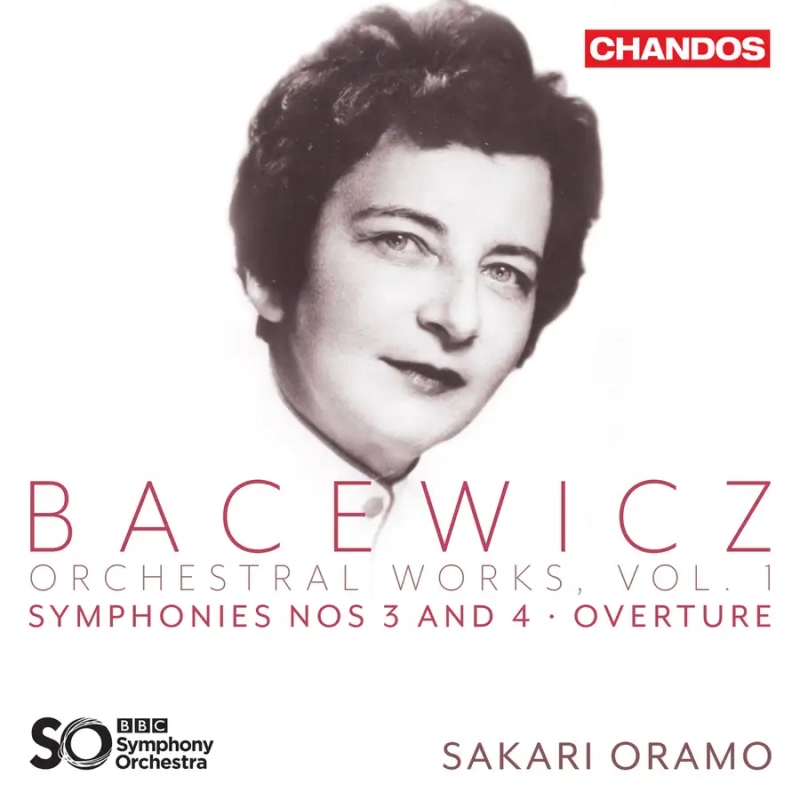
  在芬蘭指揮奧拉摩(Sakari Oramo)與BBC交響樂團近年在Chandos錄製的專輯裡,刻意讓這兩首交響曲聽起來不像是五○年代的作品,而是像當代新作:節奏俐落而有彈性,展現明確的推進感;銅管與打擊樂頗具爆發能量卻不顯得嘈雜;弦樂線條始終保持清晰度,使各聲部間的關係分明而立體。也正因為如此,這兩首交響曲不只呈現出戰後新古典語言的成熟樣貌,始終維持著巴切維奇節奏緊湊,音樂幾乎不留喘息空間的特點。當這樣的寫作風格與邏輯進一步延伸到協奏曲與後期管弦作品時,她的音樂語言也繼續向前演進。這正是Chandos第二張專輯所呈現的時代藝術樣貌。

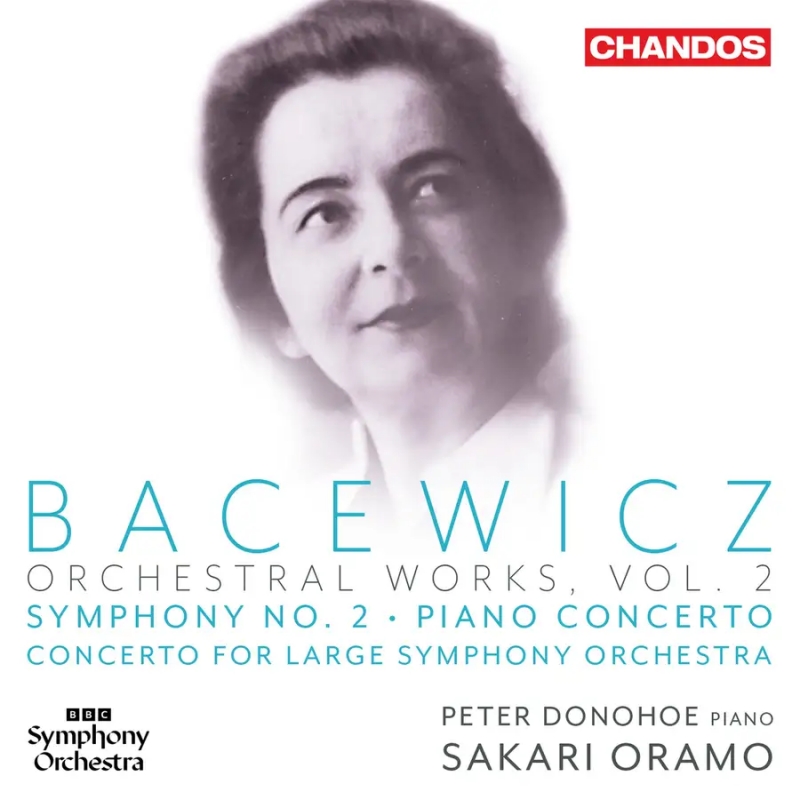
  第二張專輯透過三部作品,清楚勾勒出巴切維奇在戰後十餘年間的寫作軌跡:第二號交響曲仍保有新古典語言的輪廓;一九四九年的鋼琴協奏曲展現她對協奏形式的重新思考;一九六○年代初期的《大型交響樂團協奏曲》則把重心進一步推向聲響與節奏。鋼琴協奏曲是為紀念蕭邦逝世百年而寫,刻意避開浪漫派作品「獨奏家與樂團相抗」的戲劇化處理模式。巴切維奇讓鋼琴融合為音樂整體的一部分:音符很多、手很忙,但是目的不在於炫技和表現自己,而是和樂團一起驅動音樂前行。在奧拉摩指揮下,獨奏家多諾荷(Peter Donohoe)的琴音自然地嵌進樂團之中,線條清楚、比例分明,反而更能聽出作品內在的動能。

  最後,和前期作品相比,《大型交響樂團協奏曲》展現了音樂張力更高,也更直接的現代語言。這首作品雖然維持完整、嚴謹的四個樂章,但真正的主角不再只是旋律,而是樂團發出的整體聲響:打擊樂的重量、管弦樂音色的厚薄變化,都成了音樂往前推進的動力。奧拉摩與BBC交響樂團把這種音色與節奏之間的拉扯處理得非常清楚,讓聽眾清晰感受巴切維奇的寫作思維正躍向更前衛、更現代的語言。

  重新審視巴切維奇留下的文字,不難發現她很少藉由談論自己來引導他人理解作品。無論是書信或者訪談中,她提到戰時逃難、戰後生活條件,甚至教學與家庭帶來的壓力時,語氣往往很快就收住,點到為止,避免聽者誤把這些經驗變成創作的說明書。對她來說,語言能做的事情有限,說得太多,反而容易讓作品失焦。這種態度也反映在她的交響曲與協奏曲裡,這些作品並不帶明顯的線索,讓聽眾猜測她創作時的心境,或去對照她的人生經歷,而是讓音樂自己去呈現。奧拉摩與BBC交響樂團也正是沿這條路線詮釋這些作品:不額外加戲、不替音樂下定論、不作多餘的誇大和引導。或許這正是巴切維奇對後世的最終遺贈,那就是作品的生命力,並不取決於作曲家的自我解釋,而是在今日的聆聽情境中,是否依然能以那份原始的創作理念,擊中我們的心靈。


Twentieth-century Polish composer Grażyna Bacewicz showed little inclination to speak about herself. She disliked recounting personal experience in front of a microphone and was equally reluctant to explain her own music at length. She believed that once a composer steps into the public arena, it becomes all too easy to say what one does not truly mean. Aware that such an attitude might hinder the circulation of her works, Bacewicz nevertheless preferred to let the music confront listeners on its own terms. To her mind, a work that required constant explanation from its creator revealed, in itself, a lack of persuasive force.

For this reason, whenever Bacewicz spoke of her life and creative work, she maintained a deliberately restrained and unsentimental tone. She did not present busyness or pressure as sources of inspiration, but treated them simply as part of everyday life. This sense of steady, unrelenting motion found its way directly into her musical thinking. Her music presses forward continuously; its sections are tightly focused, offering little space for repose.

Bacewicz also described the act of composition in notably rational terms. She spoke of a state of intense concentration, as though the mind were constantly processing sound, organising scattered ideas into coherent musical form. She was careful to emphasise that this was no mystical experience, but a very concrete form of work. The same attitude is audible in her music: lines remain clear, structures compact, and once rhythmic motion is set in train, it is rarely allowed to slacken.

On paper, Bacewicz appears to have led an exceptionally busy life. She was both violinist and composer, wrote novels and short stories, taught at a conservatoire after the war, and was at the same time a wife and a mother. Yet the decisive factor in shaping her orchestral language lay not in these multiple roles, but in a choice that distinguished her from many of her contemporaries.

Born in 1909, Bacewicz studied composition and violin at the Warsaw Conservatory before continuing her training in Paris with Nadia Boulanger and Carl Flesch. Rather than pursuing a life devoted solely to composition at the desk, she accepted an invitation from the Polish conductor Grzegorz Fitelberg to become leader of the Polish Radio Symphony Orchestra. As the Polish musicologist Małgorzata Gąsiorowska observed, “Bacewicz the violinist joined the orchestra because of Bacewicz the composer.” Through rehearsal and performance, Bacewicz gained first-hand knowledge of orchestral balance, of the tensions between instrumental groups, and of the means by which musical momentum is generated. These experiences left a clear imprint on her later symphonic and concertante works: rhythmic profiles are sharply defined, centres of gravity firmly established, and individual parts retain their character rather than dissolving into an undifferentiated mass of sound.

This distinctive orchestral language is especially evident in the Third and Fourth Symphonies, completed in 1952 and 1953 respectively. They were written in the immediate aftermath of the Second World War, at a moment when society was still undergoing reconstruction and Poland had entered a socialist system under Soviet influence. Official aesthetic doctrines and strict political scrutiny meant that any departure from music deemed “accessible, pleasant, and suitable for propaganda” could earn a composer the label of “formalism”.

The style of these two symphonies is often described as severe and inclined towards neo-classicism. Their rhythmic drive is unrelenting, and their atmosphere cast in sombre shadow. Rather than relying on the Romantic accumulation of emotion, Bacewicz allows the music, within tight constraints, to sustain its own motion and development. These works do not attempt to narrate specific stories; instead, they build inner tension through structure and musical process itself.

In recent recordings for Chandos by Sakari Oramo and the BBC Symphony Orchestra, these symphonies are presented not as historical artefacts of the 1950s, but as works that speak with striking immediacy. Rhythms are taut yet flexible, with a strong sense of propulsion; brass and percussion possess considerable energy without becoming coarse; and string lines remain clear, allowing the relationships between parts to be heard with precision and depth. As a result, the symphonies reveal not only the maturity of Bacewicz’s post-war neo-classical language, but also her characteristic compression of time and energy, music that allows scarcely any room for pause. As this compositional logic extends into her concertos and later orchestral works, her language continues to move forward—an artistic trajectory clearly traced in Chandos’s second volume.

That second album outlines Bacewicz’s compositional path over more than a decade through three works. The Second Symphony still retains the outlines of her neo-classical idiom; the Piano Concerto of 1949 reflects a reconsideration of the concerto form; and the Concerto for Large Orchestra, written in the early 1960s, shifts the focus further towards sound and rhythm. Composed to mark the centenary of Chopin’s death, the Piano Concerto deliberately avoids the Romantic model of confrontation between soloist and orchestra. Instead, Bacewicz integrates the piano into the musical fabric as a whole. The writing is dense and demanding, yet its aim is not virtuoso display. The soloist works with the orchestra to propel the music forward. Under Oramo’s direction, Peter Donohoe’s piano part is naturally embedded within the orchestral texture, its lines clear and proportions finely judged, allowing the work’s inner momentum to emerge with particular force.

By contrast, the Concerto for Large Orchestra reveals a language of greater tension and more direct modernist expression. Although it retains a rigorous four-movement design, melody is no longer the sole protagonist. Instead, the sound of the orchestra itself—its percussive weight and shifting timbral density—becomes the principal driving force. Oramo and the BBC Symphony Orchestra articulate with clarity the friction between sound and rhythm, enabling listeners to sense how Bacewicz’s compositional thinking moves decisively towards a more forward-looking, modern idiom.

A return to Bacewicz’s own writings makes clear how rarely she sought to guide the understanding of her music through personal commentary. In letters and interviews, references to wartime displacement, post-war living conditions, or the pressures of teaching and family life are swiftly curtailed. She avoids allowing such experiences to become explanatory frameworks for her work. Language, in her view, has limited power; too much of it risks drawing attention away from the music itself. The same attitude governs her symphonies and concertos. They offer no obvious cues inviting listeners to speculate about her emotional state or to map biography onto sound. Instead, the music is left to speak on its own terms.

Oramo and the BBC Symphony Orchestra follow precisely this path: no added drama, no imposed conclusions, no exaggerated gestures. Perhaps this is Bacewicz’s final legacy—the reminder that a work’s vitality does not depend on a composer’s self-explanation, but on whether it can still strike us, in the present moment of listening, with the force of its original conception.
BACEWICZ Orchestral Works Vol. 1
(Symphony No. 3, Symphony No. 4, Overture)
BBC Symphony Orchestra, Sakari Oramo
13 and 14 February 2023, Fairfield Halls, Croydon
BACEWICZ Orchestral Works, Vol. 2
(Symphony No. 1, Piano Concerto, Concerto For Large Symphony Orchestra)
Peter Donohoe (piano), BBC Symphony Orchestra, Sakari Oramo
4 and 5 November 2024, Fairfield Halls, Croydon

 陳效真作品集
發表留言