  相信在歐美聽過古典音樂會的人,都會發現聽眾的年齡層普遍偏高。為了吸引年輕人走進音樂廳,從音樂家到演出單位無不絞盡腦汁。有些演奏家把燕尾服視為頭號戰犯,於是早期有穿上名牌華服的麥斯基(Mischa Maisky)與提博代(Jean-Yves Thibaudet),有小露香肩就被指責「賣肉」的慕特(Anne-Sophie Mutter);近期則有露背爆乳的哈提雅‧布尼亞季什維利(Khatia Buniatishvili)與「再短一點就得十八禁」的王羽佳(Yuja Wang)。一九九六年,加拿大小提琴家拉拉‧聖薔(Lara St. John)因為唱片封面僅以小提琴遮點而讓專輯大賣⋯⋯他們的理由之一,都是「年輕觀眾可能會因此對古典音樂產生興趣」。

  除了演奏家,演出單位也各出奇招。伯明罕市立交響樂團(City of Birmingham Symphony Orchestra)行政總監史丹寧(Emma Stenning)一上任,今年就因為一連串向年輕觀眾招手的新政策引發大風波。除了衣著隨君意、可以帶飲料入場,她還歡迎大家想鼓掌就鼓掌,想拍照就拍照,要錄短片也完全沒問題。結果男高音波斯特瑞吉(Ian Bostridge)在演唱中不得不停下來,因為觀眾的手機光線直射他的眼睛,使得他無法專心演唱。雖然批評如潮,史丹寧完全不打算讓步,她的應對方式是宣導聽眾調低手機亮度,繼續歡迎大家來拍,歡迎大家傳上網。
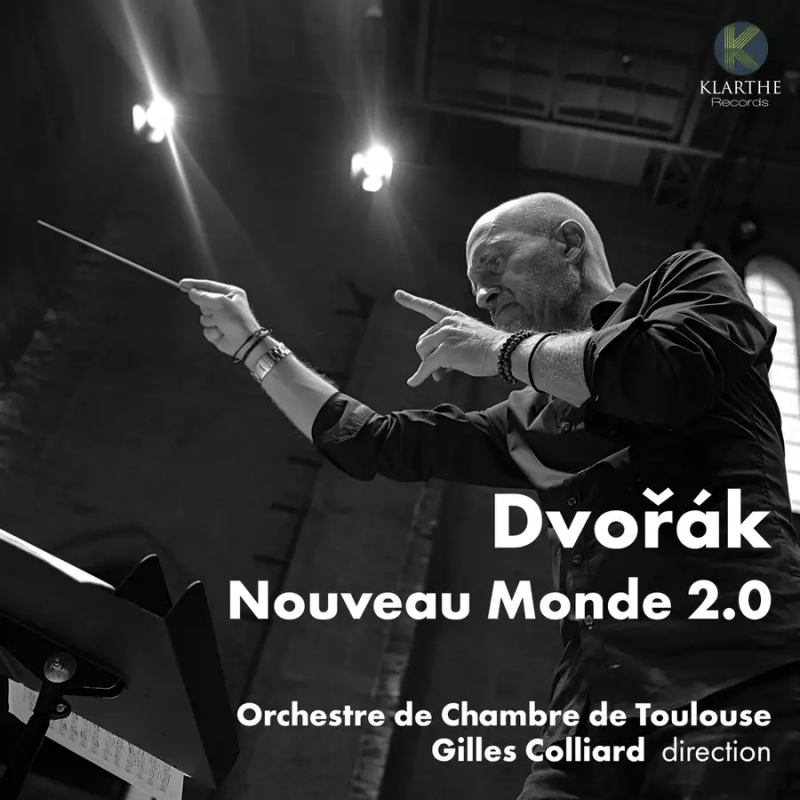
這張別出心裁加入電子樂器的「德弗乍克新世界2.0」(Dvořák nouveau monde 2.0)同樣以吸引年輕人為目標。雖然唱片在二○二四年年底出版,其實這是土魯斯室內樂團(L'Orchestre de chambre de Toulouse)二○二二年春天的重點演出曲目,同時進錄音室錄音。原始構想來自樂團行政經理格呂斯(Renaud Gruss),同樣的,他也認為現在古典音樂的受眾太少,聽眾平均年齡太高。對於這個現象的成因,主要業務在支持和發展法國管弦樂事業的法國管弦樂協會(Association Française des Orchestres)的解釋是:老一輩人更有文化素養,因此願意接觸古典音樂;新一代則缺乏這種素養。格呂斯持不同觀點,他認為主因是古典音樂被設計成「反表演」的形式,一切都變得標準化和公式化,再加上燕尾服這種現在看來古怪滑稽的服裝,在在都違反追求驚奇創新的舞台原則,只會讓喜歡熱鬧的年輕人寧願去看電影或戲劇這些「真正的表演」。因此格呂斯除了早就主張讓樂團音樂家自由選擇舒服的衣著上台,另一個吸引年輕人的法寶是讓古典音樂「更具戲劇性」。這張專輯就是把德弗乍克著名的第九號交響曲《新世界》改編成融入電子樂器的版本,演出人數從五十人以上降到十八人。動手改編的,是樂團音樂總監兼首席科利亞(Gilles Colliard)。
In Western countries, classical music audiences are aging, and both musicians and organizers are trying to attract younger listeners. Some musicians blame traditional attire like tailcoats, opting instead for designer outfits or provocative clothing, such as Anne-Sophie Mutter's shoulder-baring dresses or Yuja Wang's daringly short outfits. Others, like violinist Lara St. John, used bold album covers, like posing nude with only a violin, to spark interest.
Concert organizers are also experimenting with unconventional ideas. Emma Stenning, CEO of the City of Birmingham Symphony Orchestra, introduced policies such as casual dress codes, allowing drinks, and encouraging audience members to clap, take photos, or record during performances. However, this led to incidents like Ian Bostridge being disrupted by a phone light mid-performance. Despite criticism, Stenning stood firm, asking only for dimmer phone lights while continuing to invite audience participation.
In France, the Toulouse Chamber Orchestra created a project to reimagine Dvořák's New World Symphony with electronic instruments, aiming to make classical music more appealing to younger audiences. Renaud Gruss, the orchestra's manager, believes classical music feels outdated due to its rigid, standardized traditions and old-fashioned attire. The project reduced the orchestra from 50 players to 18, incorporating synthesizers and sound design while keeping the original structure of the symphony intact.
Gilles Colliard, the project's director and arranger, explained that the goal was to modernize the sound without altering Dvořák's intentions. However, the result was polarizing. While the electronic arrangement provided initial novelty, it failed to sustain engagement for the full 50-minute performance. The complexity and interplay of traditional orchestral textures, crucial to the original piece's charm, were lost in the electronic adaptation.
I don't see why the manager and conductor think adding electronic instruments will magically attract young audiences, especially when the music may not suit this approach. Their arguments sound appealing but lack logic. Gruss criticizes classical musicians for rigid training, yet Colliard insists on faithfully preserving the composer's intent. How is this "innovation" led by someone so traditional?
The Toulouse Chamber Orchestra, a small group with limited repertoire, likely took this approach to expand their programming. That's valid, but framing it as saving classical music is overhyped. Classical music's timeless value doesn't need mass appeal. If they had simply promoted this as a creative reimagining, I'd respect their effort. But claiming to be a musical savior and aiming for massive venues feels unrealistic. Focus on authenticity instead.
*This English version is a concise summary of the original Chinese article.*
Dvořák nouveau monde 2.0
Orchestre de chambre de Toulouse, Gilles Colliard


 陳效真作品集
發表留言