
舊曲新意,故地新象:皮耶蒙特以當代美學詮釋布拉姆斯經典
  二○二五年四月,瑞士鋼琴家皮耶蒙特西(Francesco Piemontesi)與指揮家何內克(Manfred Honeck),在萊比錫布商大廈(Gewandhaus)完成這張布拉姆斯第二號鋼琴協奏曲現場實況錄音。這座音樂廳和布拉姆斯有著極深的歷史淵源,也記錄他最慘痛的回憶。

  一八五九年,布拉姆斯第一號鋼琴協奏曲在此演出,招來了音樂史上著名的挫敗。當時萊比錫的聽眾反應極其冷酷,噓聲幾乎擊碎這名年輕作曲家的信心。布拉姆斯給友人姚阿幸(Joseph Joachim)的信中自嘲:「我的作品在這裡遭遇了一場輝煌且徹底的──失敗。」(Dass mein Stück hier eine glänzende und entschiedene – Niederlage erlitten hat.)不過,這場挫敗讓布拉姆斯在此後的二十年裡,對大型管弦樂作品的發表變得極其慎重,也正是這樣的敬畏與磨礪,熬煉出二十年後規模更宏大、思維更趨成熟的第二號鋼琴協奏曲。皮耶蒙特西選擇回到布商大廈錄下這部傑作,不僅是向傳統致敬,更像是在同一片土壤上,顯影出作品中那種跨越挫折後重生的韌性。

布蘭德爾的遺產:細節中的愛

  皮耶蒙特西的演奏邏輯,很大程度建立在他獨特的師承背景。身為布蘭德爾(Alfred Brendel)的學生,他承襲了老師對「細節」的堅持。布拉姆斯這部協奏曲結構繁複,常被戲稱為「有鋼琴助奏的交響曲」,許多鋼琴家傾向於以英雄式的音響強攻,皮耶蒙特西卻展現出細節解剖式的精確。

  他曾經提到,布蘭德爾教導他要「愛上事物的細節」(love the detail of things)。在這張錄音裡,這種精神轉化為對內聲部的梳理。皮耶蒙特西不盲目追求音量的堆疊,而是讓每一個聲部都充份的說話,使得布拉姆斯那厚重的寫作手法,在現代鋼琴的音響下呈現出少見的透明感。這種透明感,也來自他身上另一股鮮為人知的血統。皮耶蒙特西曾提到,他的音色美學深受法派名家烏塞(Cécile Ousset)的影響。這種「德意志邏輯、法蘭西觸鍵」的結合,讓他的布拉姆斯不顯得笨重,反而帶著一種輕盈的空氣感,在鋼鐵般的結構中,保留了細膩的色彩。

李希特與卡薩爾斯的啟示:尋找真實的鄉愁

  皮耶蒙特西對「詮釋」的看法,並非死守教條。他曾經分享兩個影響他早年美學觀的故事。

  第一個是關於李希特(Sviatoslav Richter)。皮耶蒙特西回憶,幼年時曾在瑞士琉森聽過李希特彈奏布梭尼改編的巴赫。對於當時的他而言,李希特那種排山倒海的力量與改編作品展現的自由,證明了詮釋音樂並非復刻舊照片,而是一種基於現代音響觀念的再創造。

  第二則故事則是對傳奇大提琴家卡薩爾斯(Pablo Casals)的觀察。皮耶蒙特西聽過卡薩爾斯指揮巴赫《B小調彌撒》老錄音,察覺到那個時代習慣使用濃郁的「揉弦」(Vibrato)來增加音樂的情感張力。以現代的耳朵來聽,卡薩爾斯那種極具個人特色、充滿濃厚揉弦的演奏方式,與目前相當盛行,追求清澈、少揉弦,甚至無揉弦的音響,以貼近巴洛克時期原貌的「歷史詮釋演奏」(Historically Informed Performance,簡稱HIP)相比,確實顯得與時代風格脫節。但是他並非以此否定前人,而是從中體會到一種對前人美學的留戀和反思:每個時代的音樂家都在尋找自己心目中的「真實」,所以對他而言,彈奏布拉姆斯不應只是模仿舊聲響和舊詮釋,而是要像卡薩爾斯那樣,將音樂視為一種「存在的需求」(Lebensnotwendigkeit),讓音符在當下的時空中產生真實的意義。

從對抗轉向對話:現場錄音的即興張力

  為了塑造自己的新詮釋,皮耶蒙特西與何內克還讓這部協奏曲顯現出明顯的「室內樂化」傾向。皮耶蒙特西並未將自己定位為與樂團對抗的英雄,而是試圖與樂團進行對話。特別是在第三樂章小行板裡,鋼琴與大提琴獨奏的互動,聽起來就像是兩位老友在深夜裡的交心長談。他刻意控制鋼琴的主導性和攻擊性,讓琴音與布商大廈管弦樂團深沉的弦樂質感相互交疊、共鳴。這種處理方式反映了他心目中對「詮釋天份」的定義:真正的才華不在於表現指尖的炫技,而是懂得如何將身體、心靈與周遭的聲音整合在一起,達成完美的連結。

結語:間奏曲中的內省

  專輯後半部安排了布拉姆斯晚期的三首間奏曲,是一個極佳的結尾。相較於協奏曲那種適合音樂廳大場面、帶有英雄般豪壯氣勢的曲目,這三首作品更像是鋼琴家深夜裡的私人獨白。皮耶蒙特西在瑞士阿斯科納(Ascona)創辦音樂節時,曾致力推廣現代音樂,這種開放的心態也反映在他處理經典作品上。他將布拉姆斯的晚年孤獨,處理得極度精煉且節制,避開了過度的感傷,卻讓聽眾在冷靜的音符中,聽見了最深沉的共鳴。

  這張專輯不僅在布拉姆斯當初被誤解受挫的歷史現場,為他的協奏曲作品展現新探索、新詮釋,延續生生不息的生命,更展現了一位現代鋼琴家如何處理「傳統」與「個人情感」的平衡。皮耶蒙特西融合了導師布蘭德爾的理智教導,以及他對舊時代美學的眷戀,用現代的視角,為這部經典作品勾勒出融入當代美學的新面貌。(2026年3月3日)
In April 2025, Swiss pianist Francesco Piemontesi and conductor Manfred Honeck joined the Gewandhausorchester Leipzig to complete this live recording of Brahms’s Piano Concerto No. 2. This concert hall shares a profound historical connection with Brahms, yet it also holds the memory of his most painful professional moment.
In 1859, the premiere of Brahms’s Piano Concerto No. 1 here was met with one of the most famous failures in music history. The Leipzig audience was remarkably cold, and their hissing nearly shattered the young composer’s confidence. In a letter to his friend Joseph Joachim, Brahms self-mockingly wrote: “My piece has suffered a brilliant and decisive—failure.” (Dass mein Stück hier eine glänzende und entschiedene – Niederlage erlitten hat.) However, this setback made Brahms extremely cautious about publishing large-scale orchestral works for the next twenty years. It was through this reverence and discipline that he forged the grander and more intellectually mature Piano Concerto No. 2. By choosing to return to the Gewandhaus to record this masterpiece, Piemontesi not only pays homage to tradition but also, on that very same soil, brings to light the resilience and rebirth that follow such historical adversity.
The Legacy of Brendel: Love in the Details
Piemontesi’s approach to performance is largely built upon his unique pedagogical background. As a student of Alfred Brendel, he inherited his teacher’s insistence on “detail." Brahms’s concerto is structurally complex—often nicknamed a “symphony with piano obbligato." While many pianists tend to attack it with heroic, powerful sonority, Piemontesi displays an almost anatomical precision.
He once mentioned that Brendel taught him to “love the detail of things.” In this recording, that spirit translates into a meticulous clearing of the inner voices. Rather than blindly chasing layers of volume, Piemontesi allows every voice to speak fully, giving Brahms’s thick writing a rare transparency on the modern piano. This clarity also stems from another, lesser-known part of his musical pedigree. Piemontesi has noted that his aesthetic of tone was deeply influenced by the French virtuoso Cécile Ousset. This combination of “German logic and French touch" prevents his Brahms from feeling heavy-handed, imbuing it instead with a sense of lightness and air that preserves delicate colours within the iron-clad structure.
Inspirations from Richter and Casals: Seeking a Sincere Nostalgia
Piemontesi’s view on “interpretation" is far from dogmatic. He has shared two stories that shaped his early aesthetic outlook.
The first concerns Sviatoslav Richter. Piemontesi recalls hearing Richter play a Busoni arrangement of Bach in Lucerne, Switzerland, during his childhood. For the young boy, Richter’s overwhelming power and the freedom displayed in the arrangement proved that interpreting music is not about replicating an old photograph, but rather a re-creation based on modern acoustic concepts.
The second story is his observation of the legendary cellist Pablo Casals. Having heard old recordings of Casals conducting Bach’s Mass in B Minor, Piemontesi noticed the era’s habit of using a rich “vibrato culture" (Vibrato-Kultur) to heighten emotional tension. To modern ears, Casals’s highly personal and vibrato-laden style can seem out of step with today’s prevalent “Historically Informed Performance" (HIP), which seeks a clearer, leaner sound to match the original Baroque era. Yet, Piemontesi does not use this to dismiss the past. Instead, he finds in it a sense of longing and reflection: musicialns of every era are searching for their own “truth." For him, playing Brahms is not about imitating old sounds or interpretations, but following Casals’s lead in treating music as a “necessity of existence” (Lebensnotwendigkeit), allowing the notes to find true meaning in the present moment.
From Conflict to Dialogue: The Improvised Tension of Live Recording
To shape his new interpretation, Piemontesi and Honeck give this concerto a distinct “chamber music" quality. Piemontesi does not position himself as a hero in conflict with the orchestra’s power; instead, he seeks a dialogue. This is particularly evident in the third movement (Andante), where the interaction between the piano and the solo cello sounds like a late-night intimate conversation between two old friends. He deliberately restrains the piano’s dominance and aggression, allowing its tone to overlap and resonate with the deep, string textures of the Gewandhausorchester. This approach reflects his definition of “talent": true gift lies not in displaying finger virtuosity, but in knowing how to integrate body, mind, and spirit with the surrounding sounds to achieve a perfect connection.
Conclusion: Interiority in the Intermezzi
The latter half of the album features Brahms’s late Three Intermezzi, Op. 117, serving as a perfect conclusion. Compared to the concerto’s grand scale and heroic atmosphere, these three pieces feel like a pianist’s private midnight soliloquy. Piemontesi, who founded a music festival in Ascona and has championed modern music, brings that same open-mindedness to these classics. He treats Brahms’s late-life loneliness with extreme refinement and restraint, avoiding excessive sentimentality while allowing the listener to hear a profound resonance within the calm notes.
This album does more than just present a new exploration of Brahms’s concertos at the historical site of his early misunderstanding. It demonstrates how a modern pianist balances “tradition" with “personal emotion." By fusing the intellectual guidance of Brendel with a nostalgic love for old-world aesthetics, Piemontesi uses a modern lens to sketch a new face for this classic work—one that is perfectly integrated into the aesthetics of today.(3 March, 2026)
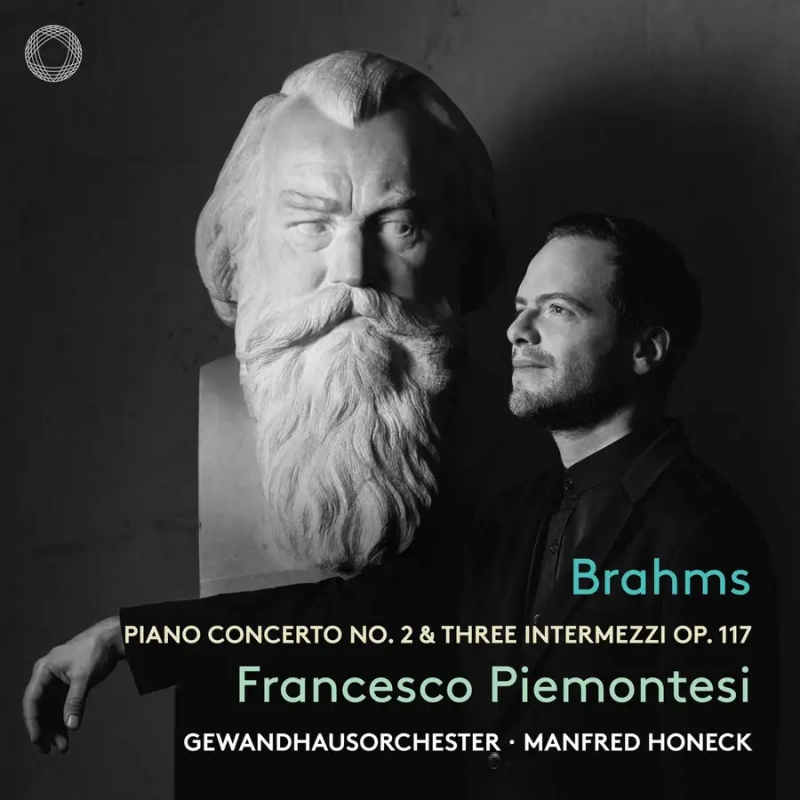
BRAHMS Piano Concerto No. 2; Three Intermezzi
Francesco Piemontesi (piano), Gewandhausorchester Leipzig, Manfred Honeck
April 2025, Gewandhaus zu Leipzig, Germany


發表留言