極簡主義的減法與感官加法:拉貝克姐妹的《科克托三部曲》
  二〇一五年,拉貝克姐妹(Katia & Marielle Labèque)在洛杉磯首演極簡主義作曲家菲利浦‧格拉斯(Philip Glass)的《雙鋼琴協奏曲》。幾年後的二〇一九年,她們收到一份來自格拉斯的驚喜禮物:他把一九九六年的室內歌劇《可怕的孩子們》(Les Enfants Terribles)改編成的雙鋼琴版樂譜,而這份樂譜也成為她們在隨後疫情封城期間潛心鑽研的重心。

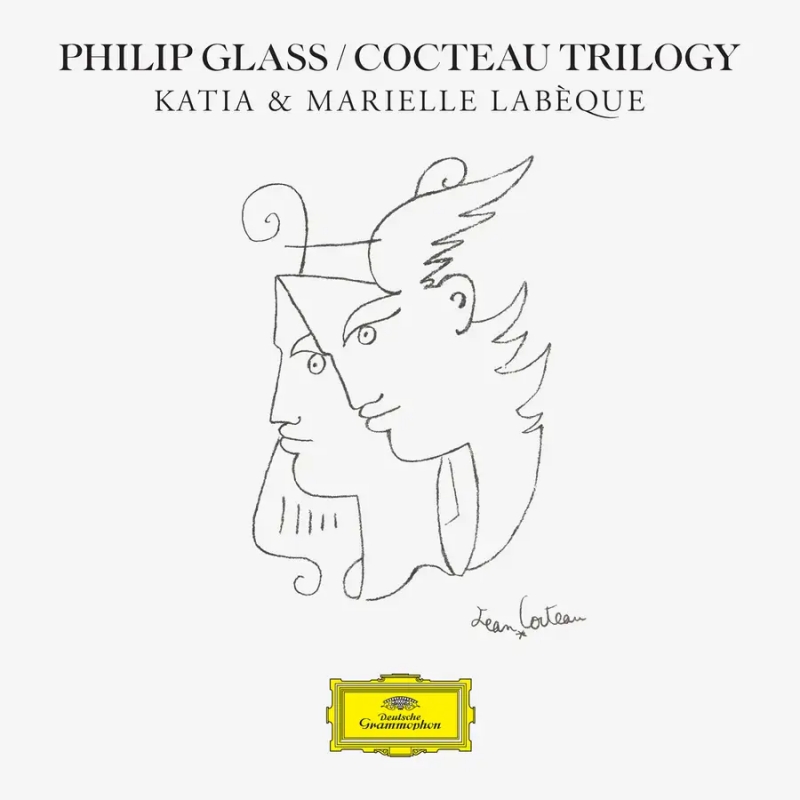
  《科克托三部曲》(Cocteau Trilogy)是格拉斯以法國導演及詩人科克托(Jean Cocteau)的作品為靈感寫成的歌劇統稱,包含科克托親自執導的電影《奧菲斯》(Orphée)與《美女與野獸》(La Belle et la Bête),以及由梅爾維爾(Jean-Pierre Melville)執導、科克托參與合作的電影《可怕的孩子們》。拉貝克姐妹演出《可怕的孩子們》雙鋼琴版本獲得廣泛迴響後,進一步向格拉斯與其樂團音樂總監里斯曼(Michael Riesman)提議,把另外兩部作品也改編為雙鋼琴版本,促成這套完整三部曲的誕生。

翻轉西方邏輯的東方根源

  談格拉斯的音樂之前,必須先釐清大眾對「極簡主義」(Minimalism)常有的刻板印象。事實上,格拉斯音樂語言的本質深受非西方音樂影響。一九六〇年代,格拉斯在巴黎參與電影配樂工作時,結識了印度西塔琴大師香卡(Ravi Shankar)與塔布拉鼓手阿拉·拉卡(Alla Rakha)。這次相遇徹底改變格拉斯的作曲邏輯,隨後他更親赴印度與西藏旅行,把印度音樂的「加法式節拍」(additive method)與節奏循環帶進自己的作品中。這種以小單位拼接成大循環的邏輯,有別於西方傳統古典樂切分時間的「除法」概念。

  這個結構性的差別決定了聆聽的體驗。西方古典音樂習慣以「起承轉合」推進,聽眾會本能地回想上一句、預期下一步;格拉斯則希望聽眾放下這種期待,只專注聽眼前當下的聲音。他要的不是故事,而是一種接近靜止、卻又持續震動的狀態。在這種聆聽方式下,音樂不再依靠線性的情緒推進,因此也常被認為帶有一種「冷感」。這就是極簡音樂的架構邏輯,也是演奏家之後會遇到的詮釋難題。

剝除色彩後的音樂骨架

  把一部編制有聲樂、樂團,有時還會同步放映電影的歌劇濃縮到兩架鋼琴,在音樂上是一項高度複雜的轉換工作。改編者里斯曼掌理菲利浦‧格拉斯合奏團(Philip Glass Ensemble)數十年,是最適合進行這項改編的人選。他的任務不只是把音符搬家,還要把歌劇的戲劇線條重新分配給兩架鋼琴。

  當這種「減法」運作得當,也會帶來清楚的效果:剝除管弦樂與人聲之後,格拉斯音型的機械性骨架反而赤裸呈現。在兩架鋼琴上,原本層層堆疊的分解和弦與持續推進的八分音符變得格外清晰,呈現獨特且不輸原版的衝擊力。

  然而,三部歌劇面臨的改編挑戰並不相同。《可怕的孩子們》原曲本就是為三部鋼琴與四名聲樂家所作,改編為雙鋼琴僅是少了一部琴,極為成功且毫無違和。但是《奧菲斯》與《美女與野獸》原為較大編制的合奏團或管弦樂,一旦去除配器色彩,在慢速樂段的音樂織體便無可避免地顯得單薄,因為格拉斯極簡語彙本來就不依靠和聲張力支撐,它的厚度來自配器的堆疊。

視覺與嗅覺的劇場補償

  格拉斯一九九四年的《美女與野獸》原版是一部實驗性的「電影同步歌劇」(cine-opera):演出時,同步放映科克托一九四六年的電影,歌手的唱段要與銀幕上演員的嘴型精準對位。也就是說,這部作品的本質就是影音共構的劇場。把它改編成純器樂的雙鋼琴,等於同時抽離「影像」與「人聲」這兩個歌劇的核心支柱。

  理解雙鋼琴版《美女與野獸》作品結構性的空缺,也就能明白為什麼《科克托三部曲》舞台演出時,製作得要採取必要的「加法」,例如水晶燈、氣味的配套。嚴格來說,這些要素是以《美女與野獸》為起點,擴展成整套三部曲的製作設計,不是三部曲各自都需要同樣規格的視覺補償。

  舞台上方懸掛的水晶吊燈,並非單純的氣氛裝飾,而是用來補足原本消失的視覺效果。科克托在一九四六年的電影《美女與野獸》裡,設計了由人手持舉的魔法燭台,那是全片最著名的視覺符號之一。當現場演出不再有同步放映的影片時,舞台上這盞懸吊的吊燈,用意即在以另一種方式補足那層消失的劇場感。

  《可怕的孩子們》段落前穿插科克托的法語獨白也不是懷舊。科克托在錄音中說了一句話:「藝術從不進步,它是一種原地的振動,一種暴力的原地振動。」(L'art ne fait jamais de progrès: c'est une vibration sur place, une violente vibration sur place.)這句話幾乎可以視為格拉斯極簡美學的註腳:宏觀看似靜止,微觀卻滿是高速震動。兩者間有著緊緻的精神呼應,絕非只是巧合。

  然而現場演出時,香氛設計與劇場執行的落差還是引發一些議論。調香師庫爾吉安(Francis Kurkdjian)為三部作品各自設計氣味:以冷冽的焚香對應《奧菲斯》的冥界、帶刺玫瑰對應《美女與野獸》的感官誘惑、甜美與冰雪的對比對應《可怕的孩子們》裡童年與成熟的拉扯。概念雖然清楚,有質疑者認為問題在於觀眾拿到的是一張附有試香紙的折頁節目單。音樂是隨時間流動的藝術,三部作品的氣味應該是三段依序展開的嗅覺敘事;但是試香紙條是一次性發放的靜態物件,三種氣味同時掛在觀眾手邊,原本設計裡的對比與推進因此消失。妮娜‧夏洛(Nina Chalot)設計的水晶吊燈也有類似的問題:它的視覺意義雖然成立,但是除了顏色變化,演出過程中是靜態的,裝置本身停在概念階段。

  然而,另一方支持者的觀點認為,若從極簡主義追求「接近靜止、持續震動」的核心精神來看,這種「靜態且恆定」的存在,或許未必是缺點。當音樂在微觀中高速重複、展現動態時,舞台上凝固的視覺與嗅覺,反而能與格拉斯那種「原地振動」的美學形成精準的對應。這種看似未竟的劇場效果,也可能恰是對極簡美學最冷靜而精準的註解。

法語獨白中的美學註腳

  另一個常被忽略的細節是語言。在美國洛杉磯演出時,製作團隊把「科克托的原音」當成整場演出的重要素材,卻沒有搭配英文字幕;對於不懂法語的觀眾來說,錄音的內容就只是一段聽不懂的人聲,剩下沒有實質內容的氛圍。感官的加法要成立,配套得要跟上;否則加上去的東西就只成了背景噪音,而不是補強效果的訊息。

浪漫派觸鍵的詮釋跨度

  最後回到鋼琴家。拉貝克姐妹是長期受歐洲傳統訓練的法國鋼琴家。她們詮釋格拉斯的方式,在極簡主義圈內並不算典型。她們在演奏中明顯加入歐洲浪漫派傳統的彈性速度,讓極簡音型有細微的漸快與漸慢,並在觸鍵上追求如同傳統詮釋拉威爾作品時的色彩層次。

  在嚴格的極簡主義信徒眼中,這個做法幾乎可視為偏離典型風格。格拉斯的樂譜雖然不要求演奏者像節拍器那樣機械複誦,但是自由到讓彈性節奏與色彩變化介入極簡音型,這個跨度就有過大之嫌。拉貝克姐妹為自己辯護的說法是:格拉斯本人私下彈自己的作品時,也充滿漸快與漸慢,並不拘泥於表面上的均勻節奏。

  可以確認的是,這種詮釋讓《科克托三部曲》出現另一種聆聽方式:它不再只是要求聽眾放下預期的聲音結構,而是允許相當程度的情緒與表情介入音樂。這是減法之後的另一種加法,不是加在舞台上,而是加在觸鍵裡。在這段精巧的「三創」過程中,格拉斯的歌劇先做減法,去除西方音樂的敘事慣性;里斯曼再做一次減法,把歌劇濃縮為兩架鋼琴;最後,拉貝克姐妹加回節奏彈性與音色變化。觀眾在現場聽到的,是這三層處理交疊後的結果,是不同藝術家不同理念之下,細緻精巧的承接、轉換與融合。(2026年5月5日)

In 2015, Katia and Marielle Labèque gave the Los Angeles premiere of minimalist composer Philip Glass’s Double Concerto for Two Pianos. A few years later, in 2019, they received a surprise gift from him: the two-piano score of his 1996 chamber opera "Les Enfants Terribles". This score became the focal point of their intensive study during the subsequent pandemic lockdowns.

The Cocteau Trilogy is the collective title for three operas Glass composed inspired by the works of the French director and poet Jean Cocteau. It comprises the films Cocteau directed himself, "Orphée" and "La Belle et la Bête", alongside "Les Enfants Terribles", a film directed by Jean-Pierre Melville with Cocteau's collaboration. Following the widespread acclaim of their two-piano performance of "Les Enfants Terribles", the Labèque sisters proposed to Glass and his musical director, Michael Riesman, that the remaining two works be similarly adapted, leading to the birth of this complete trilogy.

Eastern Roots Subverting Western Logic

Before discussing Glass’s music, it is necessary to dispel the common stereotypical perception of 'Minimalism' as mechanical. In reality, the essence of Glass's musical language is profoundly influenced by non-Western music. In the 1960s, whilst working on film scores in Paris, Glass met the Indian sitar master Ravi Shankar and the tabla player Alla Rakha. This encounter fundamentally altered his compositional logic. He subsequently travelled to India and Tibet, incorporating the "additive method" and rhythmic cycles of Indian music into his own work. This logic of assembling small units into larger cycles stands in stark contrast to the traditional Western classical concept of 'divisive' time, which divides time into regular, smaller fractions.

This structural difference dictates the listening experience. Western classical music typically progresses through a narrative arc, prompting the audience to instinctively recall previous phrases and anticipate the next. Glass, however, expects listeners to abandon these expectations and focus entirely on the present sound. He is not pursuing a narrative, but rather a state of seeming immobility that is nonetheless continuously vibrating. Under this mode of listening, music no longer relies on linear emotional progression, demanding that the listener abandon the traditional concepts of "recollection and anticipation" to view it as a pure sound event. This forms the structural logic of minimalist music, and it poses the very interpretative challenge that performers later face.

The Musical Skeleton Stripped of Colour

Condensing an opera—originally scored for vocalists, an orchestra, and occasionally synchronised film projection—down to two pianos is a highly complex musical transcription. The arranger, Michael Riesman, having directed the Philip Glass Ensemble for decades, was the ideal candidate for the task. His role was not merely to relocate notes, but to redistribute the opera's dramatic lines across the two keyboards.

When this 'subtractive' process is executed successfully, the effect is striking: with the orchestral colours and vocals stripped away, the mechanical skeleton of Glass's motifs is laid bare. On two pianos, the layered broken chords and the relentlessly driving quavers become exceptionally clear, delivering a unique impact that rivals the original.

However, the adaptation challenges varied across the three operas. "Les Enfants Terribles" was originally composed for three pianos and four singers; adapting it for two pianos merely meant losing one instrument, resulting in a highly successful and seamless transition. Conversely, "Orphée" and "La Belle et la Bête" were originally written for larger ensembles or full orchestras. Once stripped of their orchestral colours, the musical texture in the slower passages inevitably feels somewhat thin, because Glass's minimalist vocabulary does not inherently rely on harmonic tension for support; its density derives from layered orchestration.

Theatrical Compensation through Sight and Scent

Glass's original 1994 version of "La Belle et la Bête" was an experimental "cine-opera": during the performance, Cocteau's 1946 film was projected simultaneously, and the singers' vocal lines had to synchronise precisely with the lip movements of the actors on screen. In essence, the core of this work was an audio-visual theatrical construct. Reducing it to a purely instrumental two-piano piece effectively removes the two central pillars of the opera: 'image' and 'voice'.

Understanding the structural void in the two-piano version of "La Belle et la Bête" clarifies why the stage production of the Cocteau Trilogy required necessary 'additions', such as a chandelier, bespoke fragrances, and visual projections. Strictly speaking, these elements were developed with "La Belle et la Bête" as the starting point and subsequently expanded into the production design for the entire trilogy, rather than each of the three works inherently requiring the same level of visual compensation.

The crystal chandelier suspended above the stage was not merely an atmospheric decoration, but a device to compensate for the lost visual effects. In his 1946 film "La Belle et la Bête", Cocteau designed the magical "chandeliers held by human hands", which remain one of the film's most iconic visual symbols. With the live performance no longer featuring the synchronised film, the suspended chandelier served to restore that lost sense of theatre in an alternative form.

Similarly, the inclusion of Cocteau's French monologue before the "Les Enfants Terribles" segment was not an exercise in nostalgia. In the recording, Cocteau states: "L'art ne fait jamais de progrès : c'est une vibration sur place, une violente vibration sur place." ("...art never makes progress, it is a static vibration, a violent static vibration..."). This statement can essentially be viewed as a footnote to Glass's minimalist aesthetic: macroscopically appearing static, yet microscopically brimming with high-speed vibration. The tight spiritual resonance between the two is by no means a mere coincidence.

Nevertheless, the disparity between the fragrance design and its theatrical execution sparked some debate during live performances. Perfumer Francis Kurkdjian designed a distinct scent for each of the three works: cold incense corresponding to the underworld of "Orphée", a thorny rose for the sensual temptation of "La Belle et la Bête", and a contrast of sweetness and snow for the clash between childhood and maturity in "Les Enfants Terribles". Although the concept was clear, critics pointed out that audiences were simply handed a folded programme containing scent strips. Since music is a temporal art form, the scents for the three works should ideally have unfolded sequentially as an olfactory narrative; however, the scent strips were static objects distributed all at once, placing all three fragrances in the audience's hands simultaneously, thereby losing the intended contrast and progression. Nina Chalot's crystal chandelier design faced a similar issue: while its visual significance was valid, apart from colour changes, it "basically remained static" during the performance, stalling the installation at the conceptual stage.

Conversely, supporters argued that, viewed through the core minimalist ethos of pursuing a state of being nearly static, yet continuously vibrating, such 'static and constant' presences might not necessarily be flaws. When the music exhibits dynamic, high-speed repetition on a microscopic level, the congealed visual and olfactory elements on stage provide a precise counterpoint to Glass's aesthetic of a static vibration. This seemingly unfulfilled theatrical effect might, in fact, be the most dispassionate and accurate annotation of the minimalist aesthetic.

An Aesthetic Footnote within the French Monologue

Another frequently overlooked detail is language. During the Los Angeles performance, the production team utilised Cocteau's original voice as a crucial element of the show, yet failed to provide English surtitles. For non-Francophone audience members, the recording was merely an incomprehensible human voice, leaving behind an atmosphere devoid of substantive content. For sensory additions to be effective, the supporting translations must be in place; otherwise, the added elements become mere background noise rather than a reinforcing message.

The Interpretative Scope of Romantic Touch

Finally, returning to the pianists themselves. The Labèque sisters are French pianists trained in the European tradition. Their approach to interpreting Glass is rather atypical within minimalist circles. They deliberately introduce the rubato of the European Romantic tradition into their performance, allowing the minimalist motifs subtle accelerations and decelerations, whilst pursuing a depth of tonal colour akin to traditional interpretations of Maurice Ravel.

In the eyes of strict minimalist purists, this approach might be seen as deviating from the typical style. Although Glass's scores do not require performers to recite mechanically like metronomes, allowing rhythmic flexibility and colour variations to intervene so freely in minimalist motifs might seem too broad a departure. In their defence, the Labèque sisters point out that when Glass himself plays his own works privately, his performances are also filled with "rubato, accelerandos and ritenutos", rather than rigidly adhering to an even surface pulse.

What is certain is that this interpretation opens up a new way of listening to the Cocteau Trilogy: it no longer merely asks the audience to abandon their expectations of musical structure, but permits a considerable degree of emotion and expression to permeate the music. This is another form of 'addition' following the 'subtraction'—not added to the stage, but to the keystrokes. In this sophisticated process of successive re-creation, Glass first applied subtraction to his operas, removing the narrative conventions of Western music; Riesman then applied a second subtraction, condensing the operas for two pianos; finally, the Labèque sisters added back rhythmic flexibility and tonal colour. What the audience experiences live is the culmination of these three layered treatments—a meticulous and exquisite reception, transformation, and fusion under the differing philosophies of distinct artists. (5 May, 2026)
GLASS Cocteau Trilogy
Katia & Marielle Labèque (piano)
November 2023, Studio La Fabrique des Ondes



發表留言