
跨越聲學限制與樂譜迷思:拉特里的法式交響管風琴詮釋美學
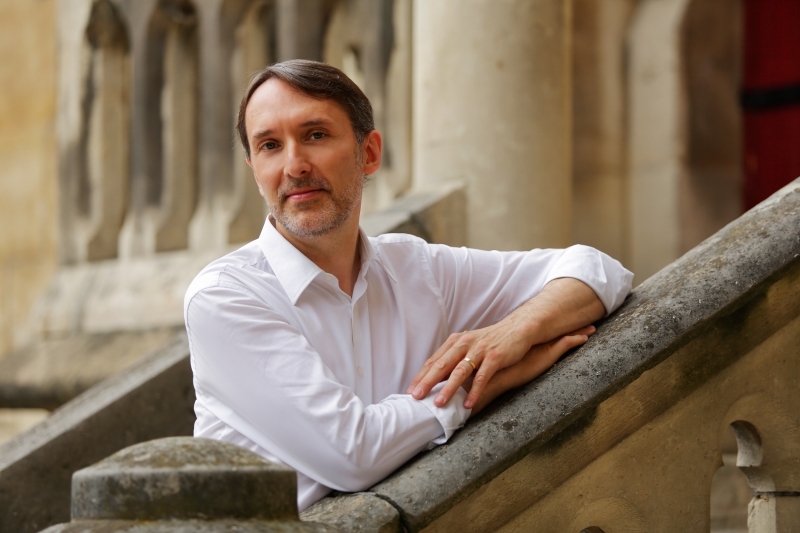
  成為管風琴大師之前,拉特里(Olivier Latry)的藝術起點帶有幾分戲劇性的幽默。十二歲那年,僅有電子琴經驗的他,在一場婚禮上自告奮勇坐上教堂管風琴琴檯。拉特里回憶,當時面對琳瑯滿目的按鈕,只認得「小號」與「長笛」兩個標示;甚至因不理解「Presto」音栓的意涵而不敢觸碰。當他試圖按下「極強音」(Fortissimo)時,巨大的鳴響讓他嚇得跌在鍵盤上,發出震耳欲聾的響聲。

  這場意外不僅沒有讓拉特里退縮,反而讓他直接體會到這件樂器驚人的聲響能量,也由此開啟他對這座「聲響巨獸」長達數十年的探索。

  一九八五年,二十三歲的拉特里通過遴選,成為巴黎聖母院管風琴師。當他接下職務時,龐大的歷史壓力隨之而來。拉特里形容,就任初期,彷彿歷任前輩大師都站在背後凝視著自己,使他不得不時刻保持謹慎。他引用教宗若望保祿二世的經歷說明當時的心境:「教宗花了一年才適應那件法袍,而我成為聖母院管風琴師也是如此。」他深知這份職務是對法蘭西文化遺產的守護;在實務上,他也必須從聲學與管風琴的物理結構層面,重新理解法式交響學派在聲響與結構上的運作方式與其內在邏輯。

七秒殘響間的發音藝術

  聖母院高達七秒的殘響,構成詮釋上的絕對條件。拉特里把演奏者比喻為「在回音空間中說話的演員」:必須刻意放慢發音、清楚咬字,才能維持音樂的清晰度。他指出維耶納(Louis Vierne)作品中特有的長篇幅靜止和聲,正是聲學條件所造成的必然結果,因為過於密集的複音音樂在巨大殘響中無法清晰呈現。對拉特里而言,演奏是與建築的對話,必須預留空間讓聲音擴散。這種精準掌控,使他的演奏在壯麗之中仍保有清晰的結構邏輯。

建築制約下的聲響實驗室

  聖母院的管風琴本身就是一座實驗室。一八六〇年代,建築師維奧萊─勒─杜克(Eugène Viollet-le-Duc)基於視覺考量,強硬要求製琴師卡瓦葉─科爾(Aristide Cavaillé-Coll)取消懸掛在外的背音部鍵盤 (Rückpositiv)。這項限制反而讓製琴師在音色設計上獲得更多自由,進而加入罕見的小七度泛音音栓(Septième)。這讓樂器在不同音域具備截然不同的性格:低音區如銅管般厚重,高音域則呈現出多種音色的混合質感。拉特里精準掌握這些特性,證明「法式交響色彩」實質上是建立在因應建築機制所設計的類似管弦樂配器的音色調度方式。

破解樂譜迷思與連奏底線

  在詮釋上,拉特里透過嚴謹考據,試圖還原作品在歷史情境中的實際演奏方式。他指出,為了讓樂譜更容易流通,維耶納在記譜時簡化了部分音色配置的細節。然而在聖母院的實際演奏中,卻大量使用泛音音栓。拉特里在演出中還原了這些隱藏色彩,使音樂展現出管弦樂般的豐富層次。面對十九世紀管風琴沉重的機械觸鍵,他幽默地指出法國管風琴師的「懶人智慧」:彈奏時傾向停留在第一層手鍵盤,依靠聯結栓切換聲響。相對地,在樂曲語氣上,他對自己極為嚴格,強調法式音樂必須是「絕對的連奏」。他進一步指出,樂譜上的圓滑線往往是在提示音樂語氣,而不只是標示演奏上的連接方式。

不求共識的教育思辨

  拉特里與同儕布瓦爾(Michel Bouvard)在巴黎國立高等音樂舞蹈學院(CNSMDP)創設「雙教授制」。他們共同指導學生,但是對同一首作品經常抱持截然不同的詮釋觀點。這種自然呈現的理念分歧,避免只傳授給學生單一的標準答案。學生一開始難免感到困惑,但最終必須自行發展出獨立的詮釋路徑。在文化語境上,他強烈要求學生學習法語。他主張法語中特有的「弦外之音」(second degré),帶有反諷與間接表達的特質,是理解法式音樂語氣的關鍵。因此詮釋法式音樂時,不宜過度直白,而應依此邏輯揣摩其真正的表達方式。除了鑽研傳統之外,拉特里也刻意拓展管風琴音樂的邊界。他積極涉入當代管風琴協奏曲的演出,試圖打破管風琴與當代社會真實音樂世界的隔閡。他認為必須將管風琴連結到更廣闊的音樂界,否則它終將被困於教堂之中,成為孤立的存在。

隱身僕人的定位

  拉特里認為管風琴應具備藝術獨立性,而非僅作為宗教儀式的聲音背景。然而一旦回到聖母院演奏時,他便有意採取有別於音樂廳舞台的表現,將自己定位為「隱身的僕人」:「我的角色是幫助有信仰的人與上帝建立連結,並幫助沒有信仰的人,在音樂中或許也能找到上帝。」

  拉特里證明了傳統不等於死板的規範教條,他透過對聲學、機械結構與文化的深度理解,將這項古老藝術轉化為具有當代意義的思考方式,並確立了他在當代管風琴藝術中的核心地位。最後,這套建立於實踐之上的詮釋方式,讓他成功連結歷史遺產與未來聲響,成為當代極具啟發性的藝術典範。(2026年5月19日)
Before becoming an organ master, Olivier Latry’s artistic beginnings carried a touch of dramatic humour. At the age of twelve, having only had experience with an electronic keyboard, he volunteered to sit at the console of a church organ during a wedding. Latry recalls that, faced with a dazzling array of buttons, he only recognised the labels for “Trumpet" and “Flute"; he even dared not touch the “Presto" stop because he did not understand its meaning . When he attempted to press the “fortissimo", the colossal roar startled him so much that he fell onto the keyboard, producing a deafening sound .
This accident did not deter Latry; rather, it allowed him to directly experience the instrument’s astonishing sonic energy, thereby sparking his decades-long exploration of this “sonic behemoth."
In 1985, at the age of 23, Latry was appointed as the titular organist of Notre-Dame de Paris through a competitive audition. As he assumed the post, an immense historical pressure followed. Latry describes that, in his early days, he felt as though all his predecessors were standing behind him, watching his every move, which compelled him to remain cautious at all times . He illustrated his state of mind at the time by quoting the experience of Pope John Paul II: “It took me one year to wear the clothes of the pope. I think it’s the same by being organist at Notre-Dame" . He was profoundly aware that this position was a guardianship of French cultural heritage; in practice, he also had to fundamentally reinterpret the operational methods and internal logic of the French Symphonic school in terms of sound and structure, starting from the acoustics and physical mechanics of the organ.
The Art of Articulation Within a Seven-Second Reverberation
The vast seven-second reverberation of Notre-Dame constitutes an absolute condition for interpretation. Latry compares the performer to an actor speaking in an echoing space: “C’est comme un acteur qui devrait jouer dans un lieu… avec un petit peu d’échos" (It is like an actor who has to play in a place with a little bit of echo) . One must deliberately slow down pronunciation and articulate clearly to maintain musical clarity. He points out that the extended, static harmonies characteristic of Louis Vierne’s works are the inevitable result of these acoustic conditions, as overly dense polyphony cannot be clearly rendered within such an enormous reverberation. For Latry, performing is a dialogue with the architecture, requiring the performer to leave space for the sound to expand. This precise control allows his playing to retain a clear structural logic amidst its grandeur.
A Sound Laboratory Under Architectural Constraints
The organ of Notre-Dame is itself a laboratory. In the 1860s, for visual reasons, the architect Eugène Viollet-le-Duc firmly demanded that the organ builder Aristide Cavaillé-Coll remove the suspended Rückpositiv (the choir division). This restriction paradoxically granted the builder more freedom in designing tone colours, leading to the addition of the rare Septième harmonic stop. This allows the instrument to possess entirely distinct characters across different registers: the lower register is thick and heavy like brass, whilst the high register presents a blended texture of various tone colours. Latry’s precise mastery of these characteristics proves that “French Symphonic colour" is fundamentally an orchestration-like tonal arrangement designed in response to architectural mechanisms.
Dispelling Score Myths and the Baseline of Legato
In terms of interpretation, Latry uses rigorous historical research to reconstruct how works were actually performed in their original historical context. He points out that to make his scores easier to circulate, Vierne simplified the details of some tonal configurations in his notation. However, during actual performances at Notre-Dame, he used mutation stops extensively. In his own performances, Latry restores these hidden colours, giving the music a rich, orchestral-like layering. Facing the heavy mechanical key action of nineteenth-century organs, he humorously points out the lazy wisdom of French organists (“French organists are a little bit lazy"): they tended to stay on the first manual whilst playing, relying on couplers to switch sounds. Conversely, regarding musical phrasing, he is extremely strict with himself, emphasising that French music must be “absolutely legato" . He further notes that the slurs in the score often serve to indicate musical phrasing rather than merely instructing a physical connection in performance.
Educational Philosophy Without the Need for Consensus
Alongside his colleague Michel Bouvard, Latry established a “dual-professor system" at the Conservatoire National Supérieur de Musique et de Danse de Paris (CNSMDP). They jointly instruct students, yet they frequently hold entirely different interpretive views on the same piece. This natural divergence of ideas avoids feeding students a single standard answer. Although students inevitably feel confused at first, they ultimately must develop an independent path of interpretation. In terms of cultural context, he strongly urges his students to learn French. He argues that the “second degré" (second degree/hidden meaning) unique to the French language, with its ironic and indirect qualities, is key to understanding French musical phrasing. Therefore, when interpreting French music, one should avoid being overly literal, but rather deduce its true expressive meaning through this logic. Beyond delving into tradition, Latry deliberately broadens the boundaries of organ music. He actively participates in performances of contemporary organ concertos, striving to break the barrier between the organ and the real musical world of contemporary society. He believes the organ must be connected to the wider musical sphere; otherwise, it will forever be trapped within the church, existing as an isolated “satellite"
The Identity of an Unseen Servant
Latry believes that the organ should possess artistic independence, rather than serving merely as a sonic background for religious rituals. However, once he returns to play at Notre-Dame, he intentionally adopts an approach different from that on a concert hall stage, positioning himself as a hidden servant: “Ici, c’est un musicien caché, c’est un serviteur inconnu. Mon rôle justement ici, c’est d’aider les gens qui sont croyants à atteindre Dieu, et d’aider les gens qui ne le sont pas à peut-être trouver Dieu." (“Here, it is a hidden musician, it is an unknown servant. My role here is precisely to help the people who are believers to reach God, and to help the people who are not to perhaps find God.").
Latry has proven that tradition does not equate to rigid, dogmatic rules. Through a profound understanding of acoustics, mechanical structures, and culture, he has transformed this ancient art into a contemporary mode of thought, cementing his core position in modern organ art. Ultimately, this practice-based approach to interpretation has allowed him to successfully bridge historical heritage with future sonorities, making him a profoundly inspiring artistic exemplar of our time. (19 May, 2026)


發表留言