「THE FIRST TAKE」是日本索尼音樂娛樂於二○一九年十一月在YouTube推出的音樂頻道。它標榜以4K高畫質攝影和高品質錄音技術單次錄製(One Take),不允許重複錄製或後製編輯,讓音樂家在純白色的背景前展現最樸素而真實的一面。頻道成立以來,在THE FIRST TAKE出現過歌手包括日本本土的LiSA、YOASOBI、Aimer、北村匠海⋯⋯以及海外歌手艾薇兒(Avril Lavigne)、蔡依林、韋禮安、A-Lin⋯⋯等。然而在這些當紅的流行歌手群中,THE FIRST TAKE卻在二○二五年年初,一口氣推出鋼琴家藤田真央的兩支影片,這也是該頻道首度出現古典音樂家,顯得特別搶眼突出。
兩支影片曲目分別是貝多芬《熱情》奏鳴曲第三樂章與蕭邦二十四首前奏曲中的最後一首。對音樂家來說,這種一次性錄影錄音的演出本身就是心裡壓力大挑戰。尤其藤田真央是第一位在THE FIRST TAKE露臉的古典音樂家,他形容彈奏這兩首加起來不到十分鐘的音樂, 比起在紐約卡內基廳舉辦獨奏會還要緊張。但是這個長著娃娃臉的二十六歲鋼琴家,卻以他細膩而不失激情的詮釋讓人留下深刻的印象。
藤田真央一九九八年出生於日本東京。因為哥哥學鋼琴,三歲搬到山梨縣後,想和哥哥看齊的藤田真央也開始學鋼琴。幾年後,全家再搬到「冬天除了滑雪和彈鋼琴,幾乎沒有其他事可做」的長野縣。藤田真央每個週末搭新幹線前往東京上鋼琴課,直到十六歲進入東京音樂大學附屬高等學校。和大部分青年音樂家一樣,藤田真央也是從少年時期就開始參加各種音樂比賽,二○一七年的哈絲姬兒國際鋼琴大賽(Clara Haskil International Piano Competition)首獎與二○一九年的柴科夫斯基國際鋼琴大賽(International Tchaikovsky Competition)銀牌讓他打開國際知名度。
雖然到莫斯科參賽的主因是想和一九八六年重返莫斯科的霍洛維茲(Vladimir Horowitz)一樣,能站上莫斯科音樂學院大音樂廳的舞台上演出。但是比賽過程並不輕鬆愉快,而是很「恐怖」的事,尤其藤田真央自認為並不是以競技為樂的人。他的身高只有一百六十公分,爆發力或是雙手能跨越的音程都受到先天限制,因此藤田真央的音樂詮釋重點一直放在音樂的細膩度與音色美感上。然而在比賽的戰場上,注重細膩度與音色的參賽者,很容易被各種運動健將型對手帶來的感官刺激淹沒。然而藤田真央最後能拿下柴科夫斯基國際鋼琴大賽第二名,意謂他在音樂細節和內涵的耕耘,還是受到評審們的留意和肯定。獲獎之後,國際演出邀約接踵而來,藤田真央終於可以高喊「我不要再比賽了」。二○二三年,一直與家人生活的藤田真央前往柏林,進入艾斯勒音樂學院(Hochschule für Musik Hanns Eisler Berlin)跟隨與他音樂理念最契合的俄裔鋼琴家格爾施坦(Kirill Gerstein)進修。
THE FIRST TAKE is a YouTube music channel launched by Sony Music Entertainment Japan in November 2019. It is known for its one-take, high-quality 4K video and audio recordings, where artists perform without retakes or post-production editing, capturing their raw and authentic presence against a simple white background. Since its launch, the channel has featured many popular artists, including LiSA, YOASOBI, Aimer, and even international singers like Avril Lavigne, Jolin Tsai, WeiBird, and A-Lin. However, in early 2025, THE FIRST TAKE made headlines by featuring classical pianist Mao Fujita in two videos—the first classical musician ever to appear on the channel.
Mao Fujita performed the third movement of Beethoven's "Appassionata" Sonata and the final piece from Chopin's 24 Preludes. The one-take recording format posed a significant challenge, as there was no room for mistakes. Fujita himself admitted that playing these two pieces, which total less than ten minutes, was more nerve-wracking than performing a full recital at Carnegie Hall. However, the 26-year-old pianist impressed audiences with his delicate yet passionate interpretations.
Born in Tokyo in 1998, Mao Fujita started playing the piano at three years old, inspired by his older brother. After moving to Nagano, he traveled weekly to Tokyo for piano lessons. Like many young musicians, he participated in numerous competitions, winning first prize at the 2017 Clara Haskil International Piano Competition and the silver medal at the 2019 International Tchaikovsky Competition. His goal in competing in Moscow was to perform at the prestigious Great Hall of the Moscow Conservatory, just like his idol, Vladimir Horowitz, did in 1986. However, he found competitions stressful and preferred focusing on musical expression rather than technical display. Despite his small hands and limited reach, his meticulous attention to tonal beauty and musical depth earned him recognition. In 2023, he moved to Berlin to study with Russian pianist Kirill Gerstein at the Hanns Eisler School of Music.
At the Verbier Festival, Fujita met pianist Mikhail Pletnev, whose mastery of tone and bold interpretations left a profound impact on him. Pletnev's philosophy—that music should be a personal expression rather than a rigid adherence to rules—deeply resonated with Fujita. Their discussions on music and life strengthened his belief that artistry should come from within rather than seeking audience approval.
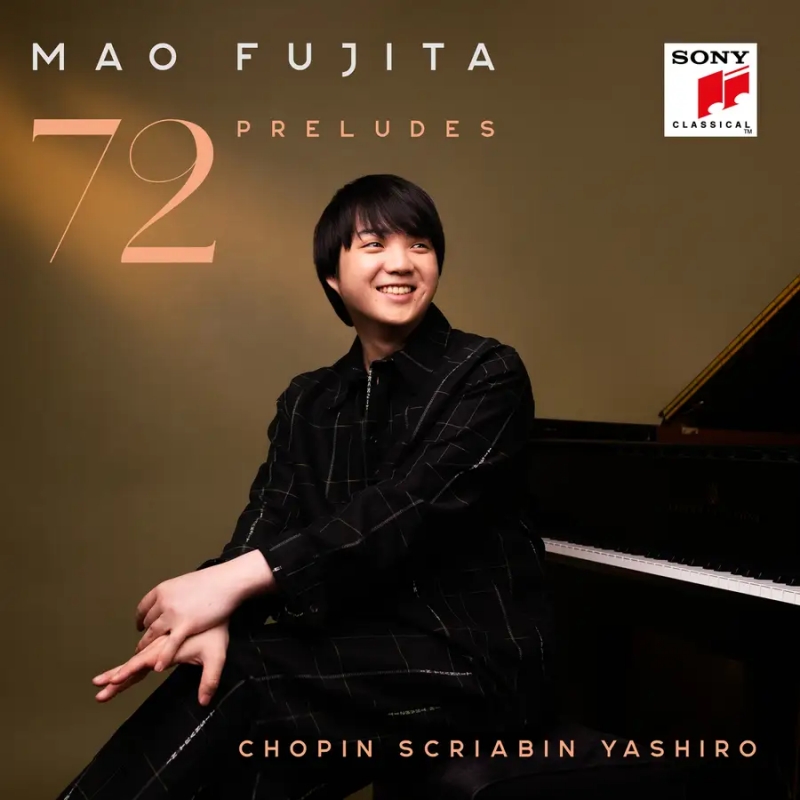
Fujita gained international attention in 2021 when he performed the complete Mozart piano sonatas at the Verbier Festival. Later, he signed with Sony Classical and recorded the full set, surprising listeners with his refined touch and dynamic contrasts. In late 2024, he released another album, 72 Preludes, featuring 24 preludes each by Chopin, Scriabin, and Japanese composer Akio Yashiro. This album reflects Fujita's connection to both Japanese and European cultures and highlights the evolution of the piano prelude from the Romantic era to the 20th century.
Chopin's 24 Preludes inspired many later composers, including Scriabin, who composed his own set in 1884, building on Chopin's harmonic and technical innovations while developing his unique style. Yashiro's 24 Preludes, written in 1945 before he studied in France under Olivier Messiaen and Nadia Boulanger, show strong Impressionist influences but also incorporate elements of Japanese pentatonic scales. Fujita likens his album to a sushi meal—Chopin and Scriabin serve as the fundamental fish and rice, while Yashiro is the wasabi, adding a distinctive yet essential flavor.
Fujita's interpretation of Chopin leans towards introspection, prioritizing subtlety over dramatic intensity, as seen in the 16th prelude. His Scriabin performances evoke dreamlike atmospheres and rich tonal colors, reminiscent of Pletnev's influence. Meanwhile, Yashiro's works, with their impressionistic textures and Japanese sensibilities, showcase Fujita's refined control of tone and touch. The 18th prelude, which mimics the sound of the traditional Japanese koto, is particularly striking.
Fujita distinguishes himself among young pianists with his unique artistic voice. While many performers focus on social media presence, he chooses a different path. Since 2022, he has been writing a column, Traveling from the Fingertips (指先から旅をする), for Bungei Shunju Online, where he shares personal reflections on music and life. These essays, written with warmth and sincerity, offer readers an intimate glimpse into his artistic journey. His reserved yet deeply expressive nature makes him stand out in a world where many artists seek attention, earning him admiration from audiences worldwide.
*This English version is a concise summary of the original Chinese article.*
CHOPIN 24 Preludes, op. 28
SCRIABIN 24 Preludes, op. 11
YASHIRO 24 Preludes
Mao Fujita (piano)
December 2023 & April 2024, Berlin, b-sharp




發表留言