德國北部的漢堡(Hamburg)是一座歷史悠久的港口城市,因人口流動而促成豐富的文化交流。早在一六七八年,這裡便誕生世界上第一座公共歌劇院——鵝市場歌劇院(Oper am Gänsemarkt),韓德爾(George Frideric Handel)與泰勒曼(Georg Philipp Telemann)等大師的作品都曾經在此上演。聖米迦勒教堂(Hauptkirche Sankt Michaelis)是漢堡的宗教、音樂與藝術中心,從教父泰勒曼手中接下漢堡市音樂總監(Kapellmeister)的C. P. E. 巴赫(Carl Philipp Emanuel Bach)就安葬在那裡。漢堡不僅是布拉姆斯的故鄉,更是孕育漢堡愛樂的搖籃。
沒沒無聞的老布拉姆斯起初只能在啤酒園和舞廳演奏,直到一八五三年成為漢堡市立劇院低音提琴手,並在一八六四年到七○年轉往愛樂樂團。此時剛成年的布拉姆斯為了探尋進入音樂圈的門徑,離開漢堡前往杜塞爾道夫(Düsseldorf)拜訪舒曼(Robert Schumann),展開與舒曼、克拉拉(Clara Schumann)之間的傳奇藝術情誼。後來布拉姆斯定居維也納,曾經回到漢堡申請愛樂樂團指揮職位,但是未獲青睞。布拉姆斯雖然與樂團失之交臂,但樂團日後卻成為布拉姆斯音樂的強力代言者。從一八七○年代末期起,愛樂樂團多次演奏布拉姆斯的交響曲與協奏曲,例如:克拉拉在一八八七年與指揮德索夫(Felix Otto Dessoff)合作第二號鋼琴協奏曲。
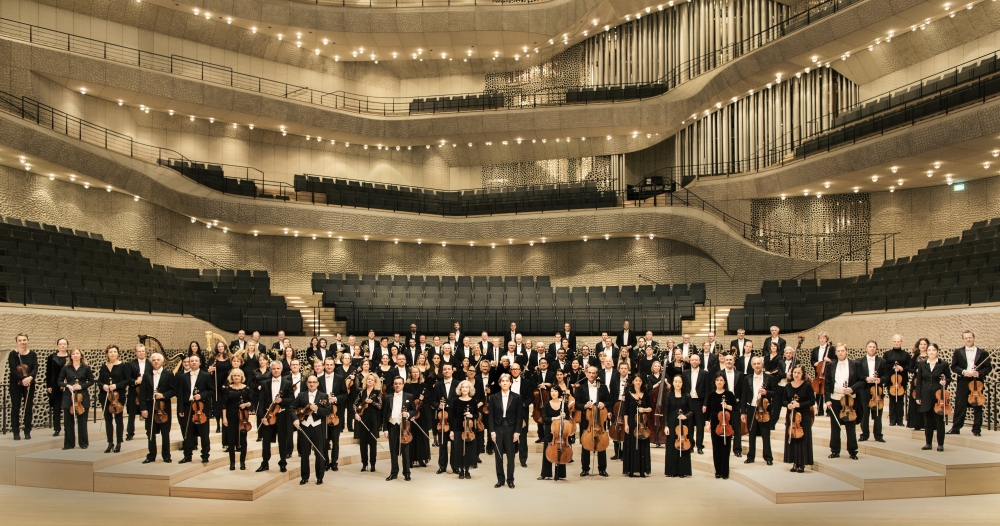
在為期三週的開幕節慶活動中,身為易北愛樂廳駐廳樂團之一,漢堡愛樂特別委託作曲家耶爾格‧韋德曼(Jörg Widmann)創作清唱劇《方舟》(Arche)。因為外型,耶爾格‧韋德曼把易北愛樂廳比喻為方舟,作品融合來自《聖經》、宗教彌撒、尼采(Friedrich Wilhelm Nietzsche)、席勒(Johann Christoph Friedrich von Schiller)等多位作家的文本,並以多樣化的音樂語言表達,象徵著對未來的承諾、對創新精神的支持,以及對傳統再詮釋的信念,同時也展現對未來音樂世界的想像與期待。
從布拉姆斯的故鄉到易北愛樂廳,漢堡愛樂跨越兩個世紀,仍能讓傳統與創新並存。長野健在二○二五年以布拉姆斯第四號交響曲告別樂團,並與團隊展開「畢業旅行」後,新任首席指揮將由以色列指揮家兼作曲家韋爾伯(Omer Meir Wellber)接棒。當長野健的布拉姆斯餘音未散,韋爾伯將如何帶領漢堡愛樂航向新海域?這支與布拉姆斯擦肩而過的樂團,如何在兩個世紀後,成為傳統與現代的橋樑?答案或許藏在長野健留下的那句話中:「漢堡的音樂是跨接時光的橋樑。」(Musik in Hamburg ist wie eine Brücke, die Zeit und Raum verbindet)
Hamburg, in northern Germany, is a historic port city shaped by centuries of cultural exchange due to its dynamic population movements. As early as 1678, it became home to the world’s first public opera house—the Oper am Gänsemarkt—where works by masters like George Frideric Handel and Georg Philipp Telemann were once performed. St. Michael’s Church (Hauptkirche Sankt Michaelis), the city’s religious, musical, and artistic center, is where Carl Philipp Emanuel Bach, who succeeded Telemann as Hamburg’s Kapellmeister, now rests. Hamburg is not only the birthplace of Johannes Brahms—it also laid the foundation for the Hamburg Philharmonic.
By the mid-19th century, in an old apartment near St. Michael’s Church in the Gängeviertel district by the Elbe River, a ten-year-old Brahms practiced piano on a borrowed, battered instrument, with the sounds of ship horns, sailors’ calls, and market noise drifting in through the window. His father, a versatile musician, had come to this bustling city at age twenty to seek musical opportunities. Though the Oper am Gänsemarkt had already declined, the city opened the Hamburg City Theater (Hamburger Stadttheater) in 1827. The following year, local citizens, merchants, and music lovers founded the Philharmonic Society (Philharmonische Gesellschaft). Its Philharmonic Orchestra and the theater ensemble became twin pillars of Hamburg’s dramatic and symphonic life.
Composers like Gustav Mahler and Pyotr Tchaikovsky later conducted the Philharmonic Orchestra themselves, premiering their Fifth Symphonies in Hamburg—proof of the orchestra’s standing in Europe’s musical world.
The elder Brahms, initially unknown, played in beer halls and dance venues. In 1853, he joined the Hamburg City Theater as a double bassist, and from 1864 to 1870, he moved to the Philharmonic Orchestra. As a young man seeking entry into the musical world, Brahms left Hamburg to visit Robert Schumann in Düsseldorf—beginning his legendary friendship with Robert and Clara Schumann. Though he later settled in Vienna, Brahms returned to Hamburg to apply for the Philharmonic’s conductor post but was not selected. Despite this missed opportunity, the orchestra became a strong advocate for his music. From the late 1870s, it regularly performed Brahms’ symphonies and concertos—for instance, Clara Schumann collaborated with conductor Felix Otto Dessoff on Brahms’ Piano Concerto No. 2 in 1887.
In 1934, the Hamburg City Theater Orchestra and the Philharmonic Orchestra merged to become the Philharmonisches Staatsorchester Hamburg (Hamburg Philharmonic State Orchestra), resident ensemble of the newly renamed Hamburg State Opera (Hamburgische Staatsoper), while continuing regular symphonic concerts.
Under its first chief conductor Eugen Jochum, the new Hamburg Philharmonic navigated wartime and reconstruction. His 1949 recording of Bruckner’s Symphony No. 8 remains a landmark of early postwar symphonic interpretation. Despite being mono, the recording reveals striking dynamic range and clarity—a benchmark in early Bruckner discography. In the 1960s, Wolfgang Sawallisch raised the orchestra’s profile through German repertoire and international tours. Hans Zender introduced avant-garde works by Luigi Nono and Mauricio Kagel. Gerd Albrecht championed contemporary opera, while Ingo Metzmacher’s vision embraced both old and new: he featured atonal 12-tone works by Berg and Henze alongside Shostakovich, Hanns Eisler, and Kurt Weill, emphasizing innovation grounded in tradition.
Kent Nagano began his tenure in 2015 and led the orchestra for ten years. He introduced interdisciplinary projects like “Music and Science” and emphasized chamber and experimental formats. Before the Elbphilharmonie’s opening, the Philharmonic performed at the Hamburg State Opera and the neo-Baroque Laeiszhalle. On January 11, 2017, the Elbphilharmonie opened on a former warehouse site in HafenCity, near St. Michael’s Church. This boldly designed venue fused Hamburg’s centuries-old musical legacy with 21st-century ambition. As part of its three-week inaugural celebration, the Hamburg Philharmonic—now one of the Elbphilharmonie’s resident ensembles—commissioned Jörg Widmann to compose the oratorio Arche. Inspired by the building’s shape, Widmann likened it to an ark. The work incorporates texts from the Bible, the Mass, Nietzsche, and Schiller, expressed through diverse musical idioms. It embodies a vision of the future, support for innovation, a commitment to reinterpreting tradition, and an imaginative outlook on the world to come.
Spanning two centuries, the Hamburg Philharmonic continues to reconcile tradition and modernity. In 2025, Kent Nagano bade farewell with Brahms’ Symphony No. 4 and embarked on a symbolic “graduation tour” with the ensemble. He was succeeded by Israeli conductor-composer Omer Meir Wellber. As the echo of Nagano’s Brahms still lingers, a new chapter begins. What direction will Wellber steer the orchestra toward? How will this ensemble, once passed over by Brahms, now serve as a bridge between heritage and the contemporary world? Perhaps the answer lies in Nagano’s own words:
“Musik in Hamburg ist wie eine Brücke, die Zeit und Raum verbindet.” “Music in Hamburg is like a bridge connecting time and space.”




發表留言