簡潔、直白,卻串起全世界的人心:卡爾‧簡金斯《武裝的人》二十五週年
  二○○○年四月,威爾斯作曲家卡爾‧簡金斯(Karl Jenkins)在倫敦皇家亞伯特廳(Royal Albert Hall)親自指揮新作《武裝的人:和平彌撒》(The Armed Man: A Mass for Peace)首演。當時卡爾‧簡金斯以獨特自創的似拉丁語人聲,融合世界音樂元素、宏大合唱和管弦樂編制演出的「阿迪瑪斯」(Adiemus) 系列音樂紅遍全球,也為許多廣告、電影和電視節目創作大量音樂。《武裝的人:和平彌撒》是卡爾‧簡金斯在古典音樂領域中,第一部以傳統大型合唱作品形式獲得空前巨大成功,並把他推向全球主流古典樂壇的作品。它的旋律平易簡明,讓人朗朗上口,結構明晰,卻有著強烈的文化與歷史張力。它是一部彌撒,卻同時揉合了伊斯蘭、印度、日本、基督教與文學詩句等元素。卡爾‧簡金斯形容這部作品時說得坦率:「我只是想寫一部能讓人記住旋律的作品,一首能讓不同背景的人一起演唱的音樂。」二十五年來,全球各地已經有過三千個合唱團演出過這部作品,成為當代最受歡迎的合唱作品之一。

  《武裝的人:和平彌撒》的誕生,始於英國皇家軍械博物館(Royal Armouries)的一個問題:面對新千禧年的到來,我們該如何以音樂紀念過去,也提醒未來?根據歷史記載,「武裝的人」(L'homme armé)是流行於十五世紀勃艮第尼德蘭(Burgundian Netherlands)(大約是現在的比利時、荷蘭、盧森堡和法國北部部分地區)和法國地區的法語世俗歌曲,簡單的歌詞只陳述一個重點:「應當畏懼武裝之人」,反出中世紀晚期軍事與社會氣氛。後來這段旋律被許多中世紀作曲家,像是杜飛(Guillaum Dufay)、奧克岡(Johannes Ockeghem)、帕勒斯提那(Giovanni Pierluigi da Palestrina)⋯⋯運用在自己的作品裡。現代除了彼得‧麥斯威爾‧戴維斯(Peter Maxwell Davies)、美國作曲家熱夫斯基(Frederic Rzewski)等人,加拿大鋼琴家阿默蘭(Marc-André Hamelin)也受克萊本國際鋼琴大賽主辦單位委託,為鋼琴創作《武裝的人觸技曲》(Toccata on L'Homme Armé)。

  英國皇家軍械博物館館長蓋伊‧威爾森(Guy Wilson)提出:「如果十五世紀的〈武裝的人〉曾經啟發過數十位文藝復興作曲家寫下彌撒曲,那麼我們是否也可以用這首歌為起點,寫一部屬於現代的和平彌撒?」卡爾‧簡金斯接下委託,與蓋伊‧威爾森一同選定文本,內容從傳統的拉丁彌撒到伊斯蘭祈禱詞,從聖經詩篇到印度史詩《摩訶婆羅多》,再到二戰後廣島詩人峠三吉與英國詩人丁尼生(Alfred Tennyson)的作品。

  「我想要創造一部能夠擁抱全人類的作品,而非僅限於單一信仰或文化。」卡爾‧簡金斯曾這樣闡述他的創作理念。因此,《武裝的人:和平彌撒》雖然以傳統的天主教「彌撒」為框架,卻大膽地融合了來自世界各地的文本,這使得《武裝的人:和平彌撒》成為一部真正的「世界彌撒」,用音樂搭建起不同文化間溝通的橋樑,讓多元文化與信仰指向一件事,那就是和平。

  全曲共十三個樂章,以十五世紀民謠〈武裝的人〉開場,鋪陳出軍隊行進的鼓聲與武裝的準備。接著是穆斯林的祈禱聲、基督徒的呼求、士兵的戰前誓言、戰場的血與火,以及戰後的沉默與哀悼。最後在〈迎主曲〉(Benedictus)和〈和平勝於戰爭〉(Better is Peace)中,慢慢導向一個最質樸的結尾:「上帝將擦去他們一切的眼淚,不再有死亡,不再有悲傷與痛苦。」

  這並不是一部尋常的彌撒。它沒有單一敘事主體,也不是為某一宗教或國族發聲。它更像是一部「世界公民合唱的反戰記事」,每一段文字與旋律,都試圖引導聽者回望歷史、直視暴力、想像和平。

  《武裝的人:和平彌撒》中最為人熟知的樂章是〈迎主曲〉。它以一段大提琴主題開場,旋律簡單卻富有張力,與合唱的層層堆疊交織出動人的弦外之音。卡爾‧簡金斯承認,這段旋律其實來自他成名系列「阿迪瑪斯」〈永恆輪結〉(The Eternal Knot)的風格轉化;〈歡呼歌〉(Sanctus)則延續自「阿迪瑪斯」〈靈魂之旅〉(Immrama)。卡爾‧簡金斯說:「我在寫廣告配樂時學會了一件事——音樂要能立刻觸動人。後來我把這樣的語彙放進古典形式裡,像是彌撒、安魂曲、聖母悼歌,結果發現它能接觸到比想像中更多的人。

  當年這部作品發行時正值911前夕。儘管出發點是紀念科索沃戰爭,但隨著歷史演進,《武裝的人:和平彌撒》被越來越多組織在不同脈絡中引用——從美國911十週年追思音樂會,到世界和平日、聯合國成立紀念、甚至地區性合唱節。

  卡爾‧簡金斯回憶,曾有一位北愛爾蘭觀眾上前告訴他:「我的母親在去年聖誕節遇害。我原本以為我再也無法接受任何音樂。但這首彌撒,讓我願意再次坐下來聽完一場音樂會。」另一位罹癌合唱團員則在病逝前一週,特地請卡爾‧簡金斯通話致意,因為這是他最後一次參與合唱,而《武裝的人:和平彌撒》正是他最喜愛的曲目。對卡爾‧簡金斯來說,這些都是他創作時無法預期的結果。「我不是為了要改變世界才寫它的,只是希望它能成為一種連結。」

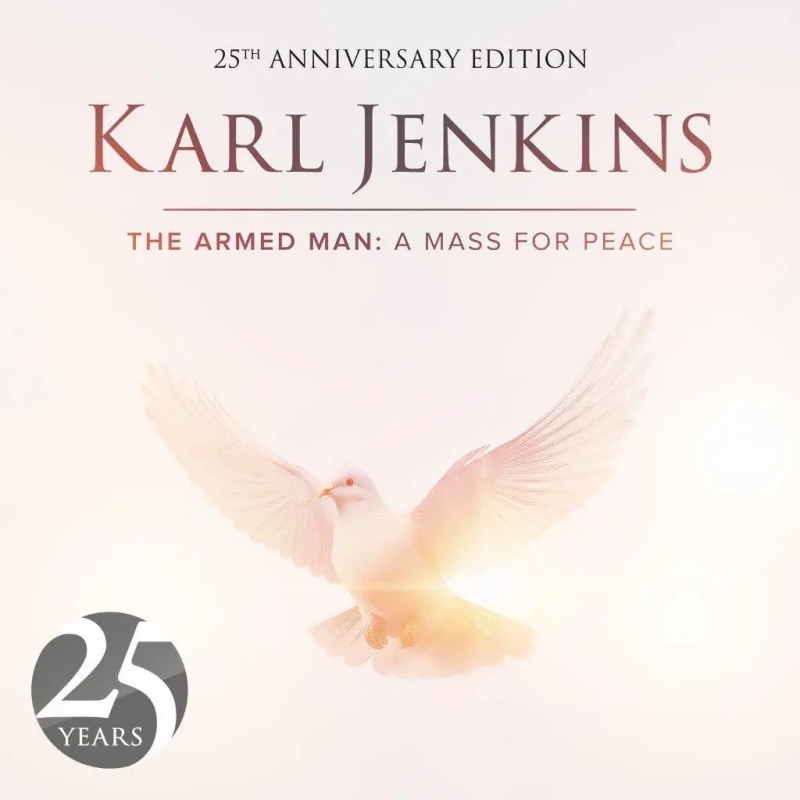
  二○二五年,《武裝的人:和平彌撒》迎來二十五週年。笛卡唱片公司特別重新發行當年卡爾‧簡金斯親自指揮的錄音。這張專輯不僅封面設計煥然一新,還加入了博物館館長蓋伊‧威爾森回顧作品創作始末的序言、大提琴家朱利安‧洛伊韋伯(Julian Lloyd Webber)對首演的回憶、以及卡爾‧簡金斯本人的註記與感言。同時,卡爾‧簡金斯本人也在倫敦、蘭戈倫(Llangollen)等城市巡迴指揮《武裝的人:和平彌撒》的紀念音樂會,演出陣容包含皇家愛樂樂團與克勞奇恩德節日合唱團,並搭配他其他代表作如《帕拉迪歐》(Palladio)與《交響阿迪瑪斯》(Symphonic Adiemus)。

  《武裝的人:和平彌撒》不是一部標新立異的實驗之作,也不是嚴格意義上的宗教音樂。它的結構簡潔,語言直白,卻能在不同年代、不同國家、不同宗教的人群中引起共鳴。卡爾‧簡金斯曾說:「我不相信靈感,我只相信每天坐下來寫作,然後去蕪存菁。」這樣樸實的創作態度,也許正是這首「和平彌撒」能歷久不衰的原因。它不是為了取悅某一群人而寫,而是希望讓更多人參與,理解,記得:我們都曾經為和平而歌唱。

# The Armed Man: A Mass for Peace – 25 Years of Resonance

In April 2000, Welsh composer Karl Jenkins conducted the premiere of his new work, "The Armed Man: A Mass for Peace", at London's Royal Albert Hall. At the time, Jenkins was already globally renowned for his "Adiemus" series, which featured a unique, pseudo-Latin vocal style blended with world music elements, grand choral arrangements, and orchestral scoring. His music was widely used in advertisements, films, and television programs. "The Armed Man: A Mass for Peace" marked Jenkins' first major success in the classical music realm as a large-scale choral work, propelling him into the mainstream of the global classical music scene. Its melodies are simple and memorable, its structure clear, yet it carries profound cultural and historical weight. While rooted in the form of a mass, it boldly incorporates elements from Islam, Hinduism, Japan, Christianity, and literary poetry. Jenkins described the work candidly: "I just wanted to write a piece with melodies people could remember, music that people from different backgrounds could sing together." Over the past 25 years, more than 3,000 choirs worldwide have performed this work, making it one of the most beloved choral compositions of our time.

The creation of "The Armed Man: A Mass for Peace" began with a question posed by the Royal Armouries, Britain's oldest national museum: as we entered the new millennium, how could music commemorate the past while inspiring hope for the future? Historically, "L'homme armé" ("The Armed Man") was a secular French song popular in the 15th-century Burgundian Netherlands (roughly modern-day Belgium, Netherlands, Luxembourg, and parts of northern France) and France. Its simple lyrics conveyed a single message: "The armed man must be feared", reflecting the militaristic and social atmosphere of the late Middle Ages. This melody was later used by numerous Renaissance composers, such as Guillaume Dufay, Johannes Ockeghem, and Giovanni Pierluigi da Palestrina, in their own works. In modern times, composers like Peter Maxwell Davies, Frederic Rzewski, and Canadian pianist Marc-André Hamelin—who was commissioned by the Van Cliburn International Piano Competition to write a "Toccata on L'Homme Armé" for piano—have also drawn inspiration from it.

Guy Wilson, Master of the Royal Armouries, proposed an idea: "If the 15th-century ‘L'homme armé' inspired dozens of Renaissance composers to write masses, could we use this song as a starting point to create a modern mass for peace?" Karl Jenkins accepted the commission and collaborated with Wilson to select texts, ranging from traditional Latin mass settings to Islamic calls to prayer, from Biblical Psalms to the Indian epic "Mahabharata", and from the post-World War II poetry of Hiroshima survivor Toge Sankichi to the works of British poet Alfred Tennyson.

"I wanted to create a work that could embrace all of humanity, not just one faith or culture", Jenkins once explained. Thus, while "The Armed Man: A Mass for Peace" is framed within the structure of a traditional Catholic mass, it boldly incorporates texts from diverse global traditions. This makes it a true "world mass", using music to build a bridge for communication across cultures and faiths, all pointing toward one shared goal: peace.

The work consists of 13 movements, opening with the 15th-century folk song "L'homme armé", which sets the scene with the sound of marching drums and preparations for battle. This is followed by a Muslim call to prayer, Christian pleas for salvation, soldiers' pre-battle oaths, the chaos of bloodshed and fire on the battlefield, and the silence and mourning that follow war. The work culminates in the "Benedictus" and "Better Is Peace", leading to a simple yet profound conclusion: "God shall wipe away all tears from their eyes; and there shall be no more death, neither sorrow, nor crying."

This is no ordinary mass. It lacks a single narrative voice and does not speak for any one religion or nation. Instead, it feels like a "global citizens' choral chronicle against war", with each text and melody guiding listeners to reflect on history, confront violence, and imagine peace.

The most well-known movement of "The Armed Man" is the "Benedictus". It begins with a cello theme, simple yet full of tension, interwoven with layered choral writing that creates a deeply moving resonance. Jenkins has admitted that this melody was adapted from the style of "The Eternal Knot" from his "Adiemus" series, while the "Sanctus" draws on "Immrama" from the same series. "I learned one thing from writing music for advertisements", Jenkins said, "music has to touch people immediately. Later, I brought that language into classical forms like masses, requiems, and stabat maters, and found it could reach more people than I ever imagined."

When the work was released, it was on the eve of the September 11 attacks. Though originally dedicated to the victims of the Kosovo conflict, as history unfolded, "The Armed Man: A Mass for Peace" was increasingly adopted by organizations in various contexts—from the 10th anniversary memorial of 9/11 in the United States to World Peace Day, United Nations commemorations, and regional choral festivals.

Jenkins recalls a moment when a woman from Northern Ireland approached him after a performance: "My mother was murdered last Christmas. I thought I could never listen to music again. But this mass made me willing to sit through a concert." Another choir member with terminal cancer, just a week before passing away, asked to speak with Jenkins because "The Armed Man" was his favorite piece, and it was his final performance. For Jenkins, these were outcomes he could never have anticipated. "I didn't write it to change the world", he said, "I just hoped it could be a connection."

In 2025, "The Armed Man: A Mass for Peace" celebrates its 25th anniversary. Decca Records has reissued the original recording, conducted by Jenkins himself. This edition features a redesigned cover, a foreword by Guy Wilson reflecting on the work's creation, recollections of the premiere by cellist Julian Lloyd Webber, and notes and reflections from Jenkins himself. Additionally, Jenkins is conducting anniversary concerts in cities like London and Llangollen, featuring the Royal Philharmonic Orchestra and Crouch End Festival Chorus, alongside other signature works such as "Palladio" and "Symphonic Adiemus".

"The Armed Man: A Mass for Peace" is not an avant-garde experiment, nor is it strictly religious music. Its structure is straightforward, its language direct, yet it resonates across generations, nations, and faiths. Jenkins once said: "I don't believe in inspiration. I believe in sitting down every day to write, then keeping the good and discarding the bad." This grounded approach to composition may be why this "mass for peace" has endured. It was not written to please a specific audience but to invite more people to participate, understand, and remember: we have all sung for peace.
KARL JENKINS The Armed Man - A Mass For Peace
Guy Johnston (cello), Mohammed Gad (vocals), Jody K. Jenkins (percussion), Nicholas Merryweather (baritone), Lisa Spurgeon (soprano), Neil Percy (percussion), Rachel Lloyd (mezzo-soprano), Paul Beniston (trumpet), Tristan Hambleton (treble), Susie Parkes (soprano), Elizabeth Witts (soprano), Philip Shakesby (bass), Dave Hassell (percussion), London Philharmonic Orchestra, National Youth Choir of Great Britain, The National Youth Choir of Great Britain, Karl Jenkins
January 2001, Air Studios



發表留言