
因歷史因緣促成,因音樂理念聚合:馬可夫談「拉赫曼尼諾夫國際管弦樂團」的誕生
  要談拉赫曼尼諾夫國際管弦樂團(Rachmaninoff International Orchestra, RIO),必須先從當年俄羅斯國家管弦樂團(Russian National Orchestra, RNO)成立的故事說起。

  一九九○年春天,也就是波羅的海三小國出現脫離蘇聯聲浪、戈巴契夫(Mikhail Gorbachev)當選蘇聯總統,蘇聯國運正值風雨飄搖的時候,幾名音樂家拜訪三十三歲的普雷特涅夫(Mikhail Pletnev),希望他能站出來,號召對留在祖國工作還沒有失望的音樂家,共同組成一個新的、獨立於國家體制之外的樂團。RIO經理馬可夫(Sergey Markov)回憶:「當時不只是經濟崩潰,道德與精神失重。過去被認為世界強大的國家,一夕之間破產,大家都失去方向。音樂家只懂音樂,不懂政治與經濟。那時唯一的期望,無非就是仍然有繼續演奏音樂的機會。」

  普雷特涅夫一開始以時機不對為由拒絕,但是「讓一個在俄羅斯改革時期誕生的樂團,復興俄羅斯精神與文化」的夢想終於讓他點頭。音樂家們相信,「只要我們維持演奏得比別人好,生活也就有機會變得更好」。於是一九九○年十一月十六日,「俄羅斯國家管弦樂團」正式誕生。主修經濟管理,原本在俄羅斯駐墨西哥大使館負責文化事務的外交官馬可夫也在一九九四年辭去公職,前往RNO擔任經理。

  經過三十年,RNO有了自己耀眼的歷史,不但有穩固的世界口碑,從二○○七年也正式從俄羅斯文化部獲得補助。然而世事遽變,二○二二年二月底,俄羅斯與烏克蘭之間的衝突升級為全面戰爭。有人積極投入支持政府,也有許多人無法認同這場戰爭。「這是一場斯拉夫世界的內戰,俄羅斯社會出現分裂:有人支持普京(Vladimir Putin),有人痛罵這是瘋狂;烏克蘭也有人主張『我們要為民族感到驕傲』,因而排斥原本視同一體的俄羅斯文化。」俄國政府要求所有接受政府補助的文化機構公開表態支持當局,RNO自然也不例外。然而,音樂總監普雷特涅夫不願發表音樂以外的政治言論,也不願讓樂團成為宣傳工具。最後,普雷特涅夫選擇永遠離開俄羅斯並且入籍瑞士,從此「RNO失去普雷特涅夫,普雷特涅夫也不再有樂團」。

  不止普雷特涅夫,許多音樂家也面臨生活上的問題。以RNO非常優秀的前小號首席拉弗里克(Vladislav Lavrik)為例,他出生於烏克蘭札波羅熱(Zaporizhzhia),長期在莫斯科求學與工作。戰爭爆發後,持烏克蘭護照的拉弗里克無法繼續留在俄國,也難以回到烏克蘭,最後只好以難民簽證定居德國。馬可夫語氣沉重地說:「像拉弗里克這樣的人,才是真正的受害者。」這樣的情況並非個案。許多因此失去工作的音樂家,只能暫時接受次等編制,甚至兼職維生。「當問題與需求同時出現,新的機會就會誕生。」馬可夫說。於是,一個新構想逐漸成形,也就是建立一支跨越國界、能容納不同背景樂手的樂團,讓散落各地的音樂家能再度聚首,發揮他們的音樂長才。
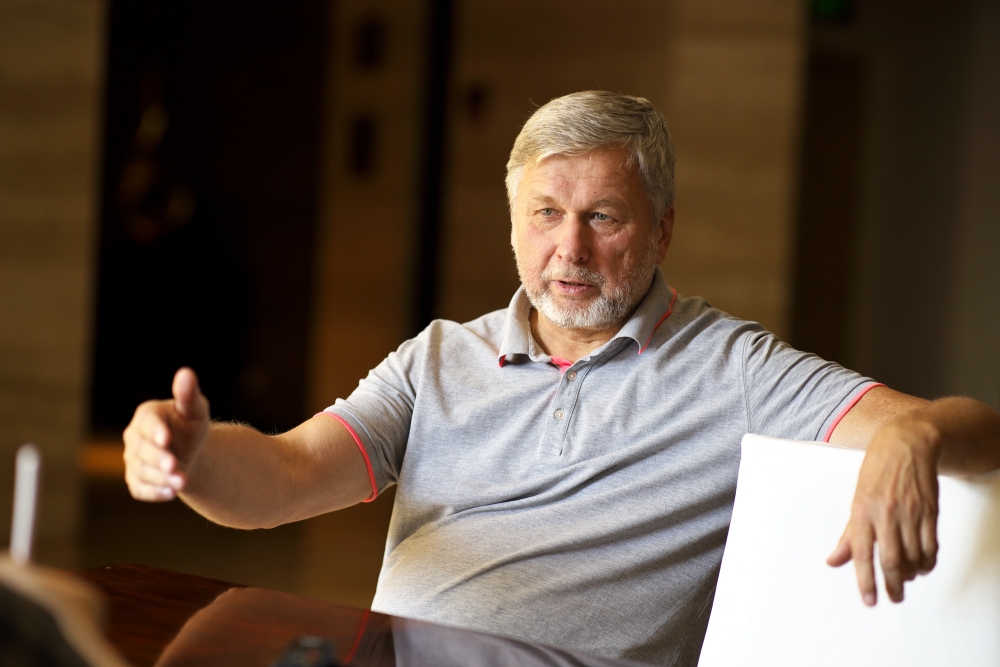
  現在很難追究成立RIO的原始構想出自何人。但是某一天,曾經長時間協助RNO處理法律問題的美國律師沃克(Richard Walker),和二○○六年離開RNO的馬可夫聯絡,問他「要不要再做一次三十年前幹過的事?」,馬可夫欣然接受這個提議,兩人在二○二二年五月前往杜拜與普雷特涅夫會面。

  「大師,您需要一支樂團,對嗎?」馬可夫問。「是的。」普雷特涅夫回答。「請您再一次親自號召音樂家吧,因為他們尊敬您。只要您一開口,他們一定就會有回應。」馬可夫說。普雷特涅夫點頭同意。新樂團的誕生,就此拍板。

  馬可夫和沃克決定沿用一九九○年代到二○○六年運營RNO的「俄羅斯藝術基金會」(Russian Arts Foundation)架構,但是在「不想做一支流亡的俄國樂團,而是建立真正國際樂團」的理念下,重新命名為「全球藝術基金會」(The Foundation for Global Arts)。

  至於新樂團的名稱,普雷特涅夫提議用「拉赫曼尼諾夫」,因為拉赫曼尼諾夫當年處境與現今流亡音樂家相似,都是因為政治因素被迫離鄉。沃克則從尋求贊助的現實面考量,建議名稱能和RNO相似。最後決定採用RIO,也就是拉赫曼尼諾夫國際管弦樂團。「RIO要成為一個真正的國際樂團。有俄羅斯人,有烏克蘭人,也有歐洲各國的音樂家。」馬可夫稱:「這是以音樂為核心的共同體」。

  沒有經紀公司願意邀請一個還不存在的樂團,所以RIO第一個實際行動並非演出,而是錄音。二○○二年八月,馬可夫先安排RIO在布拉提斯拉瓦(Bratislava)錄音。除了二十多名來自RNO的樂手,普雷特涅夫也列出一份烏克蘭音樂家邀請名單,包括敖德薩歌劇院首席。不過,名單上的烏克蘭音樂家全部拒絕。他們對俄國和這場戰爭的怨恨太深。烏克蘭社會的主流感受是:「俄羅斯人殺害我們的兄弟姊妹,我們不想與俄羅斯人有任何往來。」政府的官方立場也是拒絕俄羅斯音樂、拒絕俄羅斯音樂家。即使是曾經在莫斯科音樂學院就讀,與俄羅斯樂手交好的烏克蘭音樂家也擔心遭到政府懲處,讓樂團幾乎不可能直接從烏克蘭招募樂手。

  RIO後來仍然找到折衷方案,那就是邀請已經旅居歐洲的烏克蘭音樂家。這些人雖然同樣感受到戰爭的痛楚,但是他們的態度比較客觀理性,也不受烏克蘭政府約束。即使如此,馬可夫坦言,俄羅斯與烏克蘭樂手一開始仍帶著戒心與敵意看待對方。但是「當音樂響起,他們就忘記了那些事。因為音樂在一瞬間把他們重新連結起來。」

  在和瑞士樂壇關係深厚的老友托比亞斯‧李希特(Tobias Richter)協助下,樂團首場正式音樂會是二○二三年十月,地點在瑞士羅勒(Rolle)全新的羅西音樂廳(Rosey Concert Hall),對方希望普雷特涅夫連續兩晚演出五首拉赫曼尼諾夫為鋼琴與樂團所寫的作品。演出由 EuroArts 錄影,Medici TV 播出。普雷特涅夫提議邀請從RNO時期就合作愉快的指揮長野健(Kent Nagano)。長野健答應了,同時帶來一項錄音計畫:烏茲別克裔德國作曲家薩季科娃(Aziza Sadikova)的作品。長野健以這張錄音和樂團相互了解,事後他形容這個樂章有「核反應爐般的能量」與「野馬般的衝勁」,給他一種幾乎「幾乎失控卻又能駕馭」的昂揚快感。

  由於長野健當時是漢堡國立歌劇院(Hamburgische Staatsoper)與漢堡愛樂(Philharmonisches Staatsorchester Hamburg)首席指揮,十月份正是歌劇院最忙碌的時候。為了RIO創團音樂會,已經七十二歲的長野健甚至願意「每天早上在漢堡排練,下午飛到日內瓦。不睡覺也沒關係!」 最後是RIO與漢堡國立歌劇院協調變更排練時間,在長野健不得不缺席排練的時候,由同時也是指揮家的拉弗里克擔任助理指揮協助排練。

  馬可夫坦言,RIO雖然在短時間內完成錄音與首演,卻仍然是一支「剛出生的樂團」,運作上面臨許多現實難題,最大的挑戰是團員流動過高。由於多數音樂家分散在歐洲各地,RIO的每次錄音與巡演都必須重新召集人員。馬可夫苦笑著補充:「普雷特涅夫曾對我說,『我們剛錄完一張專輯,下一次卻有一半的人都換了,我又得重新認識大家。』」這讓樂團在音色一致與默契培養上,必須付出更多時間。

  第二個問題是俄羅斯本土樂手的出境限制。馬可夫指出,RNO管理階層不願意團員參加RIO,因此「RNO的團員雖然想參與,但是他們多半拿不到許可。」因此,RNO樂手實際上能夠前來參與的只有少數幾位。根據馬可夫的統計,目前俄羅斯樂手約十七人,其中僅三人仍是RNO現任團員,其餘多是已經離開俄國或自由音樂工作者。烏克蘭樂手的情況更複雜。由於戰爭與政治禁令,烏克蘭境內音樂家幾乎無法受邀合作。目前常駐的烏克蘭成員約八人,多數來自德國、波蘭與奧地利等地。兩國樂手加上若干歐洲音樂家共同構成現有編制,呈現一種真正跨國的混合樣貌。

  經費與「沒有基地」的現實也是難題。馬可夫直言:「要維持固定排練場館與儲藏設備的費用太高。」目前樂團依靠「全球藝術基金會」的資金,以及各地主辦單位提供的排練場所運作。日常透過線上工具與各地成員聯繫溝通,遠端討論曲目和演奏事宜,直到演出前幾天才集中排練。「十年前無法想像這樣的做法,現在的科技卻讓它成為現實。」這種「無基地」模式雖然靈活,卻也帶來後勤壓力。馬可夫舉例說,二○二五年十月的中國巡演時正好碰上長假,所有航班客滿、票價昂貴,導致樂手分批抵達,原本三天的合排縮成一天半。「法國號首席甚至在飛機上感冒,第一場就抱病上台。」

  儘管困難重重,RIO仍持續吸引世界各地音樂家加入。英國、法國、德國的演奏家陸續成為固定合作成員,例如來自倫敦的首席大提琴、凡爾賽管弦樂團的法國號首席,以及受過美國教育訓練的德國長號手等。馬可夫強調,這支樂團「不是由地理位置構成,而是因理念而凝聚」。他說:「有人從巴西、智利飛很遠而來,只因為想和普雷特涅夫共事。這樣的吸引力,比一份固定聘書更強。」目前RIO的團員總數約四十至四十五人,馬可夫形容,樂團仍在成長階段,「永續經營」是堅定的追求:「這只是誕生的陣痛,我們終究會走向穩定。它已經有了生命,不能關掉。像一個孩子,只能讓它慢慢長大。」

  在多年前的訪談裡,馬可夫打趣用「大黃蜂」的故事來形容RNO。這種大黃蜂體形碩大,就身體結構來說,完全不符合飛行法則,然而它卻「因為不知道自己不能飛,所以就飛了起來」。如今這句話可以再次成為RIO的寫照:在一切條件都看似不可能的情況下,他們選擇了「先起飛再說」,也就有了後續無限的可能和希望。

二○二五年RIO系列文章:
- 因歷史因緣促成,因音樂理念聚合:馬可夫談「拉赫曼尼諾夫國際管弦樂團」的誕生
- 沒有家園的樂團:以音樂理念聚合的拉赫曼尼諾夫國際管弦樂團
- 讓音樂成為連結人與人的語言:拉赫曼尼諾夫國際管弦樂團的新樂聲與新關照
- 以音樂聯結分裂的世界:俄烏音樂家在亂世中的長談
To speak of the Rachmaninoff International Orchestra (RIO) is to return first to the origins of the Russian National Orchestra (RNO).

In the spring of 1990 — when the Baltic States were beginning to seek independence, Mikhail Gorbachev had just become President of the Soviet Union, and the entire Soviet order was trembling — several musicians approached thirty-three-year-old Mikhail Pletnev. They asked him to take the initiative and bring together those musicians who still had faith in their country, to form a new orchestra independent of the state system.

Sergey Markov, now General Manager of RIO, recalled:

 “It was not only an economic collapse; it was a loss of moral and spiritual gravity. A country once thought strong and prosperous suddenly went bankrupt, and everyone lost their sense of direction. Musicians knew only music — not politics or economics. The only hope left was to keep on playing.”

At first, Pletnev declined, believing the moment inopportune. Yet the idea of creating, amid Russia’s reforms, an orchestra capable of reviving the Russian spirit and culture finally persuaded him. The musicians held one simple conviction: “If we play better than anyone else, perhaps life itself will also become better.”

Thus, on 16 November 1990, the Russian National Orchestra presented its inaugural concert, marking the birth of the ensemble.

Trained in economics and management, Sergey Markov was then working as a cultural attaché at the Russian Embassy in Mexico. In 1994 he resigned from the diplomatic service and joined the RNO as its manager.

Over three decades the RNO built an illustrious history and a secure reputation. From 2007 it even began to receive official state funding. Yet the world changed.

In February 2022, the conflict between Russia and Ukraine escalated into full-scale war. Some sided fervently with the government; others could not accept it.

 “It was a civil war within the Slavic world,” said Markov. “Russian society became divided — some supported Putin, others called it madness. In Ukraine, nationalism grew intense, and many turned away from what they had once regarded as a shared Russian culture.”

The Russian authorities demanded that all state-supported cultural institutions publicly declare loyalty. The RNO was no exception. But Pletnev refused to make political statements or allow his orchestra to serve as a vehicle for propaganda. In the end, he left Russia permanently and settled in Switzerland.

 “The RNO lost Pletnev, and Pletnev no longer had an orchestra,” said Markov.

Exile and Opportunity

Not only Pletnev but many other musicians were forced into difficult choices. One telling example was Vladislav Lavrik, the RNO’s distinguished former principal trumpet. Born in Zaporizhzhia, Ukraine, he had long studied and worked in Moscow. After the war began, his Ukrainian passport made it impossible to remain in Russia, yet returning home was equally perilous. He eventually resettled in Germany under refugee status.

Markov spoke gravely:

 “People like Lavrik are the true victims.”

Such cases were by no means isolated. Many displaced artists accepted temporary or secondary positions, or took on part-time work to survive.

 “When a problem and a need appear together, an opportunity is born,” said Markov.

And from that opportunity arose a new idea — to create an orchestra without borders, uniting musicians of different backgrounds and nationalities, allowing those scattered across Europe to meet again and share their art.

A New Beginning

It is now difficult to say precisely who first conceived the RIO. One day, however, Markov received a message from Richard Walker, the American lawyer who had long assisted the RNO in legal matters. “Would you like to do again what we did thirty years ago?” he asked.

Markov agreed without hesitation. In May 2022, the two men travelled to Dubai to meet Pletnev.

 “Maestro, you need an orchestra, don’t you?” Markov asked.
 “Yes,” replied Pletnev.
 “Then please, call your musicians once again. They respect you — if you speak, they will respond.”

Pletnev nodded. The decision was made: a new orchestra would be born.

Markov and Walker revived the organisational structure of the 1990s Russian Arts Foundation, but renamed it the Foundation for Global Arts.

 “We didn’t wish to build an orchestra of Russian exiles,” explained Markov. “We wanted to create a truly international ensemble.”

Finding a Name

For the new orchestra’s name, Pletnev suggested Rachmaninoff — because Sergei Rachmaninoff’s own exile mirrored the fate of today’s displaced musicians. Walker, thinking pragmatically about sponsorship, advised choosing a name reminiscent of RNO.

Thus, the final title combined both: Rachmaninoff International Orchestra (RIO).

 “RIO is to be a truly international orchestra,” said Markov. “Russians, Ukrainians, and musicians from all over Europe. A community united by music.”

The First Steps

No agency would invite an orchestra that did not yet exist. RIO’s first project, therefore, was not a concert but a recording.

In August 2022, Markov organised the sessions in Bratislava, joined by over twenty former RNO musicians. Pletnev provided a list of Ukrainian players — among them the concertmaster of the Odessa Opera House — yet all declined.

Their refusal was understandable. The pain and resentment were too deep.

 “Russians are killing our brothers and sisters,” they said. “We want nothing to do with them.”

Even those who had once studied at the Moscow Conservatory feared punishment if they cooperated.

In the end, RIO found a solution: to invite Ukrainian musicians already living in Europe. Though they too suffered from the war’s shadow, they could act more freely and rationally.

 “At first,” Markov admitted, “the Russian and Ukrainian musicians looked at each other with suspicion. But once the music began, they forgot everything. Music, in an instant, brought them together again.”

The Debut in Switzerland

With the help of Swiss impresario Tobias Richter, RIO gave its first concert in October 2023 at the new Rosey Concert Hall in Rolle, near Geneva. The organisers requested that Pletnev perform all five of Rachmaninoff’s works for piano and orchestra over two evenings. The event was filmed by EuroArts and broadcast by Medici TV.

Pletnev proposed inviting Kent Nagano, his long-time colleague from the RNO days. Nagano agreed and brought with him an additional project: the recording of Stradivari, a work by the Uzbek-German composer Aziza Sadikova.

After the sessions, Nagano remarked: “The energy of this orchestra is like a nuclear reactor — or a wild mustang: almost unrestrained, yet still responsive. It gives an intoxicating sense of exhilaration.”

At that time Nagano was Chief Conductor of the Hamburg State Opera and Philharmonic Orchestra — October being its busiest month. Yet, at seventy-two, he insisted on joining the RIO premiere, saying with characteristic humour that he could “rehearse in Hamburg in the morning and fly to Geneva in the afternoon — sleep is optional.”

Finally, a compromise was reached: when Nagano was in Hamburg, Vladislav Lavrik — now also active as a conductor — assisted with rehearsals.

The Realities of a New Orchestra

Although RIO achieved much in a short time, it remained a young ensemble facing very real difficulties. The greatest challenge was the instability of personnel.

 “After one recording,” Markov recalled with a smile, “Pletnev said to me, ‘Next time half of them will be new again — I’ll have to get to know everyone once more.’”

Consistency of tone and ensemble unity demanded extra work.

A second problem was the restriction on Russian musicians travelling abroad. The RNO administration discouraged its players from joining RIO, and few were granted permission. Markov counted seventeen Russian musicians in total, only three still active members of the RNO; the rest had already left Russia or were freelancers.

The situation for Ukrainians was even more complex. Because of the war, musicians inside Ukraine could not collaborate at all. Around eight Ukrainian players, residing in Germany, Poland or Austria, became RIO’s regular members. Together with musicians from various European countries, they formed a truly international ensemble.

Funding and the absence of a permanent base posed further obstacles.

 “Maintaining a rehearsal hall and storage facilities would cost far too much,” Markov explained.

At present, RIO relies on the Foundation for Global Arts and on rehearsal venues provided by organisers. Communication is handled online: parts and recordings are exchanged digitally, and discussions take place remotely until the players gather only a few days before performance.

 “Ten years ago, such a system would have been unimaginable,” said Markov. “Technology has made it possible.”

Flexibility, however, brings its own strains. During the China tour in October 2025, the concerts coincided with the national holiday. Flights were full, fares soared, and musicians had to arrive in groups, reducing three rehearsal days to one and a half. “Our horn principal even caught a cold on the plane and played the first concert ill,” said Markov ruefully.

A Living Organism

Despite all obstacles, RIO continues to attract musicians from around the world. Players from Britain, France and Germany have joined as regular collaborators — the principal cellist from London, the principal horn of the Orchestre de Versailles, a German trombonist trained in the United States, and others.

 “This orchestra is bound not by geography but by shared ideals,” said Markov. “Some fly from Brazil or Chile simply because they wish to work with Pletnev. Such attraction is stronger than any contract.”

Currently numbering between forty and forty-five musicians, the RIO remains in its formative stage.

 “Sustainability is our aim,” Markov said. “These are only the birth pains. The orchestra already has a life of its own — you cannot switch it off. Like a child, it must be allowed to grow.”

The Spirit of the Bumblebee

Years ago, Markov jokingly compared the RNO to a bumblebee: an insect whose body is too heavy and wings too small for flight, and yet it flies.

 “By the laws of aerodynamics, the bumblebee cannot fly. But it does not know that — and so it flies.” ( “По законам аэродинамики шмель летать не может. Но он этого не знает — и летает.”)

Today the same image perfectly fits the RIO. Against all reason, in circumstances that seemed impossible, they chose simply to take off — and, in doing so, discovered new possibilities and hope.

Music as a Bridge

As Markov later reflected:

 “In recent years, the world has seen too many conflicts, even more wars than before. Ordinary people do not want conflict; they want peace. Musicians can only come together and, through music, bring peace, harmony and love.” ( “В последние годы в мире стало очень много конфликтов… Людям нормальным не нужны конфликты, им нужен мир… Музыканты могут только вместе сойтись и через музыку нести мир, гармонию и любовь.”)

Roughly half of the RIO’s musicians speak Russian — some Russian, some Ukrainian — and alongside their colleagues from across Europe, they share the conviction that music can elevate the spirit and awaken the longing for peace.

 “We believe the story of this orchestra, which began three years ago, can help achieve that,” Markov said. “We shall continue our work; please listen and decide whether we are fulfilling our mission.”
В последние годы в мире стало очень много конфликтов, и даже войн стало больше, чем раньше. Сейчас, в последние годы, в мире стало очень много конфликтов. Людям нормальным не нужны конфликты, им нужен мир. Но часто политики разные втягивают страны в войны между собой. А что могут этому противопоставить музыканты?
Они могут только вместе сойтись и через музыку нести мир, гармонию и любовь. У нас в оркестре примерно половина или чуть больше половины музыкантов говорит по-русски. Но это музыканты из России и Украины, и мы очень хотим, чтобы не было никакой войны.
Как мы можем этого добиться? Вот вместе делать музыку. И у нас тоже много музыкантов из Европы, из других стран Европы. И в Европе тоже было очень много войн даже за последние сто лет. Но вот мы вместе все верим в то, что музыка может нести добро, любовь, мир и через то, что душу она возвышает, людям не захочется конфликта, а захочется мира.
Вот мы думаем, что история этого оркестра, которая началась три года назад, поможет этого добиться. Поэтому мы все вместе три года назад собрались. Все. Теперь мы будем продолжать работу, а вы послушайте и решите, если у нас все хорошо получается выполнять нашу миссию.— СЕРГЕЙ МАРКОВ
近年來,世界紛爭不斷,戰火比以往更頻繁。普通人不渴望衝突,他們渴望和平;然而政客常將國家捲入戰爭。那麼,音樂家能做什麼?
唯有相聚,以音樂傳遞和平、和諧與愛。我們樂團約有一半成員說俄語,他們來自俄羅斯與烏克蘭,我們都真心盼望世間不再有戰爭。
要如何實現?答案就是:共同演奏音樂。我們的團員也來自歐洲多國,那片土地在過去一百年裡也歷經無數戰爭。但我們堅信,音樂能帶來善意、愛與和平,當靈魂被音樂提升,人們便不願再爭,而願共生。
這支樂團的故事,始於三年前。我們因信念而聚,如今將繼續前行。請傾聽,並自行判斷我們是否已在實踐這份使命。 —謝爾蓋‧馬可夫
In recent years, the world has seen a surge of conflicts—more wars than before. Ordinary people do not seek conflict; they long for peace. Yet politicians often draw nations into battle. What, then, can musicians do?
They can come together and carry peace, harmony, and love through music. In our orchestra, about half of the musicians speak Russian—they come from both Russia and Ukraine. We all sincerely wish there were no war at all.
How can we achieve that? By making music together. Many of our members are also from different European countries—lands that have known many wars even in the past century. But we all believe that music can bring goodness, love, and peace; when it elevates the soul, people cease to desire conflict and begin to yearn for peace.
В последние годы в мире стало очень много конфликтов, и даже войн стало больше, чем раньше. Сейчас, в последние годы, в мире стало очень много конфликтов. Людям нормальным не нужны конфликты, им нужен мир. Но часто политики разные втягивают страны в войны между собой. А что могут этому противопоставить музыканты?

Они могут только вместе сойтись и через музыку нести мир, гармонию и любовь. У нас в оркестре примерно половина или чуть больше половины музыкантов говорит по-русски. Но это музыканты из России и Украины, и мы очень хотим, чтобы не было никакой войны.

Как мы можем этого добиться? Вот вместе делать музыку. И у нас тоже много музыкантов из Европы, из других стран Европы. И в Европе тоже было очень много войн даже за последние сто лет. Но вот мы вместе все верим в то, что музыка может нести добро, любовь, мир и через то, что душу она возвышает, людям не захочется конфликта, а захочется мира.

Вот мы думаем, что история этого оркестра, которая началась три года назад, поможет этого добиться. Поэтому мы все вместе три года назад собрались. Все. Теперь мы будем продолжать работу, а вы послушайте и решите, если у нас все хорошо получается выполнять нашу миссию.— СЕРГЕЙ МАРКОВ

近年來,世界紛爭不斷,戰火比以往更頻繁。普通人不渴望衝突,他們渴望和平;然而政客常將國家捲入戰爭。那麼,音樂家能做什麼?

唯有相聚,以音樂傳遞和平、和諧與愛。我們樂團約有一半成員說俄語,他們來自俄羅斯與烏克蘭,我們都真心盼望世間不再有戰爭。

要如何實現?答案就是:共同演奏音樂。我們的團員也來自歐洲多國,那片土地在過去一百年裡也歷經無數戰爭。但我們堅信,音樂能帶來善意、愛與和平,當靈魂被音樂提升,人們便不願再爭,而願共生。

這支樂團的故事,始於三年前。我們因信念而聚,如今將繼續前行。請傾聽,並自行判斷我們是否已在實踐這份使命。 — 謝爾蓋‧馬可夫

In recent years, the world has seen a surge of conflicts—more wars than before. Ordinary people do not seek conflict; they long for peace. Yet politicians often draw nations into battle. What, then, can musicians do?

They can come together and carry peace, harmony, and love through music. In our orchestra, about half of the musicians speak Russian—they come from both Russia and Ukraine. We all sincerely wish there were no war at all.

How can we achieve that? By making music together. Many of our members are also from different European countries—lands that have known many wars even in the past century. But we all believe that music can bring goodness, love, and peace; when it elevates the soul, people cease to desire conflict and begin to yearn for peace.

The story of our orchestra began three years ago. United by this belief, we came together then—and we continue our work now. Listen, and judge for yourself whether we are fulfilling our mission. — SERGEY MARKOV

 陳效真作品集
發表留言