讓音樂成為連結人與人的語言:拉赫曼尼諾夫國際管弦樂團的新樂聲與新關照
  由於拉赫曼尼諾夫國際管弦樂團(Rachmaninoff International Orchestra, RIO)沒有常駐基地、沒有常任團員,「錄音」不只是音樂的具體成果,也是樂團得以存在的方式。所以,樂團從創團之初就以錄音為核心活動。普雷特涅夫(Mikhail Pletnev)以聲音重新「組裝」專屬於他的樂團,每一次錄音,都使這個成形中的團體進一步磨合和具體化。

  在普雷特涅夫重新編排的柴科夫斯基《天鵝湖》交響組曲與謝德林《卡門組曲》唱片,以及創團音樂會的實況錄影錄音之後,RIO在二○二五年有了更大的動作。不但首度巡迴演出,也持續出版兩張新專輯。

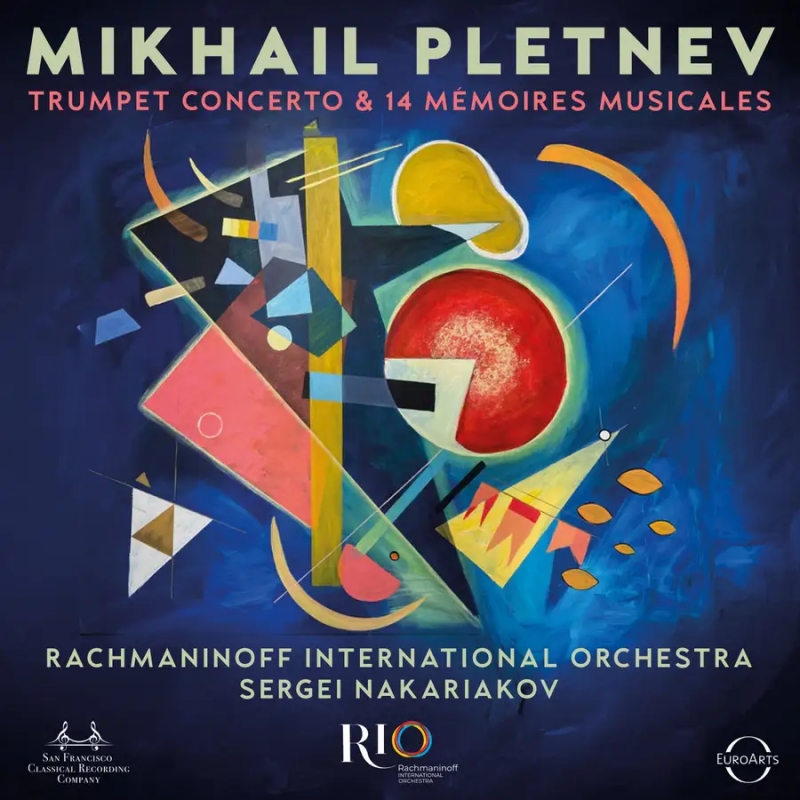
  首先是普雷特涅夫的小號協奏曲與管弦樂曲《十四段音樂回憶》(14 Mémoires musicales)。雖然俄羅斯國家管弦樂團(Russian National Orchestra, RNO)管理階層不樂見團員參與RIO,但是讓人驚喜的是,RNO首席波爾什涅娃(Tatiana Porshneva)是這張唱片的首席;持烏克蘭護照,因為戰爭無法留在俄國的RNO前小號首席拉弗里克(Vladislav Lavrik)則是小號協奏曲的指揮,他們和普雷特涅夫都有長達二十年的合作默契。小號協奏曲中的低音管獨奏沙米達諾夫(Andrei Shamidanov)同樣來自RNO。

  小號協奏曲是普雷特涅夫二○二三年底到二四年初的作品,題獻給小號家納卡里亞科夫(Sergei Nakariakov),也由他首演與錄音。與一般小號作品最大的不同點是,普雷特涅夫使用聲音比一般降B調小號更明亮的C調小號。雖然曲名是「小號協奏曲」,但是普雷特涅夫在構思這部作品的時候,避開傳統協奏曲刻意炫耀華麗技巧的做法,轉而讓小號成為音樂敘事的主角。因此就像納卡里亞科夫所說,普雷特涅夫寫的是一部以小號來說故事的作品。在絕大部分的時間裡,小號不是表演的主角,更像是引領樂團的說書人。獨奏使用的唇顫音、弱音、童謠旋律⋯⋯的目的都不是炫技,而是為了整體的戲劇效果與層次感。樂團則是採用室內樂編制:長笛、低音管、打擊樂(定音鼓、小鼓、鈸、木魚、筒鼓、木琴)與弦樂組。

  乍聽會覺得這是一部前衛作品,但是仔細聽幾次,會發現普雷特涅夫要說的,是一個和俄羅斯有關的故事。舉例來說,小號在第二樂章演奏兩次的這一段俄羅斯旋律,第一次像在夢境,第二次則是回到現實,但是都混雜著純真、回憶、恐懼、悲愁等複雜的情感。

  第三樂章的俄羅斯故事則是幽默的。普雷特涅夫讓小號的節奏與表情變得更靈動,他要納卡里亞科夫把唇顫音「吹得像懸在空中的俄羅斯方塊。不是炫技,而是等待崩塌的緊張」。當那個懸念終於落下,熟悉的〈貨郎〉(Коробейники)旋律(即電玩俄羅斯方塊主題曲)便浮現,成為整首曲子唯一明確引用的既有素材,也是結構上的釋放點。這段既是幽默的轉折,也象徵著情感壓力的解開。

  《十四段音樂回憶》是普雷特涅夫自傳性的作品,靈感來自童年與青年時期的記憶,化為十四個獨立的音樂圖像,每一段如同一則短篇故事。雖然每一段音樂都有標題,但是作品並沒有具體敘事,而是更接近後現代的拼貼思維:不同風格、節奏、音色交錯並置,在對比中形成新的統一。

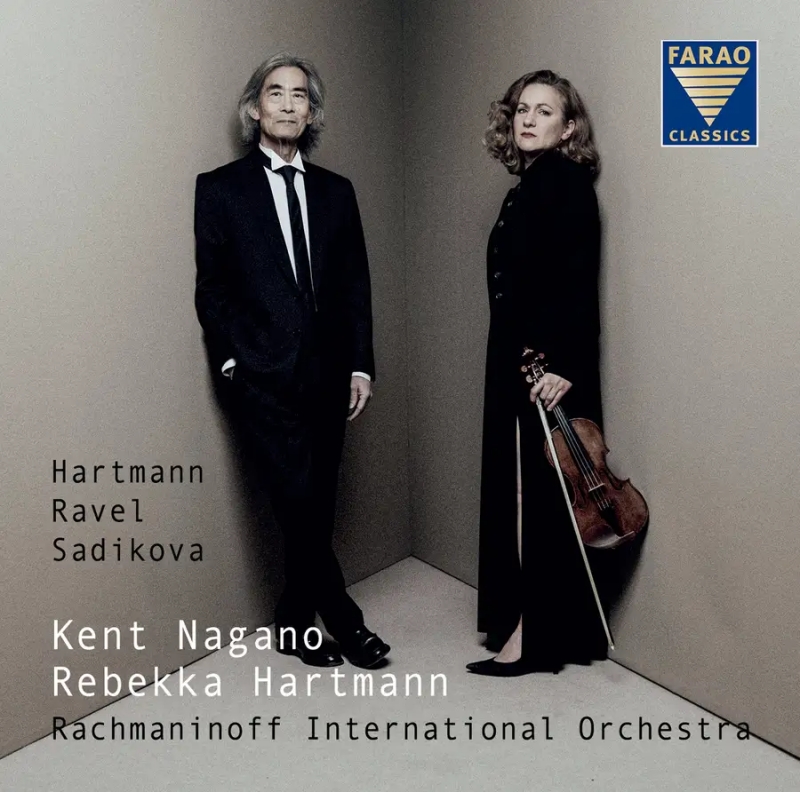
  RIO創團音樂會前,指揮長野健(Kent Nagano)利用合作錄音培養雙方默契,也就是這一張以「從黑暗走向光明」(Von der Dunkelheit ins Licht)為題的專輯。它的核心構想源自於一個泛歐洲視角,透過三首作品探索歐洲文化的多樣性與連接,獨奏家是德國小提琴家瑞貝卡‧哈特曼(Rebekka Hartmann)。

  《葬禮協奏曲》(Concerto funebre)是德國作曲家卡爾‧阿瑪迪斯‧哈特曼(Karl Amadeus Hartmann)在一九三九年完成的作品,描寫納粹恐怖與戰爭陰影,象徵對極權的抗議,並融入俄羅斯革命葬禮進行曲的引用,體現歐洲歷史的複雜交織。

  瑞貝卡‧哈特曼委託烏茲別克裔德國作曲家薩季科娃(Aziza Sadikova)譜寫的《史特拉底瓦里》(Stradivari),其創作靈感來自蘇聯電視劇《拜訪彌諾陶洛斯》(Визит к Минотавру)。該劇以義大利製琴師安東尼奧・史特拉迪瓦里(Antonio Stradivari)為主線,並穿插當代莫斯科的名琴失竊案,將巴洛克時期的藝術創作與蘇聯時期的當代世界交錯對照。薩季科娃以時間錯置的敘事方式,將義大利巴洛克塔替尼(Giuseppe Tartini)風格的旋律與裝飾音,結合了蘇聯文化記憶,向史特拉迪瓦里及歐洲工藝精神致敬,象徵歐洲藝術傳統在時代變遷中的延續與再創造。在長野健的建議下,兩首作品中間加入拉威爾《吉普賽人》這首受羅姆人音樂啟發的狂想曲,象徵文化開放與藝術自由。三首作品分別象徵戰爭、自由與重生,代表一段從歷史陰影通往藝術希望的音樂旅程。

  《葬禮協奏曲》是整張專輯最精彩的一首。長野健以冷峻克制的手法,把樂團的聲音處理成如同面臨世界末日般緊繃卻清晰;弦樂纖細、銅管節制,層層推進,堆積出戰爭與反抗的張力。哈特曼的獨奏則內斂深沉,情感節制而具穿透力,使音樂的悲痛更為真實。樂團與獨奏者之間的對話,展現出一種肅穆、堅定的歷史記憶。

  與普雷特涅夫作品的錄音相比,這張專輯的語言更克制,卻同樣深刻。普雷特涅夫的小號協奏曲與《十四段音樂回憶》展現他對俄羅斯記憶的內在回望,長野健與哈特曼的專輯則從歐洲整體的視角出發,以音樂回應歷史的傷痕。兩張專輯雖然風格不同,卻都指向同一個理念,那就是讓音樂重新成為連結人與人的語言。(2025年11月11日)

二○二五年RIO系列文章:
Because the Rachmaninoff International Orchestra (RIO) has neither a resident base nor permanent members, “recording” is not merely a tangible artistic outcome — it is the very means by which the orchestra exists. From the outset, recording has been the ensemble’s central activity. Through sound, Mikhail Pletnev continually “reassembles” a group of musicians uniquely his own; each recording brings the evolving ensemble closer together, both musically and in identity.

Following the releases of Pletnev’s reorchestrations of "Tchaikovsky’s Swan Lake Suite" and "Shchedrin’s Carmen Suite", as well as the video and audio recording of the orchestra’s inaugural concert, 2025 marked a significant expansion for RIO: its first concert tour, accompanied by the release of two new albums.

The first features Pletnev’s "Trumpet Concerto" and his orchestral work "14 Mémoires musicales". Although the management of the Russian National Orchestra (RNO) discouraged its musicians from joining RIO, the participation of Tatiana Porshneva, the RNO’s concertmaster, came as a welcome surprise. The "Trumpet Concerto" is conducted by Vladislav Lavrik, former RNO principal trumpet, who now holds a Ukrainian passport and has been unable to remain in Russia since the war began. Both musicians have shared more than twenty years of collaboration with Pletnev. The bassoon soloist Andrei Shamidanov, also from the RNO, performs in the concerto as well.

Composed between late 2023 and early 2024, the "Trumpet Concerto" is dedicated to Sergei Nakariakov, who also premiered and recorded it. Unusually, Pletnev wrote the work for a C trumpet, whose brighter tone contrasts with the more common B-flat instrument. Though labelled as a “concerto”, Pletnev avoided the conventional model of virtuoso display, instead treating the trumpet as a narrative voice. As Nakariakov himself observed, this is “a work that tells a story through the trumpet.” For most of the piece, the trumpet does not act as a soloist in the traditional sense, but as a storyteller guiding the orchestra. Its lip trills, muted passages, and nursery-like melodies are not for display but serve the dramatic effect and textural layering.

The orchestra is chamber-sized — flute, bassoon, percussion (timpani, small drum, cymbals, temple-block, tom-toms, xylophone), and strings — a sound world of intimacy and clarity.

At first hearing, the piece may seem modernist, yet repeated listening reveals a deeply Russian narrative beneath the surface. In the second movement, a Russian melody returns twice: first as a dream, later in waking reality — both times imbued with innocence, memory, fear, and sorrow.

The third movement brings humour to this “Russian tale.” Pletnev asked Nakariakov to make his lip trills “hover in the air like suspended Tetris blocks — not as a show of virtuosity, but as a tension waiting to collapse.” When the suspension finally breaks, the familiar tune of "Korobeiniki" (Коробейники, the Russian folk song known as the "Tetris" theme) emerges — the work’s only explicit quotation and its point of release. It is a witty, cathartic gesture that unknots the accumulated emotional pressure.

"14 Mémoires musicales" is a self-portrait in sound — a cycle of fourteen orchestral vignettes inspired by Pletnev’s childhood and youth. Each section forms a brief musical image, like a short story. Though individually titled, the work follows no literal narrative; its structure reflects a postmodern collage, juxtaposing contrasting styles, rhythms, and colours to create a new synthesis through contrast.

Before the orchestra’s inaugural concert, Kent Nagano rehearsed with RIO through a recording project titled "Von der Dunkelheit ins Licht" (“From Darkness to Light”). Conceived from a pan-European perspective, the album explores the diversity and interconnectedness of European culture through three works, featuring German violinist Rebekka Hartmann as soloist.

Karl Amadeus Hartmann’s "Concerto funebre" (1939) expresses the terror of Nazism and the shadow of war, symbolising protest against tyranny while incorporating a quotation from a Russian revolutionary funeral march — a reminder of Europe’s intertwined histories.

"Stradivari", commissioned by Hartmann from Uzbek-German composer Aziza Sadikova, was inspired by the Soviet television series "Visit to Minotaur" ("Визит к Минотавру"), which juxtaposes the story of Italian luthier Antonio Stradivari with a contemporary violin theft in Moscow. Sadikova’s work overlays Baroque-style melodies and ornamentation reminiscent of Giuseppe Tartini with Soviet-era cultural memory, paying homage to both Stradivari and the enduring European craft tradition — a reflection on continuity and reinvention. At Nagano’s suggestion, Ravel’s Tzigane, inspired by Romani music, was placed between the two works to symbolise openness and artistic freedom. Together, the three compositions represent war, freedom, and rebirth — a musical journey from historical darkness to the light of art.

The "Concerto funebre" stands at the album’s emotional core. Nagano shapes the orchestra with austere restraint — strings taut and transparent, brass subdued — constructing layers of tension that evoke both conflict and resistance. Hartmann’s violin playing is inward yet piercing, expressing sorrow with disciplined clarity. The dialogue between soloist and orchestra resonates with solemn remembrance and moral resolve.

Compared with Pletnev’s works, Nagano’s album speaks in a more measured voice, yet with equal depth. Pletnev’s "Trumpet Concerto" and "14 Mémoires musicales" turn inward toward Russian memory, while Nagano’s programme looks outward from a European vantage point, responding to history’s wounds through music. Despite their differing idioms, both recordings embody the same conviction: that music remains a universal language connecting human beings. (11 November, 2025)
PLETNEV Trumpet Concerto, 14 Mémoires musicales
Sergei Nakariakov (trumpet), Rachmaninoff International Orchestra, Vladislav Lavrik
Rachmaninoff International Orchestra, Mikhail Pletnev
Tatiana Porshneva, Concertmaster
Maria Fedotova, Solo Flute
Andrei Shamidanov, Solo Bassoon
January 2025, Moyzes Hall of Comenius University in Bratislava, Slovakia
KARL AMADEUS HARTMANN Concerto funebre; RAVEL Tzigane; SADIKOVA Stradivari
Rebekka Hartmann (violin), Rachmaninoff International Orchestra, Kent Nagano
2023, Moyzes Hall of Comenius University in Bratislava, Slovakia



發表留言