
孫悟空的當代轉身:一部關於文化、身分與反叛精神的歌劇
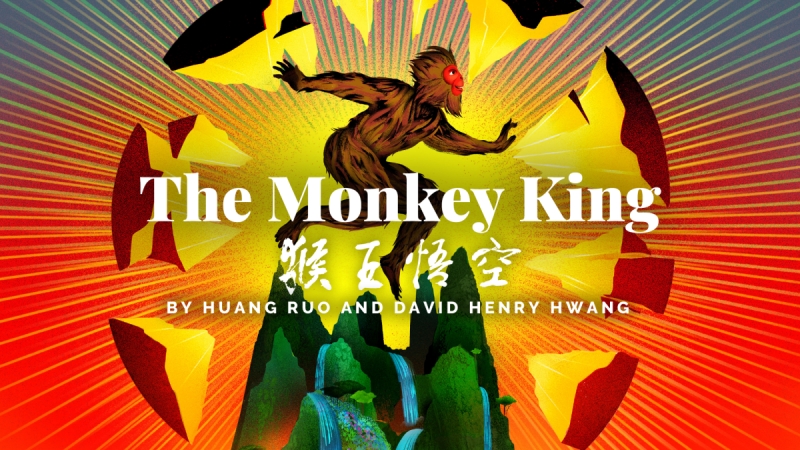
當舊金山歌劇院在二○二五年十月推出全新歌劇《猴王悟空》時,許多觀眾自然回想起二○一六年的歌劇《紅樓夢》。《紅樓夢》是歌劇院近十年來以華文文學為基礎的重要新作,由盛宗亮作曲、黃哲倫參與劇本創作、賴聲川導演。這部作品從首演到後續復排,持續吸引著不同文化背景的觀眾,激發多種反響與影響。《猴王悟空》延續這條線索,以截然不同的美學語言重新改編《西遊記》前半部,並在視覺、音樂與文化意義上都成為歌劇院的一次重要嘗試。
這部歌劇由作曲家黃若與劇作家黃哲倫共同創作。兩人的合作可追溯至二○一三年外百老匯重排的舞台劇《舞蹈與鐵路》。其後,黃若向黃哲倫提出把《蝴蝶君》改編為歌劇的構想,其後兩人也以駐阿富汗華裔美軍二等兵陳宇暉遭受種族歧視霸凌而自殺的真實事件為題材,創作了一部歌劇《一個美國士兵》。《猴王悟空》便是這條創作脈絡中的最新一章。
黃哲倫並非第一次接觸《西遊記》。早在二○○一年,他就為美國影集《西遊記:失落的帝國》撰寫劇本。這部電視迷你影集是以美國商人為主角,由觀音引導進入神魔世界冒險。與那次以「西方觀眾理解東方」的敘事方式相比,如今的《猴王悟空》回到孫悟空的視角,強調角色本身的經歷、叛逆與精神轉折。
歌劇改編自《西遊記》前幾回,從石猴出世,到花果山、斜月三星洞、東海龍宮、天庭御馬監、蟠桃園,再到八卦爐與五行山等場景,幾乎完整呈現悟空從誕生到「鬧天宮」的階段。劇本採回溯式結構:悟空在五行山下回望自己一路走來的狂放行為,作品因而特別著重觀音與悟空之間的對話與精神拉扯,呈現悟空從叛逆走向某種覺悟的心路。
黃若的音樂延續近年創作中展現的跨文化語彙,以西方交響樂團為基礎,加入琵琶、鑼、鈸與印尼鑼等東亞樂器,形成既具西方戲劇音樂的強大張力,又保留華人文化以氣韻敘事的音響風格。他希望「讓孫悟空成為亞洲版超級英雄」,為美國亞裔孩子提供文化認同的對象,而這種企圖在他的音樂中得到具體體現:悟空的音樂鮮明有力、節奏靈活俐落,與觀音抒情而純淨的唱段形成對比。
在舞台視覺上,由黛安‧保羅斯(Diane Paulus)執導,巴塞爾·特維斯特(Basil Twist)設計舞台與偶戲部分,讓整體呈現幾乎像是一場無窮變幻的視覺表演。特維斯特運用大量絲絹、懸吊裝置、巨型布景與木偶,讓舞台場景可以在水底、天空、山巒與天宮之間快速轉換,而布料的變形呈現也呼應了佛教中「無常」的概念。孫悟空由男高音王亢、舞者張慧望與木偶三種形式輪流演繹,讓角色在不同層次的空間自由切換。一個舞台同時匯聚武術、戲曲、歌劇表演與偶戲的混合語彙,讓《猴王悟空》的視覺效果十分華麗。
總體而言,《猴王悟空》並非一部僅僅再製、重現傳統神話題材的歌劇,而是一部在當代美國社會語境下重新思考文化、身分與敘事主體性的作品。它延續《紅樓夢》、譚恩美同名小說改編成的歌劇《接骨師之女》以及譚盾、哈金、張藝謀在紐約大都會歌劇院推出的《秦始皇》,對華裔題材的探索,同時以更強調神怪元素與多層次舞台語彙的方式,擴大了華文題材在美國歌劇中的呈現範圍。孫悟空不再只是奇幻故事的主角,而是透過亞裔創作者的重新演繹,被賦予新的精神意涵。
When San Francisco Opera unveiled its new production “The Monkey King" in October 2025, many naturally recalled the company’s 2016 staging of “Dream of the Red Chamber". The earlier opera—composed by Bright Sheng, with a libretto by David Henry Hwang and Sheng, and directed by Stan Lai—had been one of the company’s most significant explorations of modern works drawn from Chinese literature. From its premiere through subsequent revivals, it continued to resonate with audiences from diverse cultural backgrounds and generated a wide range of responses. “The Monkey King" extends that trajectory, reimagining the first half of “Journey to the West" with a markedly different aesthetic language and becoming, in visual, musical and cultural terms, an important new venture for the company.
The opera is a collaboration between composer Huang Ruo and playwright David Henry Hwang, whose partnership dates back to the 2013 Off-Broadway revival of “The Dance and the Railroad". Huang Ruo later proposed an operatic adaptation of Hwang’s best-known play “M. Butterfly". The two artists subsequently created “An American Soldier", based on the real case of Private Danny Chen, a Chinese American who took his own life after severe racial bullying in the U.S. military. “The Monkey King" is the latest chapter in this continuing creative dialogue.
This is not Hwang’s first encounter with “Journey to the West". As early as 2001, he wrote the screenplay for the American television mini-series “The Monkey King" (also known as “The Lost Empire"), in which an American businessman is guided by Guanyin into a mythic realm. In contrast to that earlier narrative—designed to help Western audiences “enter” an Eastern story—the present opera returns to Sun Wukong’s own point of view, emphasising his experience, his rebellious nature, and the spiritual turning points that define him.
The opera adapts the opening chapters of “Journey to the West", from the Stone Monkey’s miraculous birth to the Flower-Fruit Mountain, the Cave of the Three Stars, the Dragon Palace, the Heavenly Stables, the Peach Orchard, the Eight-Trigram Furnace and finally the Five-Element Mountain. It effectively traces Wukong’s path from birth to the havoc he wreaks in Heaven. The libretto is constructed in retrospect: trapped beneath the mountain, Wukong looks back on his wild ascent. As a result, the opera places particular emphasis on the conversations between Wukong and Guanyin, presenting his movement from defiance toward a measure of awakening.
Huang Ruo’s music continues the cross-cultural language characteristic of his recent works. Built upon the foundation of a Western symphony orchestra, the score incorporates pipa, gongs, cymbals and Indonesian metallophones, creating a sound world that combines the dramatic force of Western opera with the “breath-centred” narrative quality found in Chinese aesthetics. Huang hopes to “make Sun Wukong an Asian superhero,” offering Asian American children a figure of cultural recognition—an intention heard clearly in the music. Wukong’s musical lines are vivid, energetic and rhythmically agile, set in contrast to Guanyin’s lyrical and luminous arias.
Visually, the production—directed by Diane Paulus, with staging and puppetry designed by Basil Twist—unfolds like an ever-shifting spectacle. Twist employs silk, suspension devices, large-scale scenic elements and puppetry so the stage can move fluidly between underwater realms, skies, mountains and celestial courts. The transformations of fabric subtly echo the Buddhist notion of impermanence. Sun Wukong is portrayed interchangeably by tenor Kang Wang, dancer Huiwang Zhang and a puppet, allowing the character to shift across multiple planes of presence. The stage becomes a meeting ground for martial arts, Chinese opera techniques, Western operatic performance and puppetry, giving “The Monkey King" an unmistakably opulent visual style.
Taken as a whole, “The Monkey King" is not merely a restaging of a traditional myth but a work that reconsiders culture, identity and narrative agency within a contemporary American context. It extends the line traced by “Dream of the Red Chamber", by the operatic adaptation of Amy Tan’s “The Bonesetter’s Daughter", and by Tan Dun, Ha Jin and Zhang Yimou’s “The First Emperor" at the Metropolitan Opera. By leaning more heavily into the supernatural and by employing a multi-layered visual vocabulary, it expands the range of how Chinese themes can be presented in American opera. Sun Wukong is no longer simply a fantastical protagonist; through the interpretive lens of Asian creators, he is endowed with renewed spiritual significance.


發表留言