第三個樂季是「童話‧傳奇」,演出一連串與童話故事及神話傳說有關的經典作品,例如《仲夏夜之夢》、黃安倫《賣火柴的小女孩》、《天方夜譚》、《莎樂美》、《普羅米修斯》、《達孚尼與克羅埃》、《崔斯坦與伊索德》,並以音樂會型式演出作曲家周龍得到普立茲音樂獎(Pulitzer Prize for Music)的歌劇《白蛇傳》。水藍認為作曲家常受童話、神話啟發,這年樂季讓樂團接觸更多樣的音樂內容,擴展曲目並提升演奏技巧。同時,他大力支持國人創作,將傳統民俗(如古琴)融入古典,打造有臺灣特色的樂團。
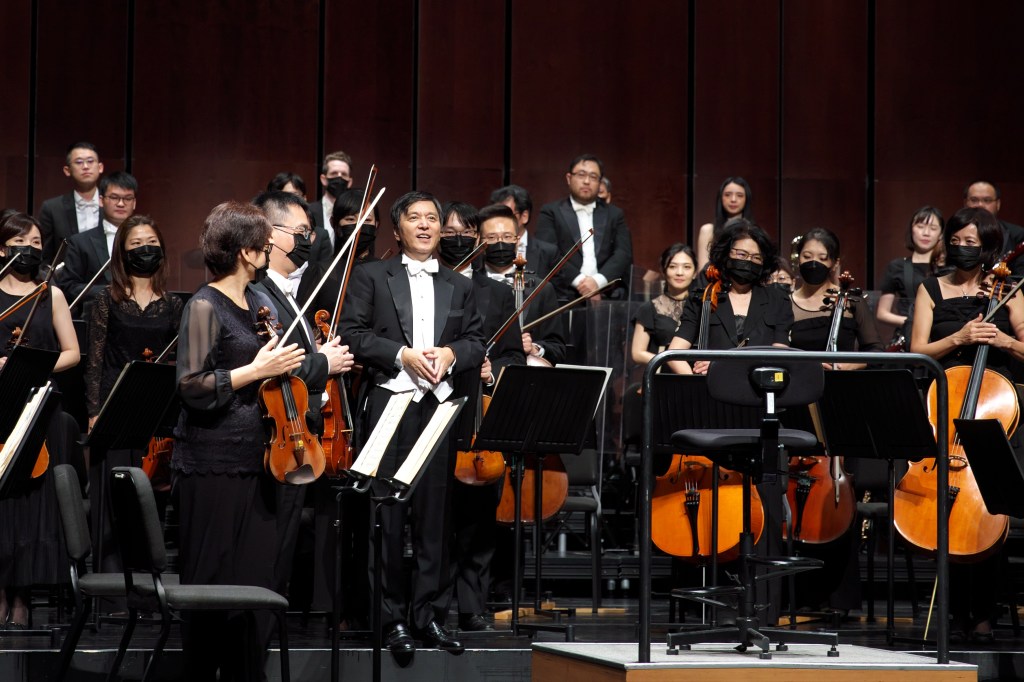
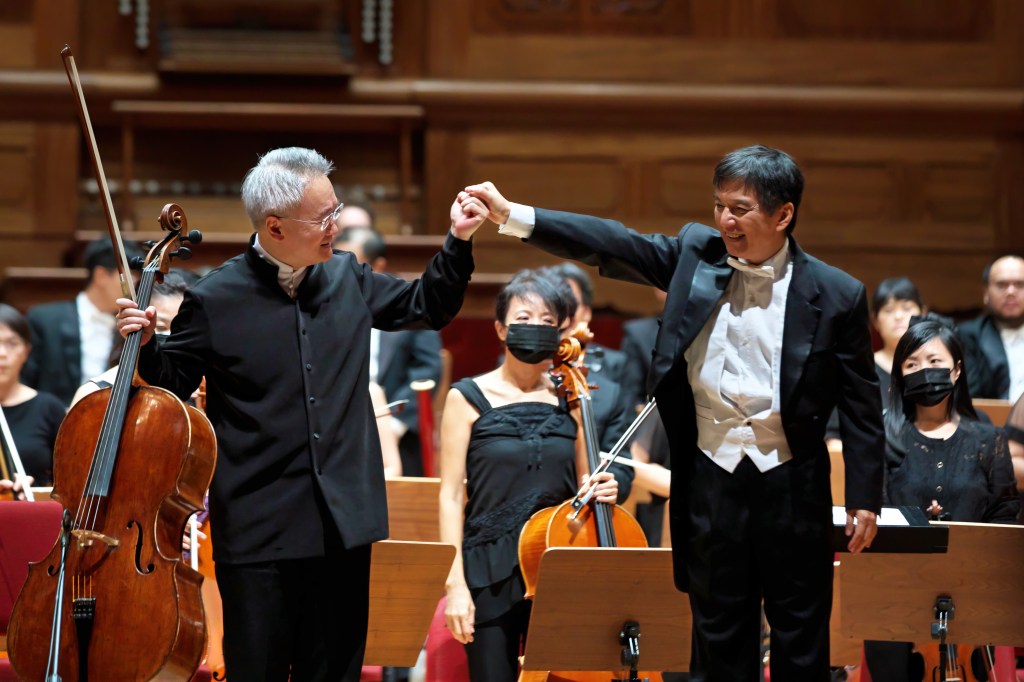
The orchestra, like a person, has its own life journey and its own fortunes. Sometimes, what seems like a chance encounter can change the course of history. The bond between Lan Shui and the National Taiwan Symphony Orchestra (NTSO) is just like that—it didn't start with grand invitations or appointments, but grew through sincere interactions that built trust and understanding. This relationship has been stable and close over the years, not under the title of "Music Director", but through the roles of Artistic Advisor and Principal Guest Conductor, continuously injecting change and forward-thinking energy into the orchestra. Lan Shui's collaboration with NTSO began in 2004, officially as Artistic Advisor in 2011, and resuming as Principal Guest Conductor in 2019. In 2020, due to the global pandemic and border closures, he unexpectedly stayed with the orchestra for an extended period, becoming a key turning point in their relationship.
In early 2020, after the Lunar New Year, the COVID-19 pandemic spread rapidly worldwide. Taiwan suspended entry for non-citizens starting March 19, but Lan Shui arrived just one day before the border closure. With international flights halted and countries locking down, he was stranded in Taiwan, unexpectedly becoming NTSO's "resident conductor" for over half a year.
This unplanned stay became a rare opportunity for the orchestra's collective growth. At that time, concerts worldwide were canceled, but rehearsals continued in Wufeng, with recordings, videos, and internal performances. It was the first time in Lan Shui's conducting career that he spent such a long, stable period with one orchestra. Even his 22-year tenure as Music Director of the Singapore Symphony Orchestra didn't include such deep daily involvement. During the pandemic, Lan Shui entered and exited Taiwan multiple times, enduring quarantines and "Guam" layovers, which further deepened the trust and understanding between him and NTSO.
Initial Encounter in Taiwan: From Sightseeing to First Musical Impressions
Lan Shui first visited Taiwan in June 1997, shortly after succeeding Choo Hoey as Music Director of the Singapore Symphony Orchestra. Curious about Taiwan, he accepted an invitation to co-conduct the Taipei Symphony Orchestra in the "Chinese Sentiment" concert with Chiu-Sen Chen. Since it was a shared conducting role, the rehearsal and performance schedule was relatively relaxed, allowing Lan Shui to approach it with a light-hearted mindset, combining music with sightseeing. Though casual, this debut in Taiwan impressed many music fans with his precise, sharp, and energetic conducting style.
He returned to Taiwan in 2002 to conduct two concertos for his friend, violinist Gil Shaham: "Butterfly Lovers" and Beethoven's Violin Concerto. Organized by MNA Contemporary Art (New Era Art), the orchestra was a temporary "Festival Orchestra". This collaboration built a connection with MNA Contemporary Art. In February 2004, when MNA planned Kyung Wha Chung's concerto performance with NTSO, Lan Shui was naturally chosen as conductor.
Unexpected Change: First Collaboration with NTSO
The name "Kyung Wha Chung" made Lan Shui agree immediately. "I grew up listening to her Beethoven Violin Concerto; for me, it was a rare opportunity", Lan Shui recalled. But two weeks before the concert, Chung canceled due to health reasons, replaced by Pinchas Zukerman. This change disappointed Lan Shui, as he felt his musical style didn't fully match Zukerman's, so he also considered withdrawing. With both soloist and conductor changing, the organizer faced refund and sponsor pressures. Fortunately, Lan Shui was in a phase of eagerly exploring new pieces, particularly Ferruccio Busoni's "Symphonische Suite, op. 25". When the organizer agreed to include this work, Lan Shui proceeded, and his first contact with NTSO became a "side product" of this concert. Lan Shui admitted the orchestra's technique had room for improvement, but the members' dedication and passion, along with a family-like warmth unlike the distance in many top orchestras, stood out.
Sincere Visit: The Start of Orchestra Reform
After Tscheng-Hsiung Chen retired as General Director in 2002, NTSO faced a "director without conductor" dilemma. While Chun-Chiang Chiu and Fusao Kajima served as Resident Conductor and Artist-in-Residence, finding a long-term leader to train and guide the orchestra was Chung Su's top priority as General Director. A few months after the February 2004 concert, Chung Su and Deputy Director Suan-Yung Liu suddenly visited Lan Shui in Singapore to explain the orchestra's situation, reform vision, and desire for further collaboration. The impact of that concert on the orchestra far exceeded Lan Shui's expectations.
Chung Su came from an administrative background, the first General Director after NTSO reformed from "director-conductor" dual roles. In this transition, he was often questioned for lacking music expertise. But his humble, respectful style, emphasizing "respect for every member", aligned with Lan Shui's artistic spirit. Lan Shui admired the Berlin Philharmonic's self-management model, encouraging members to express opinions and participate in decisions. Though this visit didn't immediately lead to collaboration, the sincerity of their personal trip—Lan Shui later learned it was self-funded—deeply moved him.
Lan Shui is naturally detached and doesn't seek multiple orchestra positions; he values having enough time and energy for real involvement. With his schedule dominated by the Singapore Symphony Orchestra, he couldn't fully manage another. It wasn't until Suan-Yung Liu became General Director, and NTSO's administration and artistic structure stabilized, that Lan Shui felt the timing was right. In January 2011, seven years after the overseas visit, he officially accepted the invitation as Artistic Advisor.
Musical Enlightenment: Lan Shui's Path to Growth
Lan Shui was born into an intellectual family in Hangzhou, China, with a banker father and doctor mother. During vacations, young Lan Shui often stayed with his aunt, who worked as a music librarian at the Shanghai Symphony Orchestra. His uncle, Yushi Yang, taught composition at the Shanghai Conservatory of Music, so Lan Shui's musical enlightenment wasn't Bach or Mozart, but works by Arnold Schoenberg and Paul Hindemith. Recalling his uncle, Lan Shui always feels endless regret. Before the Cultural Revolution, Yushi Yang, along with Tong Sang and Zhongrong Luo who also studied contemporary music, was labeled the "Arrogant Group". Yushi Yang chose self-isolation, shutting himself in his small home for the rest of his life, cutting off contact with the outside world. If not for this, Lan Shui believes his uncle could have taught him much in music.
Lan Shui could imitate Yushi Yang's contemporary pieces, so his uncle suggested "this child should study music". He started violin at five, but at 18, injured his right ring finger playing soccer, forcing him to give up violin performance. Though his ensemble conductor Xu Xin saw potential and urged him to conduct, Lan Shui refused, preferring composition at the Shanghai Conservatory. Seeing Lan Shui study composition, the persistent Xin Xu claimed illness once, asking Lan Shui to rehearse Beethoven's First Symphony. Actually, Xin Xu wasn't sick but watched from the corner. Moved, Lan Shui formally studied conducting under Xin Xu, with composition experience becoming a foundation for viewing works from a composer's perspective.
After graduating from the Central Conservatory of Music in 1985, Lan Shui went to Boston University in the US. In 1987, he won "Mentions - ex aequo" at the Besançon International Conducting Competition. During his US time, David Zinman invited him as assistant conductor at the Baltimore Symphony Orchestra, and he worked with Neeme Järvi at the Detroit Symphony Orchestra. In 1997, returning to Asia as Music Director of the Singapore Symphony Orchestra, Lan Shui spent 22 years elevating it from regional to international status, recording dozens of albums spanning ancient to modern repertoires. The orchestra ranked third in Gramophone's Orchestra of the Year in 2021 and was listed in BBC Music Magazine's top 21 global orchestras for the next two years.
Artistic Reform: Season Planning and Training Upgrades
As NTSO Artistic Advisor, Lan Shui brought significant changes. He not only provided professional advice and resources in music but became the orchestra's spiritual leader with his unique charisma. He chose to integrate naturally into the team, treating members as equals, listening to opinions rather than dictating. This approachable and open leadership made members feel valued, enhancing group cohesion.
Lan Shui didn't interfere in administration, focusing on artistic stability and development. He referenced international orchestra models, introducing institutional changes to improve overall standards, strengthening operational professionalism and unity. First, establishing an annual season system, turning loose performances into systematic thematic planning, like serialized novels linking repertoires, guiding the orchestra and audience to explore music's world. This not only elevated professionalism but let audiences feel the orchestra's growth.
For his three seasons as advisor, Lan Shui first scheduled Beethoven's nine symphonies, recognized as the best for conductor-orchestra integration. Though often conducting contemporary composers, his interpretations have a strong "classical" quality, especially in Beethoven's classical works, showing pursuit of era sense and rigor.
The second season theme was "Love and Death", launching classics themed on love and death monthly, like "Romeo and Juliet", "West Side Story", "Butterfly Lovers", Benjamin Britten's "War Requiem", Mahler's Fifth Symphony, Richard Strauss's tone poem "Death and Transfiguration", Rachmaninoff's "Isle of the Dead". The challenge was letting the orchestra "digest" heavy repertoires, cultivating emotional expression.
The third season was "Fairy Tales and Legends", performing classics related to fairy tales and myths, such as "A Midsummer Night's Dream", An-Lun Huang's "The Little Match Girl", "Scheherazade", "Salome", "Prometheus", "Daphnis et Chloé", "Tristan und Isolde", and Zhou Long's Pulitzer-winning opera "Madame White Snake" in concert form. Lan Shui believed composers are often inspired by fairy tales and myths; this season let the orchestra contact diverse music, expanding repertoires and improving skills. He strongly supported local creation, incorporating traditional folklore (like guqin) into classics, creating a Taiwanese-character orchestra.
Foundation Building: From Chamber Music to Team Trust
Next was strengthening chamber music training. Lan Shui believes "a symphony orchestra is an expanded chamber music", where chamber music is the foundation, allowing finer unity. Chamber performances and training improve listening and collaboration, addressing past "individualistic" habits, gradually forming cohesion.
Institutionally, NTSO already had committees for section leader selection, new member hiring, and renewals. As advisor and principal guest conductor, Lan Shui always respected operational principles, not interfering in appointments or using position to pressure. In committees, he had only one vote, equal to others. Though sometimes consulted on candidates, his involvement stayed at suggestion and observation, without overstepping.
For evaluation systems, Lan Shui didn't participate; the system was established before him. His view focused on positive functions: evaluations shouldn't just eliminate but provide reflection and growth opportunities. A healthy orchestra isn't about who gets screened out but everyone finding motivation to improve.
Performance Self-Restraint: Balancing Life and Artistic Duty
Lan Shui strictly controls his performances. Outsiders often attribute this to family priority, wanting more time with wife and children, but it reflects his artistic responsibility and rigor. He doesn't seek dense exposure or rely on familiar repertoires for "one-piece tours". He prefers fewer appearances for more time studying new works, analyzing scores, ensuring each performance is thoughtful.
For Lan Shui, this rhythm isn't just professional but a life arrangement. Moderately stepping away from music scenes, reserving family time, maintains personal balance and readjusts observation and thinking. He believes "doing nothing" sometimes creates new space for music. Compared to his youth's high-intensity work, now he values rhythm and choice freedom, seeking long-term balance between family, music, and self.
Life Off-Track: Accidents and Crisis Moments
Perhaps spending too much energy pursuing musical perfection, many friends know Lan Shui's daily life is very "off-track". Easygoing and humorous, casual in dress and living, confusing left and right when driving, messages read but not replied... are all "bad habits" friends know well. Because often absent-minded, besides injuring his finger at 18 playing soccer, two disasters nearly ended his conducting career. One was in 1997 summer at the Aspen Music Festival, seeing Yan-Pascal Tortelier cycling, Lan Shui rented one too. Downhill, sudden brake caused front wheel lock, throwing him out with severe injury. CT scan showed if bleeding more, permanent brain damage or vegetative state. After an 8-hour surgery, waking from anesthesia, Lan Shui mentally recited Mahler's First Symphony score, checking memory. "Remembering the score, I felt much relieved", Lan Shui laughed. Recovery took three months, scaring Lan Shui, just starting at Singapore Symphony Orchestra, thinking his career might end.
Another was in 2013, hastily lifting luggage onto conveyor at airport, straining right hand. Seemingly minor, recovery took longer than the bike accident, over half a year. Lan Shui worried his right hand might never conduct again. As Artistic Advisor contract ended in 2014, he didn't renew with NTSO, only agreeing verbally to continue collaboration. As injury healed, and Suan-Yung Liu who visited Singapore became General Director again, after leaving Singapore Symphony Music Director in January 2019, Lan Shui agreed to sign again. This time as Principal Guest Conductor. Spring 2020 global lockdown let Lan Shui unexpectedly bond closely with NTSO for months. Not just rehearsals and performances but planning and videos, injecting deeper trust.
Deep Rapport: The Orchestra's Unique Strengths
Collaborating with NTSO for years, Lan Shui appreciates members' inner qualities: they never see music as mere work but heartfelt love. He describes members as "sincere and lovable", dedicated and passionate. For him, orchestra cohesion is more important than pitch and rhythm; when members explore music together, this unity makes them pursue high-quality performances voluntarily. In style, Lan Shui sees NTSO as typical Asian orchestra: lacking European traditions is an advantage. "No tradition" frees from cultural baggage, bringing greater openness and flexibility for diverse styles—from Mahler's thick emotion, impressionist transparency, Beethoven's precise tension, to Eastern music's mood and charm. He designed concerts testing style switches, proving strong adaptability. Regardless of position, Lan Shui has "fated" deep bond with NTSO; members trust and adore him, becoming a musical life community.
Looking ahead, we sincerely hope Lan Shui and NTSO's bond lasts long, letting this seamless collaboration and NTSO's vitality combine to open vast new music realms.



 陳效真作品集
發表留言