
誰來帶領樂團?貝爾與聖馬丁學院管弦樂團的十五年
十幾歲的時候,美國小提琴家貝爾(Joshua Bell)買了一台有鬧鐘功能的CD唱盤。鬧鐘一響,播放的就是馬利納(Neville Marriner)指揮聖馬丁學院管弦樂團(Academy of St Martin in the Fields,簡稱ASMF)的莫札特《安魂曲》。當時他大概沒有想到,這支英國樂團會成為他日後音樂生涯中最重要的合作夥伴之一。
雙方第一次合作是在一九八六年十二月。剛滿十九歲的貝爾前往倫敦艾比路錄音室,與ASMF錄製布魯赫與孟德爾頌小提琴協奏曲。沒有事前排練,也幾乎沒有熟悉彼此的時間,但是錄音仍然順利完成。除了ASMF成熟的合奏能力之外,馬利納很少干涉貝爾的演奏,也讓他能按照自己的方式發揮。二○一一年,馬利納把音樂總監職位交給貝爾;今年正好是貝爾接任ASMF音樂總監十五週年,合約也已經延長至二○二七/二八樂季。
誰來帶領ASMF
接任十五年來,貝爾最明顯的改變,就是重拾以小提琴首席位置領導樂團的傳統。ASMF原本就不是以指揮為核心建立的樂團。一九五九年首場音樂會沒有設指揮,而是由馬利納坐在首席位置領奏。但是隨著曲目與編制擴大,管樂、銅管與打擊樂加入後,僅靠琴弓與身體動作已經很難把指令傳到後排。馬利納因此向蒙都(Pierre Monteux)學習指揮,正式站到樂團前方。也就是說,馬利納拿起指揮棒並不是為了追求指揮權威,而是為了滿足樂團擴編後的實際需要。
之後,馬利納建立起高度精密的工作方式:預先整理分譜,處理弓法、樂句與聲部關係,形成ASMF整齊、明亮、透明的聲響。貝爾接任後則採取不同方式:演奏協奏曲時站在獨奏位置,樂團總奏段落轉身領團;演奏交響曲則坐在首席位置,必要時放下琴,以雙手指揮。要讓這種方式運作,他認為九成的工作必須先在排練裡完成,包括速度、段落銜接與音色處理;到了舞台上,再盡量依靠樂手彼此的聆聽與默契。
小提琴領奏
這種演奏方式也有代價。傳統協奏曲的樂團總奏段落原本是獨奏者稍事休息的時間,貝爾卻必須立刻轉身領團,心思必須在獨奏與樂團之間即時切換。二○一六年與伊瑟利斯(Steven Isserlis)演出布拉姆斯《雙重協奏曲》時,他因為同時要顧著提示樂團而錯過獨奏的進入點。事後貝爾坦承,如果只需專注自己的聲部,這種失誤大概不會發生。
弓法與音色
排練方式和以往也明顯不同。ASMF長年依賴準備周延的固定弓法,貝爾卻會依據場地聲響、合作對象與當下的詮釋需要臨時調整,把連弓改成分弓,或是調整上下弓的安排。一開始難免造成混亂,但是部分團員後來認為,這反而迫使他們重新聆聽、觀察和思考,不再只依賴習慣的肌肉記憶。音色觀念同樣如此:早年的ASMF偏好使用高把位、連續揉弦與圓潤音色,貝爾則常用低把位,也不迴避使用空弦與滑音。這個做法與他的師承有直接關係。貝爾十二歲起跟隨金戈爾(Josef Gingold)學習,而金戈爾曾師從易沙意(Eugène Ysaÿe)。透過這層師承,貝爾接觸到十九世紀小提琴傳統中較自由的滑音、揉弦與彈性速度。對貝爾而言,這些手法不是為了刻意增加效果,而是浪漫派音樂原本的語言。
重返帕格尼尼
二○二六年八月,貝爾與ASMF推出《帕格尼尼》專輯。他強調歌唱性、靈活滑音與自由呼吸的演奏方式,這個特點在帕格尼尼第一號小提琴協奏曲裡尤其清楚。貝爾十三歲就演奏過這部作品。四十多年後,他關心的已經不只是雙音、泛音和快速音群等招牌技巧,而是如何讓炫技回到旋律與戲劇表達之中。他認為帕格尼尼作品帶有強烈的義大利歌劇性格,甚至讓人聯想到《塞維亞的理髮師》,獨奏者必須在不同角色之間不斷切換。
二○二六年的錄音並不是突然改變方向。二○二○年與ASMF巡演此曲時,已經有評論注意到貝爾把長旋律處理得近似美聲歌劇,第二樂章尤其接近詠嘆調,終樂章也沒有一味追求速度。第一樂章的裝飾奏更清楚顯示他的意圖。現代演奏常採用索瑞(Émile Sauret)的版本,貝爾年輕時也曾經選用,如今他改用自己創作的裝飾奏,以第一樂章已經出現的音樂材料為基礎,再加入雙音、快速音群等高難度技巧。這段裝飾奏聽來不像另闢一段與前文無關的炫技插曲,而是繼續回應第一樂章原有的旋律與戲劇走向。
裝飾奏與演奏選擇
從固定弓法到裝飾奏,貝爾反覆碰到的其實是同一個問題:上一代留下來的答案,究竟是必須遵守的規則,還是可以重新檢驗的選項?在ASMF的排練裡,他會更動長期沿用的弓法;到了帕格尼尼,他也沒有把既有裝飾奏視為唯一答案,而是重新寫出自己的版本。
不過,不能因此把《帕格尼尼》視為貝爾無指揮模式的成功指標。協奏曲本來就有一名站在舞台中央的獨奏者,樂團自然有清楚的音樂焦點。真正困難的情況,是沒有獨奏者居中的大型交響曲:此時速度、聲部平衡、遠距離的進入點與長線結構,都需要另外解決。
更值得注意的是,貝爾近年的工作方式本身也在改變。他在排練中愈來愈常放下小提琴,直接以雙手指揮樂團。二○二五/二六樂季起,他更出任紐澤西交響樂團首任首席客座指揮,開始更頻繁地以指揮身分登台。
十五年後的ASMF
十五年來,貝爾真正改變的,與其說是取消指揮,不如說是重新安排原本由指揮承擔的工作。速度、樂句、銜接和聲部平衡,更多在排練中預先處理;到了台上,部分決定則交給樂手彼此聆聽、觀察與即時反應。這種方式讓演奏保有較大的彈性,也同時增加失誤、體力負擔與大型作品失去整體控制的風險。
有意思的是,ASMF半個多世紀後,又回到馬利納當年面對的問題。樂團規模擴大之後,馬利納發現只靠首席位置已不足以處理所有音樂訊息,因此走到樂團前方;貝爾後來重新以首席位置領導樂團,試著把更多決定交還給樂手,如今又在某些作品裡重新放下小提琴,以雙手指揮。兩人的方向看似相反,處理的其實是同一件事:哪些事情一定需要有人站在前方完成,哪些事情可以留給樂手自己承擔。十五年後,真正留下來的不是某一種演出形式,而是一個更實際的原則:形式可以改,前提是音樂因此更清楚,也更有生命力。(2026年9月29日)
As a teenager, the American violinist Joshua Bell bought a CD player with an alarm clock function. Whenever the alarm sounded, it played Mozart’s “Requiem" performed by the Academy of St Martin in the Fields (ASMF) under Sir Neville Marriner. At the time, he could hardly have imagined that this British ensemble would become one of the most significant musical partnerships of his career.
Their first collaboration took place in December 1986. Having just turned nineteen, Bell travelled to Abbey Road Studios in London to record the Bruch and Mendelssohn violin concertos with the ASMF. With no advance rehearsal and virtually no time to get acquainted, the recording nevertheless went seamlessly. Beyond the ASMF’s mature ensemble skills, Marriner rarely interfered with Bell’s playing, giving him the freedom to perform in his own way. In 2011, Marriner passed the artistic leadership to Bell. This year marks the fifteenth anniversary of Bell’s appointment as Music Director of the ASMF, with his contract recently extended through the 2027/28 season.
Who Leads the ASMF?
Over his fifteen years at the helm, Bell’s most striking change has been reclaiming the tradition of leading the orchestra from the leader’s chair. The ASMF was not originally founded as a conductor-centric orchestra. Its debut concert in 1959 featured no conductor; instead, Marriner led directly from the principal first violin seat. However, as the repertoire and ensemble expanded to include woodwind, brass, and percussion, guiding from the chair through bow movements and body gestures alone proved insufficient to convey precise instructions to the back rows. Marriner subsequently studied conducting under Pierre Monteux and officially took his place at the front of the orchestra. Thus, Marriner picking up the baton was not a pursuit of conductorial authority, but a practical response to the orchestra’s physical expansion.
Marriner went on to establish a highly meticulous approach: thoroughly preparing parts, marking bowings, phrasing, and voice relationships in advance to create the ASMF’s signature crisp, bright, and transparent sound. Upon taking over, Bell adopted a different approach: standing in the soloist position for concertos and turning to direct during orchestral tuttis; and sitting in the leader’s chair for symphonies, putting down his instrument to conduct with both hands when necessary. To make this format work, Bell maintains that ninety per cent of the preparation must be accomplished in rehearsal—including tempos, structural transitions, and tonal colour—leaving the performance on stage to rely as far as possible on the musicians listening to and observing one another.
Directing from the Violin
This mode of performance comes at a cost. Tutti sections in traditional concertos are normally moments for the soloist to rest; Bell, however, must immediately turn to direct the orchestra, instantly switching his focus between soloist and director. In 2016, while performing Brahms’s Double Concerto with Steven Isserlis at Cadogan Hall, he missed his solo entry because he was occupied with giving cues to the orchestra. Bell later admitted that had he only needed to focus on his own part, such a miscue would unlikely have occurred.
Bowings and Tone
His approach to rehearsal also differs noticeably from his predecessor’s. While the ASMF long relied on thoroughly prepared, fixed bowings, Bell adjusts them on the spot according to venue acoustics, collaborators, and interpretive needs—changing hooked bowings to separate strokes, or reversing up- and down-bow choices. Though initially chaotic, several players later reflected that this forced them to re-listen, observe, and think critically rather than relying on muscle memory. His concept of tone follows a similar path: early ASMF playing favoured high positions, continuous vibrato, and a polished, sweet sound, whereas Bell frequently uses lower positions without shying away from open strings or portamento. This directly reflects his musical lineage. From age twelve, Bell studied with Josef Gingold, who had been a pupil of Eugène Ysaÿe. Through this heritage, Bell absorbed the freer portamento, vibrato, and rhythmic rubato of the nineteenth-century violin tradition. For Bell, these stylistic choices are not contrived effects, but the authentic vocabulary of Romantic music.
Return to Paganini
In August 2026, Bell and the ASMF released the album “PAGANINI". His emphasis on vocal lyricism, flexible portamento, and natural phrasing is particularly evident in Paganini’s Violin Concerto No. 1. Bell first performed the work at thirteen; over forty years later, his concern is no longer merely signature pyrotechnics like double stops, harmonics, and rapid passage-work, but returning virtuosity to the service of melody and dramatic expression. He regards Paganini’s concerto as intensely operatic, remarking that “it is extraordinarily operatic, straight out of The Barber of Seville, full of wit, charm, and drama. As the soloist, you get to play every character!"
The 2026 recording was no sudden shift in direction. When touring the work with the ASMF in 2020, critics noted that Bell treated long melodic lines almost like Bel Canto opera, with the second movement approaching an aria and the finale avoiding an unbridled chase for speed. His intent is most evident in the first movement’s cadenza. Modern performances frequently rely on Émile Sauret’s version, which Bell also performed in his youth; today, he plays his own cadenza, developing thematic material from the first movement alongside double stops and rapid runs. Rather than sounding like an unrelated virtuosic interlude, the cadenza continues to respond to the movement’s original melodic and dramatic trajectory.
Cadenzas and Performance Choices
From fixed bowings to cadenzas, Bell repeatedly encounters the same underlying question: Are answers inherited from the previous generation binding rules, or options to be re-examined? In ASMF rehearsals, he alters long-established bowings; with Paganini, he does not treat existing cadenzas as definitive, choosing instead to write his own response.
Yet, “PAGANINI" cannot be taken as definitive proof of the conductorless model’s success. A concerto inherently features a soloist standing at centre stage, providing the orchestra with a clear visual and musical focal point. The true test lies in large-scale symphonies without a central soloist, where tempo, voice balance, distant entries, and long-range structure must be resolved without a central guide.
Even more notable is that Bell’s own working methods have been evolving. In rehearsal, he increasingly sets down the violin to direct directly with both hands. From the 2025/26 season, he also assumes the post of Principal Guest Conductor of the New Jersey Symphony, appearing more frequently on the podium purely as a conductor.
The ASMF Fifteen Years On
Over the past fifteen years, what Bell has truly altered is less the elimination of the conductor than a re-allocation of the conductor’s traditional responsibilities. Tempos, phrasing, transitions, and voice balances are settled primarily in rehearsal; on stage, key decisions are entrusted to the musicians listening, observing, and reacting in real time. This approach grants performances greater flexibility, while simultaneously increasing the risks of miscues, physical stamina demands, and potential loss of overall control in large-scale works.
Intriguingly, more than half a century on, the ASMF finds itself grappling with the very problem Marriner once faced. As the ensemble expanded, Marriner realized leading from the chair was insufficient to process all musical information, and stepped to the front. Bell later reclaimed leadership from the leader’s chair, seeking to return agency to the musicians, and now puts down the instrument to direct with both hands in certain works. While their directions appear opposite, both address the exact same question: Which tasks require someone standing at the front, and which can be entrusted to the players themselves? Fifteen years on, what truly endures is not a rigid performance format, but a practical principle: Formats may change, provided the music becomes clearer and more vital. (29 September, 2026)
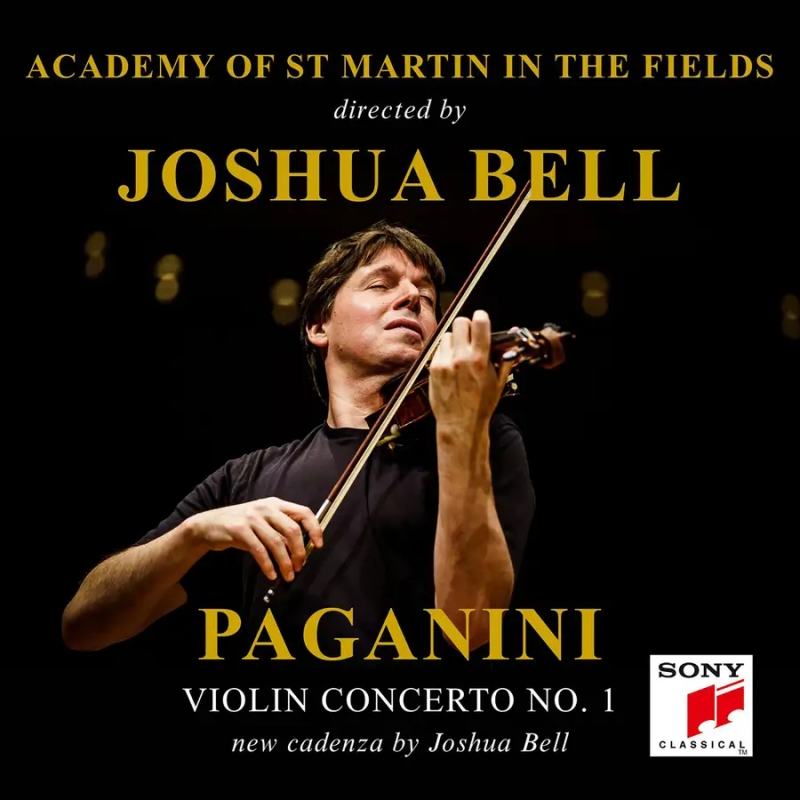
PAGANINI Violin Concerto No. 1, Cantabile, The Carnival of Venice
Joshua Bell (violin), Simon Mulligan (piano), Academy of St Martin in the Fields


發表留言