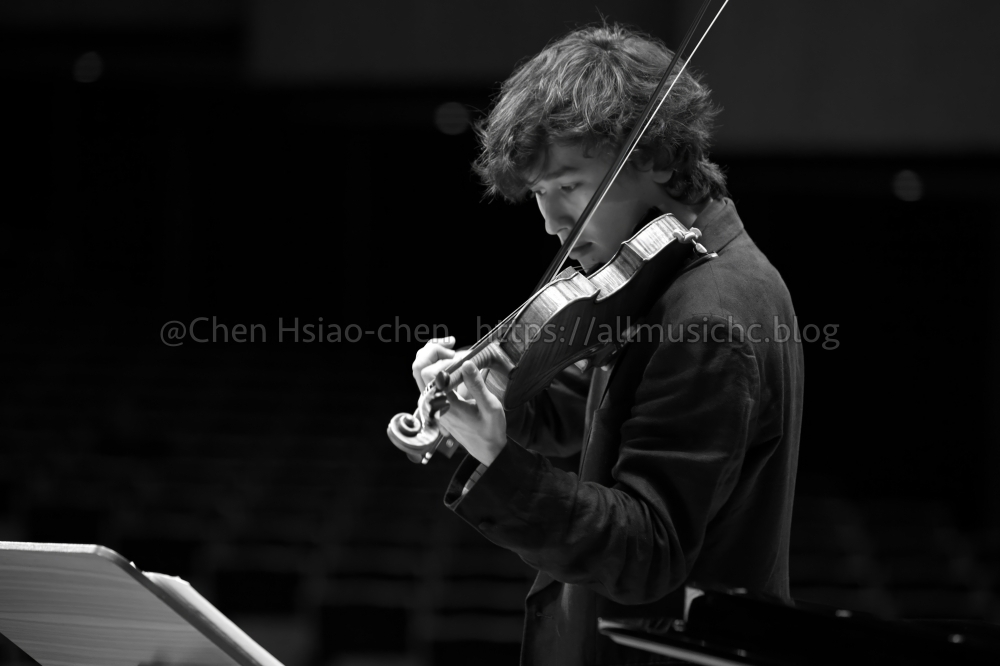
In 2018, at the age of seventeen, the Swedish violinist Daniel Lozakovich released his debut album on Deutsche Grammophon, featuring Johann Sebastian Bach’s two violin concertos alongside the Partita No. 2 in D minor (BWV 1004). At the time, he was already making a name for himself on the international stage. For a young violinist, selecting a virtuosic Romantic showpiece might have seemed a more immediate way to captivate the musical world. Yet Lozakovich chose Bach, wishing to use this debut to declare what kind of musician he truly was.
Four years later, in a 2022 interview, Lozakovich described Bach as "an entire planet". In his view, Bach’s music constitutes a rich, self-contained universe that possesses not only rigorous structures and profound emotions, but also offers an indescribable, deep spiritual experience. "I have learnt everything from Bach — he is my number one teacher," he declared, even likening Bach’s solo sonatas and partitas to "a Bible". This prompts the question: what exactly has this young violinist learnt from Bach's works?
Beyond the Violin: Studies Outside the Instrument
Born in Stockholm in 2001, Lozakovich did not begin learning the violin until he was nearly seven years old. At the time, some teachers even considered him too old to start, yet his progress was astonishingly rapid: by age nine he was performing with orchestra, and at fifteen he signed an exclusive contract with Deutsche Grammophon, becoming one of the most watched young performers on the international scene. Fascinating as this prodigy trajectory is, what proves even more compelling is how he cultivated his artistic vision. Although born and raised in Sweden, his early violin teachers came predominantly from the former Soviet Union, grounding him in the Soviet violin tradition from an early age. Alongside his instrumental training, he read extensively in literature and philosophy, while passionately studying historical recordings by past masters, developing a particular affection for conductors from the first half of the twentieth century.
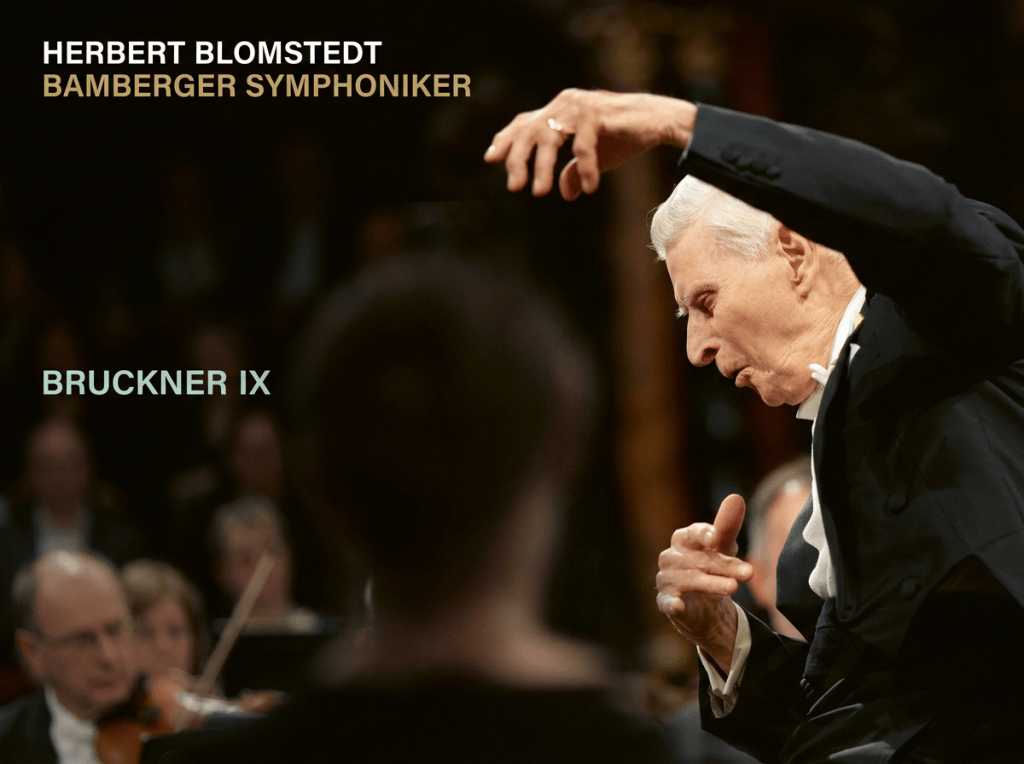
Wilhelm Furtwängler stands among the conductors he most admires. Furtwängler frequently adjusted his tempos with the music's expressive rise and fall; despite sweeping variations, his phrasing remained seamlessly fluid and natural. Lozakovich particularly admires this mastery of tempo control. In his view, performance need not adhere strictly to a rigid metronome marking; what matters is knowing when to make necessary adjustments to serve the music's organic unfolding. Yet tempo flexibility must never serve mere self-display. Lozakovich strongly endorses Furtwängler’s ethos: even when deviating from literal score markings, a performer must remain anchored in the composer's intentions. Furtwängler famously noted that if he was not convinced Beethoven desired a certain interpretation, he would not execute it. Lozakovich has also drawn on Konstantin Stanislavsky’s theatrical theory to illustrate this: an actor must inhabit a character deeply to convey genuine emotion; similarly, a musician must first immerse themselves in the work so that emotional expression flows authentically from within, rather than being artificially engineered.
These insights elucidate why Lozakovich holds Bach in such high esteem. Bach's compositions possess a rigorous architecture while affording the performer ample room for personal judgment. For Lozakovich, Bach presents the ultimate test of a musician's grasp of a work — requiring meticulous thought in shaping phrases, controlling tonal colour, and conveying emotion, all to communicate the true essence of the music to the listener.
No Single Way to Perform Bach
A defining feature of Bach's solo violin works is the creation of polyphonic, multi-voiced textures on just four strings. Through double stops and chords, different voices ring out simultaneously; through subtle melodic shaping, the listener hears an implied contrapuntal dialogue. Beyond mastering intonation and bowing, the performer must delicately balance the weight and duration of every note to clarify voice-leading and render harmonic and contrapuntal transitions natural and fluid.
Lozakovich believes that Bach's music exposes a musician's true artistic caliber, for no performer can hide their deficiencies. Pursuing a pleasing tone alone risks flattening the polyphonic hierarchy; over-emphasising personal emotion easily fractures phrasal continuity; whilst aiming purely for mechanical accuracy leaves the interpretation lifeless. Nevertheless, Lozakovich rejects the notion that there is only one correct way to interpret Bach. He admires the Bach interpretations of Glenn Gould, Pablo Casals, Trevor Pinnock, and conductor Enoch zu Guttenberg. Though vastly different in style, each inspires him. For Lozakovich, the benchmark of a successful interpretation lies simply in whether it is convincing: "as long as it is convincing".
If fidelity to the composer is paramount, how can such diverse interpretive approaches be embraced? In my view, Lozakovich cares whether a performer grasps the core logic of the work and articulates it through their own voice. A score records the composer’s blueprint but cannot specify every performance nuance; different musicians naturally respond differently to the same piece. As long as the interpretation penetrates the core logic, it carries conviction. This brings to mind the concept of treating a work as a seed: when planted in different soils, the same seed grows into distinct plants, yet at its root, it retains its intrinsic nature.
In June 2018, Lozakovich performed Bach's Partita No. 2 in D minor in Paris. Critics praised his clear articulation, precise intonation, and refined tone, yet noted that in the Sarabande, his pursuit of smoothness led him to overlook the dance's characteristic stress on the second beat: "...what is missing is the Sarabande itself: Daniel Lozakovich, in his concern for balance, has forgotten the imbalance inherent in this ancient dance, and its characteristic stress on the second beat of the bar." ( ...il manque la Sarabande : Daniel Lozakovich, dans son souci de l'équilibre, a oublié le déséquilibre inhérent à cette danse ancienne, et son appui caractéristique sur le deuxième temps de la mesure.)
In the Chaconne, while highlighting the distinct character of individual variations, critics noted that some accents felt overly forceful, with aggressively struck chords dampening the instrument's natural resonance: "...certain chords are struck with too much aggressiveness, which blocks the resonance." (...certains accords sont plaqués avec trop d'agressivité, ce qui bloque les résonnances.)
These critiques revealed a seventeen-year-old artist with an established voice, actively exploring how best to balance tonal beauty with structural integrity. By October 2026, performing the same Sarabande as an encore in Toulouse, France, critics observed a marked shift: using very little vibrato, his tone was pale and pure (détimbré), his phrasing infinitely sustained (phrasés infinis), conveying profound emotional depth even in delicate, unspoken pianissimos (pianissimos indicibles). The French critic Thibault d'Hauthuille wrote: "The contrast is staggering. Suddenly the sound is stripped of timbre, with very little vibrato, prodigiously inhabited by a deep melancholy, an extraordinary density, infinite phrasings, and unutterable pianissimos. One saw tears flow from the violin's f-holes; the earth could stop turning." (Le contraste est sidérant. Tout à coup le son est détimbré, très peu vibré, prodigieusement habité par une profonde mélancolie, une densité folle, des phrasés infinis et des pianissimos indicibles. On a vu des larmes sortir des ouïes du violon ; la terre peut s'arrêter de tourner.) Tone quality remains central to his artistry, and his evolving approach reflects an ongoing contemplation of aligning sound with musical character.
Facing Bach Alone
Lozakovich once categorised composers into two distinct archetypes: the music of Bach and Mozart imparts a spiritual force transcending mundane existence; while Paganini, Liszt, and Ysaÿe continually expanded the physical boundaries of instrumental technique. Although this dichotomy is not exhaustive — given that Bach also revolutionized violin technique — it underlines why Lozakovich attaches such weight to Bach's spiritual dimension, believing that works of distinct temperaments demand distinct performance postures. For instance, when performing certain passages in Bach, he feels the need to immerse himself as if in solitary prayer, without seeking direct rapport with the audience; whereas virtuosic works like Paganini's invite direct communication and enjoyment of stage atmosphere. Neither approach is superior; the key is alignment with the character of the work.
Lozakovich values solitude deeply. Practising and studying music require sustained inner reflection, yet solitude on stage differs from solitude in the practice room. Private practice allows undisturbed exploration; the stage provides an opportunity to share inner convictions with listeners. Even when fully absorbed in Bach without overt audience interaction, a profound dialogue takes place through the instrument.
The final Chaconne of Bach's D minor Partita illustrates why Bach holds such significance for Lozakovich. Spanning over fifteen minutes, this monumental variation set builds upon a repeating harmonic foundation, unfolding rich polyphonic transformations and emotional contrasts. Lozakovich particularly highlights its journey through lightness, happiness, and acute tragedy, seeing Bach encapsulate a vast spectrum of human experience within a single work.
The Chaconne poses formidable technical demands, but the greater challenge lies in mastering the work's architectural arc. Each variation possesses a distinct personality, yet remains tightly linked to the whole. Over-emphasising individual sections fragments the narrative; focusing solely on momentum obscures detail. Thus, the performer must balance the macro-structure with micro-detail, meticulously pacing tempo, tone colour, and dynamics so that the music unfolds organically while sustaining overarching unity. This again recalls Lozakovich’s admiration for Furtwängler, who adjusted tempo with phrasal respiration without disrupting continuity. Balancing local flexibility with structural unity defines the standard Lozakovich strives for in the Chaconne.
Bach Remains His Teacher
Eight years have passed since the release of his debut Bach album in 2018. During this time, Lozakovich has performed works across diverse eras, collaborated with numerous artists, and accumulated extensive stage experience — yet his devotion to Bach remains steadfast. In 2026, he presented an all-Bach solo program comprising three distinct works: the Sonata No. 1 in G minor (BWV 1001), the Partita No. 3 in E major (BWV 1006), and the Partita No. 2 in D minor (BWV 1004). Reflecting on his earlier statement, "I have learnt everything from Bach," the significance lies in how Bach’s music continuously compels him to re-examine his own playing. Controlling tempo, balancing voice-leading, and striking harmony between rigour and freedom are not questions automatically resolved by experience. Even a familiar masterpiece yields new discoveries with every return. For Lozakovich, Bach remains his teacher precisely because no matter how long one studies his works, there is always more to explore, refine, and understand. (17 November, 2026)



發表留言