自成風韻的小提琴黃鶯:Bomsori堅持探索聲音本質
  除了韓味十足的姓氏「金」(Kim)搭配很不韓風的音譯名字Bomsori,我對於韓國小提琴家Bomsori最初印象來自音樂比賽。大約在二○一五年前後,我經常在國際小提琴比賽的參賽名單看到她的名字。只是二○一三年在德國慕尼黑ARD國際音樂比賽拿下銀牌後(第一名從缺),被稱為「比賽獵人」的Bomsori卻屢次與大獎擦肩。接下來的戰績不是名落第五,就是被列入不計名次的「得獎人」。即使是聲勢最高的二○一六年維尼奧夫斯基國際小提琴大賽,她也意外名列第二,加上樂評人評審團獎(Board of Critics Prize)與波茲南市長獎。

  這一屆維尼奧夫斯基國際小提琴大賽的名次爭議,讓評審團不得不在事後公布計分。無論有沒有評審偏坦的問題,獲得銀牌已經是既成的事實。不過福禍相倚,第二年,Bomsori與華沙愛樂在華納音樂錄下她在比賽中演奏的兩首小提琴協奏曲,比首獎得主更早獲邀灌錄唱片。而她在比賽中的表現讓波蘭鋼琴家布列哈奇(Rafał Blechacz)印象深刻,主動寫信邀請合作。於是Bomsori被帶往DG錄音,接著成為DG旗下音樂家,順利打開知名度。

  回顧密集參賽的那段日子,Bomsori聲稱主要目的並不是追求名次,而是把國際比賽視為通往世界舞台的必經途徑。「比賽有許多優缺點,但若想在短時間內消化大量曲目並累積舞台經驗,我會建議後輩挑戰比賽。」比賽強迫她在短時間內準備多樣曲目,從巴洛克到現代作品,有助於拓展音樂視野與技術能力,「是我走向世界舞台的試煉」。更重要的是,「比賽教會我耐力。你需要一個月全力以赴,投入每一輪考驗。這對我成為職業小提琴家至關重要」。而「比賽獵人」這個稱號「讓我想起曾經走過的那段奮鬥時光,提醒我保持初心」。

  Bomsori九八九年出生於韓國大邱,祖父為她取了意思是「春之聲」的名字「Bomsori」(봄소리),象徵清新、希望與生命的甦醒,也希望在冬季出生的孫女能為世界帶來春天的好消息。五歲那一年,Bomsori跟著熱愛音樂的父母欣賞鄭京和的演出後,「那聲音直擊我的心」,她立刻央求父母讓她學習小提琴。除了小提琴,Bomsori同時接觸鋼琴、長笛與芭蕾,圍棋更成為她在音樂之外最大的愛好。

  就讀藝園學校的時候,Bomsori參加小提琴家金永旭(Young Uck Kim)的大師班,因為沒有帶伴奏而被金永旭嚴厲斥責,讓她對這位前輩印象深刻。一年多後,Bomsori考進首爾大學正式拜師金永旭,開始系統性的學習。金永旭一九六○年代與鄭京和同時在茱麗亞音樂學院師從加拉米安(Ivan Galamian),七○年代與馬友友、普列文(André Previn)、艾森巴赫(Christoph Eschenbach)、艾克斯(Emanuel Ax)等人合作過一些唱片。金永旭教學以嚴格著稱,特別注重基本功與姿勢,他在第一學期要求Bomsori專注練習基本的空弦,目的在於矯正姿勢,預防未來因不當手型造成的身體負擔。音樂詮釋上,金永旭鼓勵學生「找到自己的聲音」,而不是盲目模仿。他曾經對Bomsori說:「妳要看著自己練習!」這句話影響她對音樂的獨立思考。因此Bomsori把認識金永旭視為「人生最大的幸運」,認為他的教導不僅關乎音樂,更關乎做人的謙遜與真誠:「他教會我音樂的偉大與我們的渺小,這些教誨成為我音樂與人生的基石。」

  由於希望繼續跟著金永旭學習,Bomsori直到完成碩士學業才前往紐約茱麗亞音樂學院留學,同時開始「比賽獵人」的生涯。Bomsori從中學時期就養成寫音樂日記的習慣。日記不僅記錄靈感,也反映她對音樂的嚴格自我要求。Bomsori目前居住於德國柏林,儘管行程繁忙,她仍堅持撰寫「音樂日記」。「我以審視自己的心態來記錄,觀察我的思想、情感,以及對世界與音樂的理解如何隨時間變化」。對Bomsori而言,音樂日記是一種內省工具,幫助她梳理音樂與生活的連結。「寫日記像與自己對話,觀察我的想法如何變化。」她認為記錄能讓她追溯自己的成長軌跡,特別是對音樂詮釋與個人觀點的演變。

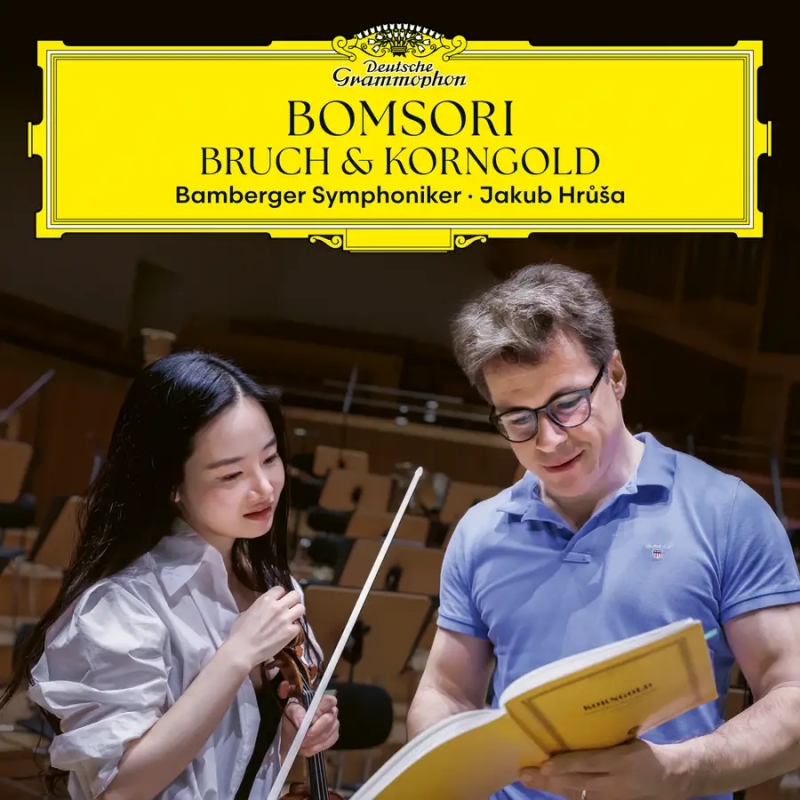
  與布列哈奇合作佛瑞、德布西、齊馬諾夫斯基的小提琴奏鳴曲之後,Bomsori在DG陸續錄製尼爾森小提琴協奏曲、曲目多半改編自歌劇、芭蕾或是戲劇性強烈的《舞台上的提琴》(Violin on Stage),最近則是與捷克指揮家赫魯沙(Jakub Hrůša)、德國邦貝格交響樂團(Bamberger Symphoniker)合作布魯赫與康果爾德的小提琴協奏曲,以及四首康果爾德的作品。布魯赫第一號小提琴協奏曲是Bomsori童年時期最愛的曲目,而她的恩師金永旭曾經於一九七○年代與卡穆(Okko Kamu)、邦貝格交響樂團在DG錄製這部協奏曲,因此對Bomsori來說,這一次錄音也有傳承的意義。

  相較於維尼奧夫斯基、蕭斯塔科維奇協奏曲許多強烈戲劇性的詮釋,Bomsori首張專輯中以「歌唱性」為核心的風格,給人耳目一新的印象。她的戲劇性不在表現誇張的對比或是頻繁多彩的音色變換,而在於搭配細緻的彈性速度與如歌般的旋律線裡。某種程度這會被歸為具有女性小提琴家的特質,然而Bomsori的音樂「細」而不「膩」,有很多獨到的處理法,和某些女性小提琴家特重突出婉約形象不同。在這張版本眾多的布魯赫第一號小提琴協奏曲中,我很高興終於能聽到一個不過份甜膩嬌媚的現代錄音,但是每一個樂句、與樂團的搭配都經過仔細斟酌。赫魯沙指揮下的邦貝格交響樂團緊密貼合Bomsori的詮釋,使整張專輯呈現高度整體性的音樂語言。Bomsori在布魯赫的協奏曲中展現旋律線的自然流動與層次分明的動態處理;在康果爾德作品裡,她平衡了華麗技巧與內斂抒情。明明是兩首作曲家刻意塑造高低起伏、峰迴路轉的作品,在Bomsori手上卻像絲綢般的滑細。幾首改編曲則進一步拓展她對小提琴「歌唱性」的探索,也使專輯兼具深度與多樣性。

  Bomsori不以炫技在諸強中爭鋒,而是在音樂與自身之間建立穩固的對話。無論是比賽的歷練、師長的啟發,或錄音作品中的選曲與詮釋,她的音樂軌跡始終圍繞著對聲音本質的探索與堅持。這份穩固而清晰的音樂觀,自主風格的建立,也許正是她在多元競爭的演奏世界中持續前行的關鍵。(2025年5月20日)

Beyond the distinctly Korean surname "Kim" paired with the uniquely un-Korean given name "Bomsori," my first impression of Korean violinist Bomsori Kim came from music competitions. Around 2015, her name frequently appeared on the rosters of international violin competitions. After winning the silver medal at the 2013 ARD International Music Competition in Munich (where no first prize was awarded), Bomsori, dubbed the "competition hunter" (콩쿠르 사냥꾼), often came close to major awards but didn't quite clinch them. Her subsequent results were either fifth place or listed among unranked "prize winners." Even at the highly anticipated 2016 Henryk Wieniawski International Violin Competition, she unexpectedly took second place, alongside the Board of Critics Prize and Prize endowed by Jacek Jaśkowiak, the Mayor of Poznań.

The controversy over the rankings at that Wieniawski Competition prompted the jury to release the scores afterward. Regardless of whether there was any bias among the judges, the silver medal was a done deal. However, every cloud has a silver lining. The following year, Bomsori recorded the two violin concertos she performed in the competition with the Warsaw Philharmonic for Warner Classics, securing a recording deal before the first-prize winner. Her performance left a strong impression on Polish pianist Rafał Blechacz, who reached out to invite her for a collaboration. This led to a recording with Deutsche Grammophon (DG), where she became a signed artist, significantly boosting her international recognition.

Reflecting on her intense competition days, Bomsori explained that her primary goal wasn't chasing rankings but viewing international competitions as a necessary stepping stone to the global stage. "Competitions have their pros and cons, but if you want to master a wide range of repertoire and gain stage experience in a short time, I'd recommend younger musicians try them," she said (Korean original: "콩쿠르에는 많은 장단점이 있지만 단시간 내에 많은 레퍼토리를 소화하는 훈련과 무대 경험을 쌓고 싶다면 콩쿠르에 도전해보라고 하고 싶다"). Competitions forced her to prepare diverse pieces, from Baroque to modern works, broadening her musical perspective and technical skills, which she described as "my trial to reach the world stage" (Korean: "세계 무대에 서는 날을 꿈꾸며 고군분투하던 시절"). More importantly, "competitions taught me stamina. You need to give your all for a month, pouring everything into each round. That was crucial for me to become a professional violinist" (English original from source: "What she learnt above all from the competition circuit was stamina. ‘You're there for a month, you're putting all your efforts into each round. It was helpful for me to learn about that strength, in preparation for becoming a professional concert violinist'"). The nickname "competition hunter" "reminds me of the struggles I went through and helps me stay true to my beginnings" (Korean: "그때의 간절하지만 무지했던 열정도 생각이 나고 초심을 떠올리게 된다").

Born in 1989 in Daegu, South Korea, Bomsori was given her name, meaning "sound of spring" (봄소리), by her grandfather. It symbolizes freshness, hope, and the awakening of life, with the wish that his winter-born granddaughter would bring spring-like good news to the world. At age five, Bomsori attended a concert by Kyung Wha Chung with her music-loving parents. "The sound went straight to my heart," she recalled (English: "I was very shocked in her concert because the sound was not like anything else it was like I felt like the violin sound spoke to me directly to my heart"), immediately begging her parents to let her learn the violin. Besides the violin, Bomsori explored piano, flute, and ballet, with Go (the board game) becoming her greatest hobby outside music.

While attending Yewon School, Bomsori participated in a masterclass by violinist Young Uck Kim and was sternly reprimanded for arriving without an accompanist, leaving a lasting impression of the senior musician. Over a year later, she enrolled at Seoul National University, formally studying under Young Uck Kim in a systematic program. Young Uck Kim, who studied alongside Kyung Wha Chung under Ivan Galamian at Juilliard in the 1960s, collaborated with artists like Yo-Yo Ma, André Previn, Christoph Eschenbach, and Emanuel Ax in the 1970s. Known for his rigorous teaching, Young Uck emphasized fundamentals and posture, requiring Bomsori to focus on open-string exercises for her first semester to correct her posture and prevent future physical strain. In musical interpretation, he encouraged students to "find their own voice" rather than blindly imitating others. He once told Bomsori, "You have to look at yourself when you practice!" (Korean: "너 자신을 보고 연습하라!"). This advice shaped her independent approach to music. Bomsori considers meeting Young Uck Kim "the greatest fortune of my life" (Korean: "김영욱 선생님을 만난 건 인생에 가장 큰 행운"), crediting his teachings not only for her music but also for her humility and sincerity: "He taught me the greatness of music and our own smallness, lessons that became the foundation of my music and life" (Korean: "음악의 위대함 앞에서 우리가 얼마나 작은 존재인지… 이러한 가르침은 제 음악과 인생의 기초가 됐다").

To continue studying with Young Uck Kim, Bomsori delayed studying abroad until after completing her master's degree, then moved to New York's Juilliard School, where her "competition hunter" journey began. Since middle school, she has kept a "music diary," a habit that continues to this day. The diary records not only inspirations but also reflects her strict self-discipline in music. Now living in Berlin, Germany, despite a hectic schedule, she maintains this practice. "I write with the mindset of looking inward, observing how my thoughts, emotions, and understanding of the world and music change over time" (Korean: "나 자신을 들여다본다는 생각으로 기록을 남기다 보면 내 생각과 감정이, 그리고 세상과 음악을 이해하는 관점이 어떻게 변화해왔는지 보는 게 흥미롭다"). For Bomsori, the music diary is a tool for introspection, helping her connect music and life. "Writing is like a conversation with myself, observing how my thoughts evolve" (Korean: "일기를 쓰는 건 나와의 대화 같아요. 내 생각이 어떻게 변하는지 관찰하는 거죠"). She believes this practice allows her to trace her growth, particularly in her musical interpretations and personal perspectives.

After collaborating with Rafał Blechacz on sonatas by Fauré, Debussy, and Szymanowski, Bomsori recorded Nielsen's Violin Concerto for DG, followed by Violin on Stage, an album featuring pieces mostly adapted from operas, ballets, or highly dramatic works. Her latest project is a collaboration with Czech conductor Jakub Hrůša and the Bamberger Symphoniker on concertos by Max Bruch and Erich Wolfgang Korngold, along with four additional Korngold pieces. Bruch's Violin Concerto No. 1 is a childhood favorite for Bomsori, and her mentor Young Uck Kim recorded it with Okko Kamu and the Bamberger Symphoniker for DG in the 1970s, making this recording a meaningful act of legacy.

Compared to the bold, dramatic interpretations of Wieniawski and Shostakovich concertos, Bomsori's debut album stood out for its "singing" quality, offering a fresh perspective. Her drama lies not in exaggerated contrasts or frequent tonal shifts but in nuanced rubato and lyrical melody lines. To some extent, this might be seen as a trait of female violinists, yet Bomsori's music is refined without being overly sentimental, with many unique touches that set her apart from female violinists who emphasize delicate imagery. In the crowded field of Bruch's Violin Concerto No. 1 recordings, I'm delighted to hear a modern version that avoids excessive sweetness or charm, with every phrase and orchestral interplay carefully considered. Under Hrůša's baton, the Bamberger Symphoniker closely aligns with Bomsori's interpretation, creating a highly cohesive musical language. Bomsori brings natural flow and layered dynamics to Bruch's concerto, while in Korngold's works, she balances virtuosic flair with introspective lyricism. Despite the composers' intentional peaks and turns, in Bomsori's hands, the music feels as smooth as silk. The adapted pieces further explore her pursuit of the violin's "singing" quality, adding depth and variety to the album.

Bomsori doesn't compete by dazzling with virtuosity but by building a steady dialogue between music and herself. Whether through the trials of competitions, the guidance of mentors, or her choices in recordings, her musical journey revolves around exploring and staying true to the essence of sound. This clear and grounded musical perspective, along with her distinct style, may be the key to her continued success in the competitive world of performance.  (20 May, 2025)
BRUCH Violin Concerto No. 1 in G minor, op. 26
KORNGOLD Violin Concerto in D major, op. 35; Glück, das mir verblieb (From Die tote Stadt, op. 12); Garden Scene (From "Much Ado About Nothing", op. 11-4. arr. by Matthias Spindler)
Bomsori (violin), Bamberger Symphoniker, Jakub Hrůša
September 2024, Joseph-Keilberth-Saal Bamberg

KORNGOLD Schönste Nacht, Ohne Dich  (From Die stumme Serenade, op. 36-25 & 23, arr. by Ingmar Sonnenmoser)
Bomsori (violin), Thomas Hoppe (piano)
December 2024, Tanzsaal an der Panke / b-sharp, Berlin

 陳效真作品集
發表留言