一段延續傳統、思索未來的音樂對話:阿普爾的《向費雪狄斯考致敬》專輯
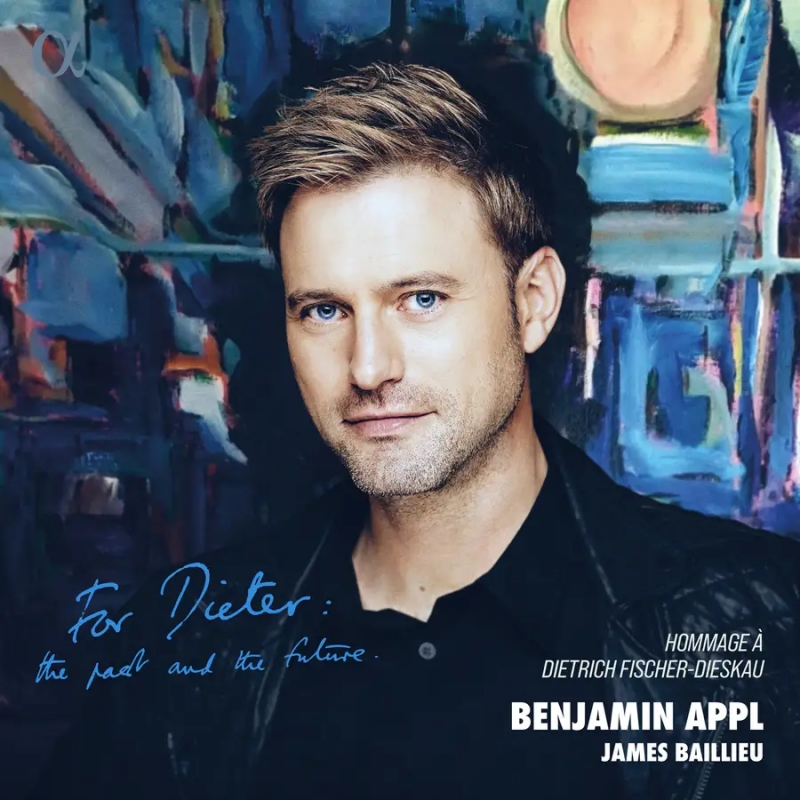
  在德國男中音阿普爾(Benjamin Appl)學習音樂的歷程中,有兩位導師對他的影響最為深遠,其中一位就是德國傳奇聲樂家費雪狄斯考(Dietrich Fischer-Dieskau)。二○二五年適逢費雪狄斯考百歲冥誕,阿普爾推出專輯《向費雪狄斯考致敬》(For Dieter: Hommage à Dietrich Fischer-Dieskau),以此專輯紀念這位改變自己音樂人生的恩師。

  阿普爾來自巴伐利亞雷根斯堡(Regensburg)一個熱愛音樂的家庭,兄弟三人從小就經常在母親的吉他伴奏下合唱,十歲加入著名的雷根斯堡大教堂合唱團(Regensburger Domspatzen)。不過,阿普爾一開始只把歌唱當成業餘的愛好。雖然在慕尼黑跟隨專業教授學習聲樂,但是他在學校主修工商管理,直到二○一○年,已經「高齡」二十八歲的阿普爾才決定進入倫敦皇家音樂學院(Royal Academy of Music)接受專業聲樂訓練。讓他下定決心改換跑道的原因,是前一年在奧地利舒伯特音樂節參加的費雪狄斯考大師班。

  十二歲聽過費雪狄斯考的《冬之旅》錄音以後,阿普爾從此把這位前輩視為聲音詮釋的典範與靈感泉源,尤其是德語藝術歌曲的領域。他大量收集而且研究費雪狄斯考的錄音。當阿普爾有機會在公開的大師班接受費雪狄斯考指導時,他懷著敬仰與不安的心情,列出三十首舒伯特藝術歌曲清單。結果費雪狄斯考卻選了四首不在曲單上的歌曲。在滿場的觀眾面前,倍感壓力的阿普爾不只是站姿不穩,音色也顫抖不已。但是費雪狄斯考「馬上讓我放鬆下來,用一種親切又認真的態度引導我。」阿普爾回憶。

  大師班結束後,費雪狄斯考主動聯繫阿普爾,給他私人聯繫方法並邀請他到家裡學習。「我到現在還是覺得像做夢一樣,這是我人生和事業中最美妙的時刻。」阿普爾說。從二○○九年到費雪狄斯考在二○一二年去世前,阿普爾定期接受費雪狄斯考指導,曲目以德語藝術歌曲,尤其是舒伯特的作品為主。費雪狄斯考不只指導阿普爾演唱,還談論舞台表演、如何理解歌詞,甚至怎麼和觀眾互動。「他教會我的不僅是聲樂或詮釋,還有身為音樂家的責任,以及對音樂的嚴謹準備。」

  二○一二年五月,阿普爾到費雪狄斯考位在慕尼黑附近塔恩貝格湖畔(Lake Starnberg)的家中,一起討論舒伯特表達愛情與英雄主義,但最終轉向內省哀傷的《致豎琴》(An die Leier)。當時費雪狄斯考的情緒相當低落,時而落淚或短暫入睡,「他反覆問及人生意義與價值,我強烈感覺這很可能就是我們最後的會面。」阿普爾說。幾週後的五月十八日,費雪狄斯考在睡夢中過世,享年八十六歲。

  強烈建議喜愛費雪狄斯考的愛樂者一定要聽聽這張專輯,仔細閱讀解說冊裡的文章,或是購買附有圖文書的套裝版本。這不是一張單純收錄費雪狄斯考拿手作品的致敬專輯,而是透過音樂和文字來完整呈現費雪狄斯考的藝術與生平。阿普爾主動聯繫費雪狄斯考的遺孀瓦拉第(Júlia Várady)和家族成員,請求協助整理其私人檔案與歷史資料。他走進費雪狄斯考位於巴伐利亞的住處,翻閱塵封多年的筆記、信件與曲譜草稿。「每翻開一頁筆記,彷彿就聽見他的聲音從紙上浮現。」在與家屬長談與共識下,這些材料不僅豐富了專輯曲目,也為圖文書提供珍貴的第一手素材。他在書中撰寫旁註與評論,從師徒情感、音樂選擇到語言風格,處處可見他對費雪狄斯考人格與藝術的細膩理解。

  選曲依照費雪狄斯考一生的經歷鋪展,以童年時期熟悉的德國藝術歌曲──舒伯特《致音樂》(An die Musik)開場並且當成整張專輯的中心主旨,接下來是阿普爾在費雪狄斯考家中發現,幾首從未公開演出的家族作品,像是父親阿伯特‧費雪(Albert Fischer)作品《塞森海姆:野玫瑰》(Sesenheim: Heidenröslein),以及曾經是合唱指揮與DG製作人的哥哥克勞斯‧費雪狄斯考(Klaus Fischer-Dieskau)的鋼琴獨奏曲《夜曲》(Notturno for piano, op. 1-1),還有〈憂鬱〉(3 Lieder für Singstimme und Klavier, op. 3: No. 2, Wehmut)與〈誕生於苦與樂之中〉(Der Spielmann, op. 22: No. 1, Aus Schmerzen und Freuden geboren)兩首歌曲,象徵家庭對於費雪狄斯考音樂啟蒙的影響。

  費雪狄斯考在戰俘營演唱過的艾斯勒(Hanns Eisler)《返鄉》(Die Heimkehr)與屈涅克(Eduard Künneke)輕歌劇中的詠嘆調《我只是一個貧窮的流浪漢》(Ich bin nur ein armer Wandergesell)表現艱難環境中的藝術堅持。布瑞頓《戰爭安魂曲》中的〈號角之歌〉(Hörnersang)與巴伯的三首歌曲則代表費雪狄斯考在國際樂壇上的影響力。每一首歌曲的背後都有費雪狄斯考的藝術生命軌跡,而德布西《美麗的夜晚》(Schöner Abend)歌詞是費雪狄斯考親自從法語翻譯為德語。

  圖文書內容包括阿普爾親自撰文的個人回憶,收錄費雪狄斯考的照片、日記、信件、手稿與繪畫。阿普爾筆下的大師並非如外界所見的從容自信,而是敏感、帶點憂鬱,執著且富有探索精神。他向愛樂者透露費雪狄斯考在公眾形象背後的人性脆弱面,像是對因產後併發症去世的第一任妻子的思念、對家庭的內疚,以及晚年的抑鬱與自我反思。

  專輯的錄音非常乾淨,沒有過多人工修飾。阿普爾的演唱頗有費雪狄斯考的細膩之風,但是他並不是模仿,而是以沉穩的節奏、細緻的語言處理與冷靜節制的表達方式展現個人特色,力求在語意與聲音之間維持精準的平衡。阿普爾不只透過這張專輯向恩師致上最深的敬意,也展現他作為當代藝術歌曲詮釋者的定位與思考,使這張專輯成為一段延續傳統、思索未來的音樂對話。

Among the two mentors who deeply influenced the musical journey of German baritone Benjamin Appl, one was the legendary German singer Dietrich Fischer-Dieskau. In 2025, marking the centenary of Fischer-Dieskau’s birth, Appl released the album "For Dieter: Hommage à Dietrich Fischer-Dieskau"  to commemorate the teacher who had transformed his life in music.

Appl was born into a music-loving family in Regensburg, Bavaria. Along with his two brothers, he often sang in harmony accompanied by their mother on the guitar. At ten, he joined the renowned Regensburger Domspatzen cathedral boys’ choir. However, singing was initially just a hobby for him. Though he studied voice privately in Munich, his main academic focus was in business administration. It wasn’t until 2010—at the relatively “late” age of twenty-eight—that Appl decided to formally pursue vocal studies at the Royal Academy of Music in London. What prompted this career change was his experience the previous year in a master class given by Fischer-Dieskau at the Schubertiade in Austria.

When Appl first heard Fischer-Dieskau’s "Winterreise" at the age of twelve, the elder artist became, as Appl later said, a "model of vocal interpretation and a source of inspiration"—especially in the realm of German art song. He avidly collected and studied Fischer-Dieskau’s recordings. When Appl was finally able to attend a public master class with him, he brought a list of thirty Schubert songs. To his surprise, Fischer-Dieskau picked four pieces not on the list. On stage before a full audience, Appl stood trembling, his tone unstable. “But he immediately put me at ease, guiding me with kindness and seriousness,” Appl recalled.

After the class, Fischer-Dieskau reached out to Appl, gave him private contact details, and invited him to study at his home. “Even now, it still feels like a dream. It was one of the most wonderful moments of my life and career,” said Appl. From 2009 until Fischer-Dieskau’s death in 2012, Appl regularly studied with him, focusing primarily on German lieder, especially Schubert. Fischer-Dieskau not only coached him vocally but also discussed stage presence, textual understanding, and audience interaction. “He taught me not only about singing and interpretation but also the responsibility of being an artist, and the seriousness with which one must prepare for music.”

In May 2012, Appl visited Fischer-Dieskau at his home by Lake Starnberg near Munich. They discussed Schubert’s ideas of love and heroism, and eventually the introspective and mournful "An die Leier". At that time, Fischer-Dieskau was emotionally fragile, occasionally crying or dozing off. “He repeatedly asked about the meaning and value of life. I had a strong feeling that it might be our last meeting,” said Appl. A few weeks later, on May 18, Fischer-Dieskau passed away in his sleep at the age of 86.

This album is highly recommended for admirers of Fischer-Dieskau. Beyond the music, the accompanying booklet offers deep insight into his art and life. Appl worked closely with Fischer-Dieskau’s widow Júlia Várady and other family members to access personal archives and historical documents. He explored Fischer-Dieskau’s home in Bavaria, poring over old notebooks, letters, and manuscript sketches. “Each page felt like his voice was emerging from the paper.” With the family’s full support, these materials enriched not only the album’s repertoire but also provided invaluable content for the accompanying photo-text book. Appl contributed annotations and commentary, reflecting on their mentor-student relationship, musical choices, and stylistic language—demonstrating his nuanced understanding of Fischer-Dieskau’s artistry and personality.

The tracklist traces Fischer-Dieskau’s life journey, beginning with Schubert’s "An die Musik", a song he cherished since childhood and that serves as the album’s thematic core. Also included are pieces previously unknown to the public, such as "Sesenheim: Heidenröslein" by Fischer-Dieskau’s father Albert Fischer and "Notturno for piano, op. 1-1" and "Wehmut" by his brother Klaus Fischer-Dieskau, as well as "Aus Schmerzen und Freuden geboren". These pieces reflect the familial roots of his musical inspiration.

Other works include Hanns Eisler’s "Die Heimkehr", sung during his time in POW camps, and Eduard Künneke’s aria "Ich bin nur ein armer Wandergesell", showcasing artistic resilience in difficult times. Pieces by Benjamin Britten 'Hörnersang' from "War Requiem" and Samuel Barber reflect Fischer-Dieskau’s international influence. Each song is tied to a moment in his artistic life. Notably, Debussy’s "Beau soir" appears here in the German version translated by Fischer-Dieskau himself.

The accompanying photo-text book features Appl’s own writings, and includes photographs, diaries, letters, manuscripts, and paintings by Fischer-Dieskau. Appl reveals a different side of the master—sensitive, melancholic, intense, and curious. He shares Fischer-Dieskau’s private grief over the death of his first wife due to childbirth complications, his guilt toward family, and the depression and self-reflection of his later years.

The recording is clear and unadorned. Appl’s performance shows a sensitivity reminiscent of Fischer-Dieskau’s, yet he does not imitate. With steady pacing, precise diction, and emotionally restrained delivery, Appl maintains his own identity. His goal is to balance meaning and vocal tone with precision. Through this album, he not only pays deep respect to his mentor but also affirms his own vision as a modern interpreter of art song—offering a dialogue between tradition and the future.
For Dieter: Hommage à Dietrich Fischer-Dieskau
Benjamin Appl (baritone), James Baillieu (piano)
April 2024, Deutschlandfunk Kammermusiksaal, Köln

 陳效真作品集
發表留言