《蓋亞》喚醒大地之母的原始力量:卡普松邀十六位作曲家共繪自然圖卷
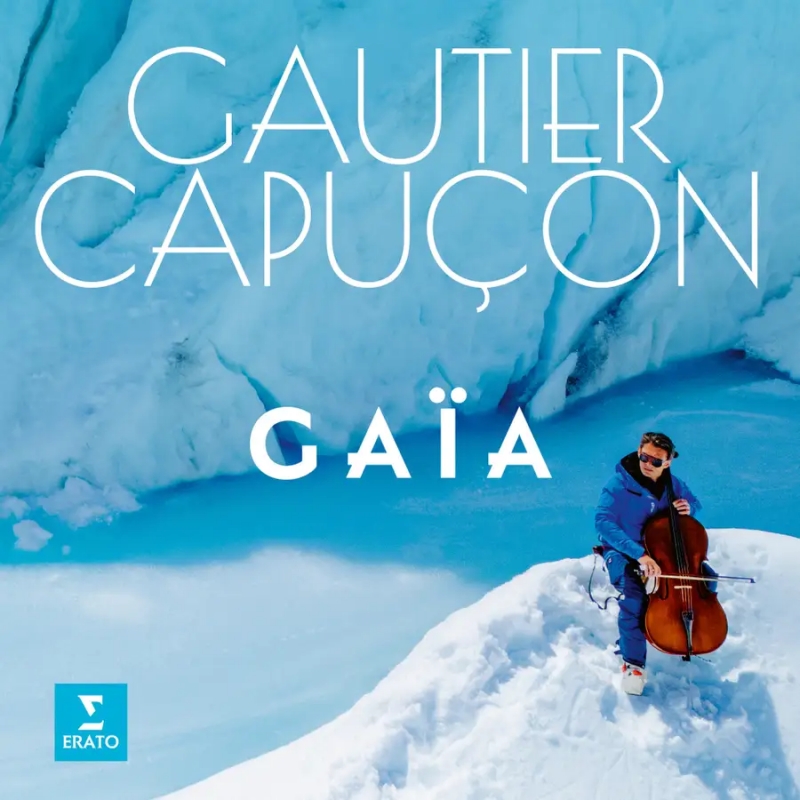
  會注意到《蓋亞》(Gaïa)這張大提琴專輯,是在一次漫無目的亂滑手機時,被戈提埃・卡普松(Gautier Capuçon)在社群上釋出的宣傳影片吸引:在高山上澄澈的藍天與白雪之間,他居然背著大提琴攀登高山峭壁,時而背著琴在陡坡滑雪,時而在雪谷中演奏大提琴,甚至用鋼索連人帶琴吊掛在離地數百公尺高的半空中演奏。這也許是有史以來最瘋狂的大提琴演奏場景!突兀的錯置,加上畫面上天與地美麗的藍白色彩交織,讓我留下非常深刻的印象。當時我還不明白這段影像和音樂之間會如何連結,然而,它已預先為《蓋亞》定下「與自然相關」的明確概念。

  專輯標題「Gaïa」是個關鍵。這個字源自古希臘神話,是大地女神,也是萬物之母。她不只是擬人化的土地,也代表自然、生育力,生命的起源以及自然界原始的力量。專輯裡收錄十七首全新創作,出自十六位當代作曲家,全部是卡普松委託創作並且首次錄音。作曲家間的背景差異極大,擅長的音樂領域橫跨極簡主義、電影配樂、聲音實驗與電子音樂,也正因為作曲家之間的音樂語言與背景如此不同,《蓋亞》最後呈現出來的樣貌,更接近一個策展型計畫,而非傳統意義上的專輯概念。

  要理解這種策展方式不能只看作品表面,而是要回頭審視卡普松怎麼理解「演奏者」這個角色。卡普松常說,音樂要讓人聽得進去,並不代表要把內容變簡單。對他來說,演奏者真正要做的,是想辦法把聽眾引領到音樂裡,而不是先替音樂「降級」,迎合聽眾本來的認知。這樣的想法,也一直影響著他在教育與推廣方面的投入,《蓋亞》可以說是他這套音樂觀的一次具體呈現。這種音樂觀也直接反映在專輯的聲音選擇。專輯沒有刻意追求統一的語言或形式,而是著重讓聲音在時間裡慢慢展開。專輯裡的多數作品,架構在清楚的音型、重複動機和留白的空間上,讓音樂自然往前推進,而不是靠強烈對比或戲劇性的效果來刺激聽眾感官。

  卡普松委託創作時,對作曲家提出的條件十分簡單:以「地球」(Gaïa)和人類的關係為核心命題,其他交由作曲家自由發揮。最後的創作成果並不是講述同一個論題或故事,而是並列出幾位當代作曲家對同一個主題的觀察視角。第一首樂曲是馬克斯‧李希特(Max Richter)〈為蓋亞而寫的序列〉(Sequence for Gaïa),大提琴和鋼琴以層疊而緩慢的樂曲結構為整張專輯定調。卡普松的演奏避免強調個人表情,而是使大提琴更像一條持續運行的能量線。相較之下,魯多維科‧艾奧迪(Ludovico Einaudi)的〈空氣〉(Air)與布萊斯‧戴斯納(Bryce Dessner)的〈走向森林〉(Towards the Forest)、〈走向光明〉(Towards the Light),則以反覆循環節奏與簡約語言維持穩定脈動,展現明晰而不煽情的音樂輪廓。專輯中最具對比性的聲音,是南非大提琴家瑟勞雪(Abel Selaocoe)為人聲與大提琴所寫的〈感謝此生〉(Toro Tsa Kwa)與米西‧馬佐里(Missy Mazzoli)為無伴奏大提琴寫的〈慣常的幻象〉(The Usual Illusion):前者把大提琴擴充為身體與聲音的結合,後者則以不穩定的音色變化描繪自然中景物的錯位感。

  萌生以「地球」為專輯主題的念頭源自卡普松的生活經驗,他成長於法國西阿爾卑斯山脈的薩伏依地區(Savoy),山與雪就是他從小出生所處的日常(難怪他滑雪功夫了得)。他親眼看到阿爾卑斯山,尤其是白朗峰山脈(Mont Blanc massif)一帶的冰河明顯融退,更讓他意識到這是不可忽視的環境變化。也因此,《蓋亞》更像是他對地球自然生態變化的直接反應。既然《蓋亞》來自卡普松對自然的親身經驗,就不難理解為什麼要上山拍攝演奏花絮。不是為了嘩眾取寵,而是延續他多年來希望把大提琴帶出音樂廳,走進自然的想法。卡普松自己描述,完成攝製時當下的感受並不是「很刺激」或覺得完成什麼壯舉,而是一種完成心願的平靜。終於讓大提琴與他最熱愛的自然融為一體,這種經驗不需要被特別誇大或渲染,它只是《蓋亞》形成過程中的一個實在背景。

  《蓋亞》並非試圖以音樂陳述特定概念或完整故事,亦無意強加某種立場給聽眾。它更像是一場客觀且開放的展示,將不同作曲家對同一主題的表述,透過卡普松精心的策劃與安排,條理分明地呈現在世人面前。這張專輯一如藍天、峻嶺與厚雪,以一種安靜而沉穩的力量,展示其壯闊的內涵;而它最終能在聆聽者的心湖中映照出何種色彩,就由每個人自己來領悟與定義了。

I first noticed "Gaïa", this cello album, during a moment of aimless scrolling on my phone, when a promotional video released by Gautier Capuçon on social media suddenly caught my attention. Against a backdrop of crystalline blue skies and vast stretches of snow high in the mountains, he appears carrying his cello while climbing steep alpine rock faces; at times he skis down precipitous slopes with the instrument on his back, at others he plays in a snow-filled valley, and at one point he is even suspended—cellist and cello together—by steel cables, performing hundreds of metres above the ground. This may well be the most extreme cello performance setting ever captured on film.

The striking sense of displacement, combined with the beautiful interweaving of blue and white—sky and earth—left a powerful impression on me. At the time, I did not yet understand how these images would connect with the music itself; nevertheless, they had already established a clear conceptual frame for "Gaïa": a project rooted in a relationship with nature.

The album title, "Gaïa", is crucial. The name comes from Greek mythology, referring to the primordial Earth goddess and mother of all living things. She is not merely a personification of land, but a symbol of nature itself—of fertility, of life’s origins, and of the elemental forces that govern the natural world. The album brings together seventeen newly commissioned works by sixteen contemporary composers, all written at Capuçon’s request and recorded here for the first time.

The composers come from strikingly diverse backgrounds. Their musical languages range from minimalism and film music to sound experimentation and electronic music. Precisely because of these differences, "Gaïa" ultimately resembles a curatorial project more than a conventional album built around a unified musical style.

To understand this curatorial approach, one must look beyond the surface of the works themselves and consider how Capuçon understands the role of the performer. He has often remarked that making music accessible does not mean simplifying its substance. For him, the performer’s responsibility is to guide listeners into the music, rather than lowering the music to meet presumed limitations of the audience. This conviction has long shaped his commitment to education and outreach, and "Gaïa" may be seen as a concrete expression of that philosophy.

This outlook is directly reflected in the album’s sonic choices. Instead of pursuing a single unified language or form, "Gaïa" allows sound to unfold gradually over time. Many of the works are built around clear motifs, repetition, and carefully shaped silences. The music moves forward organically, without relying on sharp contrasts or overtly dramatic gestures to provoke the listener.

When commissioning the composers, Capuçon set only one condition: that each piece should take as its core theme the relationship between the Earth ("Gaïa") and humanity. Beyond that, the composers were given complete freedom. The resulting works do not tell a single story or argue a single thesis; rather, they present a series of parallel perspectives on the same subject.

The album opens with "Sequence for Gaïa" by Max Richter, where cello and piano establish the tone of the entire album through a slow, layered musical structure. Capuçon avoids emphasising personal expression, allowing the cello instead to function as a continuous line of energy in motion. By contrast, Ludovico Einaudi’s "Air", together with Bryce Dessner’s "Towards the Forest" and "Towards the Light", maintains a steady pulse through cyclical rhythms and restrained musical language, shaping outlines that are clear without becoming sentimental.

The album’s most striking contrasts come from Abel Selaocoe’s "Toro Tsa Kwa", written for voice and cello, and Missy Mazzoli’s solo cello work "The Usual Illusion". In the former, the cello expands into a union of body and voice; in the latter, unstable timbral shifts evoke a sense of dislocation within the natural landscape.

The idea of shaping an album around the Earth grew directly out of Capuçon’s own life experience. He was raised in the Savoy region of the western Alps in France, where mountains and snow formed the everyday environment of his childhood—perhaps explaining his evident ease on skis. Witnessing the visible retreat of glaciers in the Mont Blanc massif, he became acutely aware of environmental change as something impossible to ignore. "Gaïa" thus stands as a direct response to transformations he has seen with his own eyes.

Seen in this light, it is easy to understand why Capuçon chose to film performance footage in the mountains. This was not an attempt at spectacle, but an extension of his long-held wish to take the cello beyond the concert hall and into the natural world. Capuçon himself has described his emotional state at the end of the filming not as excitement or triumph, but as a quiet sense of fulfilment. To bring together the cello and the natural landscape he loves most was simply the realisation of a long-cherished idea. The experience does not require exaggeration or theatrical framing; it is merely one of the concrete circumstances from which "Gaïa" emerged.

"Gaïa" does not attempt to impose a specific narrative or moral position through music, nor does it seek to instruct listeners in what they should think. Rather, it functions as an open and carefully balanced presentation. Through Capuçon’s thoughtful curation, the voices of different composers addressing the same theme are laid out with clarity and restraint.

Like blue skies, steep ridges, and deep snow, the album reveals its vastness through quiet and steady strength. What colours it ultimately reflects in the listener’s inner landscape is something each listener must discover—and define—for themselves.
GAÏA
Gautier Capuçon (cello), Jérôme Ducros (piano), Ayanna Witter-Johnson (cello), Frank Braley (piano), Olivia Belli (piano), Abel Selaocoe (cello), Michael Canitrot, Sarah Rebecca (vocals), Capucelli (cello ensemble)
August and October 2024, Schloss Elmau, Krün, Germany



發表留言