鋼琴上的「水壩建造者」:安德澤夫斯基與布拉姆斯的克制美學
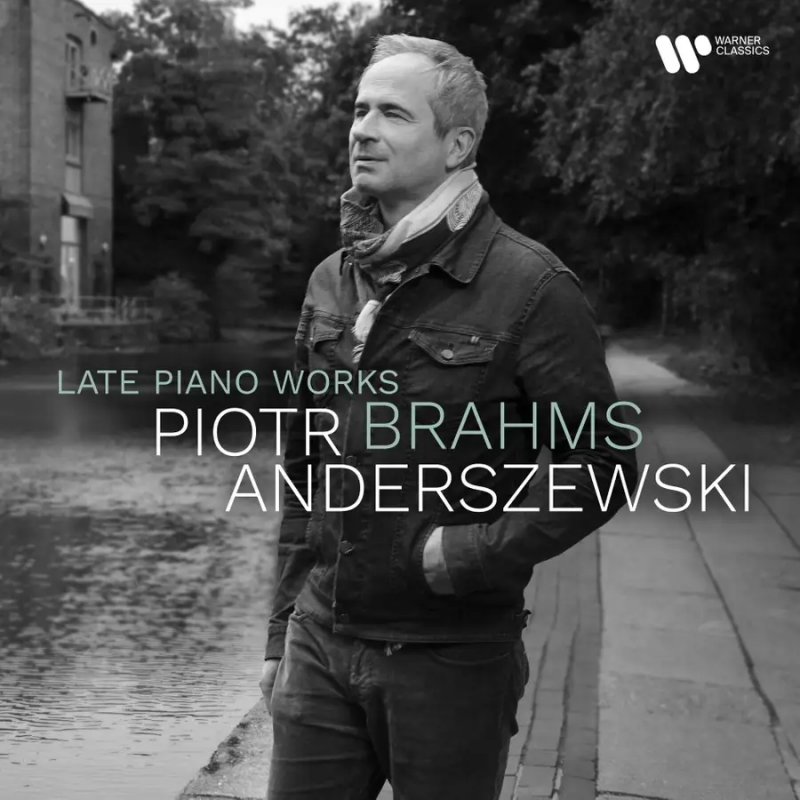
  安德澤夫斯基(Piotr Anderszewski)最新錄製的布拉姆斯晚期鋼琴作品專輯問世後,部分英美樂評對壓軸的降E大調狂想曲(作品119-4)持保留意見。他們認為,這首理應外放、具有慶典氣息的曲子,在安德澤夫斯基手中卻感覺「被束縛」,缺少傳統演奏中慣有宛如管弦樂般的爆發力。然而,這其實是安德澤夫斯基刻意的選擇,而這個選擇的背後,是他對布拉姆斯音樂中的「克制」與「控制」的理解。

  安德澤夫斯基曾經以「水壩建造者」(builder of dams)來形容布拉姆斯。他認為,布拉姆斯構築了嚴密的音樂結構,像築起一道水壩般,把原本可能四處氾濫的情感緊緊攔截住。舒曼的音樂能瞬間而且直接讓聽眾感受作曲家的悲喜與脆弱,布拉姆斯卻習慣把真實情感隱藏起來。晚期作品中,到處都是「不過分」(non troppo)的表情記號,這讓許多演奏家感到棘手。不過,安德澤夫斯基卻認為布拉姆斯最珍貴的地方,在於如何從克制中挖掘出被隱藏的情感。

宏觀的佈局

  這種對壓抑與克制的認同,也延伸到這張專輯的曲目安排。一般來說,布拉姆斯晚期鋼琴作品會依照作品編號完整錄製,但是安德澤夫斯基卻打破慣例,從二十首中挑出十二首重新排序。這種看似隨性的安排,其實經過精密的結構設計。

  最明顯的例子是專輯的開頭與結尾:他以作品119-1的B小調間奏曲開場,再以作品118-6的降E小調間奏曲收尾。這兩首曲子都帶有深沉的哀悼感,更巧妙的是,這兩首曲子雖然調性不同,但開頭的第一個音在琴鍵上是同一個位置。也就是說,最後一首結束時,幾乎可以無縫接回第一首的開頭。

  此外,結尾的降E小調間奏曲帶有「末日經」(Dies Irae)的旋律影子。這是一段象徵死亡、審判與終結的古老旋律,讓專輯最後停留在特別沉重的情緒裡。只是,這股悲傷並沒有被釋放,而是像被困在布拉姆斯建造的水壩裡,始終找不到出口。安德澤夫斯基透過這種音符的佈局,讓整張專輯形成一個音樂上的莫比烏斯環,讓哀悼不再有終點,而是在克制的琴聲中周而復始,循環不止。

  而在專輯中段,安德澤夫斯基又把作品118-2的A大調間奏曲與作品116-2的A小調間奏曲安排在一起。除了一明一暗的A調,聽起來像同一段情緒在不同光線下延續,它們的節奏感和呼吸方式也很接近,像是同一段情緒換了一個角度繼續往前走。

微觀的實踐

  安德澤夫斯基能掌控樂曲的宏觀結構,靠的卻是微觀技術的精密實踐。他自稱選曲感性,彈琴時卻像外科醫生般精確冷靜,專注於如何幫情感築起結構。他形容鋼琴是「騙子樂器」,明明本質是打擊樂器,卻能偽裝出歌聲般的連綿線條,甚至讓一隻手聽起來像兩個人在對話。因此演奏者要精於處理樂曲中,每個音符的輕重和音色。

  對安德澤夫斯基來說,布拉姆斯音樂裡的聲響是「不民主」的:也就是說,各聲部音符的地位並不平等。鋼琴家必須理智判斷哪些音該重、哪些該退,這就是他所謂的「管理不規則性」。管理的關鍵在於對時間點的精密計算:每一個音符落下的時機,都會改變整體的重心。他曾經反覆思考,在彈下第一個音之後,該何時進入第二與第三個音,因為最初的觸鍵方式,會直接影響後續音符的時間與形態。處理厚重的對位時,「如果讓和弦中一個音稍微延遲,整個聲音的平衡就會產生巨大的改變。」透過這種微秒級的不同步,被延遲的音符便會像從人群中站出來一樣,變得立體且獨立。正是在這樣的思考之下,安德澤夫斯基呈現出的直覺,其實是經過高度理性打磨後的結果。

誠實的留白

  在這張精心打磨的專輯裡,安德澤夫斯基唯獨沒有錄製作品117-1的降E大調間奏曲。他的理由非常直白:「我就是無法理解它的中段。我做不到⋯⋯所以我放棄了。」他的原則是,如果無法百分之百確信自己能為一首作品賦予意義,那麼寧可保持沉默。這個選擇,正好呼應了他對布拉姆斯音樂核心特質「隱諱」的理解:布拉姆斯把情感藏起來,安德澤夫斯基也把自己還沒把握的詮釋藏起來。水壩建造者,以及一位因無法掌握而不肯築起自己水壩的鋼琴家,在這一點上,兩者之間確實存在某種耐人尋味的對應。(2026年6月30日)

Following the release of Piotr Anderszewski's latest album of Brahms's late piano works, some British and American music critics have expressed reservations about the concluding Rhapsody in E-flat major (Op. 119 No. 4). They argue that this piece, which ought to be outgoing and festive, feels "corseted" in Anderszewski's hands, lacking the explosive, orchestral power traditionally expected in performances,. However, this is actually a deliberate choice by Anderszewski; behind this choice lies his understanding of the "restraint" and "control" in Brahms's music.

Anderszewski once described Brahms as a "builder of dams". He believes that Brahms constructed rigorous musical structures, much like building a dam, to firmly hold back the emotional waters that might otherwise spread everywhere. While Schumann's music can instantly and directly make the audience feel the composer's joys, sorrows, and vulnerability—being, as Anderszewski puts it, "has no skin" (or in French, à fleur de peau) — Brahms habitually conceals his true feelings,. In his late works, the expression mark "non troppo" can be found everywhere, which has annoyed many performers. Yet, for Anderszewski, the most precious aspect of Brahms's music lies in how to unearth the hidden emotions from within such restraint.

The Macro Layout

This identification with suppression and restraint also extends to the album's track sequencing. Generally, Brahms's late piano works are recorded entirely by their opus numbers; however, breaking with convention, Anderszewski selected twelve out of the twenty pieces and rearranged them. This seemingly casual arrangement is, in fact, the result of precise structural design.

The most obvious example is the beginning and end of the album: he opens with the Intermezzo in B minor, Op. 119 No. 1, and concludes with the Intermezzo in E-flat minor, Op. 118 No. 6. Both pieces carry a profound sense of mourning (or deuil in French), and what is more ingenious is that although their keys are different, their opening notes begin on the exact same pitch on the keyboard,. This means that when the final piece concludes, it can almost seamlessly loop back to the beginning of the first piece.

Furthermore, the concluding Intermezzo in E-flat minor contains the melodic shadow of the "Dies Irae". This is an ancient melody symbolising death, judgement, and finality, leaving the end of the album in a particularly heavy emotional state. Only, this sorrow is not released; rather, it is trapped inside the dam built by Brahms, never finding an exit. Through this layout of notes, Anderszewski turns the entire album into a musical Möbius strip, where mourning no longer has an end point, but cycles continuously amidst the restrained sound of the piano.

In the middle of the album, Anderszewski places the Intermezzo in A major, Op. 118 No. 2, right next to the Intermezzo in A minor, Op. 116 No. 2. Apart from the contrast of light and dark within the key of A, it sounds like the same emotion continuing under different lighting; their rhythmic feel and breathing are also very similar, as if the same emotion is moving forward from a different angle.

Microscopic Practice

Anderszewski's ability to master the macro structure of the pieces relies on the precise execution of micro-techniques. He claims his piece selection is intuitive, yet when playing the piano, he possesses a calm precision akin to a surgeon's—an almost "forensic rationality"—focusing entirely on how to build a structure for the emotion. He joked that the piano is an instrument for "cheaters"; although fundamentally a percussive instrument, it can create the illusion of continuous vocal lines, or even make one hand sound like two people conversing. Therefore, the performer must be highly skilled in managing the weight and tone of every single note within the music.

To Anderszewski, the sound world in Brahms's music is "undemocratic": that is to say, the status of notes in different voices is not equal. The pianist must rationally decide which notes should carry more weight and which should step back; this is what he calls how to "manage irregularities". The key to this management lies in the precise calculation of "timing": the exact moment each note falls will alter the overall centre of gravity. He has repeatedly pondered when to play the second and third notes after striking the first, because the initial touch directly dictates the timing and shape of subsequent notes. When dealing with dense counterpoint, "When playing a block chord, if you do not play all the notes simultaneously but slightly delay one of them, the balance of the sound is hugely changed". Through this microsecond-level lack of synchronisation, the delayed note stands out as if stepping from a crowd, becoming three-dimensional and independent. It is under such thought processes that Anderszewski’s apparent intuition is, in reality, the result of highly rational polishing.

An Honest Omission

In this meticulously crafted album, Anderszewski notably did not record the Intermezzo in E-flat major, Op. 117 No. 1. His reason is remarkably straightforward: "I cannot get the middle part. I can't ... I can't. [...] and you give up". His principle is that if he cannot be one hundred percent certain he can do justice to a piece and give it meaning, he prefers to remain silent. This choice perfectly echoes his understanding of the core trait of Brahms's music: its "pudique" language. Brahms hides his emotions, and Anderszewski similarly hides an interpretation he is not yet confident in. The builder of dams, and a pianist who refuses to build his own dam because he cannot fully grasp it—in this respect, there exists a rather intriguing parallel between the two.  ( 30 June, 2026)
BRAHMS Late Piano Works
Piotr Anderszewski (piano)
November 2024; August 2025, National Philarmonic Hall, Warsaw



 陳效真作品集
發表留言