用樂音描繪的歷史真貌:伊瑟利斯解密《1851》
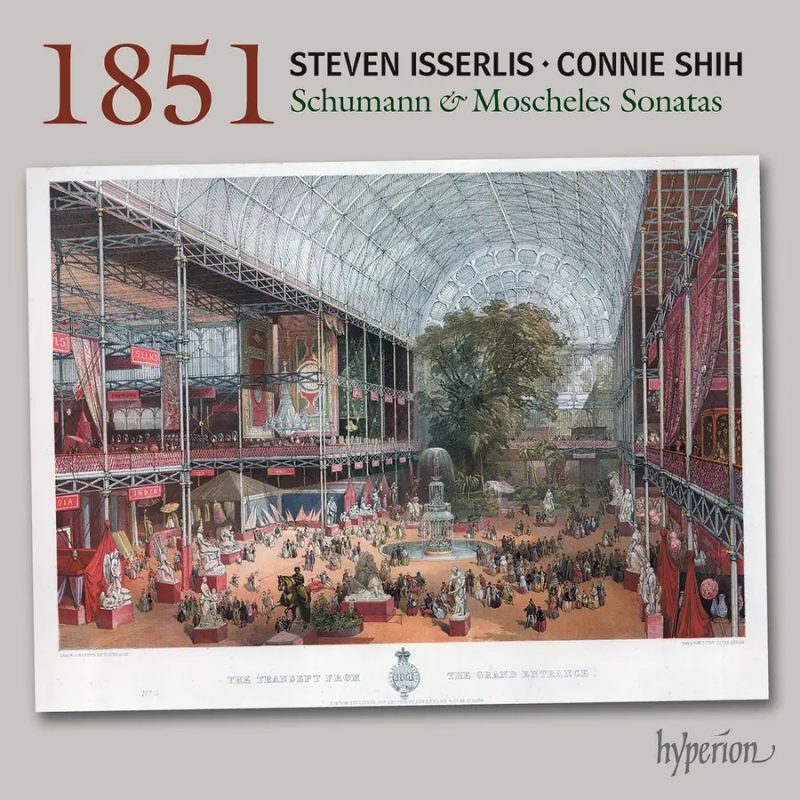
  古典音樂專輯通常以單一作曲家或特定曲風作為企畫主軸,大提琴家伊瑟利斯(Steven Isserlis)與鋼琴家史康寧(Connie Shih)卻不這麼想。翻看兩人近年的合作錄音,每一張都像是一篇音樂史的有聲論文:先設定一個特定時空的歷史切面,再從文獻考證出發,還原當年音樂家們的交友圈與內心世界,最後以同時代的樂器作為聲響與物質文化的證據。

  例如先前製作的專輯《普魯斯特的沙龍》重現十九世紀末巴黎上流社會的音樂場景;《黃金大提琴十年》(A Golden Cello Decade, 1878-1888)探討一八七八到一八八八年間,大提琴曲目為何突然大量湧現;《戰時的大提琴》(The Cello in Wartime)借來一把曾經在第一次世界大戰壕溝裡服役,外型像彈藥箱的「戰壕大提琴」,演奏當年士兵可能聽過的小品。新專輯《1851》延續同樣的敘事框架,只是這一次,整張專輯的核心圍繞著一個始終未曾真正出現、卻無所不在的名字。

缺席的靈魂:孟德爾頌死後的集體創傷

  故事要從幾年前說起。伊瑟利斯在英國普魯士灣(Prussia Cove)教學時,聽到一名小提琴學生演奏舒曼第二號小提琴奏鳴曲,深受吸引,決定改編為大提琴版本。同時,他也一直對莫歇勒斯(Ignaz Moscheles)題獻給舒曼的大提琴奏鳴曲抱有興趣。比對兩首曲目時,他發現一個驚人的巧合:兩首曲子不僅都完成於一八五一年,作品編號也同樣是Op. 121。然而,真正讓這個年份巧合轉化為一套完整敘事框架的,卻是一個缺席的名字:孟德爾頌。

  一八四七年,孟德爾頌以三十八歲之齡早逝,對萊比錫音樂圈造成巨大的衝擊。專輯裡的三位核心人物,舒曼、莫歇勒斯與小提琴家費迪南‧大衛(Ferdinand David)都是孟德爾頌的摯友,不僅在他臨終時陪伴在側,更共同擔任葬禮上的抬棺人。伊瑟利斯稱孟德爾頌是整張專輯「缺席的教父」:專輯裡沒有收錄任何他的作品,但是,他的死亡卻直接形塑這群音樂家在一八五一年前後的創作與情感狀態。

憤怒與避世:兩首作品間的情感回應

  面對失去核心人物的共同創傷,舒曼與莫歇勒斯在一八五一年給出完全不同的情感詮釋。舒曼第二號小提琴奏鳴曲表面上題獻給費迪南‧大衛,但是伊瑟利斯考證指出,這實質上是紀念孟德爾頌的祕密輓歌。樂曲開頭使用由費迪南‧大衛名字轉換而成的音樂字母密碼,這個動機恰巧與孟德爾頌《第一號鋼琴三重奏》的開頭相同。但是在舒曼筆下,這聽起來不再像是老友間的親切問候,反而更像是一場悲憤交加的哀悼。最關鍵的證據是,舒曼在樂曲中引入路德教會聖詠「讚美耶穌基督」(Gelobet seist du, Jesu Christ),這正是孟德爾頌在第二號鋼琴三重奏終樂章使用的旋律。在舒曼筆下,這段原本象徵喜悅的聖詠被轉化為陰鬱而沉重的色調,聽起來既像絕望的懇求,也像對命運揮舞拳頭般的憤怒。

  莫歇勒斯的作品則選擇另一種極端的心理防禦。他在同年寫下E大調大提琴奏鳴曲,作品編號同樣是Op. 121,題獻給舒曼。莫歇勒斯創作時坦言:「在工作時我忘卻所有煩憂;我想保持愉悅,讓音樂充滿新鮮感。」 這首作品因此充滿陽光與寬廣的抒情性,詼諧曲樂章的結尾還帶有被伊瑟利斯形容為,如同「老爸笑話」(dad-joke)般笨拙卻非常討喜的幽默。同一年、同一作品編號的兩首奏鳴曲,彷彿記錄同一個社交圈的親密友人,面對巨大創傷時的兩種反應:一種將悲痛轉化為怨怒,一種則把音樂當成暫時逃離現實的避難所。

聲響的平衡:古鋼琴與羊腸弦的對話

  把小提琴作品改編為大提琴版本,並非是突發奇想。在十九世紀,這種演奏編制靈活變通是普遍常態,舒曼的小提琴奏鳴曲在下半葉就已經由大提琴家格呂茨馬舍(Friedrich Grützmacher)改編出版。伊瑟利斯甚至看過一份樂譜複本,其原件是克拉拉·舒曼所擁有的《第一號小提琴奏鳴曲》,上面標註了「若鋼琴要與大提琴合奏時」使用的替代版本。再加上許多小提琴家抱怨舒曼過度使用小提琴極難發揮的低音域,這些樂段轉移到大提琴上反而如魚得水。

  除了深究曲目背後的人與情,這張專輯的另一項重點在於重現當時的聲音。史康寧使用的是一台伯明罕大學收藏、一八五一年製造的法國埃拉爾(Érard)古鋼琴,伊瑟利斯推測它極有可能就是當年在倫敦萬國博覽會上,讓維多利亞女王駐足聆賞到閉館的那台名琴本尊。不過,選擇古鋼琴不是為了盲目追隨歷史詮釋演奏(Historically Informed Performance Practice, HIP)的教條,而是為了解決一個非常現實的聲學問題。在一般的大提琴與鋼琴二重奏中,現代鋼琴龐大的音量非常容易掩蓋大提琴,鋼琴家必須刻意壓抑音量,大提琴家則被迫用力拉奏以求穿透力,結果雙方都沒辦法自在地表達音樂。

  埃拉爾鋼琴的發音較柔和而且低音域清透,音量不像現代鋼琴那樣強勢。伊瑟利斯的大提琴使用音色溫潤但音量較小的羊腸弦,又為了配合這架古鋼琴的定音音高,將大提琴的調音從現代標準的 A=440下調(伊瑟利斯受訪時稱降至A=430,但是專輯錄音資料標示為 A=432),讓琴音變得更為柔和。不過,這並非完全不費吹灰之力的「自然契合」。除了古鋼琴清透的音色,更仰賴鋼琴家史康寧奇蹟般輕巧的觸鍵,兩人才得以在錄音室中(甚至為了不掩蓋對方而互相要求調降音量)達成最理想的聲響平衡。

理性的基底:在史實中找回人的溫度

  專輯最後兩軌收錄古諾以巴赫《十二平均律》C 大調第一號前奏曲所寫的《聖母頌》。這首曲子出版於一八五三年,不完全符合「一八五一年」的嚴格設定,但是伊瑟利斯堅持把它當成安可曲,因為它的源頭同樣指向那位缺席的「教父」。孟德爾頌逝世前幾個月,曾經花四天時間陪伴年輕的古諾,在萊比錫的聖多默宗徒堂(St. Thomas Church)為他彈奏兩個小時的巴赫管風琴作品,啟發古諾對巴赫的畢生熱愛。

  兩軌分別是無人聲的純器樂版「冥想曲」,以及加入英國聲樂團體傑蘇阿爾多六人組(The Gesualdo Six)的合唱版本。後者是為了還原聖桑曾經見證的一場早期私人演出:古諾親自彈琴、小提琴家拉奏主旋律,「從隔壁房間傳來了六個聲部演唱拉丁文的合唱,以神祕的和弦支撐著和聲。」。伊瑟利斯以大提琴代替小提琴,在錄音室中重現這種帶有空間感與距離感的歷史聲響。這首曲子也帶有伊瑟利斯的私人回憶:大約十歲的時候,姊姊在鋼琴上彈起巴赫的前奏曲,他的俄羅斯祖母立刻跟著唱起古諾的旋律,歌聲中帶著極為濃烈的揉音。

  伊瑟利斯直言:「一個成熟音樂家唯一需要負責的對象是作曲家⋯⋯當你能直接與上帝對話時,何必找牧師呢?」。現代的串流音樂平台為方便聽眾隨興的聆聽習慣,傾向於把古典音樂曲目拆解為歌單,讓音樂的時代性變得零碎片段,伊瑟利斯反其道而行,透過嚴謹考證,讓他的專輯成為結構完整、邏輯清晰的有聲論文。然而,這些歷史考據目的不是為了建立冰冷的教條,而是為了讓音樂更自然地發聲。正因為有這些嚴謹的史實考證與聲響還原當成基底,我們才得以穿越百年時空,在古老樂器的共鳴中,觸摸到舒曼的憤怒、莫歇勒斯的自我療癒與愉悅,以及祖母歌聲中那種難以言喻的人性溫度。(2026年7年7日)

Classical music albums are typically curated around a single composer or a specific genre, but the cellist Steven Isserlis and pianist Connie Shih take a decidedly different approach. Reviewing their collaborative recordings from recent years, each album resembles a sonic dissertation on musical history: they first establish a historical cross-section of a specific time and place, proceed with rigorous textual research to reconstruct the social circles and inner worlds of the musicians of that era, and finally employ period instruments as acoustic and material evidence.

For instance, their previous album "Music from Proust's Salons" recreated the musical landscape of late nineteenth-century Parisian high society; "A Golden Cello Decade, 1878-1888" explored the sudden proliferation of cello repertoire during that ten-year span; whilst "The Cello in Wartime" featured a 'trench cello'—an instrument resembling an ammunition box that had served in the trenches of the First World War—to perform miniatures that soldiers of the time might have heard. Their new album, "1851", sustains this narrative framework, only this time, the entire album revolves around a name that never truly appears, yet remains omnipresent.

The Absent Soul: Collective Trauma Following Mendelssohn's Death

The story begins several years ago. Whilst teaching at the International Musicians Seminar Prussia Cove in Cornwall, Isserlis heard a violin student perform Schumann's Violin Sonata No. 2. Deeply captivated, he decided to arrange it for the cello. Concurrently, he had long harboured an interest in Ignaz Moscheles's Cello Sonata, a work dedicated to Schumann. Upon comparing the two pieces, he discovered a striking coincidence: not only were both works completed in 1851, but they also shared the same opus number, Op. 121. However, what truly transformed this chronological coincidence into a comprehensive narrative framework was an absent name: Felix Mendelssohn.

In 1847, Mendelssohn's premature death at the age of thirty-eight sent shockwaves through the Leipzig musical circle. The three central figures of this album—Schumann, Moscheles, and the violinist Ferdinand David—were all close friends of Mendelssohn. They were not only present at his deathbed but also served together as pallbearers at his funeral. Isserlis refers to Mendelssohn as the 'absent godfather' of the entire album: although none of his works are included, his death directly shaped the creative and emotional states of this cohort of musicians in and around 1851.

Anger and Escapism: Emotional Responses Between Two Works

Faced with the shared trauma of losing their central figure, Schumann and Moscheles offered entirely different emotional responses in 1851. Schumann's Violin Sonata No. 2 was ostensibly dedicated to Ferdinand David, yet Isserlis's research suggests that it is, in essence, a secret elegy commemorating Mendelssohn. The piece opens with a musical cipher derived from the letters of David's name, a motif that coincidentally mirrors the opening of Mendelssohn's Piano Trio No. 1. Under Schumann's pen, however, this no longer sounds like an affectionate greeting between old friends, but rather a grief-stricken and furious mourning. The most crucial piece of evidence is Schumann's incorporation of the Lutheran chorale "Gelobet seist du, Jesu Christ" (All praise to thee, Jesus Christ), the very melody Mendelssohn used in the finale of his Piano Trio No. 2. Schumann transforms this originally joyous chorale into a sombre and heavy hue, sounding at once like a desperate plea and a furious shaking of the fist at fate.

Moscheles's work, on the other hand, opted for the opposite extreme of psychological defence. He wrote his Cello Sonata in E major in the same year, sharing the same opus number, Op. 121, and dedicated it to Schumann. Regarding his composition process, Moscheles frankly noted: "Im Arbeiten vergass ich alle Sorge; heiter wollte ich sein, frisch sollte die Musik werden" ("In working I forgot all my worries; I wanted to be cheerful, then the music would have freshness). Consequently, the work is imbued with sunshine and expansive lyricism; the conclusion of its scherzo movement even contains what Isserlis describes as the musical equivalent of a 'dad-joke'—a slightly clumsy yet utterly loveable humour. Two sonatas from the same year, sharing the same opus number, vividly document two divergent reactions from close friends within the same social circle when faced with immense trauma: one transmuted grief into anger, whilst the other used music as a temporary sanctuary to escape reality.

Acoustic Balance: A Dialogue Between a Period Piano and Gut Strings

Arranging a violin piece for the cello was by no means a mere whim. In the nineteenth century, such flexibility in instrumentation was a common practice; Schumann's violin sonatas had already been arranged and published for the cello by the cellist Friedrich Grützmacher in the latter half of the century. Isserlis has even seen a photocopy of an edition of the First Violin Sonata owned by Clara Schumann, which included an alternative passage specifically marked "if playing with cello". Furthermore, many violinists frequently complain that Schumann overused the instrument's lower register, which is notoriously difficult to project. When these passages are transferred to the cello, however, they sound far more naturally singing and at ease.

Beyond delving into the personalities and sentiments behind the repertoire, another focal point of this album is the recreation of the era's authentic sound. Shih plays a French Érard piano manufactured in 1851, currently housed at the University of Birmingham. Isserlis speculates that it is highly probable this is the very instrument that so captivated Queen Victoria at the Great Exhibition in London that she lingered until closing time. However, the choice of a period piano was not made to blindly adhere to the dogma of Historically Informed Performance (HIP), but rather to solve a highly practical acoustic dilemma. In standard cello and piano duets, the sheer volume of a modern grand piano easily drowns out the cello. The pianist must deliberately suppress their volume, whilst the cellist is forced to exert excessive physical effort to project. Consequently, neither musician can express the music freely.

The Érard piano possesses a gentler attack and a bell-like clarity in its lower register, making it far less overbearing than its modern counterparts. Isserlis's cello, strung with gut strings, yields a warm but less powerful tone. To match the pitch of this period piano, he tuned his cello down from the modern standard of A=440 (Isserlis mentioned tuning down to A=430 in interviews, though the album's recording data specifies A=432), rendering his sound even softer. Nevertheless, this was not a completely effortless 'natural fit'. Beyond the clear timbre of the period piano, it relied heavily upon Shih's 'miraculous touch' to achieve the optimal acoustic balance in the recording studio—with the two musicians even humorously asking each other to turn down their respective volumes so as not to overpower one another.

A Rational Foundation: Reclaiming Human Warmth Through Historical Fact

The final two tracks of the album feature Charles Gounod's "Ave Maria", based on Bach's Prelude No. 1 in C major from The Well-Tempered Clavier. Although published in 1853 and not strictly adhering to the '1851' parameter, Isserlis insisted on including it as an encore because its origins similarly point back to the album's absent 'godfather'. Merely months before his death, Mendelssohn spent four days with the young Gounod, dedicating two hours to playing Bach's organ works for him at the Thomaskirche in Leipzig, an experience that inspired Gounod's lifelong adoration of Bach.

The two tracks comprise an instrumental version and a choral version joined by the British vocal ensemble "The Gesualdo Six". The latter aims to recreate an early private performance witnessed by Camille Saint-Saëns: Gounod himself played the piano, a violinist played the main melody, and "un chœur à six voix, chanté sur des paroles latines, faisait entendre mystérieusement dans la pièce voisine les accords soutenant l'harmonie" ("from a neighbouring room a choir of six voices singing Latin words sustained the harmony with mysterious chords"). Substituting the violin with a cello, Isserlis reconstructs this historical soundscape—complete with its spatial depth and distance—in the recording studio. The piece also carries a personal memory for Isserlis: when he was around ten years old, his sister played Bach's prelude on the piano, and his Russian grandmother immediately chimed in with Gounod's melody, her voice laden with an extremely pronounced "vibrato".

Isserlis bluntly asserts: "The only person to whom a mature musician is answerable is the composer... Why talk to a vicar when you can talk to God?" . To accommodate the casual listening habits of modern audiences, contemporary music streaming platforms tend to dismantle classical repertoire into playlists, rendering the historical context of the music fragmented. Isserlis does precisely the opposite; through rigorous research, he elevates his album into a structurally cohesive and logically clear audio dissertation. Yet, the objective of such historical scrutiny is never to establish cold dogmas, but rather to allow the music to speak more naturally. It is precisely because of this robust foundation of historical verification and acoustic restoration that we are able to traverse centuries of time. Within the resonance of period instruments, we can touch the fury of Schumann, the self-healing and joy of Moscheles, and that ineffable human warmth encapsulated in his grandmother's singing.  (7 July, 2026)
Schumann & Moscheles: 1851 Cello Sonatas
Steven Isserlis (cello), Connie Shih (piano)
January 2025, Elgar Concert Hall, University of Birmingham, United Kingdom



發表留言