夾縫中的真實:拉杜洛維奇與普羅科菲耶夫的跨時空對話
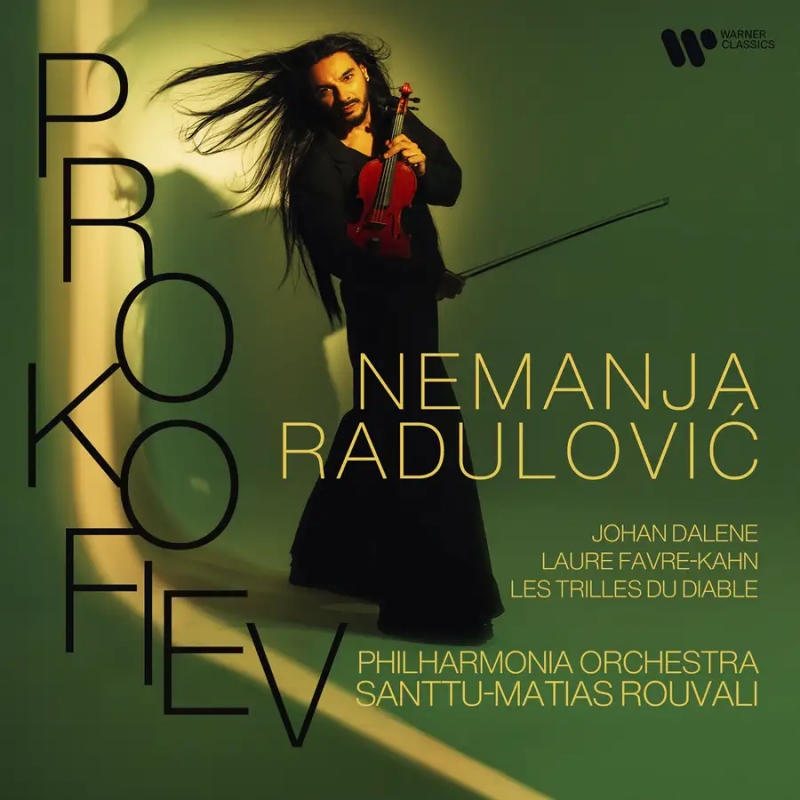
  小提琴家拉杜洛維奇(Nemanja Radulović)在他的「普羅科菲耶夫」(Prokofiev)同名專輯中,以長達八十六分鐘的篇幅,串聯起普羅科菲耶夫的協奏曲、室內樂與改編作品,試圖勾勒出作曲家筆下既明亮又陰暗、既諷刺又溫柔的多重面貌。對拉杜洛維奇而言,普羅科菲耶夫作品中著名的「諷刺」性格,絕非僅是俏皮的幽默,而是一層防禦機制,是音樂家在動盪世界中表達觀點並自我保護的方式。

  這種深刻的共鳴,源自拉杜洛維奇與普羅科菲耶夫跨越時空的生命巧合。一九三五年,普羅科菲耶夫創作第二號小提琴協奏曲的時候,正好站在人生的重要轉折點上:移居西方十七年,已經名滿國際的他正認真考慮回到家鄉。但是在回歸前夕,他卻陷於眷戀自由與恐懼壓迫的夾縫中。這種對身分與未來的焦慮,被他全都寫進甜美卻又時而尖銳的旋律裡。半個世紀後,當十二歲的拉杜洛維奇初次接觸此曲時,祖國南斯拉夫正陷入內戰。在物資匱乏,茫然不知未來的日子裡,第一任小提琴老師教他嚴格地把練琴與現實生活區分開來。就像玩耍的時候,就盡情當個小孩;練琴的時候,他的世界也應該只有音樂,沒有戰爭。對拉杜洛維奇來說,舞台從此成了一個裝滿情感的「魔法盒」,而恩師米哈伊洛維奇(Dejan Mihailović)更進一步引導他深入探索音樂的本質,讓他得以體驗日常生活中無法觸及的情感。同樣在動盪與壓力中尋找情感出口的經歷,讓拉杜洛維奇更能理解普羅科菲耶夫諷刺性格的背後,其實隱藏著脆弱。所以到現在演奏這部作品時,拉杜洛維奇仍然刻意回到初識樂譜時那種純粹的感受。

速度與自由的辯證

  在第二號小提琴協奏曲的詮釋上,拉杜洛維奇做出極具挑戰性的決定。他大幅放慢第一樂章的速度,摒棄傳統演奏中追求持續推進張力的慣例。下弓前,他先在腦中哼唱旋律,尋找一種更貼近內心、近乎沉思的緩慢步調。這種處理方式雖然在樂評界引發爭議:質疑此舉破壞結構的邏輯,但是也有人認為這個做法捕捉到樂曲深層的緊繃感,並賦予普羅科菲耶夫罕見的抒情色彩。拉杜洛維奇甚至直言,在演奏第二樂章那單純且清澈的旋律時,他聯想到的是莫札特天真而且純粹的線條。

  要支持如此大膽自由的新詮釋觀點,指揮羅瓦利(Santtu-Matias Rouvali)與愛樂管弦樂團的默契至關重要。拉杜洛維奇與羅瓦利從二○二一年起多次合作,羅瓦利深知拉杜洛維奇「藝術直覺高於遵守嚴格節奏」的偏好。因此在錄音中,羅瓦利扮演了穩固的地基,然後在框架內細膩地撐開空間,讓獨奏者得以自在呼吸發揮,也維護著作品的結構不至於在自由的詮釋下崩解。

對話與對峙

  專輯後半段的室內樂則展現了極高的實驗性。在「雙小提琴奏鳴曲」中,拉杜洛維奇邀來新銳小提琴家達連(Johan Dalene)合作。兩人在錄音前素未謀面,純粹是拉杜洛維奇聽了達連的專輯,深受其演奏中的「新鮮感與智慧」打動而發出邀請。兩人的合奏卻在樂器選用上激盪出有趣的對比:達連手持一七二五年的史特拉底瓦里名琴「Duke of Cambridge」,拉杜洛維奇則刻意選擇了一把由巴黎製琴師Francesco Coquoz製作,琴齡僅四個月的現代新琴。

  這並非標新立異。拉杜洛維奇認為這首作品在某些樂段需要如同中提琴般圓潤深沉的低音,而這把新琴恰能提供這種厚實的共鳴。錄音中,兩把年歲相差三百年的提琴,宛如兩位各具性格的見證者,時而親密低語,時而針鋒相對。他們保留了彼此迥異的演奏音色,讓音樂在合作與爭辯中,產生極具臨場感的張力。

劇場化的室內樂

  第三個焦點在於將普羅科菲耶夫大型芭蕾與歌劇改編為室內樂。拉杜洛維奇與長期搭檔「魔鬼的顫音合奏團」(Les Trilles du Diable),把《羅密歐與茱麗葉》、《三橘之戀》等鉅作重新濃縮改編。拉杜洛維奇的邏輯很清晰:改編並非要模仿交響樂團的宏大氣勢,而是要讓小提琴轉化為「說書人」。

  在鋼琴家法夫爾─卡恩(Laure Favre-Kahn)的配合下,兩人將音樂中的怪誕與酸澀感發揮到極致。例如在《羅密歐與茱麗葉》的〈蒙特鳩與卡普萊特家族〉(Montagues and Capulets)中,拉杜洛維奇刻意讓琴弓摩擦出粗糙、甚至不完美的音色,營造出一種狂野且具威脅性的戲劇效果;〈提拔特之死〉(Death of Tybalt)則狂野到像是一整個弦樂聲部在演奏。而在《灰姑娘》的〈大圓舞曲〉(Grand Waltz)裡,加入三名打擊樂手,更為聽覺鍍上一層魔幻的色彩。把普羅科菲耶夫音樂中的怪誕、狂野與深情濃縮在精簡編制裡,反而讓每一種性格都顯得更加鮮明。

重新定義經典的視角

  這張專輯的珍貴之處,在於拉杜洛維奇拒絕遵循冷酷、機械化的「俄派」鋼鐵標準。他無意強調力量與節奏,而是帶領聽眾重新發現普羅科菲耶夫靈魂深處的溫柔與孤獨。透過跨世代的對話與新舊樂器的碰撞,他打破古典音樂界對普羅科菲耶夫作品的既定想像。正如他所言,普羅科菲耶夫的音樂從不給予簡單的答案,但是在他看似複雜詭怪的旋律中,我們確實聽見了一種跨越時代、最純粹的真實。(2026年7年14日)

In his eponymous "Prokofiev" album, violinist Nemanja Radulović utilises its 86-minute runtime to weave together the composer’s concertos, chamber music, and arrangements, attempting to outline the multifaceted nature of Prokofiev’s writing—at once bright and dark, sardonic and tender. For Radulović, the famous "sarcasm" in Prokofiev's works is by no means merely playful humour, but rather a defensive mechanism; it is a way for the musician to express his worldview and protect himself in a turbulent world.

This profound resonance stems from a biographical coincidence across time between Radulović and Prokofiev. In 1935, when composing his Violin Concerto No. 2, Prokofiev stood at a major turning point in his life: having lived in the West for 17 years and achieved international acclaim, he was seriously considering returning to his homeland. On the eve of this return, however, he found himself caught in the interstices between a longing for freedom and a fear of oppression. He poured all this anxiety regarding his identity and future into melodies that are sweet yet occasionally sharp. Half a century later, when a 12-year-old Radulović first encountered this piece, his homeland of Yugoslavia was engulfed in civil war. In those days of material scarcity and an uncertain future, his first violin teacher taught him to strictly separate his practice from daily life: "Practise for 15 minutes, and don't think about anything else. Then when you are outside playing with other kids, don't think about the violin". For Radulović, the stage henceforth became "a magical box containing various emotions", while his mentor Dejan Mihailović further guided him to "go deeper" into the essence of the music, allowing him to experience emotions unreachable in everyday life. This shared experience of seeking an emotional outlet amidst turmoil and pressure enables Radulović to better understand that beneath Prokofiev’s sarcastic persona lies true vulnerability. Thus, when performing this work today, Radulović deliberately returns to the pure feelings he had when he first read the score.

The Dialectic of Tempo and Freedom

In interpreting the Violin Concerto No. 2, Radulović makes a highly challenging decision. He significantly broadens the tempo of the first movement, abandoning the traditional practice of relentlessly driving the tension forward. Before drawing his bow, he sings the melody in his head, searching for a slower, almost contemplative pace that feels closer to the heart. Although this approach sparked controversy among critics—who questioned whether it disrupted the structural logic—others argued that it successfully captured the deep-seated tension of the piece and endowed Prokofiev with a rare lyrical colour. Radulović even remarks that when playing the pure and limpid melody of the second movement, what comes to mind is the innocent and absolute simplicity of Mozart.

To support such a bold and free interpretative perspective, the rapport with conductor Santtu-Matias Rouvali and the Philharmonia Orchestra is paramount. Radulović and Rouvali have collaborated multiple times since 2021, and Rouvali is well aware of Radulović's preference for artistic intuition over strict rhythmic adherence. Consequently, in this recording, Rouvali acts as a solid foundation. As Radulović reflects, "when the rhythmical base is there you feel the freedom inside". Rouvali delicately expands the space within this framework, allowing the soloist to breathe and perform freely, whilst ensuring the structure of the work does not collapse under such a liberal interpretation.

Dialogue and Confrontation

The chamber music in the latter half of the album showcases a high degree of experimentalism. For the "Sonata for Two Violins", Radulović invited the rising star Johan Dalene to collaborate. The two had never met before the recording; Radulović extended the invitation purely because he was deeply moved by the "freshness, intelligence and engagement" in Dalene's previous album. Their duet, however, sparks an intriguing acoustic contrast in their choice of instruments: Dalene wields the 1725 'Duke of Cambridge' Stradivarius, whereas Radulović deliberately opted for a modern, brand-new violin crafted by the Parisian luthier Francesco Coquoz, which was a mere four months old at the time.

This was no mere novelty. Radulović believes that in certain passages, this work requires a round and deep bass akin to a viola, and this new violin provides precisely that thick resonance. In the recording, the two violins—separated by three centuries in age—act as two distinct witnesses, sometimes whispering intimately, sometimes engaging in sharp confrontation. They retain their differing tonal colours, generating a highly visceral tension as the music navigates between cooperation and debate.

Theatrical Chamber Music

The third focal point is the chamber arrangement of Prokofiev’s large-scale ballets and operas. Alongside his long-standing ensemble Les Trilles du Diable, Radulović distils and rearranges monumental works such as "Romeo and Juliet" and "The Love for Three Oranges". Radulović’s logic is perfectly clear: the purpose of the arrangement is not to imitate the grand scale of a symphony orchestra, but rather to transform the violin into a "narrator".

With the support of pianist Laure Favre-Kahn, the duo pushes the music's grotesque and acidic qualities to their absolute limits. For example, in 'Montagues and Capulets' from "Romeo and Juliet", Radulović deliberately allows the "rougher edge of the bow stroke" to register, creating a feral and menacing theatrical effect. Meanwhile, "Death of Tybalt" is played with such ferocious drive that it sounds "like not one player but a whole string section". In the 'Grand Waltz' from "Cinderella", the addition of three percussionists coats the auditory experience in a layer of magic. Distilling the grotesquerie, wildness, and deep affection of Prokofiev’s music into a lean ensemble counter-intuitively renders each persona all the more vivid.

A Perspective Redefining the Classics

The preciousness of this album lies in Radulović’s refusal to adhere to the cold, mechanised "Russian" steel standard. He has no intention of emphasising sheer power and rhythm; instead, he guides the listener to rediscover the tenderness and loneliness deep within Prokofiev's soul. Through a cross-generational dialogue and the acoustic collision of old and new instruments, he shatters the classical music world's preconceived notions of Prokofiev's works. As he observes, Prokofiev never chooses simplicity from the start, but within those seemingly complex and eccentric melodies, we truly hear a pure, cross-era reality—allowing us to find "the beautiful, wondrous truth" of his music.  (14 July, 2026)
Prokofiev
Nemanja Radulović (violin), Philharmonia Orchestra, Santtu-Matias Rouvali, Laure Favre-Kahn (piano), Johan Dalene (violin)
April 2025, Fairfields Hall, London; November 2025, RIFFX Studios, La Seine Musicale, Boulogne-Billancourt



發表留言