歲月打磨的內斂與韌性:梁喬信與富爾內爾的佛瑞生命縮影
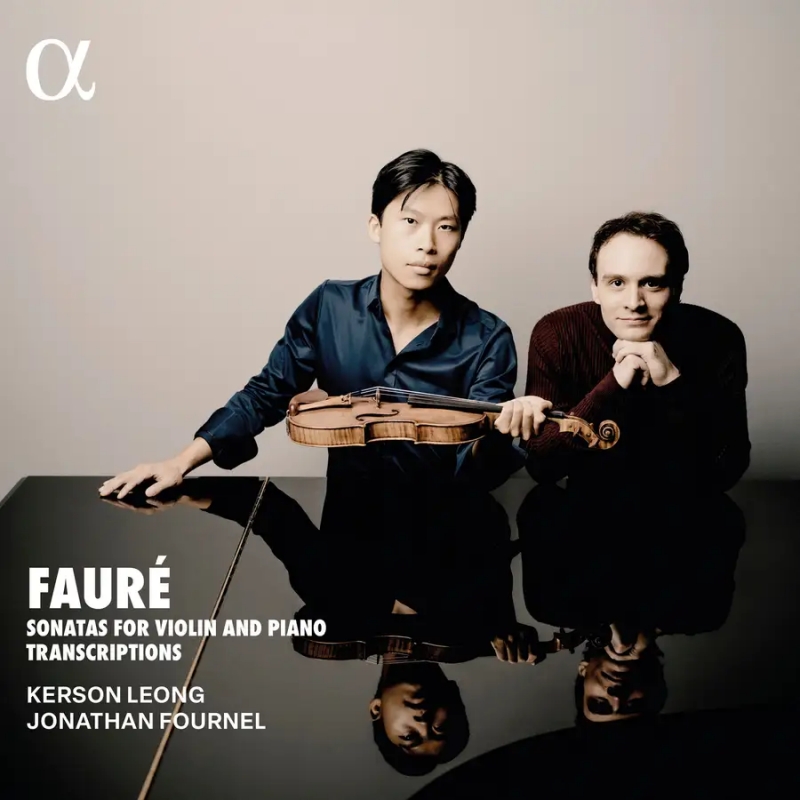
  音樂作品就像人一樣,有年少時的奔放急切,也有成熟階段的內斂沉著。佛瑞兩首小提琴奏鳴曲的創作時間相隔近四十年,一首出自他創作生涯的早期,另一首則寫於相對成熟的後期。加拿大小提琴家梁喬信(Kerson Leong)與法國鋼琴家富爾內爾(Jonathan Fournel)這張專輯,最大的特色不只是把兩首奏鳴曲放在一起,而是讓人清楚聽見佛瑞近四十年間的創作轉變。第一號奏鳴曲充滿年輕時的熱情,第二號奏鳴曲則多了歷經歲月後的沉靜。佛瑞的音樂一路改變,卻始終沒有失去自己的聲音。

拋開狂放的既定預設:第一號奏鳴曲的內斂對話

  梁喬信十三歲拿下曼紐因國際小提琴大賽少年組首獎,後來進入比利時伊莉莎白女王音樂學院(Queen Elisabeth Music Chapel)接受杜梅(Augustin Dumay)指導。這層師承關係,很容易讓人把他的佛瑞拿來和其他法國名盤相比,也期待第一號奏鳴曲展現更奔放、更不顧一切的激情。但梁喬信與富爾內爾顯然沒有打算迎合這樣的期待。他們沒有刻意避開傳統,也沒有刻意標新立異,而是把重點放回作品本身。三十歲的佛瑞,音樂裡固然有年輕人的熱情,卻也帶著對未來的不安。期待、焦慮與衝勁,都藏在旋律之中,梁喬信與富爾內爾想呈現的,正是這股還沒有被歲月磨平的生命力。

  因此,他們演奏第一號奏鳴曲時,沒有急著把熱情全部攤在表面,而是讓情感隨著旋律慢慢累積。初聽之下,它不像有些名盤那樣熱烈奔放,但音樂始終保持向前推進的力量,情感也愈來愈濃。梁喬信用的是一七四一年的瓜奈里(Guarneri del Gesù),沒有刻意追求濃烈華麗的聲響,而是在柔和、略帶脆弱的音色裡,讓旋律更像人在說話。

  富爾內爾的鋼琴也不是單純陪襯,而是承接小提琴未盡的語氣,讓兩件樂器像是在低聲交換心事。這樣的詮釋自然也引來不同評價。英國《留聲機》雜誌直言,希望梁喬信能像老師杜梅一樣「豁出去」;弦樂雜誌《The Strad》卻給出截然不同的解讀,稱讚這是「大師級的示範」。兩種評價反映了不同的聆聽期待。習慣法國作品外放詮釋的人,或許會覺得這樣的演奏過於保守;但仔細傾聽便會發現,他們並沒有削弱音樂裡的情感,而是讓它沿著旋律自然流露,而不是一下子全部傾洩出來。

卸下肩墊與身體重塑:結合科學與即興的自由

  要理解梁喬信為何能掌握如此細膩且充滿呼吸感的音樂語言,必須先了解他多年來建立的演奏觀。由於父親是物理學家,他從小便習慣從聲學共鳴與傳播原理理解小提琴。但是追求理想的聲音,也讓他的身體付出不小的代價。早年因為肩膀長期緊繃,幾乎造成運動傷害,最後促使他做出「不使用肩墊」的決定,重新學習頸部、手臂與背部之間的連動。

  這段充滿掙扎的經驗,讓他體悟到,強大且具穿透力的聲音不是來自蠻力,而是建立在身體放鬆與適度釋放張力之上,讓樂器自然鳴響。此外,少年時期吹奏爵士薩克斯風與單簧管,也讓他把爵士樂的即興精神帶進古典演奏。他認為,樂譜上的音符並沒有唯一的答案,每一次登台,都應該像第一次發現作品一樣,保有自發性與想像力。

  物理學、生理調整與爵士樂的經驗,也逐漸形成梁喬信的演奏觀:技巧練得越紮實,越能超越技巧本身,獲得真正的自由。因此,他演奏佛瑞時,不需要刻意營造煽情效果,也能讓情感自然流露。《The Strad》雜誌便注意到,他在節奏錯綜的第二號奏鳴曲中,居然能做到「換弓幾乎無聲」的極致流暢。

七首小品做為橋樑:拼湊四十年的轉變軌跡

  梁喬信與富爾內爾對佛瑞作品的思考,也反映在專輯的曲目安排上。兩首奏鳴曲之間,安排了六首由佛瑞作品改編而成的小品,包括梁喬信改編的《搖籃》(Les berceaux)、《夢醒之後》(Après un rêve),以及《夜曲》(Nocturne)、《紡紗女》(Fileuse)、《月光》(Clair de lune)、《夜晚》(Soir),以及原本為小提琴與鋼琴所寫的《搖籃曲》(Berceuse)。

  這些小品不是華麗的過場,也不是單純為了增加曲目,而是像一道道橋樑,把兩首奏鳴曲之間近四十年的創作歷程慢慢串連起來。一路聽下來,佛瑞不再只是早期與晚期兩個階段,而是一位一路成長,也持續改變的作曲家。

歷經動盪後的和解:第二號奏鳴曲的深沉紋理

  當專輯一路走到第二號奏鳴曲,佛瑞的人生也來到另一個階段。寫作此曲時,他已經年過七十,不僅面對聽力衰退,也身處第一次世界大戰前後的動盪。不過,比起年齡,更大的改變是整個音樂世界早已不同。從浪漫主義盛極一時,到史特拉溫斯基《春之祭》震撼樂壇,再到新音樂逐漸興起,佛瑞沒有停留在過去,也沒有追逐潮流,而是一步一步把自己的音樂語言磨得更簡潔、更沉靜,也更難被取代。

  因此,梁喬信與富爾內爾沒有把第二號奏鳴曲演成一首悲情的晚年作品,而是把重點放在佛瑞歷經歲月磨鍊後的精神韌性。第一樂章的不安,不是崩潰,而是繼續向前的力量;第二樂章的荒涼,不是絕望,而是在沉靜中慢慢累積情感;第三樂章也不是英雄式的終結,而是一個人走過漫長人生後,終於學會與自己和解。也因為如此,第二號奏鳴曲深沉內斂的氣質,也恰好展現了梁喬信那把一七四一年瓜奈里的音色特質,比第一號奏鳴曲更深沉,也更有顆粒感。梁喬信曾形容,正是這把琴略帶陰鬱與悲傷、近似人類「胸腔共鳴」的音色吸引了他;在這首作品裡,那種與生俱來的聲音特質也得到最充分的發揮,讓無言的器樂化作真誠的人聲對白。

  這張專輯真正動人的地方,不在於是否挑戰了歷史名盤,也不在於展現多高超的技巧,而是透過兩首相隔近四十年的奏鳴曲,讓聽眾感受佛瑞一生的轉變。青年時的熱情、面對未來的不安、晚年歷經動盪後的沉靜與韌性,都在這張專輯裡慢慢串連起來。

  四十年間,世界變了,音樂的語言也變了。然而,佛瑞始終沒有急著迎合時代,而是不斷淬鍊屬於自己的聲音。風格或許更加內斂,語言或許更加純粹,但那份獨特的精神與氣質始終沒有改變。梁喬信與富爾內爾的演奏,也讓佛瑞四十年間的創作歷程,完整連成一條清晰的軌跡。 (2026年8年4日)

Musical works are much like people: they possess the unbridled urgency of youth as well as the restrained composure of maturity. Gabriel Fauré’s two violin sonatas were composed nearly four decades apart—one from his early creative period, the other written during his relatively mature late years. The most striking feature of this album by Canadian violinist Kerson Leong and French pianist Jonathan Fournel is not merely the pairing of these two sonatas, but how it clearly reveals Fauré’s creative evolution over a span of forty years. The First Sonata is filled with youthful passion, whilst the Second Sonata possesses a tranquillity shaped by the passage of time. Fauré’s music evolved continuously, yet he never lost his unique voice.

Dispelling the Presumption of Wildness: The Restrained Dialogue of the First Sonata

Kerson Leong won First Prize in the Junior Division of the Yehudi Menuhin International Violin Competition at the age of thirteen. He subsequently attended the Queen Elisabeth Music Chapel in Belgium, where he was mentored by Augustin Dumay. This lineage easily invites comparisons between his Fauré and other historic French recordings, leading to expectations of a more unbridled, reckless passion in the First Sonata. However, Leong and Fournel clearly had no intention of catering to such expectations. They did not deliberately avoid tradition, nor did they seek novelty for its own sake; rather, they focused on the essence of the work itself. At thirty, Fauré’s music certainly contained the passion of youth, but it also carried an anxiety about the future. Anticipation, anxiety, and drive are all embedded in the melody. What Leong and Fournel seek to present is precisely this vitality, not yet smoothed over by time.

Therefore, in their performance of the First Sonata, they do not rush to lay all their passion on the surface, but instead allow the emotion to accumulate gradually alongside the melody. On first listening, it might not sound as fiercely unrestrained as some historic recordings, yet the music maintains a forward-driving momentum, and the emotion steadily deepens. Leong plays the 1741 'ex-Bohrer, Baumgartner' Guarneri del Gesù; instead of deliberately pursuing a thick and opulent sound, he utilises a soft, slightly fragile timbre, making the melody sound more like a human voice speaking.

Fournel’s piano is not mere accompaniment; it carries forward the unspoken nuances of the violin, rendering the two instruments as though they are exchanging quiet confidences. Such an interpretation naturally invites divergent appraisals. The British magazine "Gramophone" bluntly stated that they "wished he'd thrown caution to the wind", just as his mentor Dumay did. Conversely, the string magazine "The Strad" offered a starkly different reading, praising their performance as a "masterly demonstration of how this should be done". These two reviews reflect differing listening expectations. Those accustomed to the extroverted interpretation of French works might find this performance too conservative. Yet, listening closely, one discovers that they have not diminished the emotion in the music; they have simply allowed it to flow naturally along the melody, rather than pouring it all out at once.

Removing the Shoulder Rest and Physical Reconditioning: The Freedom of Science and Improvisation

To understand how Leong commands such a nuanced and breathing musical language, one must first understand the performance philosophy he has built over the years. As the son of a physicist, he has been accustomed since childhood to understanding the violin through the principles of acoustic resonance and sound transmission. However, the pursuit of the ideal sound took a considerable toll on his body. Years ago, chronic shoulder tension almost led to a physical injury, which ultimately prompted him to make the radical decision to play without a shoulder rest, forcing him to relearn the interconnected movements of his neck, arms, and back.

This struggle led him to the realisation that a powerful and penetrating sound does not come from brute force, but is built upon physical relaxation and a "controlled release of tension", allowing the instrument to resonate naturally. Furthermore, playing the jazz saxophone and clarinet in his youth allowed him to bring the improvisational spirit of jazz into his classical performances. He believes that the notes on a page do not dictate a single answer; every time one steps onto the stage, one should capture the "spark of discovery in the moment", preserving a sense of spontaneity and imagination.

Experiences in physics, physiological adjustment, and jazz gradually shaped Leong’s performance philosophy: the more solid the technique, the more one can transcend technique itself and achieve true freedom. Consequently, when playing Fauré, he does not need to manufacture sensational effects for the emotion to flow naturally. "The Strad" noted that in the rhythmically complex Second Sonata, he achieved extreme fluidity where "audible bow changes are optional and often unnecessary".

Seven Short Pieces as Bridges: Piecing Together a Forty-Year Trajectory

Leong and Fournel’s reflections on Fauré’s work are also mirrored in the album's programme. Between the two sonatas, they placed six short pieces transcribed from Fauré’s works—including "Les berceaux" and "Après un rêve" transcribed by Leong himself, alongside "Nocturne", "Fileuse", "Clair de lune", and "Soir"—as well as the "Berceuse", which was originally written for violin and piano.

These short pieces are not mere ornamental interludes, nor were they included simply to pad the tracklist. Instead, they serve as bridges, gradually linking the nearly forty-year creative gap between the two sonatas. Listening straight through, Fauré is no longer merely defined by the labels of 'early' and 'late' periods, but emerges as a composer who continually grew and evolved.

Reconciliation After Turmoil: The Profound Textures of the Second Sonata

As the album progresses to the Second Sonata, Fauré’s life had also reached a new stage. When writing this piece, he was already over seventy, facing not only hearing loss but also the turmoil surrounding the First World War. However, an even greater change than his age was that the entire musical world had been irrevocably altered. From the height of Romanticism to the shockwaves of Stravinsky’s "The Rite of Spring" and the gradual rise of new music, Fauré neither dwelled in the past nor chased trends. Instead, step by step, he honed his musical language to be more concise, serene, and ultimately irreplaceable.

Therefore, Leong and Fournel do not play the Second Sonata as a tragic late work; rather, they focus on Fauré’s spiritual resilience, forged through the passage of time. The anxiety of the first movement is not a breakdown, but a driving force to move forward; the desolation of the second movement is not despair, but a quiet accumulation of emotion; the third movement is not a heroic finale, but the sound of someone who, after a long journey through life, has finally learned to make peace with himself. Because of this, the profound and understated temperament of the Second Sonata perfectly showcases the tonal characteristics of Leong’s 1741 Guarneri—deeper and more textured than in the First Sonata. Leong once described being drawn to this exact instrument because of its slightly melancholic, sad, and "chest voice" timbre; in this work, that innate vocal quality is fully realised, transforming the wordless instrument into a sincere, human dialogue.

What makes this album truly moving is not whether it challenges historic recordings, nor is it the display of supreme virtuosity. Rather, through two sonatas separated by nearly forty years, it allows the listener to experience the transformation of Fauré’s entire life. Youthful passion, anxiety towards the future, and the tranquillity and resilience of a late life weathered by turmoil are all slowly woven together in this album.

Over forty years, the world changed, and the language of music changed. Yet, Fauré never rushed to cater to the era; instead, he continuously refined his own voice. His style may have become more restrained, and his language purer, but his unique spirit and character never wavered. The performance by Kerson Leong and Jonathan Fournel seamlessly connects Fauré’s forty-year creative journey into a single, clear trajectory. (4 August, 2026)
FAURÉ Sonatas For Violin and Piano Transcriptions
Kerson Leong (violin), Jonathan Fournel (piano)
September 2024, Domaine Forget de Charlevoix in St. Irénée, QC (Canada)



發表留言