
未必完美、嚴謹、傳奇,以及些許任性:女高音蔻楚芭絲辭世
二○二六年八月二十日,維也納國立歌劇院升起黑旗,悼念辭世的榮譽會員、羅馬尼亞女高音蔻楚芭絲(Ileana Cotrubaș),享壽八十七歲。
多數愛樂者認識蔻楚芭絲,是透過她與克萊伯(Carlos Kleiber)在DG合作的《茶花女》錄音。她的音量不大,聲音略帶顫動,甚至有些單薄;但放在身心俱疲、肺病纏身的「薇奧麗塔」(Violetta)身上,反而格外貼切。蔻楚芭絲從不靠音量取勝,也很清楚自己的極限。成名後,她刻意控制演出量,不願拿聲音冒險。
從兒童合唱走上歌劇舞台
蔻楚芭絲一九三九年出生在羅馬尼亞多瑙河畔的加拉茨(Galați),父親是愛唱歌的公務員,也是業餘合唱團的成員,蔻楚芭絲很自然也愛上唱歌。她第一次走進劇院不是聽歌劇,而是參加《卡門》的兒童合唱。進入布加勒斯特音樂學院後,她接受斯特羅埃斯庫(Constantin Stroescu)的指導,由於訓練極其嚴格,蔻楚芭絲一度灰心到想放棄。老師教她最重要的一件事是:技巧只是手段,最後仍要回到音樂、人物與歌詞。
一九六四年,二十五歲的蔻楚芭絲以德布西《佩利亞與梅麗桑》的兒童角色伊尼奧德(Yniold)正式登台。當晚法國著名的音樂教育家娜迪亞・布朗熱(Nadia Boulanger)也在場,演出後特別到後台,當面稱讚她的法語發音。一九六五、一九六六年,蔻楚芭絲接連在荷蘭與慕尼黑的聲樂比賽得獎,海外邀約隨之而來。一九六八年加入法蘭克福歌劇院(Frankfurt Opera);一九六九年以《魔笛》「帕米娜」(Pamina)首度登上維也納國立歌劇院,此後維也納成為她最重要的舞台之一。
史卡拉的十五分鐘救場
讓蔻楚芭絲國際聲名大噪的,是一九七五年一月七日的史卡拉歌劇院《波西米亞人》。原定飾演「咪咪」的芙蕾妮(Mirella Freni)在總彩排時病倒,男主角帕瓦洛第(Luciano Pavarotti)想起先前在芝加哥的合作經驗,立刻提議:「去找蔻楚芭絲!」
當時蔻楚芭絲住在英國,接到電話立刻趕往米蘭,但是過程並不順利。首先,院方必須緊急處理羅馬尼亞護照的簽證問題,接著偏偏班機誤點又碰上米蘭馬爾彭薩機場(Malpensa, MXP)因濃霧關閉。班機轉降米蘭利納特機場(Linate, LIN)後,在警方護送下,蔻楚芭絲從停機坪直接被送進史卡拉劇院。晚上八點四十五分抵達劇院的時候,距離開演只剩下十五分鐘。還好,蔻楚芭絲在機上已經自己先化完妝。上台前,指揮普雷特(Georges Prêtre)只來得及透過助理提醒「唱〈是的,他們都叫我咪咪〉(Sì, Mi chiamano Mimì)是打兩拍,不是四拍。謝謝。」
這件事常被描寫成傳奇救場,我反而覺得,更能看出蔻楚芭絲長年劇院歷練所鍛鍊出的專業能力。史卡拉在最後關頭敢點名找她,本身就是信任;對她而言,臨時頂替也並不陌生。那晚看似奇蹟,其實是多年歷練的結果。
不完美,卻成就了薇奧麗塔
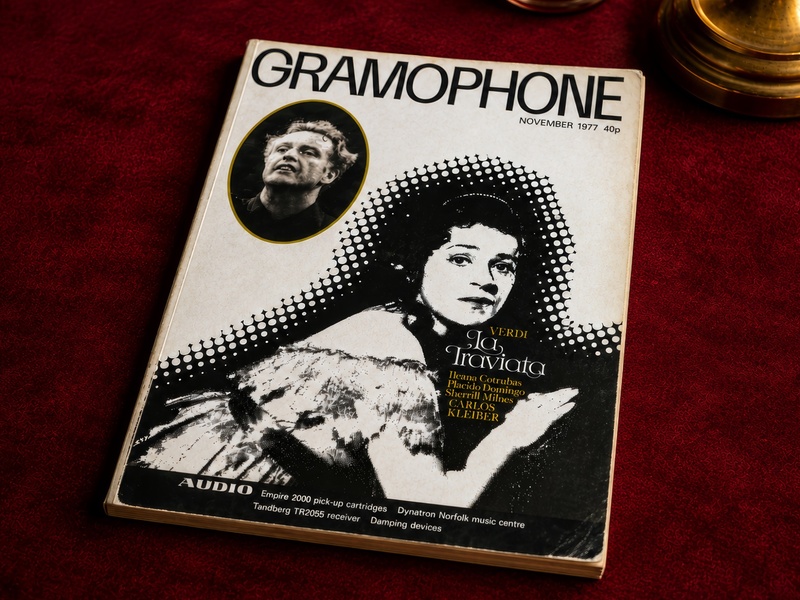
與克萊伯合作的《茶花女》是蔻楚芭絲最著名的錄音。這套唱片並不是與舞台演出毫無關聯的錄音室企畫,而是承接導演奧圖·宣克(Otto Schenk)與克萊伯一九七五年四月在慕尼黑巴伐利亞國立歌劇院推出的製作。錄音沿用巴伐利亞國立歌劇院的管弦樂團與合唱團,主要角色則重新配置,由蔻楚芭絲、多明哥(Plácido Domingo)與米倫茲(Sherrill Milnes)組成錄音陣容,一九七六年五月與次年六月在慕尼黑市民啤酒館(Bürgerbräukeller)完成錄音。
蔻楚芭絲的聲音並非毫無缺點。當年的評論也曾指出她音色偏薄、高音穩定度不盡理想。但是對於「薇奧麗塔」這個角色,這些弱點反而替角色加分。舉例來說,第一幕著名的〈始終自由〉(Sempre libera)中,克萊伯把速度推得很快,蔻楚芭絲唱到高音時甚至顯得緊繃。聲音未必完美,但是放回戲裡,卻讓薇奧麗塔的興奮帶上一絲慌亂。我的感覺是,她不像真的相信眼前的狂歡,反而像急著用狂歡壓住恐懼。
更讓人難忘的是第三幕讀老傑爾蒙來信。蔻楚芭絲幾乎拿掉歌劇演員慣有的表演腔,把聲音收得很乾,像真的在讀一封信。直到最後一句「太遲了」(È tardi!),絕望才突然落下來。維也納國立歌劇院在悼文中,也特別提到這段演唱已經被寫進《茶花女》的演出史。
「難搞」背後的歌手立場
蔻楚芭絲在圈內還有另一個名聲:難搞。她確實一次次和導演、指揮、劇院鬧翻,但是爭執重點通常不是待遇,而是角色怎麼演、音樂怎麼處理,以及歌手到底有多少發言權。她最反感的是被當成只能服從指令的木偶。
一九七三年在維也納國立歌劇院排演《葉甫蓋尼‧奧涅金》時,蔻楚芭絲和導演諾爾特(Rudolf Noelte)發生嚴重歧見。尤其到了「寫信場景」,導演要求的動作完全不符合她對音樂與人物情緒的理解,蔻楚芭絲最後乾脆退出製作。蔻楚芭絲後來回憶,她並不反對導演提出新的想法,反對的是導演拒絕和歌手討論,只要求服從。一九八四年在大都會歌劇院,她又因不滿指揮柯恩(Eugene Kohn)對《波西米亞人》的處理,拒絕演唱最後一場。蔻楚芭絲認為指揮既不能只是跟著歌手走,也不能只要求歌手服從,雙方必須真正一起做音樂。一九八七年在蘇黎士,蔻楚芭絲又因《茶花女》的舞台製作與劇院翻臉。她原想退出,但是在違約金的壓力下還是完成演出,卻在謝幕時公開向觀眾表明自己不認同這個製作。
持平而論,把所有衝突都解釋成捍衛藝術也不盡公平。她有時理由充分,有時則是處理方式值得商榷。例如前述大都會事件,她在正式通知劇院前先聯繫《紐約時報》樂評人哈洛德‧荀貝格(Harold C. Schonberg),在議事程序上很難說是妥善的處理方式。蘇黎士事件也一樣,她有權表明立場,但是一起謝幕的歌手、樂團與工作人員無法選擇是否參與抗議。「難搞」的風評因此並非毫無根據。
最後的舞台選擇
一九九○年,五十一歲的蔻楚芭絲在聲音仍維持良好狀態時退出歌劇舞台。除了因為幼年時期鏈球菌感染留下的心臟瓣膜問題,她對當時歌劇院的製作風氣也愈來愈失望,覺得唱歌不再像過去那麼快樂。既然如此,她寧願自己決定何時停下腳步。
回頭看蔻楚芭絲的一生,主線其實很清楚:她律己甚嚴,知道自己的聲音能做什麼,也知道自己工作的原則是什麼。前者讓她懂得保護和運用聲音,後者則形成她對角色與舞台合作近乎固執的要求。那些原則讓她締造許多出色的演出,也一次次和導演、指揮、劇院發生衝突。她不是單純的藝術理想主義者,也不只是個性上難以合作的歌手。更準確地說,她有一套明確堅守的標準,而且願意承擔堅持那些標準所面臨的代價。至於是不是每一次都對,她留下的爭議已經給出了答案:未必,但是她始終真誠。(2026年9年1日)
On 20 August 2026, a black flag was raised over the Vienna State Opera in mourning for the Romanian soprano and honorary member, Ileana Cotrubaș, who passed away at the age of eighty-seven.
To most music lovers, Cotrubaș is best remembered for her legendary recording of Verdi’s La Traviata with Carlos Kleiber on Deutsche Grammophon. Her voice was not massive; indeed, it was slightly plaintive, vibrating, and at times even thin. Yet when applied to the physically exhausted, consumption-ridden Violetta Valéry, these very qualities became profoundly affecting. Cotrubaș never sought to conquer through sheer volume; she was acutely aware of her vocal limits. After achieving stardom, she deliberately restricted her performances, refusing to gamble with her instrument.
From Children’s Chorus to the Operatic Stage
Born in 1939 in Galați, Romania, on the banks of the Danube, Cotrubaș inherited her musicality naturally. Her father, a civil servant, loved to sing and was a member of an amateur chorus. It was only natural that she, too, fell in love with singing. Her first step into an opera house was not as a spectator, but as a performer: at just nine years old, she sang in the children’s chorus of Bizet’s Carmen. After entering the Bucharest Conservatory, she came under the strict tutelage of Constantin Stroescu. Due to his uncompromising and rigorous standards, she was once so discouraged that she nearly gave up. Yet, her master taught her a lesson that would define her career: technique is merely a means; ultimately, the singer must return to the music, the character, and the words.
In 1964, at the age of twenty-five, Cotrubaș made her professional solo debut at the Bucharest Opera, singing the child role of Yniold in Debussy’s Pelléas et Mélisande. The legendary French music pedagogue Nadia Boulanger was in the audience that evening and visited her backstage afterwards to praise her impeccable French diction. In 1965 and 1966, major vocal prizes in ‘s-Hertogenbosch and Munich paved the way for international engagements. She joined the ensemble of the Frankfurt Opera in 1968, and in 1969 made her debut at the Vienna State Opera as Pamina in Die Zauberflöte. Vienna would soon become her most cherished artistic home.
The Fifteen-Minute Salvage at La Scala
The event that catapulted Cotrubaș into international superstardom occurred on 7 January 1975 at Milan’s Teatro alla Scala. Mirella Freni, who was scheduled to sing Mimì in Puccini’s La Bohème, fell seriously ill during the dress rehearsals. The tenor Luciano Pavarotti, recalling their recent collaboration in Chicago, immediately suggested: “Get Cotrubaș!"
At the time, Cotrubaș was living in Sevenoaks, Kent. Receiving the urgent call, she rushed to Milan, but the journey was far from smooth. First, the theatre had to urgently resolve the visa complications of her Romanian passport. Then, her flight was delayed, and Milan’s Malpensa Airport was closed due to dense fog, forcing the plane to divert to Linate. Escorted by the police directly from the tarmac, she was rushed straight to the opera house. When she arrived at La Scala at quarter to nine in the evening, she had a mere fifteen minutes before the curtain went up. Fortunately, she had already applied her stage make-up on the plane. Before stepping onto the stage, the only artistic directive she received from the conductor, Georges Prêtre, was a brief message relayed by an assistant: “Mr. Prêtre beats ‘Mi chiamano Mimi’ in two, and not in four. Thank you." When she finished singing the famous aria, the La Scala audience erupted into what she described as an “earthquake" of applause
While this historic evening is often romanticised as a legendary rescue, it is perhaps more accurately viewed as a testament to the professional maturity she had built over years of rigorous repertory work. That La Scala dared to summon her at the eleventh hour was a mark of deep trust; to Cotrubaș, stepping in at short notice was a familiar discipline honed in Frankfurt and Vienna. What seemed like a miracle was, in truth, the logical outcome of a solid theatrical education.
An Imperfect Voice that Perfected Violetta
Her recording of La Traviata with Carlos Kleiber remains her most celebrated legacy. This album was no sterile, detached studio project; rather, it was the direct offshoot of a landmark production directed by Otto Schenk at the Bavarian State Opera in Munich in April 1975. The recording utilised the orchestra and chorus of the Bavarian State Opera, but re-cast the principal roles to create a ‘golden’ studio lineup featuring Cotrubaș, Plácido Domingo, and Sherrill Milnes. It was recorded in May 1976 and June 1977 at Munich’s Bürgerbräukeller.
Cotrubaș’s voice was not technically flawless. Critics of the day noted that her timbre could be thin, and her high notes and vocal stability were not always impeccable. Yet, for the role of Violetta Valéry, these perceived limitations became dramatic assets In the famous Act I cabaletta “Sempre libera", where Kleiber drove the tempo to a breakneck speed, Cotrubaș’s high notes sounded distinctly strained. While not classically perfect, this physical struggle translated on stage into a frantic, feverish desperation. One feels that this Violetta does not truly believe in her own hedonism; rather, she is frantically using revelry to anaesthetise her terror of death.
Even more unforgettable is her reading of Giorgio Germont’s letter in Act III. Stripping away the conventional grandiosity of operatic declamation, Cotrubaș dried her voice completely, delivering the text in a raw, spoken whisper. It is only at the final exclamation, “È tardi!" (“It is too late!"), that her despair crashes down. In its obituary, the Vienna State Opera specifically noted that this performance had inscribed itself into the performance history of La Traviata.
The Soprano’s Stance Behind ‘Difficult’
Within the operatic world, Cotrubaș also acquired a reputation for being ‘difficult’. She did indeed clash repeatedly with directors, conductors, and administrations. Yet her battles were rarely over fees or prestige; they were fought over characterisation, musical interpretation, and the artistic agency of the singer. Her deepest aversion was to being treated as a mindless marionette.
In 1973, while rehearsing Tchaikovsky’s Evgeny Onegin at the Vienna State Opera, she had an irreconcilable disagreement with the director Rudolf Noelte. In the pivotal ‘Letter Scene’, Noelte demanded stage business that she felt directly contradicted Tchaikovsky’s music and her emotional understanding of Tatiana. She walked out of the production, asking the director, “Whose Tatiana? Yours or mine?" Cotrubaș later recalled that she did not oppose innovative staging; what she rejected was a director’s refusal to collaborate, demanding blind obedience instead.
In 1984, she withdrew from her final performance of La Bohème at the Metropolitan Opera due to her dissatisfaction with conductor Eugene Kohn. She maintained that a conductor must neither merely follow the singer nor expect them to be a passive follower; they must “make music together". She declared to news organizations: “I will not prostitute myself for the money. If this is the level of the Metropolitan Opera, I cannot sing here. It is not on a professional level. An opera is teamwork."
In 1987, she clashed with the Zurich Opera over a bizarre modern staging of La Traviata. Although she wanted to withdraw, she sang under threat of a financially ruinous breach-of-contract lawsuit, but used her curtain calls to declare openly to the audience in no uncertain terms: “Das ist nicht meine Traviata" (“This is not my Traviata").
To be fair, it is perhaps too simplistic to frame every conflict as a pure crusade for art. While her convictions were deep, her methods were sometimes open to question. In the 1984 Metropolitan Opera affair, she chose to bypass the administration and contact Harold C. Schonberg of The New York Times before formally notifying the house—a move that was procedurally highly irregular. Similarly, in Zurich, she exercised her right to protest, but her public denunciation on stage gave her fellow singers, the orchestra, and the stagehands no choice but to be involuntary participants in her protest. The label of being ‘difficult’ was not entirely without foundation; she was sometimes thoroughly justified, but her handling of these crises could indeed be contentious.
The Final Act
In 1990, at the age of fifty-one, Cotrubaș retired from the operatic stage while her voice was still in excellent condition. In addition to a heart valve condition caused by a childhood streptococcal infection, she had grown increasingly disillusioned with the prevailing production styles in modern houses, feeling that singing had lost its spontaneous joy. Rather than descend into routine or compromise her standards, she chose to decide for herself when to step down, reflecting later: “I was lucky to find the right moment to retire.. .. I burned myself out in a way, especially emotionally…. And besides I could not accept doing productions that are against the intentions of our great composers."
Looking back at Cotrubaș’s life, the thread is remarkably clear: she possessed an unsparing self-discipline, knowing exactly what her voice could achieve and what artistic principles she would not compromise. The former allowed her to protect and manage her delicate instrument; the latter shaped her obstinate demands for dramatic truth and genuine collaboration on stage. These principles yielded some of the most searing performances in operatic history, even as they brought her into constant conflict with the establishments of her day. She was neither a naive idealist nor merely an uncooperative diva. Rather, she was an artist with a clear, uncompromising standard, and she was entirely willing to bear the professional cost of her convictions. As to whether she was always right—the controversies she left behind already contain the answer: perhaps not always, but she was always true. (1 September, 2026)


發表留言