
傳承也是一種創造:席貝《晚禱》連結英國、西班牙與當代聲響
  談到古典吉他,蘇格蘭吉他演奏家席貝(Sean Shibe)近年曾語帶反思地指出,這項樂器花了太多的時間在扮演提供舒適感的「安慰劑」。長久以來,古典吉他唱片的主流曲目多半是十九世紀西班牙小品。這類作品甜美抒情,也讓許多聽眾把吉他視為適合放鬆、療癒的樂器。不過席貝認為,如果吉他始終停留在這類曲目裡,它的聲音世界就會愈來愈狹窄。他希望吉他不只是反覆演奏這些熟悉的小品,也能演奏當代音樂創作。新專輯《晚禱》(Vesper),正是這個想法的實踐。

  席貝一九九二年生於愛丁堡,畢業於蘇格蘭皇家音樂院。二〇一二年,他成為BBC Radio 3「新生代藝術家」計畫首位入選的吉他家,二〇二二年又獲得德國伯恩斯坦獎(Leonard Bernstein Award)。不過,真正讓他受到矚目的,其實是他的選曲方向與專輯策劃。

當代與傳統的聲音碰撞

  其中最具代表性的,是二〇一八年出版的專輯《softLOUD》。前半部以原聲吉他演奏十六到十八世紀的蘇格蘭魯特琴作品,後半部則改用電吉他,演奏當代作曲家賴奇(Steve Reich)、茱麗亞‧渥爾夫(Julia Wolfe)、大衛‧朗(David Lang)等人的作品。他把古老的魯特琴音樂與今日的電吉他作品並置,刻意讓兩種時代的聲音彼此碰撞。《晚禱》延續這種做法。不過,席貝並沒有因為轉向新音樂,就刻意切斷吉他與西班牙傳統的關係。專輯收錄畢爾維斯托(Harrison Birtwistle)、阿德斯(Thomas Adès)、狄倫(James Dillon)三位英國作曲家的作品,但是三人的創作都與西班牙藝術有所連結。阿德斯的《哈巴奈拉舞曲》(Habanera)來自改編西班牙導演布紐爾(Luis Buñuel)超現實主義經典電影的同名歌劇《泯滅天使》(El Angel Exterminador);畢爾維斯托的靈感來自畢卡索的吉他雕塑;狄倫則引用羅卡(Federico García Lorca)的詩句。席貝以一句話概括整張專輯:「既是西班牙的,也是英國的;既古老,也屬於當代。」這正是《晚禱》的中心主旨。

  最能表現出這個想法的,是席貝錄製畢爾維斯托《吉他與白手》(Guitar and White Hand)及五首小品時,刻意使用的特製吉他Sylvette。這把琴由製琴師安布里奇(Simon Ambridge)製作,參考十九世紀西班牙製琴大師托雷斯(Antonio de Torres)的設計,也就是現代古典吉他的源頭。之後又由法裔英國畫家科貝特(Lydia Corbett)親自彩繪。科貝特是畢卡索晚年最重要的模特兒之一,被稱為畢卡索「最後一位繆思」,因此這把吉他自然與畢卡索的藝術世界產生了直接連結。對席貝而言,這把琴不只是錄音時使用的樂器,更像是整張專輯理念的具體象徵:西班牙吉他傳統、畢卡索的視覺藝術,以及英國當代音樂,透過這把特製吉他被串連在一起,也讓席貝對作品關聯性的思考,從抽象概念落實到既可以聽見、也能實體的被看見。

現代演奏家與作曲家的緊密合作

  回顧二十世紀的英國吉他演奏史,絕對繞不開布林姆(Julian Bream)這個關鍵人物。當時多數英國作曲家根本不瞭解吉他,全靠布林姆主動說服、親自示範並講解吉他的特性,才催生出布瑞頓、華爾頓、阿諾德(Malcolm Arnold)等人的經典作品。然而,到了席貝這一代,創作環境已經明顯不同。相較於布林姆當年必須從頭向作曲家解釋吉他的特性,像阿德斯這樣不具演奏背景、卻能在初稿階段便精確掌握吉他性能的作曲家,在當代依然被席貝視為極端罕見的特例。但是,這並不意味演奏家的角色因此減弱。相反地,作曲家與演奏家的合作依然十分緊密。即使作品已接近定稿,雙方仍會反覆討論和弦把位、泛音,以及各種演奏細節在實際操作上的可行性。尤其非吉他演奏者出身的作曲家,作品中經常會出現極度前衛而抽象的聲響構想,此時便更需要演奏家以自身經驗與創意,將樂譜上的概念真正轉化為可被聽見的聲音。

畢爾維斯托與阿德斯的曲目實踐

  畢爾維斯托的作品就是一個典型例子。主曲〈白手之外:吉他手的立體構造〉(Beyond the White Hand: Construction with Guitar Player)長達十八分鐘,靈感來自畢卡索一九一二至一九一四年間的吉他雕塑與草圖。畢爾維斯托本人不彈吉他,他把那種立體而破碎的視覺感,轉化成尖銳、稜角分明的聲響。這時,席貝必須透過極具想像力的觸鍵與音色,與作曲家的抽象思維高度配合,才能把這些抽象構想轉化為具體的聲音。

  除了這首大型作品外,專輯也收錄幾首畢爾維斯托的微型小品。其中〈啼鳴的布穀鳥〉(Oockooing Bird)、〈珍妮的搖籃曲〉(Berceuse de Jeanne)與〈悲傷之歌〉(Sad Song)原本並不是吉他曲,而是由吉他家福布斯‧亨德森(Forbes Henderson)改編。這也是幾首作品的首次錄音。

  這些小品讓人看見畢爾維斯托較少被注意的一面。例如〈珍妮的搖籃曲〉的樂譜寫著「以嬰兒心跳的速度演奏」,最後一個和弦則標示「按住直到嬰兒醒來,再從頭開始」。和畢爾維斯托一向嚴峻的形象相比,這類帶著家庭溫韾氛圍與幽默感的文字並不常見。

  相較於畢爾維斯托把立體派視覺化為稜角,阿德斯與席貝密集討論,展現另一種想法豐富,又對細節極其講究的合作默契。阿德斯交出初稿的時候,已經很清楚吉他的長短處。不過在脫稿前幾週,他仍與席貝頻繁討論,包括和弦該放在哪個把位、泛音應該放在哪根弦上,效果才會最好。阿德斯很少把吉他單純視為「西班牙樂器」,他在《被遺忘的舞蹈》(Forgotten Dances)中,不僅大量運用了如同十六世紀魯特琴般的對位彈奏法,甚至在特定特別柔軟且富共鳴的和弦下方直接標註「lute」,要求演奏者營造出溫暖幽暗的音色;而在另一首《哈巴奈拉舞曲》(Habanera)裡,吉他則化身為充滿打擊殘暴感的西班牙佛朗明哥樂器

音色留白與即興隨想

  專輯同名曲〈晚禱〉,引用了十七世紀英國作曲家普賽爾(Henry Purcell)的《晚間聖詩》(An Evening Hymn)低音主題,再改寫成半音色彩更濃的當代版本。因此,《晚禱》並不是一味追求新聲響,而是同時回首十六、十七世紀的音樂傳統。席貝能掌握這種作品,和他長期接觸魯特琴音樂有很大關係。

  阿德斯另一首收錄於專輯中的《哈巴奈拉舞曲》,則更直接展現他對吉他的想法。這首曲子出自他二〇一六年的歌劇《泯滅天使》。在原作裡,女主角半夜陷入譫妄,幻想一隻斷手在房間裡漂浮。所有樂器突然安靜下來,只剩吉他反覆彈奏哈巴奈拉舞曲,彷彿那隻斷手正在空中跳舞。阿德斯發現,即使拿掉人聲旋律,吉他聲部本身也能單獨成立,因此與席貝合作改編成獨奏版本。他認為吉他有一種特殊的「虛幻感」。很多聲音其實沒有真正出現,而是由聽眾在腦中自行補足。吉他真正迷人的地方,往往就在那些被省略、被留白的聲響空間。

  這種留白正好是席貝最重視的音樂元素。他曾多次談到古典吉他的限制:音量小、延音短、投射力有限。面對這些條件,演奏家唯一能依靠的,就是音色。透過極細微的撥絃變化與空間殘響的揉合,他讓聽眾感覺聲音變得更寬、更遠,體會那些原本不易查覺的泛音與餘溫。他把這種做法比作魔術,透過音色與空間殘響,讓聽眾感覺聲音被延伸了。

  如果說阿德斯是在過去中尋求虛實,那麼三名作曲家裡,最熟悉吉他的狄倫(James Dillon)則選擇遊走在即興的邊界。他早在一九八八年便寫過技巧複雜的木吉他作品《被遮蔽的鏡子》(Shrouded Mirrors),後來也在二〇一七年為蘇格蘭的當代音樂團體「紅音合奏團」(Red Note Ensemble)創作的《Tanz/haus》中使用過電吉他。他原本計畫替席貝寫一首長達近一小時的電吉他作品,最後沒有完成,反而在二〇二五年短短幾天內寫出《十二首隨想曲》。整套作品僅約十分鐘,最短的一首甚至不到三十秒。狄倫形容這些作品接近即興,像是瞬間浮現,未經細部雕琢的音樂片段。作品聚焦於吉他的共鳴、聲響與演奏動作。開頭則引用羅卡的詩句
在月亮的網中,
天穹的蜘蛛
纏住了
飛旋的群星
En la red de la luna,
araña del cielo,
se enredan las estrellas
revoladoras.
專輯中的西班牙線索,也因此從畢卡索、布紐爾,一路延伸到羅卡。

創造出來的傳承

  回頭來看,《晚禱》的核心思想其實很清楚。席貝不希望吉他繼續只被人當成放鬆的樂器,但他也不認為進入當代,就必須切斷傳統。對他而言,古老與當代從來不是對立,而是吉他歷史裡始終並存的兩種聲音。當古典樂界喜歡把他包裝成「布林姆的傳人」時,席貝自己的回答反而很直接:「傳承不是繼承來的,而是創造出來的。」《晚禱》正是這種理念的具體呈現。(2026年9年22日)

When discussing the classical guitar, the Scottish guitarist Sean Shibe has recently reflected that the instrument has spent far too much time "doing the comforting and being the comforter". For decades, the classical guitar recording market has been dominated by nineteenth-century Spanish miniatures. Sweet and lyrical, these works have led audiences to view the guitar primarily as an instrument of relaxation and therapy. However, Shibe argues that if the guitar remains confined to this cozy repertoire, its sonic world will inevitably contract. He hopes the instrument can move beyond repeatedly performing these familiar miniatures to tackle serious contemporary creations. His new album, "Vesper", is the direct realisation of this artistic conviction.

Born in Edinburgh in 1992, Shibe graduated from the Royal Conservatoire of Scotland. In 2012, he became the first guitarist ever admitted to the prestigious BBC Radio 3 New Generation Artists scheme, and in 2022, he was awarded the Leonard Bernstein Award. Yet what has truly set him apart in the classical music scene is his distinctive curatorial vision and ambitious album programming.

The Sonic Collision of Contemporary and Traditional

His most representative project is the 2018 album "softLOUD". The first half features acoustic interpretations of sixteenth- to eighteenth-century Scottish lute manuscripts, while the second half switches to electric guitar to perform works by contemporary composers Steve Reich, Julia Wolfe, and David Lang. By juxtaposing early lute music with modern electric sounds, Shibe deliberately forces different eras to collide.

"Vesper" continues this conceptual approach. However, Shibe does not sever the guitar's historical ties with Spanish tradition in his embrace of new music. The album brings together works by three British composers—Harrison Birtwistle, Thomas Adès, and James Dillon—each of whom engages with Spanish art in some form. Adès’s 'Habanera' derives from his opera "The Exterminating Angel" (itself an adaptation of Luis Buñuel’s surrealist cinematic classic); Birtwistle draws inspiration from Picasso's cubist guitar sculptures; and Dillon prefaces his work with a poetic fragment by Federico García Lorca. Shibe encapsulates the album's ethos in a single phrase: "Spanish but British; contemporary; ancient". This is the central thesis of "Vesper".

Nothing embodies this concept more tangibly than "Sylvette", the bespoke guitar Shibe used to record Birtwistle’s "Guitar and White Hand" and his five miniatures. Built in 2021 by the luthier Simon Ambridge, the instrument's design is inspired by the nineteenth-century Andalusian master Antonio de Torres, the father of the modern classical guitar. The guitar's soundboard was hand-painted by the French-British artist Lydia Corbett. Corbett (born Sylvette David) was Picasso's famous teenage model and muse, the subject of some sixty of his works. This provenance links the physical instrument directly to Picasso’s artistic universe. For Shibe, "Sylvette" is more than a tool for recording; it is a physical manifesto. It unites Spanish guitar heritage, Picasso's visual art, and British contemporary music, rendering Shibe's abstract conceptual threads audible and visible.

The Intimate Collaboration Between Performer and Composer

The history of twentieth-century British guitar music is dominated by the legendary Julian Bream. Because most British composers of his era did not play or understand the guitar, Bream had to cajole, demonstrate, and teach them the instrument's idiomatic capabilities, thereby midwiving classics by Benjamin Britten, William Walton, and Malcolm Arnold.

By Shibe’s generation, the creative landscape has shifted significantly. Unlike Bream, who had to teach the fundamentals from scratch, Shibe found that a composer like Adès displayed a rare, intuitive grasp of the guitar's technical limits in his first drafts. Yet this does not diminish the performer's agency. On the contrary, their collaboration remains incredibly close. In the final weeks leading up to the final score, composer and performer constantly swap video demonstrations, refining chord positions, choosing strings for harmonics, and adjusting physical fingerings. For non-playing composers, who often dream up highly avant-garde and abstract sonic ideas, the performer's practical expertise and creative interpretive license remain indispensable for translating ink into sound.

Realising Birtwistle and Adès

Harrison Birtwistle's contribution is a case in point. The central work, "Beyond the White Hand: Construction with Guitar Player", is a monumental eighteen-minute piece inspired by Picasso's cubist guitar sculptures and sketches from 1912–14. Birtwistle, who did not play the guitar, translated this fractured, multi-dimensional visual aesthetic into sharp, angular sonorities. To bring these abstract, fragmented ideas to life, Shibe must employ highly imaginative touch and tone, co-authoring the work's sonic architecture through precise physical execution.

Alongside this epic construction, the album includes several of Birtwistle's miniatures. Three of these—"Oockooing Bird", "Berceuse de Jeanne", and "Sad Song"—were originally written for the piano and are heard here in world-premiere recordings of arrangements by guitarist Forbes Henderson, a close friend of Birtwistle's family.

These miniatures reveal a rare, domestic warmth and playfulness in the famously dour, granitic composer. For instance, the score of "Berceuse de Jeanne" instructs the performer to play at the "tempo of baby's heart", while over the final chord, Birtwistle writes: "Hold until baby awakes. Then start the piece again". Such domestic, tender intimacy is a striking departure from Birtwistle's characteristically severe aesthetic.

Where Birtwistle visualises cubist angles, Thomas Adès’s collaboration with Shibe reveals an exceptionally detailed, conceptual synergy. Though Adès understood the guitar's limitations from his very first drafts, the two spent the final weeks swapping video feedback on the precise placement of chords and harmonics. Adès rarely pigeonholes the guitar as a purely "Spanish" instrument. In "Forgotten Dances", he looks back to the sixteenth-century lute, using contrapuntal textures to simulate a vocal ensemble. Underneath "a particularly soft and resonant chord" in the score, he explicitly writes the word "lute" as a coloristic instruction for a warm, dark sound. Conversely, in his standalone "Habanera", the guitar is treated percussively, transforming into a violent, percussive flamenco instrument.

Tonal Illusions and Ephemeral Caprices

The album's title track, "Vesper", takes its cue from the ground bass of Henry Purcell’s seventeenth-century masterwork, "An Evening Hymn". Adès reimagines this bass-line as a highly chromatic modern version over which he weaves his own complex counterpoint. Thus, "Vesper" does not merely hunt for novel sonorities; it is a profound retrospective of sixteenth- and seventeenth-century English musical traditions. Shibe's mastery of this aesthetic is deeply linked to his own practice on the Renaissance lute, bringing an early-music touch and articulation to modern strings.

The standalone "Habanera" further highlights Adès's view of the instrument's unique psychology. Extracted from his 2016 opera "The Exterminating Angel", the scene features the delirious Leonora imagining a severed hand floating about the bedroom. While all other instruments fall silent, the guitar alone plays the habanera—the macabre dance of the severed hand. Realising that the guitar part could easily stand alone without the soprano, Adès collaborated with Shibe to create this solo version. Adès is fascinated by what he calls the "disembodied" nature of the guitar: "there’s so much that has to be implied in the making of the music; not everything is actually played... the things that are left out but which are absolutely present, just not visible".

This "unseen structure" of implication sits at the very heart of Shibe's artistic philosophy. He has spoken often of the classical guitar’s physical limitations—what he terms its "deficit" of volume, sustain, and projection. Confronted with these barriers, the performer's ultimate weapon is tone color. By manipulating micro-timbre and letting the physical resonance of the instrument ring, Shibe creates the acoustic illusion of vast spatial and dynamic scope. He compares this to a magician's "smoke and mirrors": using tonal magic to conjure resonances and warmth that do not physically exist on six strings.

While Adès navigates historical illusions, James Dillon—the composer most familiar with the instrument—chooses to wander along the porous boundary of improvisation. Dillon had written the notoriously complex acoustic solo "Shrouded Mirrors" in 1988 and deployed the electric guitar in his 2017 ensemble piece "Tanz/haus". He originally intended to compose a massive, hour-long electric guitar work for Shibe, but the pandemic intervened. Instead, in 2025, he spontaneously penned his "12 Caprices". Lasting barely ten minutes in total, with the shortest caprice clocking in at 28 seconds, Dillon describes these as fleeting, poetic glimpses captured in manuscript paper, focused purely on the physical mechanics and resonance of the instrument. Dillon prefaces his score with Lorca’s evocative poem, "Capricho":
En la red de la luna,
araña del cielo,
se enredan las estrellas
revoladoras.
In the moon's web,
the sky spider,
stars are entangled,
whirling.
Thus, the album's Spanish thread extends seamlessly from Picasso's cubism and Buñuel's surrealism to Lorca's verse.

A Legacy Made, Not Inherited

Ultimately, the core philosophy of "Vesper" is clear. Shibe refuses to let the classical guitar languish as a passive "comforter", yet he rejects the idea that embracing the contemporary requires a violent break with the past. For him, the ancient and the modern are not in opposition; they are parallel registers that have always coexisted in the guitar’s history. When the classical music establishment and record labels eagerly package him as "the inheritor of the legacy of Bream", Shibe’s response is characteristically candid: "Legacies are not really inherited, they're made". "Vesper" is the stunning, tactile manifestation of that very belief.  (22 September, 2026)
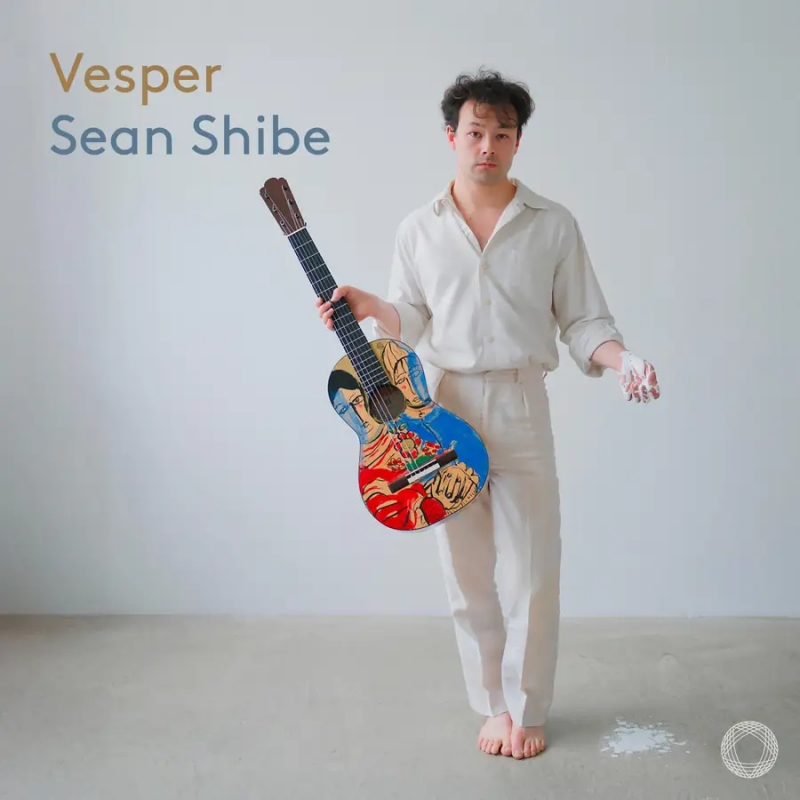
Vesper
Sean Shibe (guitar)
June and August, 2025, Crichton Collegiate Chapel, Midlothian, Scotland




發表留言