
在音符之間,永不停歇的探索:孫旻秀與巴赫《十二平均律第一冊》
近年提到韓國鋼琴家孫旻秀(Minsoo Sohn),「任奫燦(Yunchan Lim)的老師」是最常見的介紹詞。尤其任奫燦在二○二二年贏得克萊本國際鋼琴大賽首獎後,這個稱呼甚至像一個頭銜般,牢牢貼在孫旻秀名字前面。就連他加盟英國Hyperion唱片,媒體也以「任奫燦的老師簽約⋯⋯」下標。今年秋天,孫旻秀以自己的名字推出巴赫十二平均律第一冊專輯,並且帶著同一套作品展開巡演。這一次,舞台上沒有任奫燦,也沒有師生二重奏,只有孫旻秀和巴赫。對聽眾來說,這正是一個暫時放下「任奫燦的老師」這個標籤,直接從演奏重新認識他的機會。
謝爾曼教他的事
要理解現在的孫旻秀如何面對《十二平均律》,得先從他的兩位老師說起。孫旻秀十八歲到波士頓,進入新英格蘭音樂院,跟隨謝爾曼(Russell Sherman)與卞和暻(Wha Kyung Byun)學習。謝爾曼上鋼琴課時,談的常常不只限於鋼琴,而是跨及多種領域。他要求學生讀但丁《神曲·地獄篇》、聽講座、寫文章;他曾經帶學生到動物園,聆聽不同動物的鳴叫聲,有學生甚至被要求做植物生長觀察記錄。每次到老師家,孫旻秀還會注意謝爾曼最近在讀什麼書,回去後趕緊也找來讀。這些事情看起來和鋼琴無關,目的卻很實際:謝爾曼要學生先學會觀察,再談怎麼彈琴。對周遭世界愈敏感,坐到鋼琴前,對聲音的想像也會愈豐富。
「探求」沒有終點
謝爾曼從不把練琴想成等待靈感。有一回,孫旻秀向老師坦承,自己只有少數時候靈感充沛,大部分時間都是出於責任感練琴,結果被謝爾曼當場嚴厲訓斥。謝爾曼相信,靈感不會自己出現,只能靠長時間反覆摸索,才有可能偶爾遇上。人生最後一場獨奏會前不久,高齡八十八歲的謝爾曼還花了十個小時,反覆練習貝多芬第三十號鋼琴奏鳴曲第三樂章第四變奏裡一段並不困難的樂句,最後從這首已經彈了七十多年的作品中,找到過去沒有注意到的東西。謝爾曼希望用一個字總結自己的一生,那就是Quest,也就是「探求」。對他來說,音樂沒有一個抵達之後就可以停下來的終點。作品彈得愈久,不代表答案愈來愈篤定,有時反而會更清楚知道,還有許多地方尚未真正探索到。
這種「探求」的精神也很適合用來理解孫旻秀。二○○八年十二月三十一日,孫旻秀在結冰的路面滑倒,右手嚴重骨折,經歷兩次手術與兩年多復健。在不能彈琴的日子裡,孫旻秀得重新摸索手腕肌肉在各種角度的動作方式,以及何時用力、何時放鬆。這段經歷後來直接影響他的教學。每個人的手型、手臂和軀幹條件都不同,不可能用同一套方法要求所有人。 謝爾曼一向反對學生在音樂上模仿老師,手傷的經驗又讓孫旻秀親身發現,連身體的使用方式都沒有一套放諸四海皆準的方法。這兩件事最後都指向同一個核心命題:別人的經驗可以參考,但是真正坐在鋼琴前面,還是得找到適合自己的做法。
老師留下的《十二平均律》
謝爾曼在二○二三年過世後,夫人卞和暻把他生前使用的兩冊《十二平均律》樂譜交給孫旻秀。樂譜裡留下大量指法、分析與筆記。謝爾曼本人沒有留下完整《十二平均律》的公開演奏錄音
,而他對這套作品留下的遺憾,也成了孫旻秀後來錄製《十二平均律第一冊》的重要契機。只是,謝爾曼一向反對模仿,如果學生把老師留下的記號照單全收,反而違反他教學中最重要的一課。那些筆記真正有價值的地方,不只在於記錄老師做過什麼,更是促使孫旻秀重新檢查,自己究竟怎麼理解同一部作品。
《十二平均律》本來就和「教」與「學」有很深的關係。一七二○年,巴赫為九歲的長子W. F. 巴赫(Wilhelm Friedemann Bach)準備鍵盤教本,其中已經出現第一冊多首前奏曲的早期版本;一七二二年完成第一冊時,巴赫也在標題頁上寫明用途:提供想學習的年輕音樂家使用,也讓已經熟練的人拿來消遣。全冊依半音順序走過十二個大調與十二個小調,每個調各有一首前奏曲與賦格。三百多年後,一名已經成為老師的學生,拿著自己老師留下註記的樂譜,重新演奏這套原本就帶有教學用途的作品,這樣的巧合也讓作品多了一層意義。
孫旻秀對這類需要長時間累積、反覆琢磨的大型作品並不陌生。二○一一年,他已經錄過巴赫《郭德堡變奏曲》;二○二○年又完成貝多芬三十二首鋼琴奏鳴曲全集。從《郭德堡變奏曲》到《十二平均律》,中間相隔十多年。這段期間,他走過完整的貝多芬計畫,而早年那場手傷也迫使他重新理解自己的身體與彈琴方式。這些經歷到了今天,都沉澱進他對巴赫的理解裡。
《十二平均律》也很適合檢驗孫旻秀這種不斷分析、反覆確認,不輕易把答案定下來的工作方式。二十四組前奏曲與賦格都有清楚的結構與規則,但是真正開始演奏時,仍有許多地方需要演奏者自己判斷,像是聲部怎麼安排,樂句往哪裡走,速度與強弱如何拿捏,前奏曲和後面的賦格怎麼彼此呼應,都不會因為分析完成就自動有了答案。它也不是二十四首彼此無關的小品,而是一套有完整布局的作品。每往前一組,調性、性格與聲部關係都跟著改變,演奏者既要處理眼前每一首,也得掌握前後作品的接續與整體走向。謝爾曼花七十多年彈同一首貝多芬,到了八十八歲還能找到過去沒有發現的東西;孫旻秀今天面對巴赫,延續的也是這種不斷分析、反覆尋找的工作方式。
把答案交還給自己
孫旻秀後來成為老師,也把謝爾曼留下來的態度帶進自己的教學。他為學生開閱讀書單,也經常講述謝爾曼的故事,更從不要求學生模仿自己的彈法。在他看來,老師的工作不是替學生決定答案,而是幫助他們建立自己的判斷,找到自己的聲音。任奫燦雖然沒有直接受教於謝爾曼,卻透過孫旻秀認識這位上一代老師。從謝爾曼到孫旻秀,再到任奫燦,延續下來的不是某種固定的彈法,而是面對音樂時願意自己尋找答案的態度。
今年秋天,孫旻秀把十二平均律第一冊帶上獨奏會舞台。在錄音室裡,二十四組前奏曲與賦格可以分開處理,可以隨時停下來重新檢查;到了演奏現場,從第一首C大調前奏曲開始,就只能一路往前,直到最後的B小調賦格結束。對聽眾來說,真正值得聽的,是一位經歷過求學、執教、手傷磨練與多年舞台經驗的鋼琴家,現在如何面對巴赫,陳述他從巴赫作品中探求出來的獨到領悟。當「任奫燦的老師」的光環暫時退到背景,舞台上呈現的,才是最真實而純粹的孫旻秀本人。(2026年10月6日)
In recent years, whenever Korean pianist Minsoo Sohn is mentioned, “the teacher of Yunchan Lim" has become the most ubiquitous moniker. Particularly after Lim won first prize at the 2022 Van Cliburn International Piano Competition, the description attached itself to Sohn’s name almost like an official title. Even when he signed with the British classical label Hyperion Records, headlines heralded the event as “Teacher of Yunchan Lim signs…". This autumn, however, Sohn releases his new album—Book I of Bach’s “The Well-Tempered Clavier"—under his own name and embarks on a worldwide recital tour with the same repertoire. This time, there is no Yunchan Lim on stage and no piano-duo collaboration—only Minsoo Sohn and Bach. For listeners, it offers a timely opportunity to set aside the label “teacher of Yunchan Lim" and rediscover Sohn through his playing alone.
What Sherman Taught Him
To understand how Minsoo Sohn approaches “The Well-Tempered Clavier" today, one must begin with his two principal mentors. At eighteen, Sohn moved to Boston to study at the New England Conservatory under Russell Sherman (1930–2023) and Wha Kyung Byun. During piano lessons, Sherman’s instruction rarely confined itself to the instrument; it traversed a wide array of humanistic disciplines. He assigned students to read Dante’s “Inferno", attend academic lectures, and write essays; he once took students to the zoo to listen to the distinct vocalisations of different animals, and required another student to keep a written journal tracking the growth of a plant. Whenever Sohn visited his teacher’s home, he would quietly note the book Sherman was currently reading, then promptly purchase a copy for himself. While these assignments seemed unrelated to pianistic technique, their purpose was intensely practical: Sherman wanted his students to learn how to observe before sitting down to play. The more sensitive one becomes to the surrounding world, the richer one’s sonoral imagination at the keyboard.
A Quest Without End
Sherman never viewed piano practice as passively waiting for inspiration. On one occasion, when Sohn confessed to his mentor that he felt genuinely inspired only rarely and spent most of his time practising “out of duty", Sherman rebuked him severely. Sherman firmly believed that inspiration never arrives unbidden; it reveals itself only as a rare blessing after long, arduous, and painstaking exploration. Shortly before his final recital, at the age of eighty-eight, Sherman spent ten hours obsessively practising a structurally modest phrase from the fourth variation of the third movement in Beethoven’s Piano Sonata No. 30 in E major, Op. 109—a work he had performed for over seventy years—and discovered nuances he had never noticed before. When asked near the end of his life how he would summarise his journey in a single word, Sherman chose “Quest". For him, music offers no final destination where one may simply stop. Playing a work for decades does not yield increasingly rigid certainty; rather, it clarifies how much remains undiscovered.
This spirit of “Quest" provides an equally fitting lens through which to view Sohn himself. On 31 December 2008, Sohn slipped on an icy road and suffered a severe fracture in his right wrist, requiring two surgeries and more than two years of rehabilitation. During the months when he was unable to play, Sohn had to reconstruct his physical mechanism, re-examining the angles of his wrist and learning precisely when muscles ought to engage or release. This ordeal directly reshaped his approach to pedagogy. Because every pianist possesses a distinct hand shape, arm length, and physical torso, no single method can be imposed universally. Sherman had always opposed students imitating their teachers in musical interpretation; Sohn’s injury proved firsthand that even physical mechanics admit no universal doctrine. Both realisations pointed to the same fundamental truth: while the experience of others may serve as a reference, sitting before the keyboard ultimately demands that one find a path suited to oneself.
The Scores Left by His Mentor
Following Sherman’s passing in 2023, his wife, Professor Wha Kyung Byun, entrusted Sohn with the two volumes of “The Well-Tempered Clavier" that Sherman had used throughout his life. The pages were filled with meticulous fingerings, analytical diagrams, and handwritten notes. Sherman himself had never left a complete commercial recording of “The Well-Tempered Clavier", and his expressed regret over this unfulfilled project became a vital catalyst for Sohn’s own recording of Book I for Hyperion Records. Yet, given Sherman’s lifelong opposition to imitation, blindly adopting the annotations in those scores would have betrayed his mentor’s most essential teaching. The true value of those markings lay not in providing a template to copy, but in prompting Sohn to re-examine how he personally understood the same masterpiece.
“The Well-Tempered Clavier" has always been intimately bound up with the act of teaching and learning. In 1720, Bach compiled the “Clavier-Büchlein vor Wilhelm Friedemann Bach" for his nine-year-old eldest son, containing early versions of several preludes that would later form Book I. Upon completing Book I in 1722, Bach inscribed its purpose directly on the title page: “"For the use and profit of young musicians desirous of learning, as well as for the pastime of those already skilled in this study"" (“Zum Nutzen und Gebrauch der Lehrbegierigen Musicalischen Jugend, als auch derer in diesem Studio schon habil seyenden, zum Besonderen Zeitvertreib"). The collection systematically traverses all twelve major and twelve minor keys in chromatic order, pairing each key with a prelude and fugue. Three centuries later, a student who has himself become a master takes up the annotated scores left by his late mentor to perform a work originally conceived for instruction—a coincidence that lends a deeper resonance to the project.
Sohn is no stranger to monumental cycles that demand years of rigorous reflection. In 2011, he released his acclaimed recording of Bach’s “Goldberg Variations", followed in 2020 by his complete cycle of Beethoven’s thirty-two piano sonatas. Fifteen years separate his “Goldberg" recording from his present “Well-Tempered Clavier". Across those years, Sohn completed his Beethoven odyssey while absorbing the profound physical re-education brought about by his earlier injury. These cumulative experiences have all settled into his present understanding of Bach.
“The Well-Tempered Clavier" serves as an ideal test for Sohn’s analytical and reflective methodology—one that resists hasty conclusions. Although the twenty-four pairs of preludes and fugues possess clear contrapuntal rules and structural logic, the actual performance demands countless subjective judgements. Voice leading, phrase direction, tempo, dynamics, and the intersegmental dialogue between each prelude and its corresponding fugue are not automatically resolved by structural analysis alone. Nor is the cycle a collection of twenty-four isolated miniatures; it is a grand architectural whole. As the cycle advances through each key, the character, tonal colour, and contrapuntal relationships continuously shift. The performer must address the immediate demands of each individual piece while maintaining command over the overarching narrative arc. Just as Sherman, after seventy years of playing a single Beethoven sonata, discovered something entirely new at eighty-eight, Sohn approaches Bach today through this very same process of continuous analysis and endless searching.
Finding One’s Own Answer
When Sohn subsequently became a pedagogue himself, he brought Sherman’s philosophy into his own teaching room. He provides his students with extensive literary reading lists, frequently shares anecdotes about Sherman, and strictly refrains from requiring students to copy his own interpretative choices. In Sohn’s view, a teacher’s role is not to dictate answers, but to help students cultivate their own judgement and discover their authentic voice. Although Yunchan Lim never studied with Sherman directly, he came to know the legendary teacher through Sohn’s guidance. From Sherman to Sohn, and onward to Lim, what endures across generations is not a fixed technique or dogmatic style, but an unwavering commitment to seeking one’s own answers when confronting music.
This autumn, Minsoo Sohn brings Book I of “The Well-Tempered Clavier" to the concert stage. In the recording studio, twenty-four preludes and fugues can be recorded individually, re-examined, or paused at will. Live on stage, however, from the opening C major Prelude to the final B minor Fugue, the music moves inexorably forward. For the audience, what makes the performance truly compelling is hearing how a pianist—tempered by decades of study, teaching, physical trial, and stage experience—now stands alone before Bach, articulating a deeply considered vision won through a lifelong quest. As the spotlight on “the teacher of Yunchan Lim" recedes into the background, what remains on stage is the authentic, unadorned art of Minsoo Sohn himself. (6 October, 2026)
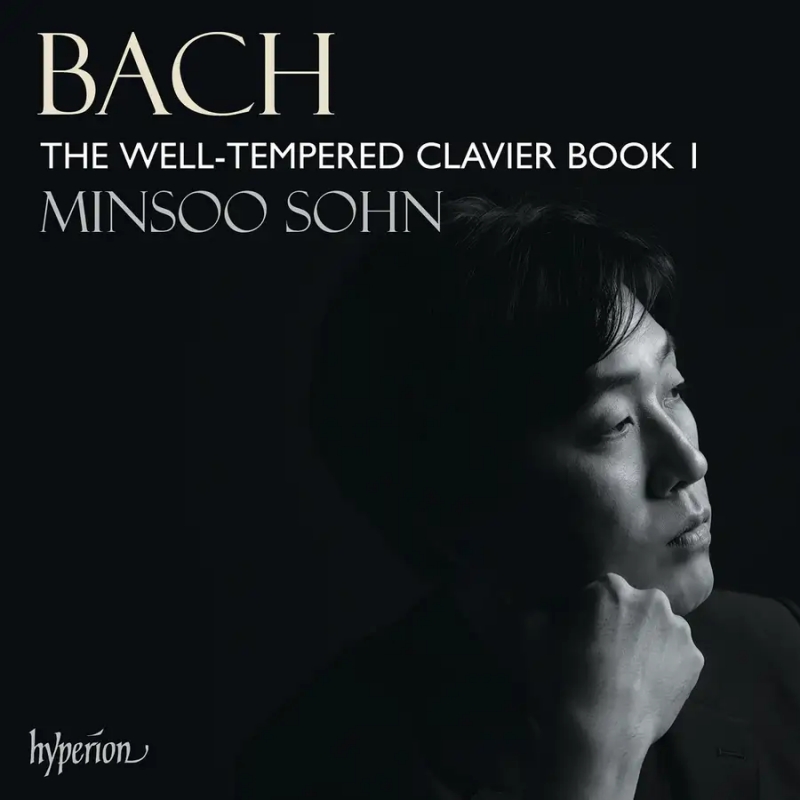
BACH The Well-tempered Clavier I
Minsoo Sohn (piano)
April 2026, Schloss Elmau, Krün



發表留言