
沒有安全網的音樂冒險:Sol & Pat的二十多年琴緣
小提琴家科帕欽斯卡雅(Patricia Kopatchinskaja)把追求完美的古典音樂演奏比喻為超市裡的番茄:每一顆看起來都很漂亮,大小一致,嘗起來也一模一樣,失去各自的味道。科帕欽斯卡雅不太相信外表過於完美的東西。音符拉得乾淨、速度準確、沒有錯音⋯⋯這些當然都是演奏家的基本功。但如果每個人都按照同一套標準演奏,最後聽起來大同小異,在她看來才是最可怕的事。她寧可挑一顆長得有點奇怪,甚至帶著傷痕,但是咬下去有滋味的番茄。像她這樣重視個人風格的演奏家,要找到合拍的夥伴並不容易,偏偏大提琴家嘉碧妲(Sol Gabetta)卻和她合作了二十多年。
個性不同,卻像姐妹
兩人是在二○○三年認識的。當時嘉碧妲與芬蘭鋼琴家西格弗里德松(Henri Sigfridsson)準備組成鋼琴三重奏,正在尋找合適的小提琴家。西格弗里德松向她推薦科帕欽斯卡雅,還半開玩笑地說,這位小提琴家非常出色,只是可能有點瘋狂。沒想到兩人第一次合作就非常合拍,從此建立起長達二十多年的友誼。後來,她們經常在瑞士伯恩高地的呂提胡貝爾音樂節(Rüttihubeliade)一起演奏。那段日子,很難想像會發生在今天兩位明星音樂家身上:五天演出十八場音樂會,一群年輕人住在山上的舊兒童之家,連熱水都沒有。白天、晚上不停排練和演奏,舒伯特、舒曼、庫爾塔格(György Kurtág)、海頓的作品一首接一首。演奏之外,大家還一起吃飯、住宿,幾乎整天生活在一起。這樣密集的相處,也讓她們在音樂合作之外,逐漸建立起深厚的友誼。如今兩人都已是活躍國際舞台的音樂家,但是二十多年的交情始終沒有改變。嘉碧妲甚至形容兩人「像姐妹」,只是感情再好,也不代表個性相同。
嘉碧妲長期接觸古樂演奏,曾經以羊腸弦與巴洛克弓錄製維瓦第的作品,也與哥哥安德烈斯‧嘉畢達(Andrés Gabetta)共同創立嘉畢達古樂團(Cappella Gabetta)。即使有豐富的古樂演奏經驗,她仍稱自己是「現代大提琴家」。嘉碧妲很重視音樂的結構,習慣先弄清楚整首作品的發展脈絡,再從中尋找自由。科帕欽斯卡雅則喜歡嘗試各種不同的聲音,例如刻意不揉弦、讓弓毛摩擦琴弦發出粗糙的聲響、突然中斷樂句,甚至把小提琴當成打擊樂器使用,只要她認為音樂需要,都願意嘗試。她把樂譜比作滿天星斗,同樣一片星空,每個人都可以從中看出不同的故事。
乍看之下,很容易把兩人分成「穩定的嘉碧妲」和「瘋狂的科帕欽斯卡雅」,但是這樣的區分未免太簡單。嘉碧妲曾說:「我們非常不一樣,但是卻高度互補。她讓我展現瘋狂的一面,我則給她安全感。」這句話倒是說出了兩人合作有趣的地方。科帕欽斯卡雅敢放手嘗試,因為知道嘉碧妲會隨時回應;嘉碧妲也因為科帕欽斯卡雅的帶動,願意嘗試平常不一定會採取的演奏方式。兩人都敢冒險,也都願意配合對方,有時一個人先跨出去,另一個人緊接著跟上,有時候角色還會交換。
故意留下的錯音
兩人曾把合作的感覺比喻為沒有安全網的高空雜技,也像兩個用繩索綁在一起的登山者。即使不知道對方下一步會怎麼走,仍然敢向前跨出一步,因為相信繩索另一頭的人不會放手。她們合作的唱片《Sol & Pat》裡,就發生過一件有趣的事。在錄製西班牙作曲家科爾(Francisco Coll)的《根莖》(Rizoma)時,她們拉錯了幾個音。照理說,錄音出了錯,只要重錄一次,或者透過後製修正,聽眾根本不會察覺。她們卻決定保留這些錯音,甚至在唱片解說裡指出錯在哪裡。對職業演奏家來說,這個決定實在有點特別。從小到大花了那麼多年練習,就是為了盡量避免出錯,如今明明有機會修正,她們卻偏偏把錯誤留下來,還主動告訴聽眾。顯然,兩人對什麼值得留下、什麼需要修正,有自己的判斷。
不過,刻意保留錯音,也有值得追問的地方。當不完美成為有意識的選擇,會不會也變成另一種個人風格?科帕欽斯卡雅討厭超市裡每顆番茄都長得一模一樣,但是當大家一眼就能認出哪一顆是「科帕欽斯卡雅的番茄」,問題豈不是又繞了回來?究竟是讓音樂更有生命力,還是建立起另一套容易辨認的風格,仍然值得聽眾判斷。
說起《Sol & Pat》的錄製過程,麻煩還不只這些。她們在瑞士錄音時,外面不時有軍機飛過。好不容易安靜了,又有人開始割草。接二連三的干擾讓兩人哭笑不得。嘉碧妲後來回憶,當時根本沒辦法安靜演奏超過十分鐘。錄音受到干擾,只能停下來等,成為音樂冒險之外的小插曲。
兩把樂器的極限考驗
唱片可以反覆錄製、修改,音樂會卻沒有重來的機會。因此,我更好奇兩人到了舞台上,會如何面對無法預料的變化。這次臺北音樂會的曲目安排,就足以讓她們忙上一個晚上。勒克萊爾(Jean-Marie Leclair)、巴赫父子的作品與耶爾格‧韋德曼(Jörg Widmann)、科爾、李格第、澤納基斯等當代作曲家的音樂交錯出現,其中還有科帕欽斯卡雅自己創作的《奇想曲》(Ghiribizzi)。她們沒有把老音樂放在一邊、新音樂放在另一邊,讓聽眾慢慢適應不同時代的風格。聽過澤納基斯猛烈、不規則的聲響,再回頭聽巴赫,原本熟悉的音樂可能突然顯得格外直接;反過來說,巴赫清楚的聲部走向,也可能讓聽眾在當代作品裡聽見更多細節,不再只注意到「奇怪」或「刺耳」的聲音。整場音樂會不斷轉換音樂風格,演奏者得迅速調整,聽眾的耳朵也很難閒下來。
除了風格多變,這套節目還有兩首特別考驗合作默契的作品:拉威爾小提琴與大提琴奏鳴曲,以及高大宜二重奏。小提琴與大提琴二重奏其實很殘酷,沒有鋼琴幫忙填補聲部之間的空隙,也沒有其他樂器可以掩飾演奏上的問題。兩個人只要稍微配合不順,聽眾馬上就能察覺。嘉碧妲甚至說,整套節目演完就像跑完一場馬拉松。前面的短曲可以讓兩人迅速變換演奏方式,到了拉威爾與高大宜,卻得在長達二、三十分鐘的音樂裡,持續彼此聆聽、回應對方,還要顧及整首作品的結構與張力。兩人能不能在各自發揮個性的同時兼顧整體,能不能一路維持默契,在這兩首作品裡都藏不住。
兩人對拉威爾的詮釋,過去就曾引起截然不同的評價。欣賞她們的人,喜歡演奏中強烈的節奏感,以及慢樂章細膩的聲音變化;持不同看法的人,則認為兩人過度強調速度對比,幾乎把拉威爾的音樂解構了。這種分歧並不難理解。科帕欽斯卡雅和嘉碧妲的演奏個性如此鮮明,本來就不太可能讓所有人滿意。強烈的個人風格固然可能帶來耳目一新的詮釋,但也可能破壞作品原有的平衡。既然選擇冒險,就得接受有人欣賞,也有人質疑她們是否走得太遠。究竟讓人聽見拉威爾音樂中更多的可能性,還是讓演奏者的個性蓋過作品本身,最後仍得由聽眾自己判斷。
繩索另一頭的信任
即使外界對她們的演奏有不同評價,兩人似乎也沒有打算改變彼此的個性。長達二十多年的合作關係,反而是讓我覺得最有意思的地方。兩人如今都已是活躍國際舞台的音樂家,卻仍然願意站在只有兩把樂器的舞台上,接受對方隨時可能改變演奏方式、做出意料之外反應的挑戰。合作多年,當然讓她們更加熟悉彼此,但熟悉不代表每一步都能預料,也不代表演奏就此失去冒險的刺激性。
比起唱片裡那些刻意保留的錯音,我更期待聽見她們在音樂會現場如何面對意料之外的變化。唱片可以重錄,音樂會不行。到了臺北,我想聽的也不只是她們如何演奏拉威爾、高大宜或巴赫。我更好奇的是,當年在山上一起演奏、一起生活的兩個年輕人,二十多年後站上國家音樂廳的舞台,還敢不敢像以前一樣,在不知道對方下一步會往哪裡走的時候,膽敢先把腳跨出去。只因為她們彼此相信,繩索的另一頭永遠還有人。(2026年10月13日)
The Moldovan-born violinist Patricia Kopatchinskaja once compared the pursuit of flawless classical performance to supermarket tomatoes: every single one looks immaculate, uniform in size, and tastes virtually identical, shorn of its individual flavour. Kopatchinskaja remains deeply skeptical of anything that appears overly pristine. Clean intonation, metronomic precision, zero wrong notes—these are, of course, the basic tools of a virtuoso. Yet to her mind, the truly alarming prospect is when every musician adheres to the exact same standard, producing performances that are indistinguishable from one another. She would far rather pick a tomato that looks a little odd, perhaps even bears a scar, but yields a burst of real flavour when bitten into. For a performer so fiercely devoted to personal expression, finding a compatible partner is no easy task. Yet, for over two decades, she has shared a profound artistic alliance with the cellist Sol Gabetta.
Different Temperaments, a Sisterly Bond
The two met in 2003 in Bern. Gabetta and the Finnish pianist Henri Sigfridsson were looking to form a piano trio and needed a violinist. Sigfridsson recommended Kopatchinskaja, remarking half-jokingly:
“You know there is an amazing violinist around here, and probably she’s a little bit crazy, but we could try."
Their very first reading sparkled with an immediate connection, laying the groundwork for a friendship that has endured for over twenty years.
In those early years, they performed together frequently at the Rüttihubeliade Festival in the Berner Oberland. It is a chapter that feels almost unimaginable for two of today’s international star soloists: giving eighteen concerts in five days in a spirit of sheer, joyful madness. A troupe of young musicians bivouacked together in a former mountain children’s home with no hot water, practising up to fourteen hours a day, eating, sleeping, and sharing a single bathroom. Day and night, they worked through a relentless succession of works by Schubert, Schumann, Kurtág, and Haydn. This intense communal living forged a deep emotional foundation beneath their musical synergy. Today, though both are celebrated figures on the world’s major stages, their bond remains unchanged. Gabetta describes playing together as “like playing with your sister"—though a sisterly bond hardly implies identical temperaments.
Gabetta has a long-standing involvement with historically informed performance (HIP). She has recorded Vivaldi on gut strings with a Baroque bow and co-founded the ensemble Cappella Gabetta with her brother, the violinist Andrés Gabetta. Yet despite her deep immersion in early music, she firmly considers herself a “modern cellist". Gabetta places immense value on structural architecture, preferring to master the overarching framework of a work before searching for freedom within it. Kopatchinskaja, on the other hand, delights in exploring unconventional sonic terrain—deliberately eschewing vibrato, dragging the bow hair to produce raw, gritty textures, interrupting phrases with sudden pauses, or treating the violin like a percussion instrument whenever she feels the music demands it. She likens a musical score to a living constellation of stars: beneath the same night sky, every individual interprets a distinct narrative.
At first glance, it is tempting to cast them in a simplified binary: Gabetta as the anchor of stability, Kopatchinskaja as the unpredictable free spirit. Yet such a division is far too reductive. As Gabetta noted in an interview with the French magazine Classica:
“Avec Patricia, nous sommes très différentes mais complémentaires. Elle me permet d’exprimer mon côté sauvage, et je la rassure ! (“With Patricia, we are very different but complementary. She allows me to express my wild side, and I reassure her!")
Her observation captures the essence of their partnership. Kopatchinskaja dares to leap because she knows Gabetta will respond in an instant; Gabetta, galvanized by Kopatchinskaja, willingly ventures into interpretive territory she might not otherwise explore. Both are instinctual risk-takers who readily adapt to one another—sometimes one steps into the void first and the other follows; at other times, their roles seamlessly reverse.
The Deliberately Retained Mistakes
The pair have often described their onstage dynamic as trapeze acrobats performing without a net, or two mountaineers roped together on a sheer face. Even without knowing where the other’s next step will land, each dares to step forward, confident that the person holding the rope will never let go.
A telling anecdote unfolded during the making of their duo album, Sol & Pat (released on Alpha Classics in 2021). While recording the Spanish composer Francisco Coll’s intricate duo Rizoma—a work that pushes instrument techniques to their physical limits—they made a few wrong notes. Convention dictates that recording errors are either patched over in re-takes or edited out seamlessly in post-production. Instead, they chose to leave the wrong notes in the final release, going so far as to print an explicit list of their missteps in the album booklet:
SOL: “By the way, you do know we’ve actually recorded a couple of wrong notes?"
PAT: “Never mind: that’s what happens in first performances."
SOL: “For all those who will be the next to perform Rizoma, here’s a list of our mistakes: 1st movement, bar 17, violin, instead of F it should be F sharp; Bar 35, cello, instead of G, G sharp; 2nd movement, bar 11, cello, instead of G sharp, B natural; bar 23, cello, instead of F sharp, that should be an A flat. Despite that, I think it sounds quite nice as we played it!"
For professional classical musicians, who spend decades striving to eliminate error, choosing to preserve mistakes—and actively pointing them out to the listener—is a radical gesture. Clearly, both artists possess an independent compass for deciding what is worth retaining and what truly requires correction.
Yet this deliberate preservation of error invites a deeper question. When imperfection becomes a conscious aesthetic choice, does it risk becoming merely another branded posture? Kopatchinskaja rejects the uniform, factory-line tomato of modern performance; yet when a “Kopatchinskaja tomato" becomes instantly recognizable for its curated scars, the dilemma comes full circle. Whether such choices genuinely liberate the music or simply establish a new set of recognizable stylistic tropes remains a judgment for the listener to make.
The recording sessions for Sol & Pat brought environmental disruptions as well. While recording in the Church of Saanen near Gstaad, Swiss Air Force jets regularly thundered across the sky in a noisy aerobatic display, and when the jets finally departed, a neighbour started up a lawnmower. As Gabetta recalled with a laugh, they could barely play for ten minutes without an interruption. They had no choice but to wait out the noise—a comic interlude in their ongoing musical adventure.
The Ultimate Test of Two Strings
A studio recording allows for endless takes and editing; a live concert offers no second chances. How these two musicians navigate the unpredictable in front of an audience is what makes their live appearances so compelling. Their duo programme—such as the one brought to Taipei’s National Concert Hall—presents a formidable evening’s work. The repertoire interweaves Baroque works by Jean-Marie Leclair and J. S. and C. P. E. Bach with modern and contemporary pieces by Jörg Widmann, Francisco Coll, György Ligeti, Iannis Xenakis, and Kopatchinskaja’s own playful miniature Ghiribizzi.
Rather than segregating early music on one side and contemporary works on the other, they construct an integrated sonic tapestry designed to “clean the ears". Hearing the fierce, irregular rhythms of Xenakis before returning to Bach makes the familiar Baroque counterpoint feel startlingly direct; conversely, the crystalline voice-leading of Bach allows the ear to discern intricate linear detail within contemporary soundscapes that might otherwise seem purely abrasive. This constant shifting of musical idioms demands instant agility from the performers and keeps the audience’s listening intensely active.
Beyond stylistic versatility, two major 20th-century works form the backbone of the programme, placing their partnership under a fierce spotlight: Maurice Ravel’s Sonata for Violin and Cello and Zoltán Kodály’s Duo, Op. 7. The violin and cello duo is an unforgiving medium. Without a piano to cushion the harmony or provide a rhythmic safety net, every seam in the texture is exposed. As Gabetta remarked, completing such a duo recital “always feels like a marathon!" While brief character pieces allow for rapid shifts in colour, the Ravel and Kodály demand sustained mutual listening, structural endurance, and dynamic dialogue across thirty-minute spans.
Their interpretation of Ravel’s Sonata has historically provoked sharply divided reactions. Admirers praise their incisive rhythmic drive and the ghostly, unvibrated delicacy of the slow movement. Critical voices, however, have questioned their extreme dynamic and tempo contrasts. As the critic Giselher Schubert observed in the German magazine Fono Forum:
“nimmt der Musik ein wenig ihre einzigartige kühle, beherrschte Eleganz" (“robs the music somewhat of its unique cool, restrained elegance")
Such divergence is easy to understand. With personalities as potent as Kopatchinskaja’s and Gabetta’s, pleasing every listener is impossible. A fiercely idiosyncratic approach may shed fresh light on a masterpiece, but it can also disrupt a work’s delicate classical equilibrium. In choosing risk over safety, they accept that some will celebrate their daring while others will question whether they have pushed too far. Whether their performance reveals new possibilities in Ravel or allows the performers’ identities to overshadow the score remains, ultimately, for the audience to decide.
Trust at the Other End of the Rope
Despite conflicting critical opinions, neither musician shows any inclination to temper her artistic identity. Their twenty-year partnership is all the more fascinating because of this refusal to compromise. Today, both are world-renowned artists who nevertheless choose to step onto a stage populated by only two stringed instruments, placing themselves at the mercy of a partner who might shift tempo, inflection, or timbre on a whim. Decades of collaboration have bred deep familiarity, but familiarity here has not bred predictability or dulled the thrill of risk.
Far more than the recorded mistakes printed in an album booklet, the true test of their art lies in how they navigate the unexpected live on stage. Studio takes can be re-recorded; a concert exists only in the fleeting present. Hearing them perform in Taipei is not merely about how they play Ravel, Kodály, or Bach. It is about witnessing whether two musicians who once shared cold water and mountain air in the Swiss Alps twenty years ago still possess the courage to step off the ledge into the unknown—confident that, at the other end of the rope, someone is holding fast. (13 October, 2026)
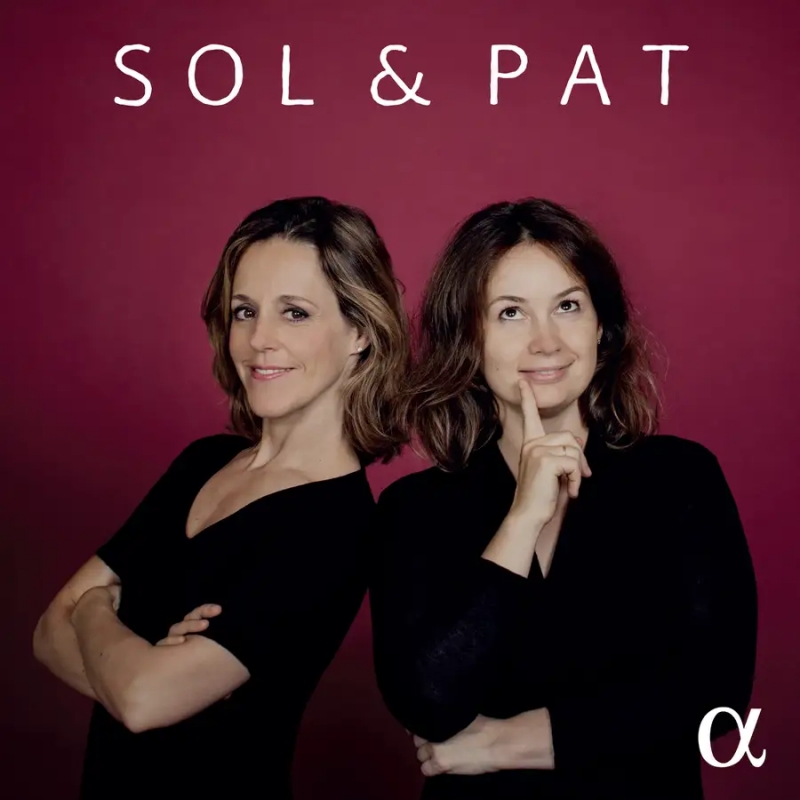
Sol & Pat
Patricia Kopatchinskaja (violin), Sol Gabetta (cello)
August 2014, the Church of Saanen
August 2018, the Church of Zweisimmen (Switzerland)


發表留言