全面認識魯普真正的演奏樣貌:魯普失落與重現的錄音寶藏
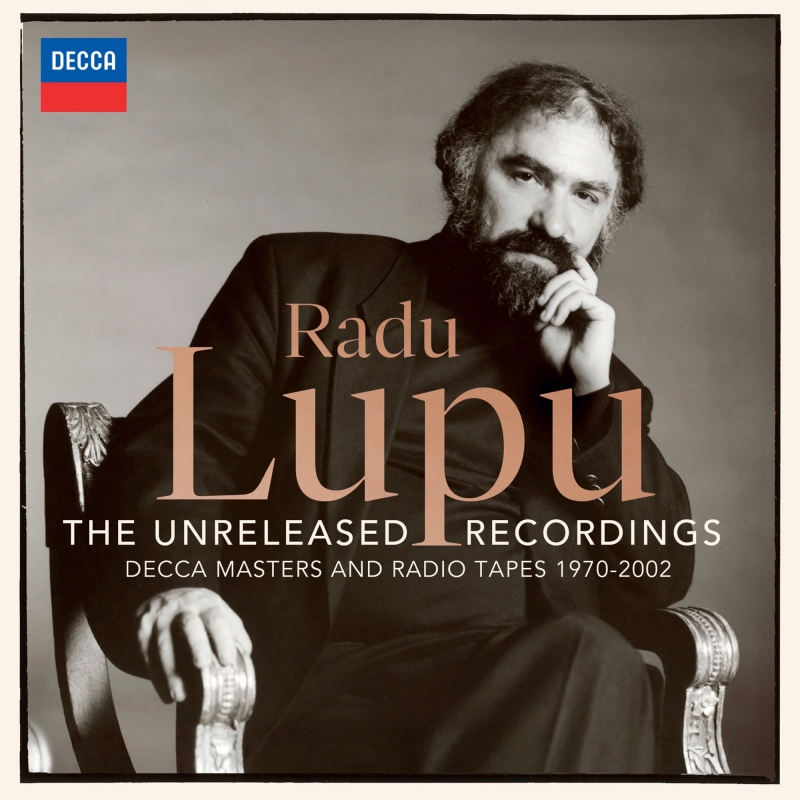
  鋼琴家魯普(Radu Lupu)八十歲冥誕之際,和他有二十多年合作情誼的笛卡(Decca)在二○二五年推出這套《魯普傳奇:1970–2002失落與重現的錄音寶藏》(Radu Lupu: The Unreleased Recordings)。六張CD的錄音年代橫跨三十多年,素材全部來自笛卡長期保存但是沒有公開發行的檔案,包括早年的錄音室母帶,以及由BBC、荷蘭電台與西南德廣播(SWR)所錄製的獨奏會現場實況。所有錄音都是第一次正式出版,曲目也都不在魯普過往商業錄音的曲單上。相關資料都沒有提到這些錄音完成後沒有出版的原因,推測很可能是不符合魯普對錄音的要求。但是對愛樂者來說,卻是補上魯普現有商業錄音中的曲目缺口,並藉此更全面理解魯普作品詮釋手法的途徑。

  整理對照魯普既有的商業錄音,可以大致看出這套唱片填補的幾個方向:首先是曲目類型,補充他在舒伯特奏鳴曲系列中的缺漏曲目、原本在他的唱片目錄中缺席的穆索斯基、巴爾托克、柯普蘭、德布西、海頓等作曲家的鋼琴獨奏作品,以及從未露面的鋼琴四重奏。其次,在錄音時期分布上,從一九七○年代的比賽與早年巡演,到一九八○年代的歐洲音樂節與電台實況,再到一九九○年代後期與二○○○年代初期的零星錄音,提供一條相對連續的時間線,讓聽者能比較魯普在不同時期與不同曲目類型中的演奏方式與風格變化。最後,當中的現場錄音直接而忠實,從中可以觀察他在處理樂曲速度彈性、段落分句銜接與力度層次處理時,如何依現場條件與當下感覺做出不同詮釋。

  魯普一九四五年出生於羅馬尼亞加拉茨(Galați),父母是律師和語言學家。他從六歲開始學琴,但是一直把自己當成作曲家,而不是鋼琴家,因此並不特別積極訓練鋼琴的演奏基本功,直到進入布加勒斯特音樂院與莫斯科音樂學院後,徹底改變他對鋼琴的看法,逐漸形成一種「先在腦中聽見理想聲音,再讓手指追上」的演奏觀,把音色、聲線與結構的清晰度視為首要標準。一九六○年代後期,魯普接連贏得克萊本、安奈斯可與里茲三項重要國際比賽首獎。雖然他對競賽一向不熱中,也常以運氣淡化得獎意義,這幾項成果仍直接促成他與笛卡的合作,並確立他在國際樂壇的地位。

  這套唱片最具代表性的錄音室錄音,是一九七六年與台拉維夫弦樂四重奏(Tel Aviv Quartet)合作錄製的莫札特第一、二號鋼琴四重奏,以及一九九二年到九五年間錄製的舒伯特第十五、十七號鋼琴奏鳴曲。雖然魯普曾經和小提琴家戈德伯格(Szgmon Goldberg)錄製膾炙人口的莫札特小提琴奏鳴曲,也留下幾首鋼琴協奏曲錄音,但是從來沒有正式發行鋼琴四重奏唱片;而已經出版的舒伯特鋼琴奏鳴曲中,也缺少上述這兩塊重要拼圖。

  電台的音樂會實況錄音部份,包括一九八八年威格摩廳的海頓、一九九一年的舒曼《交響練習曲》、一九七○年在里茲的蕭邦作品,以及一九七○年代初期的巴爾托克《戶外》組曲、柯普蘭鋼琴奏鳴曲。除了舒曼的作品之外,其他作曲家都是在魯普現有商業錄音曲目中不曾出現的。其他現場錄音中,幾部魯普生涯中罕見的代表性曲目,像是一九八四年在阿姆斯特丹大會堂的穆索斯基《展覽會之畫》,是目前所知少數能具體聽見他處理此曲的實例。二○○二年的德布西《來自草稿本》則是魯普在斯圖嘉特獨奏會上的安可曲。從音色、節奏與聲音的清晰程度,可以聽出他晚年如何調整觸鍵與層次感。過去魯普的德布西錄音只有和鄭京和的小提琴奏鳴曲,因此《來自草稿本》顯得特別有意義。此外,與科爾德(Kazimierz Kord)、西南德廣播交響樂團在一九八○年合作的莫札特第十八號鋼琴協奏曲,也補充了魯普不算完整的莫札特協奏曲錄音中的一塊空白。

  魯普對錄音品質要求甚高,在錄音室裡,魯普經常因為對鋼琴的音色不滿意、環境的殘響不合意,或是覺得身體狀態未達標準而推遲錄音;或是反覆要求調音師調整音色與觸鍵而延誤進度。但是在現場舞台上,他會依據現場狀況與自身感覺調整演奏速度、樂曲處理的句法與力度。現場演奏多少保留了演奏當下的風險與不完美之處,但是一定具備活生生的即時感與完整說服力。對一位事業後期極少錄音,甚至要求音樂會不能架設麥克風的鋼琴家來說,這套合集最重要的意義是公開一批原本不會出版的錄音,對於理解魯普實際涉獵的曲目範圍與興趣相當重要,並讓愛樂者可以更全面認識魯普真正的演奏樣貌。

  從上述這些角度看,《魯普傳奇:1970–2002失落與重現的錄音寶藏》並不只是附錄性質的「補遺」,而是一組具實質參考價值的檔案資料。如果只看以往發行的唱片目錄,會誤以為魯普的興趣僅限於特定德奧經典曲目,這套唱片修正了這個過往的偏見,另一方面也提供更接近實際演奏情境的聲音記錄,讓現代的愛樂者在評估魯普的藝術風格時,有更多可以比對的實例。這套錄音的意義不在於「再塑造」魯普,而在於提供一組更完整的觀察材料。對於本來已熟悉他過往商業錄音的愛樂者,這套合集提供新的比對基準;對於初次接觸他的樂迷,則是一個從實際演奏案例認識這位鋼琴家的絕佳出發點。

To mark the 80th anniversary of pianist Radu Lupu’s birth, Decca—his recording partner of more than two decades—issued in 2025 the six-CD collection "Radu Lupu: The Unreleased Recordings (1970–2002)". Spanning over thirty years, the recordings are drawn entirely from Decca’s long-preserved but previously unpublished archives. They include early studio master tapes as well as live recital broadcasts recorded by the BBC, Dutch Radio, and Südwestrundfunk (SWR). All are issued here for the first time, and none of the repertoire overlaps with Lupu’s earlier commercial discography.

The accompanying documentation offers no explanation as to why these recordings were left unpublished at the time. It is reasonable to assume that they did not meet Lupu’s own exacting standards. For listeners, however, this release fills significant gaps in his recorded repertoire and provides a broader basis for understanding his approach to interpretation.

A comparison with Lupu’s established commercial recordings reveals several ways in which this set expands our view of his artistry. First, in terms of repertoire, it supplements missing works in his Schubert sonata cycle and introduces composers absent from his official catalogue, including Mussorgsky, Bartók, Copland, Debussy, and Haydn, as well as the only example of a piano quartet in his recorded legacy. Secondly, the chronological spread—from competitions and early tours in the 1970s, through European festivals and radio broadcasts in the 1980s, to occasional recordings from the late 1990s and early 2000s—offers a relatively continuous timeline, enabling listeners to compare his playing across different periods and genres. Finally, the live recordings, unmediated and direct, allow close observation of how Lupu adjusted tempo flexibility, phrasing, and dynamic balance in response to the moment and the acoustical conditions of performance.

Radu Lupu was born in 1945 in Galați, Romania, to parents who were a lawyer and a linguist. He began piano lessons at the age of six but initially regarded himself as a composer rather than a pianist, and therefore did not focus intensively on pianistic technique. His outlook changed decisively after entering the Bucharest Conservatoire and later the Moscow Conservatory, where he gradually formed a conception of playing based on sound imagined inwardly before being realised physically at the keyboard. As he put it in an interview:

 “I hear exactly the sound I want in my head—the full sound of the piece, with all the interpretive elements. Then, I try to bring that sound to the piano with my fingers.”

In the late 1960s, Lupu won first prizes at the Van Cliburn, George Enescu, and Leeds International Piano Competitions. Although he was never fond of competitions and tended to attribute success to chance, these victories led directly to his association with Decca and established his international reputation.

The most significant studio recordings in this set are the Mozart Piano Quartets K. 478 & 493, recorded in 1976 with the Tel Aviv String Quartet, and the Schubert Piano Sonatas D. 840 and D. 850, recorded between 1992 and 1995. While Lupu made celebrated recordings of Mozart violin sonatas with Szymon Goldberg and left several concerto recordings, he never previously released a piano quartet. Likewise, these two Schubert sonatas fill notable gaps in his otherwise substantial Schubert discography.

The radio broadcasts include a 1988 Wigmore Hall recital of Haydn, Schumann’s "Symphonic Études" from 1991, Chopin works recorded in Leeds in 1970, and early-1970s performances of Bartók’s "Out of Doors" and Copland’s Piano Sonata. With the exception of Schumann, these composers are absent from Lupu’s commercial recordings. Other live performances include rare repertoire from his concert life, such as Mussorgsky’s "Pictures at an Exhibition", recorded at the Amsterdam Concertgebouw in 1984—one of the very few documented instances of his interpretation of this work—and Debussy’s "D’un cahier d’esquisses", played as an encore in Stuttgart in 2002. The latter is particularly significant, as Lupu’s only previously released Debussy recording was the violin sonata with Kyung-Wha Chung. The set also includes Mozart’s Piano Concerto K. 456, recorded in 1980 with Kazimierz Kord and the Sinfonieorchester des Südwestfunks, further supplementing his limited Mozart concerto discography.

Lupu was famously exacting about recording conditions. In the studio, dissatisfaction with the piano, the acoustics, or his own physical state often led him to postpone sessions or demand repeated technical adjustments, sometimes at considerable cost of time. On stage, by contrast, he responded flexibly to the circumstances of performance, shaping tempo, phrasing, and dynamics according to the moment. Live performance inevitably involved risk and imperfection, but it also carried immediacy and conviction. For an artist who recorded sparingly in later years and eventually forbade microphones in concert, the importance of this collection lies precisely in making public recordings that were never intended for release. They are invaluable for understanding the true extent of his repertoire and musical interests, and for gaining a more complete picture of his playing as it actually unfolded in performance.

Viewed from these perspectives, "Radu Lupu: The Unreleased Recordings (1970–2002)" is far more than a supplementary appendix. It constitutes a body of archival material of genuine reference value. Judged solely by his earlier discography, one might assume that Lupu’s interests were confined to a narrow core of Austro-German repertoire. This collection corrects that assumption, while also offering sound documents that more closely reflect real performance conditions. Its significance lies not in reshaping Lupu’s image, but in providing a fuller evidential basis. For listeners already familiar with his commercial recordings, it offers new points of comparison; for those encountering him for the first time, it provides an excellent point of entry through concrete examples of his art.
Radu Lupu: The Unreleased Recordings



發表留言