
承受沉靜的自信:白建宇與舒伯特的七十年對話
二○二六年三月,韓國鋼琴家白建宇(Kun Woo Paik)發行雙CD專輯《舒伯特》(Schubert),距離他上一次錄製舒伯特作品已經相隔十三年。同年四月,他自釜山出發,在韓國十二個城市展開巡迴獨奏會。此時的他步入八十歲,也迎來登台七十週年的重要里程碑。
專輯《舒伯特》收錄四首鋼琴奏鳴曲:D.664、D.894、D.784、D.959。其中第十三號(D.664)是他鋼琴生涯最早學習的曲目之一;最後的第二十號(D.959)卻被他擱置數十年,既不曾錄音,也沒有公開演出。對白建宇來說,這首曲子的第二樂章像超越秩序的幻想,第四樂章則彷彿沒有盡頭的反覆。他一直想為這首作品找到詮釋方向,卻始終沒有答案。這張專輯把生涯起點與遲遲不敢碰的曲目並列,構築出一段跨越七十年的時間跨距。
放下證明自己的壓力
韓國媒體與樂迷常稱白建宇為「鍵盤上的求道者」或「苦行僧」。面對這些帶有神格意味的標籤,白建宇反而感到不自在。他認為,只要在自己的位置上盡責工作,每個人某種程度上也都是求道者。不過,白建宇嚴格的自我要求確實有目共睹,他對音樂的好奇心從不會減弱。舉例來說,幾年前在釜山市民會館排練時,白建宇反覆測試一個和弦,甚至站起來閉眼聆聽,只為了確認共鳴是否理想。巡演期間,他也會到當地的圖書館或是舊樂譜店,尋找不同版本的李斯特《超技練習曲》樂譜或是德布西的初版樂譜。對於這種近乎執著的投入,他只簡單表示:「太好奇、太神奇、太有趣了。」到了八十歲,白建宇真正放下的並不是探索心,而是過去那種必須向觀眾證明自己的壓力。現在,練琴不再是為了外界期待,而是回到最單純的好奇。
讓休止符真正成為休止符
這種心境的轉變,最明顯表現在 D.959 終樂章的休止符。舒伯特在再現部寫下幾個刻意的停頓,像是生命接近尾聲時的短促喘息。面對這些留白,白建宇坦言年輕時曾試圖在複雜樂句中找答案,卻愈找愈失望。直到八十歲,他才理解:與其做些什麼,不如學著什麼都不做,讓音樂自己發聲,並且有信心承受沉靜。
這種「承受沉靜的自信」並非抽象概念。白建宇與演員尹靜姬(Jeong-hee Yoon)相伴四十六年,妻子在二○二三年初離世。十多年來,他一邊維持高強度巡演,一邊看著相伴大半生的妻子因阿茲海默症逐漸失去記憶與語言。白建宇承認,他的琴音在妻子生病以後改變了。這段漫長而殘酷的照護經歷,在他八十歲的生命中留下刻痕。當他面對 D.959 的休止符時,不再想著填滿空白,也不再急著趕走寂靜,而是讓休止符真正成為休止符。
承接生命中的裂縫
這種「無為」是面對生命「無常」的終極昇華。白建宇剔除演奏者的人為干預,讓樂譜本身的狂暴與死寂赤裸並存。在 D.784 中,他以冷峻而且乾脆的聲音,直視那種近乎失控的內心騷亂與絕望;而在 D.959那場如風暴般的第二樂章,他展現了驚人的控制力,任由極強與極弱音在爆發後自然回歸沉寂。
這張專輯的重心,在於兩種人生經驗的對照。舒伯特在三十一歲前,以對死亡的恐懼與預感寫出帶有告別意味的晚期風格;八十歲的白建宇則親身經歷衰老與離別。面對那些帶著焦慮的休止符,他不再試圖修補,而是平靜承接。音樂中的裂縫沒有被填補,而是被接受。在 D.959 第二樂章的高潮段落,白建宇並沒有因為年齡而迴避爆發力,他仍讓高音八度與顫音以極強音(ff)轟鳴,關鍵在於隨之而來的極弱音(pp)。他沒有急著收回情緒,而是讓狂暴與安靜各自保留原來的樣子。
鋼琴琴鍵能按下的深度有限,但白建宇能在微小空間裡,透過手指重量、速度與角度的變化,讓聲音產生層次。有些音像被推到失控邊緣,有些音則像從遠方浮現。對他來說,這種限制不是障礙,反而逼使演奏者更專注、更節制。因此,那些極弱音聽起來不像是刻意放輕,而像風暴開始前早已存在的寂靜。
還原一段告別的人生
繼蕭邦與舒曼專輯之後,這次白建宇再次選擇在統營國際音樂堂錄音。這座音樂廳採鞋盒型設計,以原木結構營造自然殘響。對白建宇而言,錄音是樂音與空間互動的過程。這裡的聲學條件讓他不需依賴後製,就能保留最自然的音色,讓演奏更趨近回到單純狀態。
專輯曲目順序也經過調整。四首奏鳴曲並未依照舒伯特的創作年份排列,而是排列為:D.664(一八一九年)、D.894(一八二六年)、D.784(一八二三年)、D.959(一八二八年)。D.664寫於舒伯特生命中相對溫暖順遂的階段,通篇散發著純真的氣息;D.894表面平靜,內在卻隱含悲劇感,此時的舒伯特已經度過梅毒發作最慘烈的階段,樂曲流露出向內收斂、不再有任何渴望的平靜。D.784創作於他確診重病之後,陷入了深沉的悲哀與宿命感中,生理痛苦讓音樂充滿掙扎與壓力;最後的D.959則把前面所有經歷揉合進一部交響規模的作品。這樣的排列,讓整張專輯呈現出「明朗、平靜、絕望、告別」的順序,更像一段人生過程的寫照。
外界或許會把這張專輯視為白建宇音樂生涯的總結,白建宇並不認同。他認為只要熱情還在,音樂家就不會真正退休。至於為何在此時回到舒伯特?白建宇的答案是:「不是我選擇音樂,是音樂選擇了我。」對他而言,自由不是退場,而是不再需要刻意證明自己。舒伯特三十一歲就走了,沒能活到的老年,由白建宇以自己的七十年補上。(2026年5月26日)
In March 2026, the South Korean pianist Kun Woo Paik released the double-CD album “Schubert", marking a 13-year hiatus since his last recording of the composer’s works. In April of the same year, he embarked on a nationwide recital tour across twelve cities in South Korea, starting in Busan. At this juncture, he enters his eightieth year, celebrating a significant milestone of seventy years on stage.
The album “Schubert" features four piano sonatas: D.664, D.894, D.784, and D.959. Sonata No. 13 (D.664) is among the earliest repertoire he studied in his career. In contrast, he had set aside the final Sonata No. 20 (D.959) for decades, neither recording nor performing it publicly. As Paik notes, “The second movement (of Sonata No. 20) felt like a fantasy that went beyond order, and the theme of the fourth movement seemed to repeat endlessly". He had long sought an interpretative direction for this work but remained without an answer: “For years I tried to find the answer, but perhaps because I wanted it too much, the answer did not appear". Placing the starting point of his career alongside a piece he hesitated to approach for so long constructs a temporal span of seventy years.
Relinquishing the Pressure to Prove Oneself
South Korean media and music lovers frequently bestow upon Paik titles such as “a spiritual seeker at the piano" or “an ascetic on the keys". Confronted with these somewhat mythologising labels, Paik actually feels rather uneasy. He believes that anyone fulfilling their duties in their own position is, to some extent, a seeker, noting, “Everyone is a spiritual seeker in their own field if they are devoted and work hard at whatever they do… Honestly, the title feels a bit heavy".
Nevertheless, Paik’s rigorous self-discipline is widely acknowledged, and his curiosity about music has never waned. For instance, during a rehearsal at the Busan Citizen’s Hall a few years ago, he repeatedly tested a single chord, even standing up and closing his eyes to listen, merely to ensure the resonance was ideal. Whilst on tour, he frequently visits local libraries or antique sheet music shops in search of different editions of Liszt’s “Transcendental Études" or early editions of Debussy’s scores. Regarding this near-obsessive dedication, he simply states:
“I know there are five versions of Liszt’s “Transcendental Études", and because I couldn’t find them, I went around searching for each version… I don’t do it on purpose; I just naturally do it because I’m so curious, fascinated, and amused." (“리스트 초절기교 연습곡도 버전이 다섯 개가 있는 걸 아는데 찾을 수가 없어서 돌아다니며 찾고… 너무 궁금하고 신기하고 재미있어서 자연히 그렇게 하게 돼.")
At the age of eighty, what Paik has truly relinquished is not his inquisitive mind, but the past pressure of having to prove himself to his audiences. As he admits, “For so long, there was stress, the constant need to deliver… Now what remains is simply the joy of music".
Leting the Rests Truly Be Rests
This shift in his state of mind is most vividly manifested in the rests within the final movement of D.959. In the recapitulation, Schubert wrote several deliberate pauses, resembling the brief, fleeting breaths of a life nearing its end. Faced with these silences, Paik candidly admits that in his youth, he attempted to find answers within the complex phrasing, only to grow increasingly frustrated. It was not until he turned eighty that he finally understood: “I realized that rather than trying to do something, I had to try not to do anything. To let the music sing by itself — and to have the confidence to endure the silence".
This “confidence to endure the silence" is no abstract concept. Paik was married to the actress Jeong-hee Yoon for forty-six years, until she passed away in early 2023. For over a decade, whilst maintaining a gruelling schedule of global tours, he watched his life-long companion gradually lose her memory and language to Alzheimer’s disease. Paik acknowledges that his piano tone changed after his wife fell ill: “My piano sound has changed since my wife fell ill" (아내가 아프고 난 뒤 피아노 소리도 달라졌다). This long and cruel experience of caregiving has undoubtedly left its mark on his eighty years of life. When he now confronts the rests in D.959, he no longer seeks to fill the voids, nor does he rush to banish the quietude; rather, he allows the rests to truly be rests.
Embracing the Fractures in Life
This philosophy of “inaction" represents the ultimate sublimation of the transient nature of life (“Vergänglichkeit"). Paik strips away any artificial intervention by the performer, allowing the inherent tempest and deathly stillness of the score to coexist in their barest form. In D.784, he uses a stark, unadorned tone to directly confront a near-uncontrollable inner turmoil and despair; meanwhile, in the storm-like second movement of D.959, he demonstrates astonishing control, permitting the “fortissimo" and “pianissimo" to naturally revert to silence following their eruption.
The focal point of this album lies in the juxtaposition of two distinct life experiences. Before the age of thirty-one, Schubert composed late-style works laden with a sense of farewell, driven by his premonition and fear of death. Conversely, the eighty-year-old Kun Woo Paik has personally experienced the realities of ageing and bereavement. Faced with those anxiety-tinged rests, he no longer attempts to mend them, but accepts them calmly. The fractures within the music are not patched over, but embraced. During the climax of D.959’s second movement, Paik does not shy away from explosive power due to his age; he still allows the high octaves and trills to roar at “fortissimo" (ff). The crux lies in the subsequent “pianissimo" (pp). He does not hastily retract the emotion, but rather preserves the ferocity and the tranquillity exactly as they are.
The physical depth to which a piano key can be depressed is finite. Yet, as Paik observes: “However, the depth of the keyboard is extremely limited. Everything must be resolved within that shallow depth. Producing sound with the fingertips is endless depending on the angle, speed, and weight." (하지만 건반의 깊이라는 것은 매우 제한적입니다. 그 얕은 깊이 안에서 모든 것을 해결해야 합니다. 손끝으로 소리를 낸다는 것은 각도, 속도, 무게에 따라 끝이 없습니다.)
Within this minute space, he generates layers of sound through variations in the weight, speed, and angle of his fingers. Some notes seem pushed to the brink of chaos, whilst others appear to emerge from a great distance. For him, this limitation is not a hindrance; instead, it compels the performer to be more focused and restrained. Consequently, those “pianissimo" notes do not sound as though they were intentionally softened, but rather like the silence that had already existed long before the storm began.
Reconstructing a Life of Farewells
Following his Chopin and Schumann albums, Paik once again chose the Tongyeong International Concert Hall for this recording. This venue, employing a shoebox design, utilises a wooden structure to create a natural reverberation. For Paik, recording is a process of interaction between musical sound and space. The acoustic conditions here allow him to capture the most natural timbre without relying on post-production, enabling the performance to return closer to a state of purity.
The sequencing of the album’s tracks has also been carefully considered. The four sonatas are not arranged chronologically by Schubert’s composition dates, but rather appear as: D.664 (1819), D.894 (1826), D.784 (1823), and D.959 (1828). D.664 was written during a relatively warm and smooth period in Schubert’s life, exuding an air of innocence throughout. D.894 appears calm on the surface, but as the liner notes state, “the sense of underlying tragedy remains, despite the impression of calmness" by this time, Schubert had passed the acute phase of his syphilis, and the music reveals a tranquil inward withdrawal, devoid of further worldly desires. D.784 was composed after his diagnosis with a terminal illness, “written during a period of profound sadness and fatalism owing to his worsening health", where physical agony imbued the music with struggle and tension. Finally, D.959 amalgamates all preceding experiences into a work of symphonic proportions. This arrangement allows the album as a whole to unfold in a sequence of “brightness, tranquillity, despair, and farewell," closely resembling the portrayal of a life’s journey.
The wider world might interpret this album as the summation of Paik’s musical career, but he disagrees. He believes that as long as the passion remains, a musician never truly retires: “For musicians, retirement simply has no meaning… There are still so many pieces I want to play. A lifetime is just too short". As for why he returned to Schubert at this particular moment, Paik’s answer is: “The music chose me, not the other way around. That is exactly how it feels". For him, freedom is not an exit, but the cessation of the need to deliberately prove oneself. Schubert passed away at thirty-one; the old age he never lived to see has been supplemented by Kun Woo Paik with his own seventy years of experience. (26 May, 2026)
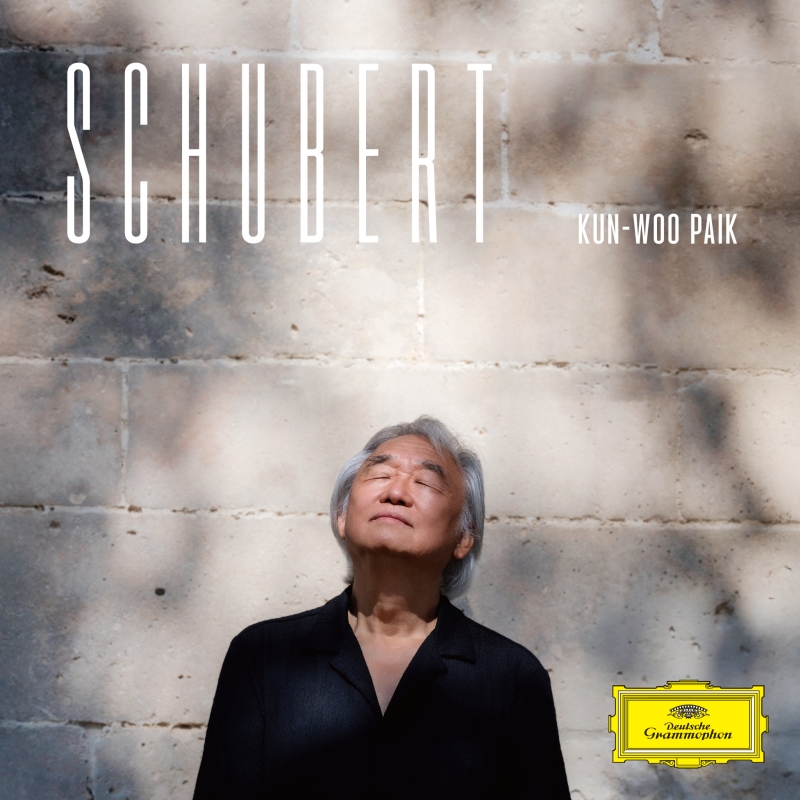
Schubert
Kun-Woo Paik (piano)
March 2025, Tongyeong International Concert Hall


發表留言