
現代琴弦上的時間紀錄:夏漢與他的巴德學院《首演集》
  在當代音樂版圖中,紐約上州的巴德學院(Bard College)具有特殊的座標意義。校園內的費雪表演藝術中心(Fisher Center)由建築大師格里(Frank Gehry)設計,音響效果則出自傳奇大師豐田泰久之手。從東京三得利音樂廳(Suntory Hall)、洛杉磯迪士尼音樂廳(Walt Disney Concert Hall)到漢堡易北愛樂廳(Elbphilharmonie)與廣島福山藝術文化廳(Fukuyama Hall of Art & Culture, Reed & Rose),這些名廳的頂級聲學皆由他操刀。對小提琴家夏漢(Gil Shaham)來說,巴德學院是他推廣當代作品的大本營。而這一切的起點,源自於他與擔任院長超過五十年的指揮家波特斯坦(Leon Botstein)長達三十年的老交情。身為教授,夏漢在此擁有極高主控權,能與由他指導的青年樂手所組成的「當代樂團」(The Orchestra Now, TŌN)反覆磨合。二○二二至二三年間,夏漢在費雪表演藝術中心把自己對新作品的思辨固化為音符,完成《首演集》(Premieres)專輯,收錄三部不同作曲家題獻給他的新作品。

惠勒:從中央公園散步者到歷史拼貼

  專輯首部作品是史考特‧惠勒(Scott Wheeler)題獻給夏漢的協奏曲《美國之鳥》(Birds of America)。惠勒長期創作歌劇與劇場音樂,這讓他很擅長用清晰的結構與鮮明的節奏來說故事。這部作品的靈感,源於惠勒與夏漢夫婦在紐約中央公園散步時,偶然遇見一隻啄木鳥的瞬間。夏漢經常對週遭環境保持新鮮與好奇,並有著敏銳的觀察力。惠勒因此形容夏漢為一名「漫遊者」(flâneur),這不僅是側寫夏漢的個性,更定義出這部作品的視角:夏漢在曲中並非帶領樂團的英雄,而更像是一名穿梭在音響森林裡的觀察者。

  為了重現那次散步的聽覺記憶,惠勒在樂譜中加入許多巧思:他利用小提琴琴身敲擊、弦樂的弓桿擊弦,搭配木管高音,精巧模擬啄木鳥的節奏。夏漢的琴聲隨興起伏,彷彿散步時目光的隨機移動。在第一樂章中,夏漢展現了不帶重力的靈巧音色,琴聲如同飛鳥般穿透管弦樂的厚重音響。

  惠勒描寫的不是真鳥,而是音樂史上的「名鳥」。他巧妙嵌入維瓦第《金翅雀》(Il Gardellino, RV 428)、舒曼《林地之景》(Waldscenen)〈預言鳥〉(Vogel als Prophet)與雷史畢基《鳥》等經典作品的碎片,甚至融入爵士風格的《熱情金絲雀》(The Hot Canary)。這種手法讓作品跳脫一般取材經典作品改寫的音效模仿,而是成為一場有趣的歷史回顧。到了第二樂章,夏漢轉化為憂慮吟唱的歌者;終樂章則展現極其嚴謹的作曲技巧功底,小提琴的技巧、音響,與打擊樂配合得天衣無縫,將公園偶遇昇華為一場聽覺盛宴。

多曼:從家人對話到靈魂之歌

  第二部作品是多曼(Avner Dorman)的第二號小提琴協奏曲《尼格尼姆:靈魂之歌》(Nigunim)。一九七五年出生於以色列、現定居美國的多曼,同時擁有音樂與物理學背景,師承美國作曲大師柯瑞里亞諾(John Corigliano)。他的作品以複雜節奏著稱,卻能在技術細節中展現強烈的情感衝擊力。

  這部作品最初是夏漢與鋼琴家妹妹歐莉‧夏漢(Orli Shaham)共同委託的奏鳴曲,因夏漢極度認同其旋律語彙而擴充演化為協奏曲。曲名「Nigunim」指猶太傳統中超越語言、通往靈性的無言歌唱。多曼提取利比亞、格魯吉亞與巴爾幹等社群音樂「基因」,把民族音樂中特有的音階色彩和語氣轉化為現代音樂語彙。對於在以色列長大的夏漢來說,這部作品觸動了深層的身分認同。

  演奏技巧上,它有複雜的節拍變化並有著緊密而高張力的雙音技巧。在沉思慢板與極具推進力的快板間,夏漢展現個人招牌的歌唱性,把融合巴洛克結構與現代音色的複雜聲響處理得平易近人。特別是受馬其頓舞蹈啟發的末樂章,夏漢展現驚人驅動力,在交響語彙中尋回古老的文化脈動。本作也讓多曼榮獲二○一八年亞茲里利猶太音樂獎(Azrieli Prize for Jewish Music)。

盛宗亮:在《飛飛歌》中尋求主體自由

  最後是盛宗亮的協奏曲《飛飛歌》(Let Fly)。這部作品的靈感源自於盛宗亮對夏漢演奏特質的直覺觀察。他發現夏漢的琴聲中有一種「向上飄揚、隨時準備展翅高飛」的輕盈質感;夏漢則是很傳神評價此曲「簡直像是巴爾托克與中國民俗音樂的交會」。

  盛宗亮融入中國南方「飛歌」的山谷對答意象,並以寫給女兒的童謠為動機,疊合傳統民族風格與私人親情。作品頻繁使用泛音營造「無重力」懸浮感,與樂團具打擊樂質感的節奏形成對比。最獨特之處在於第二與第三段間留白的「裝飾奏」,盛宗亮要求夏漢必須親自創作。這迫使演奏者從詮釋者變身為創作者,回歸早年獨奏者從作品汲取靈感,消化後自主發揮的協奏曲原型,讓作品在現代架構下又具有原始的「自在飛翔」精神。

  然而,我認為這部長達二十八分鐘而且不間斷的單樂章作品也面臨演奏效果的考驗。整部作品雖然充滿流動感,但是旋律顯得比較零碎,缺乏協奏曲名作那種可以讓人留下深刻印象的主題力量,末段結構支撐也顯得略顯薄弱。對聽眾而言,確實較難捕捉明確記憶點。但是夏漢憑藉卓越的歌唱能力維持樂曲張力,在看似即興不羈的音響地平線上,為這部「為他而寫」的作品刻畫出細膩的情感軌跡。

結語:作為時間紀錄的當代協奏曲

  這張《首演集》呈現出協奏曲在二十一世紀的新樣貌,夏漢在費雪中心留下的琴聲,深刻記錄了他與這群作曲家超過十年的磨合過程。他透過這三部作品證明,協奏曲可以很有生命力,有著多元的創作思維。它既可以是友誼的淬煉,也可以是一種文化記憶與生活經驗。當我們聽著他那極具透明感的音符,聽見的不只是三首新曲,更是一個藝術家如何在當代浪潮中,透過與同儕藝術家的專業連結,留下的最真實、最動人的交融印記。(2026年6月2日)
In the landscape of contemporary music, Bard College in upstate New York holds a unique significance. The campus’s Fisher Center was designed by the master architect Frank Gehry, with acoustics crafted by the legendary Yasuhisa Toyota. Toyota is the mind behind the world-class sonics of venues such as Tokyo’s Suntory Hall, Los Angeles’s Walt Disney Concert Hall, Hamburg’s Elbphilharmonie, and the Fukuyama Hall of Art & Culture (Reed & Rose) in Hiroshima. For violinist Gil Shaham, Bard serves as the primary base for his dedication to contemporary works. This entire project stems from his thirty-year friendship with the college president and conductor, Leon Botstein. As a professor there, Shaham enjoys immense artistic freedom, working closely with The Orchestra Now—an ensemble of young musicians under his guidance. Between 2022 and 2023, Shaham consolidated his reflections on these new works into sound at the Fisher Center, resulting in the album Premieres, which features three concertos dedicated to him by three distinct composers.
Wheeler: From Central Park Flâneur to Structural Collage
The album opens with Scott Wheeler’s concerto, Birds of America. Wheeler’s extensive background in opera and theatre gives him a keen ability to “tell a story" through clear structures and vivid rhythms. The inspiration for this work came from a chance encounter: while walking in New York’s Central Park with Shaham and his wife, Wheeler spotted a woodpecker. Noticing Shaham’s sharp observation and constant curiosity about his surroundings, Wheeler described the violinist as a flâneur (a wanderer or saunterer). This does not merely describe Shaham’s personality; it defines the perspective of the piece. In this concerto, Shaham is not the traditional hero leading the orchestra, but rather an observer wandering through a forest of sound.
To recreate the auditory memory of that walk, Wheeler employed clever effects: violin tapping and col legno (striking the strings with the wood of the bow), paired with high-pitched woodwinds to mimic the rhythmic pecking of a woodpecker. Shaham’s playing rises and falls with a sense of spontaneity, much like the wandering gaze of a stroll. In the first movement, Shaham displays a weightless, nimble tone, allowing the violin to soar through the orchestra’s dense textures.
Wheeler depicts “famous birds" from music history rather than real ones. He skillfully weaves in fragments from Vivaldi’s Il Gardellino (The Goldfinch), Schumann’s Waldscenen (Forest Scenes; specifically ‘The Prophet Bird’), and Respighi’s The Birds, even incorporating the jazz-inflected The Hot Canary. This approach moves beyond simple imitation, turning the work into an engaging historical retrospective. By the second movement, Shaham transforms into a melancholic singer; the finale then showcases Wheeler’s rigorous craftsmanship, as the violin’s technique and timbre lock perfectly with the percussion, elevating a chance meeting in the park into a feast for the ears.
Dorman: From Family Dialogue to the “Song of the Soul"
The second work is Avner Dorman’s Violin Concerto No. 2, Nigunim. Born in Israel in 1975 and now based in the United States, Dorman possesses a unique background in both music and physics, having studied under the American master John Corigliano. His music is known for its intricate craftsmanship and rigorous technique, yet it retains a powerful emotional impact.
Originally commissioned as a violin sonata by Gil Shaham and his sister, the pianist Orli Shaham, Gil’s deep connection to the melodic language led to its expansion into a concerto. The title, Nigunim, refers to the Jewish tradition of “wordless religious songs" that transcend language to reach the spiritual. Dorman extracts musical “genes" from North Africa, Central Asia (Georgia), and the Balkans, translating traditional modes and melodic gestures into a modern orchestral vocabulary. For Shaham, who grew up in Israel, the work touches upon a deep sense of identity.
Technically, the piece demands complex rhythmic changes and high-tension double stops. Between the meditative slow sections and the propulsive fast passages, Shaham displays his signature lyricism, making the complex blend of Baroque structure and modern sonics feel accessible. In the final movement, inspired by Macedonian dance, Shaham exhibits incredible drive, rediscovering an ancient cultural pulse within a contemporary symphonic language. This work earned Dorman the 2018 Azrieli Prize for Jewish Music.
Bright Sheng: Seeking Freedom in Let Fly
The final work is Bright Sheng’s concerto, Let Fly. The inspiration came from Sheng’s intuitive observation of Shaham’s playing: he noticed a “lightness and airiness," as if the sound were “soaring… and ready to take flight." Shaham, in turn, vividly described the piece as being “almost like Bartók meets the Chinese folk music tradition.”
Sheng incorporates the “Flying Song" imagery of southern China—a style of singing across mountains—and uses a nursery rhyme he wrote for his daughter as a motif, blending traditional folk style with personal affection. The work frequently uses natural harmonics to create a sense of “near weightlessness," contrasting with the orchestra’s percussive rhythms. The most distinctive feature is the cadenza left blank between the second and third sections, which Sheng required Shaham to compose himself. This forces the performer to move from interpreter to creator, returning to the concerto’s historical roots where soloists improvised based on the work’s inspiration.
However, I believe this twenty-eight-minute, non-stop single-movement work faces challenges in its performance impact. While the piece is fluid, the melodies feel somewhat fragmented, lacking the memorable thematic power found in the great concerto masterpieces. The structural support in the final section also feels slightly thin. For the listener, it is indeed difficult to grasp a clear “hook." Nevertheless, Shaham maintains the tension through his exceptional lyrical playing, tracing a delicate emotional path across a landscape of seemingly improvisational sound.
Conclusion: A Record of Time in the Modern Concerto
Premieres presents a new face of the concerto in the twenty-first century. The sounds Shaham recorded at the Fisher Center are a profound record of over a decade of collaboration with these composers. Through these three works, he proves that the concerto can be a living, breathing entity with diverse creative perspectives. It can be a testament to friendship, cultural memory, and life experience. When we listen to these transparent notes, we hear more than just three new pieces; we hear how an artist, through professional connection with his peers, leaves behind a truly moving and authentic record of time. (2 June, 2026)
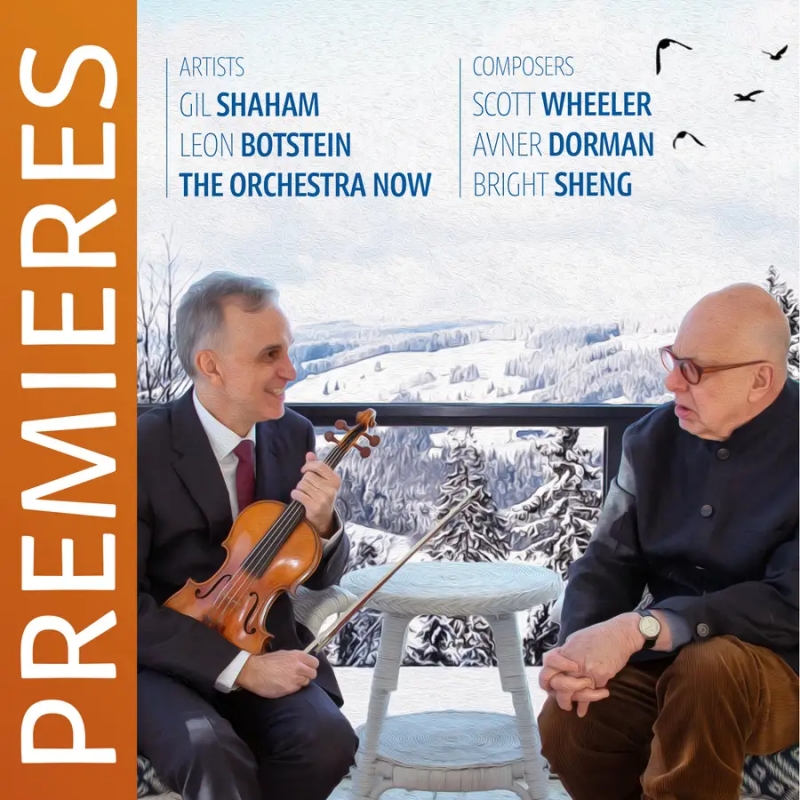
S. WHEELER Birds of America
DORMAN Violin Concerto No. 2 "Nigunim"
SHENG Let Fly
Gil Shaham (violin), The Orchestra Now, Leon Botstein
May 2022 and January 2023,  Fisher Center at Bard


發表留言