
巴佛傑的精密聲學:解剖拉威爾的理性與管弦樂思維
  提到法國鋼琴學派,許多人腦中會立刻浮現如珍珠般圓潤的觸鍵與清脆晶瑩的音色(jeu perlé):每隻手指都必須有極佳的控制力,才能做到顆粒分明不含糊,音色輕巧透明。然而,巴佛傑(Jean-Efflam Bavouzet)並不屬於這種典型印象,原因得從他的老師桑康(Pierre Sancan)說起。

  桑康把俄羅斯學派運用手臂重量的觀念帶進法國鋼琴教育,要求學生不能只依靠指尖,而是運用從背部到手指的整體力量。更重要的是,他把管弦樂思維引進鋼琴課堂,經常直接告訴巴佛傑:「這裡要拉出大提琴般的線條」,或是「像長笛一樣,然後在這裡加上一聲鈸」。這種把鋼琴對比為管弦樂的訓練,正是開啟詮釋拉威爾鋼琴作品大門的鑰匙。

以管弦樂的耳朵思考鋼琴

  有趣的是,拉威爾本人的演奏風格不以炫技見長,卻在鍵盤上創造出前所未聞的聲響。《夜的加斯巴》(Gaspard de la nuit)的〈水妖〉(Ondine),以和弦與單音的快速交替模擬波光閃爍;《鏡》的〈汪洋扁舟〉(Une barque sur l'océan)則透過極弱音與快速音型描繪海浪起伏。拉威爾之所以能寫出這些聲響,正是因為他以管弦樂的耳朵思考鋼琴。後來拉威爾把大量鋼琴作品改編成管弦樂版本,這也說明創作的時候,他腦中聽見的,確實是整個樂團的效果。因此對巴佛傑而言,演奏拉威爾不只是克服技巧,還要透過管弦樂般的思維,重現作曲家精密設計的宏大音色層次。

服從樂譜與極富表情的悖論

  拉威爾對樂譜細節近乎苛求。他反覆提醒演奏者:「只要彈寫下來的音符。」當鋼琴家維根斯坦(Paul Wittgenstein)首演《左手鋼琴協奏曲》時,曾試圖修改樂譜,並主張「演奏者不該是奴隸」。拉威爾則毫不退讓地回答:「演奏者就是奴隸。」

  然而,這句話背後又隱藏矛盾之處。拉威爾一方面要求演奏者絕對服從,另一方面卻強迫演奏者自行揣摩。例如:他經常在譜面上標示「極富表情」(très expressif),但是從不說明究竟要表達什麼,演奏者只能自行尋找答案。於是,拉威爾音樂最困難的地方往往不在技巧,而在於如何在克制與外放、理性與詩意之間取得平衡。

三十年的結構謎題

  巴佛傑花了很長時間才真正理解這一點。他演奏《G大調鋼琴協奏曲》已經上百次,但是一開始他根本不明白拉威爾所說,譜寫優美的第二樂章對他而言「非常困難」,並且採用「挑戰」(challenging)這個詞來形容是什麼意思。直到歷經三十年歲月,巴佛傑才終於解開這個謎題。不過,巴佛傑刻意賣了個關子,堅拒透露這個挑戰的具體細節,而是把秘密保留在琴音中,要聽眾自己去尋找答案。不過,若從巴佛傑的美學信仰來剖析,我們不難聽出這個挑戰的關鍵:拉威爾在該樂章追求的並非華麗效果,而是極端的結構感:這段看似單純的旋律,實則是逐小節精密推算、模仿莫札特《單簧管五重奏》慢板樂章的產物。當音樂被剝離到沒有任何多餘音符時,演奏者一絲一毫的主觀氾濫,都會瞬間破壞這份令人驚嘆的精密平衡。

從史坦威到客製化Yamaha

  理解這一點之後,再回頭比較巴佛傑兩次錄製的拉威爾鋼琴獨奏全集,就會發現有趣的差異。二○○三年,巴佛傑使用一九○一年的史坦威鋼琴錄音;二○二五年則改用Yamaha CFX演奏型三角鋼琴。許多樂評認為他的詮釋觀點出現明顯變化,但是巴佛傑本人並不認同。他認為核心觀念完全沒變,差異是來自樂器條件,以及二十多年來累積的演出經驗。

  事情其實並不那麼單純。有一年Yamaha CFX部門邀請巴佛傑評鑑在場的五、六架CFX演奏型三角鋼琴時,巴佛傑直接向研發團隊提出自己理想中的聲音與性能需求,並提出具體的改進方向。換句話說,這架鋼琴鮮明的高音與出色的延音表現,本身就是從巴佛傑的審美角度出發。

  因此,二○二五年的錄音與其說是時間自然積累沉澱的結果,不如說是他主動把聲音的清晰度推向毫無雜質的極致。巴佛傑也十分認同顧爾德(Glenn Gould)的觀點,認為錄音不只是保存演出,更是一種創作方式。新版中那種近乎沒有破綻的清晰與精準,不只得自舞台經驗,也來自錄音室反覆檢驗與修正的過程。在這種放大鏡式的審視下,音樂不再依賴現場的感性渲染,而是展現出如鐘錶般精密的結構之美。

英美與法國樂評的兩極對峙

  這正是新錄音引發兩極評價的原因。《留聲機》雜誌高度讚賞Yamaha鋼琴那種乾淨、線條分明的穿透力,認為新版錄音剔除多餘的感傷,讓音樂像幾何圖形般精準、清晰。法國《音叉》雜誌則站在完全相反的傳統立場,認為新版的高音過於尖銳,低音缺乏足夠的深沉度,整體顯得冷峻、單調且音色乾燥(sec)。必須釐清的是,這種「乾燥」並非樂器物理上缺乏延音。事實上,巴佛傑極度讚賞這架 Yamaha CFX 擁有「令人驚嘆的延音」,但演奏家為了追求絕對的精準與透明,刻意剝除了傳統印象派所仰賴的踏板迷霧與溫暖殘響。這種不妥協的聲學解剖,反而讓《鏡》失去了原本該有的夢幻與迷朦色彩。

  有趣的是,這種被《音叉》批評的特質,恰恰其實與拉威爾本人欣賞的演奏風格十分接近。拉威爾生前極為推崇卡薩德修(Robert Casadesus)那種嚴格遵循樂譜、不刻意流露私人情感的演奏方式。換句話說,巴佛傑並非悖離拉威爾,而是把拉威爾追求的客觀與精準推向更極端的程度。

難以壓抑的藝術直覺

  不過,巴佛傑也不是毫無保留的「忠於原譜」。在《高雅而憂傷的圓舞曲》(Valses nobles et sentimentales)第七首Moins vif中,巴佛傑加入一個原譜沒有標示的右手震音(tremolo)。英國樂評認為這個處理缺乏說服力,《音叉》更直接批評它顯得突兀而不協調。這個細節正好證明一個事實:即使是反覆強調忠於樂譜的鋼琴家,也很難完全壓抑自己的藝術直覺。法國樂評便敏銳地觀察到,巴佛傑在《圓舞曲》(La Valse)中大膽加入取決於個人品味的滑音(glissandos)。為了在鍵盤上還原極致的「管弦樂交響色彩」,巴佛傑也承認自己加入補充聲部,甚至在樂曲結尾處刻意偏離原譜的指示。這證明他對交響聲響的追求與個人詮釋的本能,最終還是凌駕了對樂譜的絕對忠實。

魔法花園裡的古典主義

  一般習慣把德布西和拉威爾並列為印象派音樂的兩大代表,但是在巴佛傑眼中,兩人的本質如同天南地北:德布西是打破既有架構的革命者;拉威爾則是堅定的古典主義者。他從未顛覆既有的音樂語法,而是在嚴謹的古典架構上加入豐富的和聲色彩與鮮明旋律。

  正因為如此,巴佛傑經常把拉威爾與莫札特相提並論,因為兩人都追求比例、平衡與形式的完美。他把拉威爾的音樂形容為「魔法花園」(fairy garden):所有奇幻色彩、童年記憶與神秘想像,都被安放在精密計算的結構之中。《夜的加斯巴》那些如鬼魅般暴烈的幻象,反而必須依靠高度理性的控制,才不會流於失控的噪音。

  從老史坦威的醇厚到Yamaha CFX的銳利,巴佛傑改變的或許只是彈奏的工具,而非他對拉威爾的根本信念。然而這二十年的發展歷程也讓人看得更清楚:巴佛傑不只是忠實執行作曲家要求的人,同時也是積極塑造聲音的人。在追求客觀與精準的道路上,他從來不是被動服從的奴隸,而是一位始終堅持以自己方式理解拉威爾的人。(2026年6月9日)
When the French piano school is mentioned, many immediately think of the pearly, rounded touch and crisp, crystalline tone of “jeu perlé": each finger must possess superb control to achieve a distinct, unblurred articulation and a light, transparent sound. However, Jean-Efflam Bavouzet does not fit this typical impression. The reason traces back to his teacher, Pierre Sancan.
Sancan introduced the Russian school’s concept of arm weight into French piano pedagogy, requiring students not to rely solely on their fingertips, but to utilise the entire weight of the arm from the back down to the fingers. More importantly, he brought an orchestral mindset into the piano studio, often instructing Bavouzet directly to “bring out the cello line", or saying: “Play this part like a flute… then add a cymbal here" (Joue cette partie comme une flûte… puis rajoute une cymbale ici ). This approach to training, which conceptualises the piano as an orchestra, is precisely the key to unlocking the interpretation of Maurice Ravel’s piano works.
Thinking of the Piano with an Orchestral Ear
Interestingly, Ravel’s own playing style was not renowned for its virtuosity, yet he created unprecedented sonorities on the keyboard. In ‘Ondine’ from “Gaspard de la nuit", the rapid alternation of chords and single notes simulates the shimmering of water; in ‘Une barque sur l’océan’ from “Miroirs", extreme “pianissimo" and rapid figurations depict the rolling waves. Ravel was able to compose such sounds precisely because he conceived piano music with an orchestral ear. He later transcribed a vast number of his piano works into orchestral versions, demonstrating that what he heard in his mind during composition was, indeed, the effect of a full orchestra. Therefore, for Bavouzet, performing Ravel is not merely about overcoming technical challenges, but also about employing an orchestral mindset to recreate the grand, meticulously designed layers of timbre envisaged by the composer.
The Paradox of Textual Obedience and Intense Expression
Ravel was almost draconian regarding the details of his scores. He repeatedly reminded performers to “Play only what is written!". When the pianist Paul Wittgenstein premiered the “Concerto for the Left Hand", he attempted to modify the score, arguing: “Performers must not be slaves (Les interprètes ne doivent pas être des esclaves). Ravel gave no ground, retorting: “Performers are slaves." (Les interprètes sont des esclaves).
However, a paradox hides behind this statement. On the one hand, Ravel demanded absolute obedience; on the other, he forced performers to rely on their own intuition. For instance, he frequently marked his scores with “très expressif" (intensely expressive), yet never explained exactly what was to be expressed, leaving the performer to find the answer. Thus, the greatest difficulty in Ravel’s music often lies not in technique, but in striking a balance between restraint and extroversion, rationality and poetry.
A Thirty-Year Structural Enigma
It took Bavouzet a long time to truly understand this point. He has performed the “Piano Concerto in G major" over a hundred times, but initially, he simply could not comprehend what Ravel meant when he said writing the beautiful second movement was “very difficult" and used the word “challenging" to describe it. It was only after thirty years that Bavouzet finally solved this enigma. However, he deliberately keeps the audience in suspense, refusing to disclose the specific details of this challenge, opting instead to preserve the secret within his piano tone for listeners to discover themselves. Nevertheless, by analysing Bavouzet’s aesthetic beliefs, it is not difficult to discern the crux of this challenge: what Ravel pursued in this movement was not a flamboyant effect, but an extreme sense of structure. This seemingly simple melody is, in fact, the product of a precise, “bar by bar" calculation modelled on the slow movement of Mozart’s Clarinet Quintet. When the music is stripped down to an absolute minimum, devoid of any superfluous notes, even the slightest overflow of subjectivity from the performer will instantly shatter this breathtakingly precise balance.
From Steinway to a Customised Yamaha
With this understanding, looking back and comparing Bavouzet’s two recordings of Ravel’s complete solo piano works reveals fascinating differences. In 2003, Bavouzet recorded on a 1901 Steinway piano; for the 2025 cycle, he switched to a Yamaha CFX concert grand. Many music critics perceived a distinct shift in his interpretive perspective, but Bavouzet himself disagrees. He maintains that his core concepts have not changed at all; the differences stem from the physical conditions of the instruments, alongside the accumulation of over twenty years of performing experience.
The reality, however, is not quite so straightforward. When the Yamaha CFX department invited Bavouzet to evaluate five or six of their concert grands, he frankly communicated his ideal sound and performance requirements to the research and development team, pointing out specific directions for improvement. In other words, this piano’s brilliant treble and “amazing sustain" were fundamentally shaped by Bavouzet’s own aesthetic criteria.
Consequently, the 2025 recording is less the result of time’s natural accumulation and sedimentation, and more his active, deliberate push to drive the sound’s clarity to an unadulterated extreme. Bavouzet strongly concurs with Glenn Gould’s perspective, viewing recording not merely as the preservation of a live performance, but as a creative medium in its own right. The virtually flawless clarity and precision of the new edition derive not only from stage experience but also from the rigorous process of repeated examination and correction in the recording studio. Under such microscopic scrutiny, the music no longer relies on the emotional projection of a live setting; instead, it reveals a structural beauty as precise as clockwork.
The Polarisation of Anglo-American and French Critics
This is precisely the reason the new recording provoked polarised reviews. “Gramophone" magazine highly praised the clean, sharply delineated penetrating power of the Yamaha piano, noting that the new version strips away superfluous sentimentality, rendering the music as precise and clear as geometric figures. The French magazine “Diapason", taking an entirely opposite, traditionalist stance, argued that the new version’s treble was overly sharp and its bass lacked sufficient depth, making the overall effect too cold, monotonous, and tonally “sec" (dry). It must be clarified that this “dryness" is not a physical lack of sustain in the instrument. In fact, Bavouzet has immense admiration for the Yamaha CFX’s “amazing sustain". Rather, in his pursuit of absolute precision and transparency, the performer deliberately stripped away the pedal-induced fog and warm reverberations relied upon by traditional Impressionism. This uncompromising acoustic dissection is what ultimately robbed “Miroirs" of its requisite dreamy and hazy atmosphere.
Interestingly, the very traits criticised by “Diapason" are actually quite close to the performing style Ravel himself admired. During his lifetime, Ravel highly commended Robert Casadesus for his strict adherence to the score and his refusal to indulge in personal emotion. In other words, Bavouzet has not deviated from Ravel; he has merely pushed Ravel’s quest for objectivity and precision to a more extreme degree.
The Irrepressible Artistic Instinct
Nevertheless, Bavouzet is not unconditionally “faithful to the original score". In the seventh piece of the “Valses nobles et sentimentales", he inserts a right-hand tremolo not indicated in the original manuscript. British critics found this treatment unconvincing, while “Diapason" bluntly criticised it as jarring and incongruous. This detail perfectly illustrates a broader truth: even a pianist who repeatedly emphasises fidelity to the score struggles to entirely suppress his own artistic instincts. French critics astutely observed that Bavouzet boldly incorporated “glissandos" dictated by personal taste into “La Valse". To replicate the ultimate “orchestral symphonic colour" on the keyboard, Bavouzet himself admitted to adding supplementary voices and even deliberately deviating from the original score’s instructions at the work’s conclusion. This proves that his pursuit of symphonic sound and his instinct for personal interpretation ultimately overrode his absolute loyalty to the score. When the music demands heightened tension, the performer will, in the end, make a choice.
Classicism in the Fairy Garden
It is customary to group Claude Debussy and Ravel together as the two principal representatives of Impressionist music. In Bavouzet’s eyes, however, their fundamental natures are worlds apart: “Debussy is a revolutionary! Debussy kills all of the rules. Ravel applies them, transcends them and makes them his own… Ravel is a classical composer". He never subverted established musical syntax; rather, he superimposed rich harmonic colours and vivid melodies onto rigorous classical frameworks.
Because of this, Bavouzet often compares Ravel to Mozart, as both pursued perfection in proportion, balance, and form. He describes Ravel’s music as a “fairy garden": all the fantastical colours, childhood memories, and mysterious imaginations are meticulously placed within a precisely calculated structure. Even the ghostly and violent hallucinations of “Gaspard de la nuit" must rely on highly rational control to avoid degenerating into chaotic noise.
From the mellowness of the vintage Steinway to the sharpness of the Yamaha CFX, the only thing Bavouzet has changed is perhaps his instrument of choice, rather than his fundamental conviction regarding Ravel. Yet, the evolutionary trajectory of these twenty years makes one thing clearer: Bavouzet is not just a faithful executor of the composer’s demands; he is also an active sculptor of sound. On the path to pursuing objectivity and precision, he has never been a passively obedient slave, but an artist who remains steadfast in understanding Ravel on his own terms. (9 June, 2026)

RAVEL Complete Piano Works
Jean-Efflam Bavouzet (piano)
September 2023 (Sérénade grotesque, Jeux d’eau, Pavane pour une infante défunte, Menuet antique, Sonatine, Menuet sur le nom de Haydn, Miroirs) , September 2024, Potton Hall, Dunwich, Suffolk
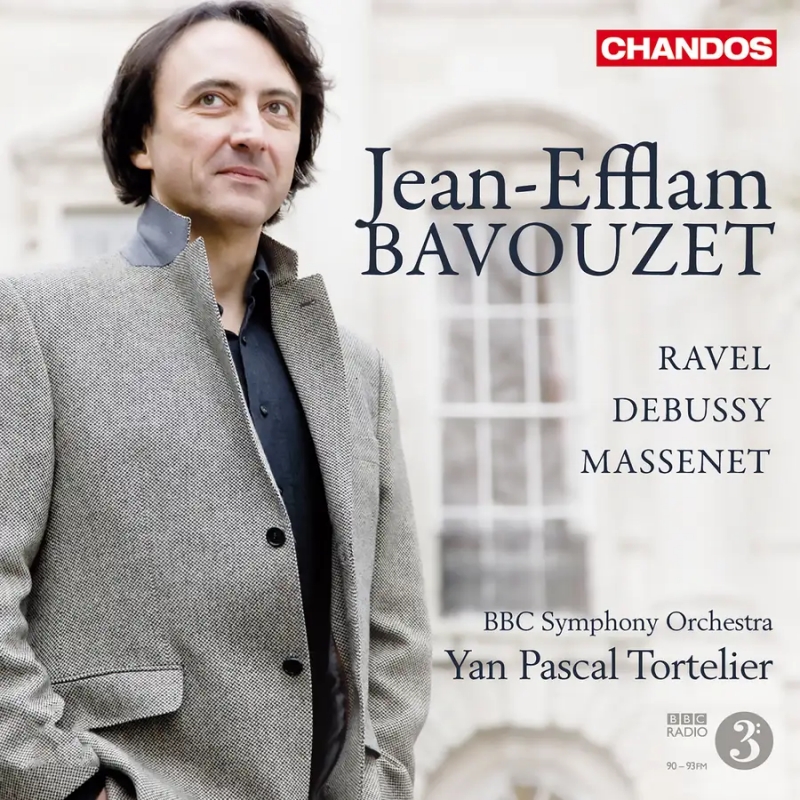
Bavouzet plays Ravel, Debussy & Massenet
Jean-Efflam Bavouzet (piano)
BBC Symphony Orchestra, Yan Pascal Tortelier
April 2010, Watford Colosseum (Debussy, Ravel)
June 2010, Potton Hall, Dunwich, Suffolk (Massenet)
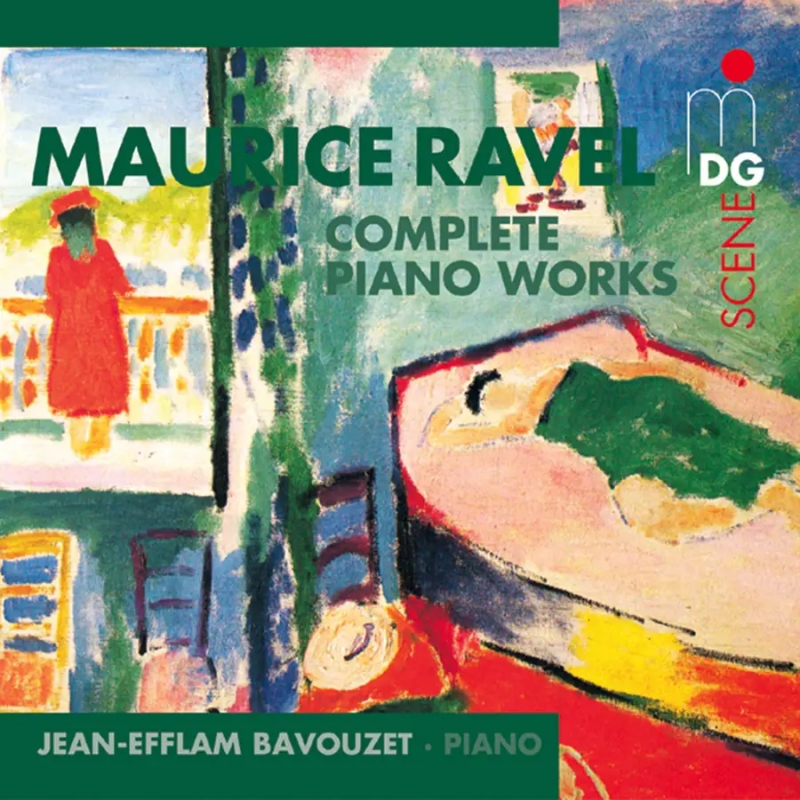
RAVEL Complete Piano Works
Jean-Efflam Bavouzet (piano)
January 2003, Fürstliche Reitbahn, Bad Arolsen,


發表留言