
智識型音樂家的時間膠囊:陳思蕾的貝多芬與巴伯詮釋
  在當代古典樂壇中,美國小提琴家陳思蕾(Stella Chen)是一位兼具出眾技藝和個人主見的音樂家。她不僅是二〇一九年伊莉莎白女王國際小提琴比賽首獎得主,也是二〇二三年《留聲機》雜誌的「年度青年藝術家」。然而,真正讓她與眾不同的,是她理解與思考音樂的方式。

  陳思蕾擁有哈佛大學心理學學士與茱麗亞音樂學院音樂藝術博士的學歷。這種跨學科訓練使她具備高度的客觀自覺,拉琴的時候,如同觀察實驗數據般,敏銳對照「腦海中的理想意圖」與「琴弦上的實際聲響」。一旦察覺兩者之間存在落差,便運用邏輯分析找出問題根源,並精準地修正它。然而,讓她真正跳脫純粹技術競技的關鍵,來自十四歲時參加的「帕爾曼音樂計畫」(Perlman Music Program, PMP)。這個計畫由小提琴家帕爾曼(Itzhak Perlman)的妻子托比(Toby Perlman)創立,核心理念是創造一個像「家庭」般充滿支持的環境,強調音樂家應透過合奏與群體生活找回「歌唱」的本能,並以社群分享取代傳統音樂教育中的高壓競爭。

  演奏中展現的呼吸感與細膩情感,在陳思蕾這張專輯裡表現得非常清楚。這張專輯由讓─雅克‧康托羅夫(Jean-Jacques Kantorow)指揮聖馬丁學院管弦樂團協奏,收錄貝多芬與巴伯的小提琴協奏曲。對她而言,這不僅是曲目上的挑戰,更是一個記錄她告別賽事階段,邁向成熟藝術家旅程的「時間膠囊」。

跨越敬畏:從大師提點到擁抱脆弱感

  對於許多演奏家而言,詮釋經典巨作往往伴隨著沉重的心理包袱,貝多芬小提琴協奏曲便是這樣的作品之一。陳思蕾坦言,演奏這首協奏曲是她自幼的夢想,但是她早年對這部作品極度敬畏,認為它是「不可觸碰」的完美存在,甚至認為音符間的深邃境界,只屬於未來的自己。

  直到十八歲跟隨帕爾曼學習,這個心理障礙才出現轉機。當帕爾曼建議她開始練習此曲,卻遭到抗拒時,他務實地反問:「如果妳不在十八歲時開始,到八十歲時怎麼可能拉得好?」。這句直指核心的建言,迫使陳思蕾提早面對這座高山。此外,已故製作人阿貝斯豪斯(Adam Abeshouse)的無條件信任,更推動她勇敢走入錄音室,把自己的詮釋化為對製作人的永恆紀念。

  面對舞台恐懼,陳思蕾並沒有選擇冰冷的「理性壓抑」,而是坦然擁抱精神自然產生的「脆弱感」(vulnerability)。她把緊張視為「好的神經反應」(good nerves),認為這正代表自己極度在乎與聽眾分享的音樂。透過這種充滿人性溫度的感性接納,她將對經典的恐懼轉化為純粹的音樂表達,最終展現出貝多芬作品「完美構成卻極具人性」的特質。

名琴交接的轉折:成就風格分水嶺的對話

  在這張專輯中,陳思蕾把創作時間與貝多芬相隔一百多年的巴伯收錄在一起,讓愛樂者同時聽到兩種完全不同的音樂語言。而在錄音期間,陳思蕾剛好遇上名琴交接,也就是得歸還先前借來的琴,並換上一把新琴。這個看似不利的巧合,反而讓專輯中兩首作品產生更有意思的聲音對話。

  錄製貝多芬的時候,陳思蕾使用的是贏得伊莉莎白女王大賽而獲借使用的一七〇八年「Huggins」名琴。她指出這把琴具備「如雷射般精準」的純淨音色,因此能抓住第二樂章那種超脫塵世的寧靜美感。隨著大賽規定的四年期限屆滿,陳思蕾必須把此琴歸還賽方以傳承給下一屆冠軍。因此,用這把琴錄製的貝多芬也象徵她正式向過往的賽事階段告別。

  在尋找新琴的過程中,陳思蕾因緣際會獲得了由上野隆司與紐約名琴協會出借的一七二〇年「General Kyd」名琴。她分析,這把琴的G弦擁有極佳的厚度與靈活性,聲音渾厚,甚至帶有深沉的「喉音」(guttural)。這種充滿靈魂、最接近「人類歌聲」的理想音色,恰好完美契合了巴伯作品中溫暖且脆弱的情感需求。

回歸親密:巴伯協奏曲的室內樂思維

  傳統的協奏曲詮釋,往往獨奏家與樂團之間帶有對立的競奏關係,但是陳思蕾在巴伯小提琴協奏曲中,展現出截然不同的視角。她明確指出:「對我來說,這就是室內樂,⋯⋯扮演單一的敘事者毫無樂趣」。她把這首作品視為與團員之間的親密對話,每個人都得隨時彼此注意聆聽,並配合他人的演奏緊密協調互動。

  這種互相聆聽的理念,在作品的第二樂章中尤為明顯。樂章一開始,獨奏小提琴必須等待近三十個小節,把開場的敘事主導權交給雙簧管。陳思蕾回憶,當她第一次聽到聖馬丁學院管弦樂團雙簧管首席的獨奏時,立刻感動落淚。在這種互動下,她順著對方的感覺走,讓小提琴進場時不只是死板地重複,而是很有層次地,把旋律自然銜接過來。

  在聲音美學上,陳思蕾也刻意在樂曲中保留一種聲響上的「脆弱感」。她認為,這部作品最獨特的美感,在於有時細緻到必須讓聽眾不自覺地把身體再湊近一點,甚至需要微微前傾,才能聽清小提琴的低語,就像在聽對方分享內心最深處的祕密。至於充滿炫技色彩的第三樂章無窮動(moto perpetuo),她也深知,管樂器在演奏急速短音符時的技術難度,甚至遠高於她連續拉奏的快板音符,因此須要更細心互動與搭配。

結論:真實發聲的時間膠囊

  正如陳思蕾本人的定義,這張專輯不僅是出版品,更是一個無可取代的「時間膠囊」。它記錄了一個從加州害羞女孩,成長為能大方展現內心感動與不安的成熟藝術家。這項成果,是多重經驗沉澱後的結晶:從「帕爾曼音樂計畫」找回音樂的社群歸屬,到哈佛與茱麗亞的訓練,讓她能在音樂中精準聯結心中想法與演奏出來的聲音。她用心理學中感同身受的能力,還原了音樂中人與人對話的最真實模樣。

  她也常以母親的座右銘「做好你自己,並祝你好運」(Be yourself and good lucky)自勉,並體認到音樂表現追求的並非絕對的「最好」,而是綻放演出當下產生的魔力。這張錄音證明了當代的「智識型音樂家」能在不流於表面炫技的前提下,以最坦然、深入思考人性的態度,為這兩部傑作留下最美善的聲音印記。(2026年6月16日)
In the contemporary classical music world, the American violinist Stella Chen is a musician endowed with both outstanding technique and strong personal conviction. She is not only the first-prize winner of the 2019 Queen Elisabeth International Violin Competition, but was also named Gramophone magazine’s 2023 ‘Young Artist of the Year’. However, what truly sets her apart is the way she understands and reflects upon music.
Chen holds a Bachelor of Arts in Psychology from Harvard University and a Doctor of Musical Arts from The Juilliard School. This interdisciplinary training equips her with a high degree of objective self-awareness; when playing, she acutely compares the ideal intention in her mind with the actual sound produced on the strings, much like observing experimental data. Once she detects a gap between the two, she applies logical analysis to identify the root of the problem and corrects it with precision. Yet, the key that allowed her to truly break away from pure technical competition came from her participation in the Perlman Music Program (PMP) at the age of 14. Founded by Toby Perlman, wife of the violinist Itzhak Perlman, the programme’s core philosophy is to create a supportive, ‘family’-like environment; it emphasises that musicians should rediscover their instinct to sing through ensemble playing and communal living, replacing the high-pressure competition of traditional music education with community sharing.
The sense of breathing and delicate emotion displayed in her playing is vividly apparent in this album . This recording, featuring the Academy of St Martin in the Fields conducted by Jean-Jacques Kantorow, includes the violin concertos of Beethoven and Barber. For her, this is not merely a repertoire challenge, but a “time capsule" documenting her farewell to the competition phase and her journey towards becoming a mature artist.
Overcoming Awe: From a Master’s Advice to Embracing Vulnerability
For many performers, interpreting historical masterworks is often accompanied by heavy psychological baggage, and Beethoven’s Violin Concerto is one such piece. Chen admits that performing this concerto has been her dream since childhood, but in her early years, she held an immense awe for the work, regarding it as an “untouchable" perfect existence, even feeling that the profound realm between its notes belonged only to a future version of herself.
This psychological barrier did not reach a turning point until she studied with Perlman at the age of 18. When Perlman suggested she should start practising this piece, she resisted; he then pragmatically asked her: “How is it going to be good when you’re 80 if you don’t start out when you’re 18?". This incisive advice forced Chen to face this towering mountain early on. Furthermore, the unconditional trust of her late producer Adam Abeshouse propelled her to bravely step into the recording studio, turning her interpretation into an eternal memorial to him.
In the face of stage fright, Chen does not resort to cold ‘rational suppression’; instead, she openly embraces the “vulnerability" naturally produced by her mind. She views nervousness as “good nerves", believing this signifies that she cares deeply about the music she is sharing with the audience. Through this highly human and emotional acceptance, she transforms her fear of the classics into pure musical expression, ultimately revealing the concerto’s quality of being “so perfect yet human".
The Turning Point of Exchanging Instruments: A Dialogue across Stylistic Divides
On this album, Chen pairs Beethoven with Barber, a composer from more than a century later, allowing music lovers to hear two entirely different musical languages simultaneously. During the recording period, Chen coincidentally experienced a handover of instruments: she had to return her previously loaned violin and switch to a new one. This seemingly disadvantageous coincidence actually generated a rather fascinating acoustic dialogue between the two works on the album.
When recording the Beethoven, Chen used the 1708 “Huggins" Stradivarius, which she was loaned for winning the Queen Elisabeth Competition. She notes that this instrument has a pure tone “like a laser", thus perfectly capturing the ethereal and tranquil beauty of the second movement. As the competition’s stipulated four-year loan period expired, Chen had to return the violin to the organisers to be passed on to the next champion. Therefore, her recording of Beethoven with this violin also symbolises her formal farewell to her past competition phase.
In the process of searching for a new instrument, Chen serendipitously received the 1720 “General Kyd" Stradivarius, loaned by Dr Ryuji Ueno and the Rare Violins In Consortium. She analyses that the G string of this violin has excellent thickness and flexibility, with a rich sound that even carries a deep “guttural" quality. This soulful ideal tone, which is the closest thing to the “human voice", perfectly matches the warm and fragile emotional demands in Barber’s work.
Returning to Intimacy: The Chamber Music Mindset of Barber’s Concerto
Traditional interpretations of concertos often emphasise a confrontational relationship between the soloist and the orchestra, but Chen demonstrates a completely different perspective in Barber’s Violin Concerto. She explicitly states: “It’s completely chamber music to me… there’s no joy in being a solo narrator". She views this work as an intimate dialogue with the orchestra members, where everyone must attentively listen to one another at all times and coordinate closely with others’ playing.
This concept of mutual listening is particularly evident in the second movement. At the very outset, the solo violin must wait for nearly thirty bars, yielding the opening narrative dominance to the oboe. Chen recalls that the first time she heard the principal oboe of the Academy of St Martin in the Fields play this solo, she was immediately moved to tears. Within this interaction, she follows the oboist’s lead, ensuring that when the violin enters, it does not merely replicate rigidly, but rather takes over the melody naturally with layered depth.
In terms of sonic aesthetics, Chen also deliberately retains a certain acoustic vulnerability in the music. She believes that the most unique beauty of this work lies in the fact that sometimes it is so delicate that the audience must instinctively “lean in just a bit closer" to hear the violin’s whispers, as if listening to someone share their deepest secrets. As for the highly virtuosic third movement, she is well aware that the technical difficulty for the wind instruments when playing rapid, short notes is even far higher than her own continuous fast-paced bowing, thus requiring even more careful interaction and coordination.
Conclusion: A Time Capsule of Authentic Voice
As Chen herself defines it, this album is not merely a publication, but an irreplaceable “time capsule". It documents a shy girl from California growing into a mature artist capable of openly displaying her inner emotional movements and insecurities. This achievement is the crystallisation of multiple experiences settling over time: from finding a musical community belonging at the Perlman Music Program, to her training at Harvard and Juilliard, which enables her to precisely align her inner thoughts with the sounds she produces. She uses the capacity for empathy found in psychology to restore the truest form of human-to-human dialogue in music.
She frequently encourages herself with her mother’s motto, “Be yourself and good lucky", and has come to realise that musical performance does not seek an absolute “best", but rather the “magic of the day" that blossoms in the moment of the performance. This recording proves that a contemporary intellectual virtuoso can, without resorting to superficial showmanship, leave behind the most beautiful sonic imprint for these two masterpieces with the most candid and deeply considered attitude towards humanity. (16 June, 2026)
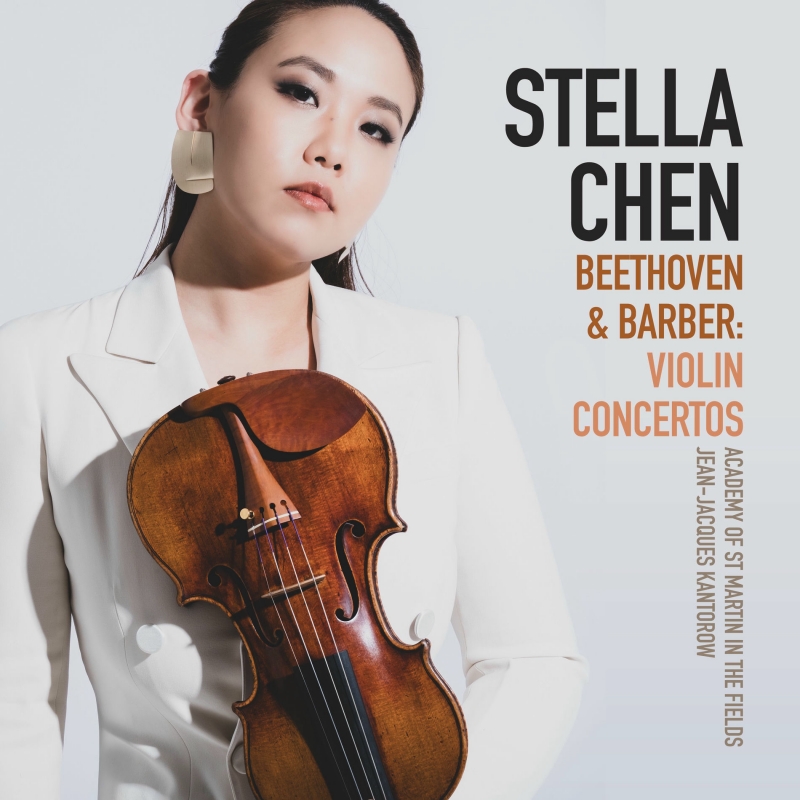
BEETHOVEN & BARBER Violin Concertos
Stella Chen (soloist), Academy of St Martin in the Fields, Jean-Jacques Kantorow
 陳效真作品集
發表留言