琴鍵上的流亡與歸宿:馬洛費耶夫從神童到藝術家的蛻變
  二○一九年,十七歲的俄羅斯鋼琴家馬洛費耶夫(Alexander Malofeev)參加第十六屆柴科夫斯基國際鋼琴大賽。由於他長期受到評審團主席馬祖耶夫(Denis Matsuev)的提拔與器重,樂界因此盛傳,他早已經是內定的首獎人選。然而,馬洛費耶夫在第一輪的表現過於急躁。無論是貝多芬《熱情》奏鳴曲中失控的速度,還是蕭邦練習曲裡粗糙的觸鍵,都帶有明顯的刻意競技色彩,最終首輪便遭淘汰。

  這場賽事的挫折,反而促使馬洛費耶夫重新省視整個俄羅斯「神童產業」的養成經歷。成年後的他態度出奇冷靜,坦言十歲左右為了準備比賽,每天得上六小時的課,老師親自示範每一個音符應該怎麼彈,然後要求他一模一樣地反覆練習。他直言,一個十歲的孩子就算能把拉赫曼尼諾夫的協奏曲彈得無懈可擊,本質上也只不過是原封不動複製老師的指令,根本無法真正理解藝術的全貌。他將這種缺乏獨立意識的機械式模仿,精準地形容為「猴子把戲」(monkey playing)。馬祖耶夫很早以前就跟他說過一句話:「比賽說到底就是一場音樂盛會。重點不在贏,而是要讓自己和觀眾都樂在其中。」然而,這番話背後所許諾的自由,要等到馬洛費耶夫畢業、移居德國,並且拭去「神童」標籤的漫長過程之後,才真正成為他能主動實踐的藝術權利。

梅特納的完整對話

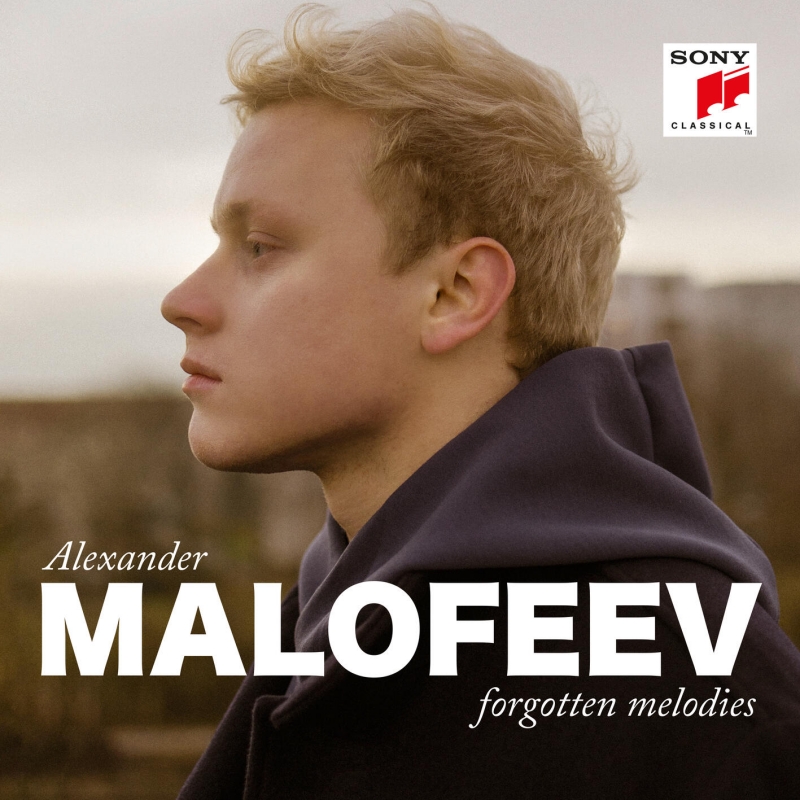
  《被遺忘的旋律》(Forgotten Melodies)是馬洛費耶夫準備多年的第一張個人專輯,從選曲就能看出現在的他有了什麼改變。馬洛費耶夫沒有挑那些容易讓聽眾叫好的熱門大曲,而是選擇了在俄羅斯以外一直相當冷門的梅特納(Nikolai Medtner),完整錄製《被遺忘的旋律》這一套鋼琴作品集。一般音樂會頂多挑其中最討喜的〈回憶奏鳴曲〉(Sonata reminiscenza),馬洛費耶夫不接受這種做法,堅持從頭錄到尾,理由很直接:拆開來聽,就像只讀小說裡的某一章,看不到作曲家如何一步步鋪展他的想法。實際聆聽他的演奏,〈回憶奏鳴曲〉的觸鍵輕到接近耳語;到了舞曲樂章,節奏與力道卻又收放自如,毫不含糊。他不靠煽情製造效果,而是讓每個聲部都擁有獨立的音色與層次,整體聲響乾淨透亮,卻又不顯得刻意經營。

  與梅特納搭配的是拉赫曼尼諾夫第二號鋼琴奏鳴曲,而且他刻意選擇一九三一年的刪減修訂版。這個版本向來爭議不斷,因為拉赫曼尼諾夫自己刪去大量的過渡段落,不少人認為音樂因此變得不夠完整。但是馬洛費耶夫的想法是:因為經過刪減,樂段之間的銜接的確顯得有點突兀,音樂聽起來像是被硬生生拼接在一起。然而這種破碎的質地,氣質上反而恰好與梅特納的音樂最為接近,讓兩部作品得到意外的呼應。實際聽他的演奏,強奏段落的爆發力驚人,和弦厚重而果斷,但自始至終沒有淪為粗暴的敲擊。第二樂章毫無渲染痕跡,帶有一種不帶矯飾的沉穩感。

呼吸與機械聲的爭議

  不過這張專輯有一個頗具爭議的地方,就是錄音中,踏板與制音器的機械聲響、甚至鋼琴家的呼吸聲都清晰可聞。這其實是追求極致聲響解析度下的一把雙面刃:錄音師採用了極近距離的麥克風擺位,目的是捕捉鋼琴更細微的音色層次與厚實的低音,卻也無可避免地把踏板、制音器的物理雜音與鋼琴家的呼吸聲一併收錄了進來。有樂評認為,這種處理為演奏增添了「臨場感」。但是我認為唱片本來就是一門和現場演奏不同的藝術,錄音工程師可以利用器材傳達很多現場聽不到的效果。我並不反對近距離錄音路線,但是我質疑的是在這張專輯使用的分寸和適切性。馬洛費耶夫的演奏確實具備龐大的動態與驚人的爆發力,但他從不流於粗暴的敲擊。然而,當他在處理如梅特納〈回憶奏鳴曲〉這類極需內斂、安靜與親密聲響的樂段時,那些被收進來的機械聲與呼吸聲就顯得特別突兀,甚至對音樂的沉浸感造成嚴重干擾。與其說是臨場感,不如說是過度曝光了本來希望藏在音樂幕後的那些部分。

異鄉人的共同鄉愁

  專輯中還收錄葛令卡與葛拉祖諾夫的作品。這四位俄羅斯作曲家有一個共同點:他們最終都離開故土,客死異鄉。他們的音樂裡,有一種俄羅斯文化特有的情感「тоска」,這個字可以理解為一種揉合了痛苦與鄉愁的渴望,對一個回不去的、甚至想像中世界所懷抱的惆悵。馬洛費耶夫本人在二○二二年因為求學與躲避兵役離開俄羅斯、目前定居柏林,當這樣一個二十出頭的年輕人彈奏這些作品時,裡面的「тоска」便不再只是回顧歷史,而是他當前的親身經歷。不過,馬洛費耶夫在專輯解說裡刻意避開「流亡」這類字眼,而是讓聽者自行去體會。

  從選曲到演奏方式,這張專輯最清楚傳達的一件事是:馬洛費耶夫已不再是那個為了換取觀眾起立鼓掌,而把李斯特《匈牙利狂想曲》安排在音樂會壓軸的少年。他甚至坦言自己不喜歡掌聲,因為掌聲總是在不恰當的時刻打斷音樂的沉浸感。在他看來,音樂結束以後留在心裡的東西,比散場那一刻的喧鬧重要得多。

音樂是唯一的家

  馬洛費耶夫在訪談中提過一個頗有意思的比喻:舞台上,總覺得自己和觀眾之間隔著一面玻璃。俄羅斯的鋼琴訓練本來就要求演奏者習慣舞台上的絕對孤獨,這種距離感讓演奏者感到安心。但是現在他換一種理解方式,認為那面玻璃不是用來隔絕,而是用來搭建一處與觀眾共享的空間。對他而言,音樂會不再是單向的技巧展示,而是一種集體的療癒,讓所有人暫時放下各自的日常,在音樂裡共同停駐兩個小時。回望成長經歷,馬洛費耶夫想清楚一件事:對他這樣從小在琴房裡長大的俄羅斯音樂家而言,真正的家就是音樂本身。無論人在柏林還是任何一座城市,只要坐到鋼琴前面,他便有了可以安頓自己的地方。《被遺忘的旋律》便是這個想法的第一個具體成果。它不華麗,也不刻討好聽眾;只是真誠平實的邀請聽眾到自己「家」來。但正因為如此,反而成了一張主張鮮明的專輯。(2026年7月28日)

In 2019, the 17-year-old Russian pianist Alexander Malofeev entered the 16th International Tchaikovsky Competition. Having long been championed by the jury chair, Denis Matsuev, rumours circulated within the music world that Malofeev had already been predetermined as the first-prize winner. However, his performance in the first round proved overly rushed. Whether it was the uncontrolled tempos in Beethoven’s "Appassionata" Sonata or the harsh touch in Chopin’s Etudes, his playing carried an overtly competitive, athletic quality, ultimately leading to his elimination in the opening round.

This setback, however, prompted Malofeev to re-evaluate his entire upbringing within the Russian "child prodigy industry". Looking back as a young adult, he is remarkably clear-eyed, admitting that at around the age of ten, preparing for competitions meant six hours of lessons a day. The teacher would demonstrate exactly how each note should be played, and he was expected to replicate it perfectly. He states bluntly that even if a ten-year-old plays a Rachmaninov concerto flawlessly, it is essentially a carbon copy of the teacher’s instructions, devoid of any genuine understanding of the art form's breadth. He accurately describes this mechanical imitation, lacking independent consciousness, as "monkey playing". Denis Matsuev had long ago told him: "...first and foremost a festival. And the main thing here is not to win, but to be able to bring pleasure to yourself and the audience." (..прежде всего фестиваль. И главное тут не победить, а суметь доставить удовольствие себе и зрителю. ) Yet, the artistic freedom promised by those words would only become a reality after Malofeev graduated, relocated to Germany, and underwent the lengthy process of shedding his "prodigy" label to actively claim his artistic rights.

A Complete Dialogue with Medtner

"Forgotten Melodies" is Malofeev’s debut solo album, a project years in the making. The repertoire selection alone reflects his profound transformation. Rather than selecting popular showpieces guaranteed to elicit immediate cheers, Malofeev opted to record the complete cycle of "Forgotten Melodies" by Nikolai Medtner, a composer who remains relatively obscure outside Russia. While most recitals might only feature the cycle's most appealing piece, the 'Sonata reminiscenza', Malofeev rejects this approach, insisting on performing the set in its entirety. His reasoning is straightforward: extracting a single piece is akin to reading only one chapter of a novel. As he notes in his own words: "But by going on to play the rest of the cycle you fully appreciate the range and potential of its ideas... you have this feeling of following Medtner’s process of invention and imagination". Listening to his performance, his touch in the 'Sonata reminiscenza' is as light as a whisper; yet, in the dance movements, his command of rhythm and dynamics is both authoritative and unhesitating. He eschews sentimental effects, instead granting each voice an independent colour and texture. The resulting sound is transparent and clear, without feeling contrived.

To complement Medtner, Malofeev selected Rachmaninov’s Piano Sonata No. 2, deliberately choosing the controversial 1931 revised version. This revision has long drawn criticism because Rachmaninov excised substantial transitional passages, leading many to feel the music lacks structural integrity. Malofeev’s perspective, however, is that these cuts make the musical transitions more abrupt, resulting in a fractured quality. As he explains: "In lots of Medtner the music can seem patchy, as if it is stitched together rather than being seamless... In the revised version of Rachmaninov’s Second Sonata, removing so much of the transitional material gives the same effect, as if the music is struggling to breathe". This fragmented nature inadvertently aligns perfectly with Medtner’s musical language. In practice, Malofeev's fortissimo sections boast astonishing explosive power, with thick, decisive chords that never descend into crude banging. The second movement unfolds without any trace of exaggeration, possessing an unadorned, grounded composure.

The Controversy over Breathing and Mechanical Noises

However, the album features a rather controversial aspect: the mechanical noises of the pedals and dampers, and even the pianist's breathing, are distinctly audible. This is effectively a double-edged sword born from the pursuit of extreme sonic resolution. The recording engineer employed a very close microphone placement to capture the subtler tonal layers and the weighty bass, which inevitably picked up all the physical extraneous noises. Some music critics argue this approach adds a "sense of immediacy". Yet, I would argue that a studio recording is an art form distinct from a live performance, allowing sound engineers to utilise equipment to convey effects unattainable in a concert hall. While I am not opposed to the close-miking route in principle, I question the proportionality and suitability of its application on this album. Malofeev’s playing certainly possesses immense dynamic range and striking explosive power, but he never resorts to crude pounding. However, when navigating passages that demand an introverted, quiet, and intimate soundscape - such as Medtner’s 'Sonata reminiscenza' - the captured mechanical and respiratory noises become particularly jarring, severely disrupting the listener’s immersion. Rather than providing immediacy, it overexposes elements that are traditionally meant to remain concealed behind the musical curtain.

The Shared Nostalgia of the Exile

The album also includes works by Glinka and Glazunov. A common thread unites these four Russian composers: they all eventually left their homeland and died in exile. Their music shares a uniquely Russian emotion, "тоска" (toska). As Malofeev explained: «...ils partagent ce que nous appelons toska en russe. C’est une sorte de douleur et de nostalgie qui caractérise l’art, la littérature et la musique russes...» ("...they share what we call "toska" in Russian. It is a kind of pain and nostalgia that characterises Russian art, literature, and music...") It can be understood as a yearning that blends pain and homesickness, a melancholy for a world that cannot be returned to, or perhaps only exists in the imagination. Following his departure from Russia in 2022 to study and avoid military conscription, the twentysomething Malofeev now resides in Berlin. When he performs these works, this "toska" is no longer merely a historical reflection, but his own current, lived reality. Nevertheless, in the album's liner notes, Malofeev deliberately avoids highly charged words like "exile", choosing instead to let the listeners interpret the music for themselves.

From the repertoire selection to the interpretive approach, this album conveys one clear message: Malofeev is no longer the prodigy who programs Liszt’s "Hungarian Rhapsody" as a finale simply to secure a standing ovation. He even admits his distaste for applause, as it inevitably interrupts the musical immersion at the wrong moment. In his view: "I do not like the sound of applause. For me, a concert is above all a sound experience, and applause is a sound that is difficult to integrate naturally; it always interrupts." (Je n’aime pas le son des applaudissements. Pour moi, un concert est avant tout une expérience sonore et les applaudissements sont un son difficile à intégrer naturellement ; ils interrompent toujours.) To him, what remains in the heart after the music has ended is far more significant than the clamour as the audience disperses.

Music is the Only Home

In his interviews, Malofeev has offered an intriguing metaphor. He stated: "I think I’m trying to create some kind of space made of glass and invite the audience into this space. I feel like we’re sitting together". Russian piano training inherently demands that performers become accustomed to the absolute solitude of the stage, a distance that provides the performer with a sense of security. Yet now, he reframes this understanding. That glass pane is no longer a barrier to isolate himself, but a means to construct a shared space with his audience. For him, a concert is no longer a one-way display of technique, but a collective healing, allowing everyone to momentarily set aside their daily lives and dwell together in the music for two hours. Looking back on his upbringing, Malofeev has realised one vital truth. As he articulated: "The good side of the fact that we all practised 10 hours a day in our childhood is that for many of us, our homeland is, in essence, music." (Хорошая сторона того, что мы все занимались по 10 часов в детстве, состоит в том, что для многих из нас родина — это, по сути, музыка.) Whether he is in Berlin or any other city, as long as he sits at the piano, he has a place to settle. "Forgotten Melodies" is the first concrete manifestation of this philosophy. It is neither ostentatious nor designed to flatter the listener; rather, it is an earnest and unpretentious invitation for the audience to enter his "home". And precisely because of this, it stands as a profoundly striking and distinctive album.  ( 28 July, 2026)
Forgotten Melodies
Alexander Malofeev (piano)
February & March, 2025, Jesus-Christus-Kirche, Berlin



 陳效真作品集
發表留言