
把巴赫放回未知之境:維勒斯坦《碎片》重新帶路經典與新作
對大提琴家而言,巴赫六首無伴奏組曲是一生無法迴避的功課。表面上只有一把大提琴演奏,音樂裡卻藏著多重聲部、不同的舞曲節奏與龐大的整體結構。演奏者沒有樂團幫襯,也沒有厚重聲響掩蓋弱點,每個音都赤裸裸呈現演奏者的意念。
美國大提琴家維勒斯坦(Alisa Weilerstein)很早便開始演奏這套作品,卻遲遲不敢錄下整套組曲。她敬畏作品背負的演奏傳統,也承受無數名家錄音帶來的壓力,總覺得自己還沒有準備好。她甚至曾因練習不如預期,氣得把樂譜摔向牆壁。因此,原先維勒斯坦計畫到了六十五歲,累積更多人生閱歷以後,再留下自己對巴赫的理解。
不必替巴赫下定論
改變她想法的,是二○一九年與馬友友的一通電話。馬友友在電話中溫暖地鼓勵她,錄音不是替作品下定論,而是記錄演奏者在某個人生階段的理解,如同拍下一張當時的照片。錄音雖然會被長久保存,卻不代表當時的詮釋就是最終答案。如同馬友友曾三度錄製巴赫無伴奏大提琴組曲,每一次的理解都不同,記錄的正是他在不同時期與作品相處的狀態,是一生與作品共同成長的生命歷程。
這番話讓維勒斯坦明白,不是找到完美答案,才有資格錄製巴赫。人的經驗會改變,對作品的理解也會隨之改變,錄音保存的只是演奏者在當下能夠給出的見解。卸下這種心理壓力後,維勒斯坦在三十七歲走進錄音室,完成六首組曲的全套錄音。這個想法也改變了她與巴赫相處的方式。她不再只是小心翼翼地仰望經典,而開始把每次演奏看成發展中的過程。
疫情期間,世界各地的音樂廳相繼關閉。在這段沉潛的日子裡,她又往前追問了一步:既然人對巴赫的理解會隨年齡改變,演出巴赫的方法是否也能改變?《碎片》(FRAGMENTS)的構想便由此展開。
拿掉熟悉的曲序
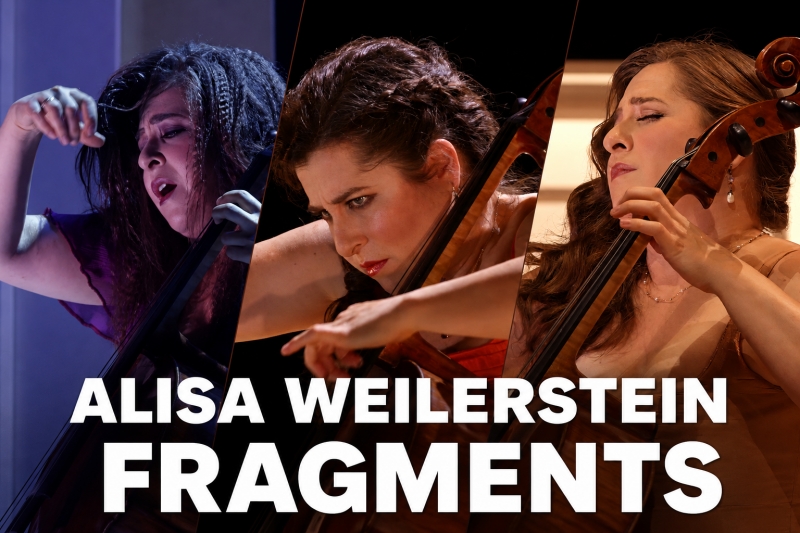
維勒斯坦把巴赫六首組曲的三十六個樂章分開,邀請二十七位當代作曲家創作新曲,再把兩者重新組合成六場獨奏音樂會。所有巴赫樂章與新作都會完整演奏,改變的只是原有的順序與組合方式。前奏曲可能直到最後才出現,有些新作也被分成數段,前後部分可能相隔二十分鐘才重新接上。
觀眾進場時,只知道演出包含哪些作曲家的作品。演出進行時,他們不知道當下聽到的是巴赫還是新作,也不知道作品名稱,完整曲序直到散場才會公布。整場演出約一小時,中間沒有報幕、停頓與掌聲。平常聽見「巴赫」,人們很容易先想到莊嚴、理性與經典;看到當代作曲家的名字,也可能直覺擔心作品艱澀。當這些資料暫時不被公布時,聽眾只能先直接面對聲音。
先聽聲音,再看名字
維勒斯坦在多倫多演出的時候,一名十九歲的聽眾以為舞台上藏了麥克風。他不相信在沒有擴音設備的情況下,一把大提琴竟然能發出如此多樣的聲音。這個反應顯示,當聽眾不確定作品的年代與類別時,注意力可能更容易專注到聲音本身。他們不必先理解滑奏、刮奏等各種弓法,也不必熟悉泛音、撥弦等技巧。有人聽見粗糙的摩擦,有人注意到輕巧的撥弦,也有人覺得某些聲音像呼吸。先聽見聲音,再認識作品與作曲家,有時候比閱讀長篇解說更直接。
拿掉文字,換上視覺
《碎片》的演出雖然拿掉文字提示,卻沒有讓觀眾完全失去引導。燈光、服裝與舞台裝置,仍然對音樂內容提供另一組明確線索。
《碎片1:驚奇》(Wonder)以巴赫第一號組曲為中心。舞台上的光箱整齊圍成半圓,色彩溫暖,氣氛安定。《碎片2:騷動》(Tumult)則以第二號組曲為骨架,光箱傾倒散落,燈光變得尖銳,維勒斯坦的服裝與妝容也更接近龐克造型。即使不知道曲名,觀眾仍會從舞台景象感受到秩序、衝突或不安。
只是,《碎片》也因此引起一些矛盾爭議。維勒斯坦雖然想減少文字資料帶來的成見,卻可能透過視覺先替聽眾設定情緒。當舞台看來像一片廢墟,尖銳的拉奏很容易被理解為衝突;柔和白光亮起,也自然成為安定的象徵。問題不在於演出使用了視覺,而在於視覺是否太早限制聽眾的理解。燈光與舞台可以幫助觀眾進入音樂,也可能在聽眾感受音樂之前,已經替音樂指向某個答案。凡是結合音樂與劇場的演出,都很難完全避開這個問題。
冒險背後的紀律
維勒斯坦自身的經歷,也讓《碎片》有了形式之外的意義。九歲那年,她早上還在練習巴赫第二號組曲的小步舞曲,下午前往預約好的醫生門診,隨後被安排住院並確診第一型糖尿病。此後,她必須隨時管理血糖、飲食與行程。這些規律沒有暫停鍵,也不是出於個人選擇,而是每天被迫必須完成的基本工作。長期在限制中維持穩定,讓她更清楚如何控制舞台上的風險。《碎片》看來充滿突發感與不確定性,實際上卻建立在極為嚴格的安排上。維勒斯坦必須記住複雜的曲序,在一小時不中斷的演出中調整呼吸、體力與情緒,還要使風格差異極大的作品自然銜接。
新的代價
不過,《碎片》這種安排也有它的問題。巴赫與當代作品緊接演奏,有時能讓彼此聽起來更有新意,有時卻會互相干擾。像是在密集、尖銳的聲響之後接上巴赫,強烈的反差可能讓巴赫顯得過於平淡;安靜的段落才剛結束,下一刻突然換成舞曲,情緒上也顯得有些突兀。另一方面,當代作品被拆開來演奏,原有的樂曲發展邏輯遭到干擾;巴赫組曲不再照原來的順序演奏,各樂章之間的前後關係也因此改變。聽眾固然聽見了平常不會出現的組合,但也少了從頭到尾完整聽完一首作品的機會。
無論如何,巴赫始終是整套樂曲最穩固的支點。《碎片1》把家喻戶曉的第一號組曲〈前奏曲〉留到最後。經過一小時的陌生聲響後,那串熟悉的G大調琶音才出現,像是終於找到回家的路。這個安排效果十分出色,卻也顯示出計畫較為保守的一面。最後負責安定人心的,仍然是巴赫。雖說當代作品因此得以露臉,卻也可能只是回到經典之前的沿途風景。
維勒斯坦沒有拆掉所有路標,只是改用另一種方式帶路。沒有巴赫,二十七首新作很可能只在當代音樂的小圈子裡流通;沒有新作,巴赫也可能落入名家演奏經典的熟悉模式。《碎片》的價值,不在於它是否推翻傳統,而在於它讓兩類作品暫時離開原來的位置,產生一種異位的動能。兩者未必處於完全平等的位置,卻都在與對方的互動中,讓聽眾聽見不同以往的面貌。
誰決定作品值得聆聽
《碎片》最後的提問,不只是關於巴赫與當代音樂並置,而是讓觀眾思考,如何判定一首作品是否值得認真聆聽。我們是否早已習慣先被告知作品重要,才願意仔細聆聽?還是試著先不過問作品的年代與名聲,反而更能直接深入音樂的核心?(2026年9月8日)
For any cellist, Bach’s six Solo Cello Suites are a hallowed rite of passage that cannot be avoided. On the surface, it is a single cello performing; yet, woven into the music are multiple voices, diverse dance rhythms, and a monumental structure. Seated alone on stage without an orchestra’s support or a dense wall of sound to mask any vulnerability, the performer presents every single note as a raw, exposed reflection of their artistic intent.
The American cellist Alisa Weilerstein began playing these suites from a very young age, yet she long hesitated to commit the complete cycle to disc. Holding the hallowed performance traditions of these works in deep reverence, and bearing the immense weight of historic recordings by past masters, she constantly felt unready. At times, when her practice fell short of her expectations, she grew so frustrated that she would, in her own words, “throw the scores against the wall". Consequently, Weilerstein originally planned to wait until she was sixty-five, hoping that with greater life experience she might finally record her own understanding of Bach.
No Need to Definitive Statement on Bach
What transformed her perspective was a phone call with Yo-Yo Ma in the summer of 2019. Ma warmly encouraged her, explaining that recording is not about delivering a definitive statement on a work. Instead, it is rather about “documenting a moment in time — a snapshot — even if the paradox is that it’s a permanent document". While a recording is preserved for posterity, it does not mean that particular interpretation is the final word. Indeed, Ma himself has recorded Bach’s Cello Suites three times; each recording is wildly different, yet they are all great—capturing his relationship with the music at different periods of his life, representing a lifelong journey of growing alongside the work.
These words made Weilerstein realise that one does not need to have found a perfect, final answer to earn the right to record Bach. As human experience changes, so too does our understanding of the music; a recording simply preserves the insight a performer has to offer at that very moment. Freed from this psychological burden, Weilerstein entered the recording studio in the summer of 2019 at the age of thirty-seven to complete her recording of the six suites. This shift in mindset also changed how she lived with Bach. No longer merely gazing up at the masterpieces with a sense of “awestruck inhibition", she began to view each performance as an evolving, open-ended process.
During the pandemic, concert halls worldwide shut their doors one after another. In this period of forced stillness and reflection, she took her inquiry a step further: if our understanding of Bach changes with age, could the very format of performing Bach be reimagined as well? It was from this spark that the concept of FRAGMENTS was born.
Stripping Away the Familiar Sequence
Weilerstein disassembled the thirty-six movements of Bach’s six suites, commissioned twenty-seven living composers to write new works, and reinterwove them to construct six distinct solo concerts. Every Bach movement and new commission is performed in its entirety; what changes is simply the original sequence and combination. A prelude might not appear until the very end of a programme, while some contemporary works are divided into several segments, with their respective parts separated by as much as twenty minutes before reuniting.
Upon entering the hall, the audience is only given a general list of the participating composers. As the music unfolds, they do not know whether they are listening to Bach or to a newly commissioned piece, nor do they know the titles of the works; the complete set list is only revealed after the performance. The entire recital lasts for about an hour, performed attacca without announcements, pauses, or applause. Ordinarily, when people hear the name “Bach", they immediately associate it with solemnity, rationality, and canon; conversely, seeing the names of contemporary composers might trigger an intuitive anxiety that the work will be dryly academic or impenetrable. By temporarily withholding this contextual information, the audience is invited to simply listen and directly encounter the sound first.
Sound First, Names Later
During a performance in Toronto, a nineteen-year-old audience member was convinced that microphones had been hidden on stage. He simply could not believe that a single cello, without any amplification, could produce such an astonishing variety of sounds. This reaction illustrates that when listeners are untethered from the era and genre of a work, they focus far more intently on the physical sound itself. They do not need a prior understanding of extended techniques like glissandos, scrapings, harmonics, or plucking. Some might hear a rough friction, others a delicate pluck, and some might experience certain sounds as human breath. Encountering the sound before being introduced to the work and its composer can often be a far more direct experience than reading a lengthy programme note.
Replacing Words with Visuals
Although FRAGMENTS strips away printed programme notes, the audience is not left entirely without guidance. Lighting, costumes, and scenic design offer an alternative, intuitive set of signposts that correspond directly to the musical content.
Fragments 1: Wonder is built around Bach’s First Cello Suite. On stage, the lightboxes are arranged in a tidy, symmetrical semicircle, cast in warm hues to create a sense of protection and stable order. Fragments 2: Tumult, anchored by the Second Suite, presents a stark contrast: the lightboxes are scattered and tilted “higgledy-piggledy" across the stage, the lighting becomes harsh, and Weilerstein appears in a punk-inspired goth outfit. Even without knowing the titles of the pieces, the audience instantly senses order, conflict, or unrest from these scenic cues.
Yet, this theatricality introduces its own aesthetic tension. While Weilerstein seeks to eliminate the biases bred by printed texts, she may inadvertently pre-empt the listener’s emotional response through these powerful visual cues. When the stage resembles a ruined temple, aggressive bowing is instantly interpreted as conflict; when soft, pure white light glows, it naturally becomes a symbol of peace and resolution. The issue is not the use of visual elements itself, but whether these visuals prematurely restrict the listener’s imagination. While stage design and lighting can ease the audience’s entry into the music, they risk pointing the listener toward a pre-packaged answer before the sound has even had a chance to resonate. Any production that marries concert music with theatre must inevitably grapple with this paradox.
The Discipline Behind the Adventure
Weilerstein’s own life journey lends a meaning to FRAGMENTS that transcends mere theatrical form. At the age of nine, on a morning when she was practising the Menuets from Bach’s Second Suite, she attended a scheduled doctor’s appointment in the afternoon, which resulted in a week-long hospitalisation and a lifelong diagnosis of Type 1 diabetes Since then, she has had to constantly manage her blood sugar, diet, and schedule This relentless regime has no pause button, nor is it a matter of choice—it is a daily, mandatory discipline of survival. Growing up managing stability within such strict parameters has given her a profound understanding of how to control risk on stage. While FRAGMENTS may project an aura of spontaneity and unpredictability, it is actually built upon exceptionally rigorous coordination. Weilerstein must perform the entire hour-long sequence from memory, managing her breathing, stamina, and emotions without interruption, while seamlessly transitioning between works of vastly different aesthetics.
The Cost of Novelty
Yet, the design of FRAGMENTS is not without its drawbacks. Interweaving Bach so closely with contemporary works can sometimes shed fresh light on both, but at other times they actively interfere with one another. For instance, when a Bach movement immediately follows a dense, screeching contemporary section, the acoustic hangover can leave Bach’s pure, unamplified tone sounding somewhat scratchy. Conversely, when a bouncy Bach dance erupts immediately after an extended, deeply introspective contemplation, the sudden emotional pivot can feel “a little slick" and jarring—like a puzzle piece that has been forcefully smoothed out to fit where it does not belong. Furthermore, because the contemporary commissions are performed in separate fragments, the developmental logic of the original compositions is disrupted. Similarly, when the Bach suites are disassembled and reordered, the architectural relationships between the traditional movements are dissolved. While listeners are treated to highly unusual, striking combinations, they are denied the opportunity to experience any single masterpiece as a coherent, continuous whole.
Nevertheless, Bach remains the immovable anchor of the entire programme. Fragments 1 holds the world-famous Prelude of the First Suite until the very end. After an hour of navigating unfamiliar and dissonant contemporary landscapes, those celebrated, flowing G major arpeggios finally surface, sounding like a long-awaited homecoming. While this structural masterstroke is undeniably effective in performance, it also betrays a more conservative undercurrent of the project. Ultimately, it is still Bach who is relied upon to restore order and soothe the soul. Although the contemporary works are given a valuable platform, they run the risk of being reduced to mere scenery along the road back to the comforting embrace of the canon.
Weilerstein has not dismantled all the signposts; she has simply chosen an alternative way of guiding us. Without Bach, these twenty-seven new commissions might easily remain confined within the insular niche of the contemporary music scene; without the new works, Bach’s suites risk falling back into the predictable routine of canonical masterworks. The true value of FRAGMENTS lies not in whether it overthrows tradition, but in how it displaces both classical and contemporary works from their habitual contexts, generating a dynamic of displacement. Though they may not meet on entirely equal terms, it is through their friction and dialogue that both are revitalised, allowing the audience to hear them with entirely fresh ears.
Who Decides What is Worth Hearing?
In the end, the ultimate question raised by FRAGMENTS goes far beyond the mere juxtaposition of Bach with the avant-garde. It challenges the audience to reflect on how we decide whether a piece of music is worthy of our serious attention. Have we become so conditioned to only listen closely after being assured of a work’s greatness and historical prestige? Or is it that by refusing to ask about a piece’s era or the composer’s fame beforehand, we might finally clear a path to connect directly with the very heart of the music? (8 September, 2026)


發表留言