不願四平八穩的鋼琴家 柯瓦謝維契的音樂人生
  二〇二六年十月二十七日,美國鋼琴家柯瓦謝維契(Stephen Kovacevich)辭世,享壽八十六歲。他的演奏生涯超過六十年,尤其以貝多芬、舒伯特、布拉姆斯與巴爾托克的作品聞名。他講究聲部清晰、節奏與力度的控制,也敢於表現音樂中粗獷、激烈甚至近乎失控的一面。寧可承擔失手的風險,也不願把作品彈得四平八穩,磨掉音樂原有的性格。

名字變了,音樂不變

  柯瓦謝維契一九四〇年出生於洛杉磯聖佩德羅(San Pedro),父親是克羅埃西亞移民。十二歲時父母離異,母親再婚後,為了讓全家使用相同的姓氏,讓他改姓畢夏普(Bishop),並以史蒂芬‧畢夏普(Stephen Bishop)展開演奏事業。七〇年代,因女兒出生萌生的家族血脈意識,他希望恢復生父的姓氏,但是唱片公司擔心影響銷量,加上美國有位同名歌手逐漸走紅,最後折衷改成「畢夏普─柯瓦謝維契」(Bishop-Kovacevich)。飛利浦甚至在內部備忘錄裡寫道:「史蒂芬‧畢夏普這個產品,現改名為史蒂芬‧畢夏普─柯瓦謝維契。」直到九〇年代轉投EMI,他才終於脫離畢夏普,恢復本名。

  柯瓦謝維契八歲跟隨俄裔教師列夫‧碩爾(Lev Schorr)學琴,十一歲首次公開演出,十四歲與舊金山交響樂團合作。十八歲獲獎學金前往倫敦,拜鋼琴家海絲(Dame Myra Hess)為師。列夫‧碩爾為他打下扎實的技術基礎,海絲則改變他對技巧的理解:彈得快、彈得準還不夠,控制音色、強弱與樂句同樣重要。他喜歡用撞球作比喻:把球打直並不難,高手的本事在於控制球的旋轉與走向。鋼琴也一樣,彈對音符只是基礎,塑造每個音符才是技藝。

不必供奉貝多芬

  貝多芬始終是柯瓦謝維契演奏與錄音的核心,然而,柯瓦謝維契年輕的時候並不喜歡貝多芬,嫌他的音樂太吵、太粗暴,直到聽見鋼琴家塞爾金(Rudolf Serkin)演奏《狄亞貝里主題變奏》,才改變看法。一九六一年,他在倫敦威格摩廳舉行歐洲首演,曲目包括貝爾格鋼琴奏鳴曲、巴赫的前奏曲與賦格,以及將近一小時的《狄亞貝里主題變奏》。這套大膽的節目讓二十歲的他受到倫敦樂壇注意,也為他日後與飛利浦唱片長達數十年的長期錄音合作奠定了基石。當時國際鋼琴比賽是年輕演奏家出頭的重要途徑,他卻對比賽毫無興趣,自嘲如果有九十五人參賽,自己大概會排第九十六名,因為他根本受不了那種競爭。

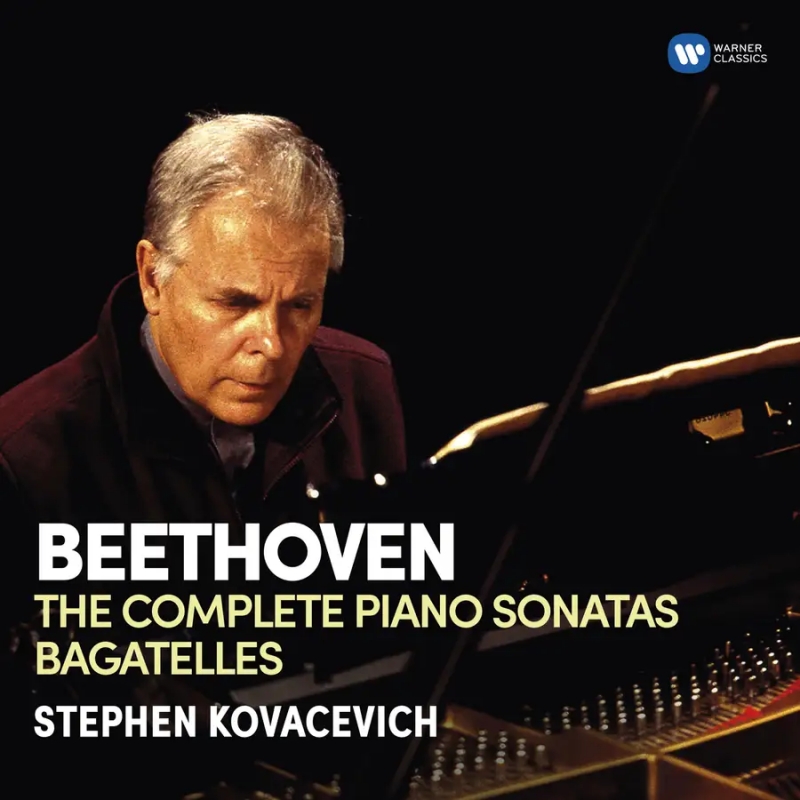
  柯瓦謝維契在七〇年代與柯林‧戴維斯(Colin Davis)合作的貝多芬五首鋼琴協奏曲,以及後來為EMI錄製的三十二首鋼琴奏鳴曲全集,都是錄音事業的重要成就。但是他反對把貝多芬當成神明供奉,因為貝多芬的音樂其實有暴躁、粗野、幽默,甚至充滿嘲諷的一面。如果演奏者總是小心翼翼,只求端正莊嚴,這些真實的性格便很難表現出來。

  然而,反對盲目崇拜不表示可以任意處理樂譜。他十分重視樂譜考證,也不照單全收長期沿用的演奏慣例。準備錄製《熱情》奏鳴曲時,他打算刪去尾聲中一個他認為是後人誤加的小節,還事先說明,以免被認為彈錯。另一次與夏伊(Riccardo Chailly)在阿姆斯特丹合作第四號鋼琴協奏曲,他根據歷史資料,把開頭的鋼琴和弦彈成琶音,卻遭樂評嘲笑,說這個加州來的鋼琴家是不是把鋼琴當成吉他。柯瓦謝維契反問:「難道他們以為,我會毫無根據地這樣彈嗎?」他不要求樂評認同自己的處理方式,但至少應該先弄清楚依據,再來評論。

  他對演奏速度也有自己的看法。貝多芬在《漢馬克拉維》奏鳴曲第一樂章標示了極快的速度,長期讓鋼琴家傷透腦筋。柯瓦謝維契試著依照標示哼唱開頭,覺得很自然,真正用鋼琴彈奏卻嫌太快。畢竟,貝多芬時代的鋼琴聲音較短促,現代平台鋼琴共鳴豐富,用同樣的速度彈奏,前後的聲響很容易混在一起。他不願為了避免這些缺失而簡化原譜。為此,樂曲開頭的左手必須在鍵盤上快速跳躍,很容易按錯音。有些鋼琴家改用雙手分擔,他卻堅持只用左手,認為不該輕易避開貝多芬刻意安排的技巧挑戰。

巴爾托克的挑戰,布拉姆斯的深情

  巴爾托克則讓柯瓦謝維契付出更大的代價。二十多歲時,他初次聽到第二號鋼琴協奏曲便深受吸引,拿到樂譜卻傻了眼,密密麻麻的音符讓他懷疑自己根本彈不出來。偏偏柯林‧戴維斯邀請他在BBC逍遙音樂節演出,他硬著頭皮接受,苦練九個月,期間兩度因肌肉過度使用,導致雙手暫時無法活動,甚至連水果都拿不起來。一九六八年,他與柯林‧戴維斯及BBC交響樂團錄下這首協奏曲,成為自己最引以為傲的錄音之一。猛烈的節奏、密集的鋼琴與樂團對答,既要求精確控制,也不能失去應有的爆發力。

  柯瓦謝維契同樣熱愛布拉姆斯。他與薩瓦利希(Wolfgang Sawallisch)、倫敦愛樂合作的第一號鋼琴協奏曲,曾獲一九九三年《留聲機》唱片大獎。這首作品既有激烈的情緒與龐大的音響,也有安靜、抒情的一面。他尤其重視慢板樂章弱音與樂句的控制,不刻意渲染感傷。晚期鋼琴小品也是他長年鑽研的曲目,作品一一八之六的降E小調間奏曲,更是他心目中布拉姆斯最深沉、陰暗的作品之一。

  舒伯特晚期作品則有另一種令他著迷的不安。A大調奏鳴曲D959第二樂章,原本安靜、略帶憂鬱的旋律,中途突然轉為激烈的爆發,節奏也變得急促。他認為這段音樂彷彿描述著一個人的精神崩潰。與貝多芬晚期作品相比,即使經過激烈掙扎,貝多芬最後往往仍能找到出口;舒伯特卻未必給人安慰。演奏這些作品,不能只顧旋律優美,也要表現令人不安的一面。

與阿格麗希的愛恨與默契

  談到柯瓦謝維契,很難略過阿格麗希(Martha Argerich)。他們兩度相戀,育有女兒史蒂芬妮(Stéphanie Argerich),卻始終沒有結婚。柯瓦謝維契開玩笑說,因為光顧著吵架就忙不過來。倒是兩人練琴時間互不干擾:阿格麗希習慣深夜十一點到凌晨三點練琴,柯瓦謝維契則習慣在早上工作。有回柯瓦謝維契練習布拉姆斯第二號鋼琴協奏曲,阿格麗希就睡在鋼琴旁邊,鼾聲甚至蓋過琴聲。柯瓦謝維契笑說,這大概是在暗示布拉姆斯不是阿格麗希喜歡的作曲家。感情結束後,他們曾有兩三年幾乎不聯絡,後來逐漸恢復往來,成為比朋友更親近的家人。

  生活中經常爭吵,音樂合作卻很有默契。一九七七年錄製巴爾托克《雙鋼琴與打擊樂奏鳴曲》,原定晚上七點開錄,阿格麗希的鋼琴卻在搬運途中摔壞。替代鋼琴凌晨兩點半才送達,錄音只好延到凌晨三點,一直進行到早上七點半。柯瓦謝維契累得難受,阿格麗希卻正好精神飽滿,結果錄出一張精彩的唱片。演奏上,他們不喜歡勉強折衷,遇到不同意見便反覆嘗試,直到找到彼此都滿意的方式。二〇一五年柯瓦謝維契七十五歲生日音樂會上,阿格麗希仍與他在威格摩廳合奏德布西《黑與白》和拉赫曼尼諾夫《交響舞曲》。

不肯求穩的舞台人生

  柯瓦謝維契在台上看似冷靜,其實十六、七歲起便深受舞台恐懼困擾。他把登台比作騎一匹未經馴服的野馬,隨時可能被甩下來。六十多歲時,他因心臟疾病裝上心律調節器,隨後因中風一度無法說話,手指速度與協調也受到影響。醫生要他回家後立刻坐到鋼琴前,他便從每天十五分鐘的音階練習開始,逐漸恢復手感,短短數週後重返舞台,演奏貝多芬《皇帝》協奏曲。

  二〇一五年七月,柯瓦謝維契在威格摩廳為BBC第三電台直播演奏舒伯特D959,終樂章因台下手機鈴聲響起受到干擾,在呈示部結束時不小心跳過中間大段結構直接彈到結尾。謝幕掌聲響起時,他向觀眾解釋自己剛才走錯了路,決定把整個終樂章再彈一次。聽眾意外多聽了十多分鐘舒伯特,第二次的演奏甚至更加出色。

  柯瓦謝維契常批評年輕演奏家過度追求零失誤,彷彿演奏只是把音符正確打出來。少年時他雖排斥參加比賽,晚年卻表明並不否定國際比賽,還擔任過評審。他明白比賽是年輕鋼琴家爭取機會的重要途徑,擔心的只是當準確成為最高標準,演奏便容易失去個性與活力。

  喜愛冒險當然不保證每次都成功。他的現場演奏也曾失手,晚年受到健康狀況影響,更影響到演奏的完美。但是這些都不影響柯瓦謝維契持續挑戰新演奏,並願意重新面對熟悉的作品。一九六八年,他首次錄下《狄亞貝里主題變奏》,四十年後又重新錄製。這首讓他二十歲時在倫敦嶄露頭角的作品,陪伴了大半輩子的演奏生涯。兩次錄音留下不同年齡時的不同理解,也說明柯瓦謝維契始終不願把自己的演奏視為定論。樂譜上的音符沒有改變,但對於如何彈出這些音符,他一生都沒有停止尋找答案。(2026年11月3日)

On 27 October 2026, the American pianist Stephen Kovacevich passed away at the age of eighty-six. His performing career spanned over six decades, winning world renown particularly for his interpretations of Beethoven, Schubert, Brahms, and Bartók. He possessed an unwavering command of contrapuntal voice-leading, rhythm, and dynamic control, whilst remaining fearlessly willing to embrace the raw, fiery, and volatile dimensions of music. Rather than playing it safe with polished, unruffled perfection, he chose to take risks, refusing to smooth away a work’s essential character.

Name Changed, Music Unchanged

Kovacevich was born in 1940 in San Pedro, Los Angeles, to a father of Croatian descent. Following his parents' divorce when he was twelve, his mother remarried and changed his surname to Bishop so that the family would share a single name; it was thus as Stephen Bishop that he launched his concert career. In the 1970s, stirred by a renewed sense of heritage following the birth of his daughter, he sought to reclaim his biological father’s name. However, his record label feared a drop in sales, and the rise of an American pop singer of the same name added to the confusion. The resulting compromise was the hyphenated "Bishop-Kovacevich". Philips even issued an internal memorandum declaring: "Stephen Bishop: this product is now called Stephen Bishop-Kovacevich". It was only in the 1990s, upon transferring to EMI, that "they agreed to drop the Bishop" and he finally restored his birth name.

Kovacevich began piano studies at eight with the Russian-born teacher Lev Schorr, making his public debut at eleven and performing with the San Francisco Symphony Orchestra at fourteen. At eighteen, he moved to London on a scholarship to study under Dame Myra Hess. While Schorr instilled a formidable technical foundation, Hess transformed his understanding of technique: speed and accuracy were merely prerequisites; the true art lay in controlling tone, dynamics, and phrasing. Kovacevich liked to draw an analogy with snooker: "Great snooker players don't just hit the ball straight... It's the same with sound—the minute variations in the way you hit it make all the difference". Striking the correct notes was merely the starting point; shaping each sound was the real craft.

Unworshipping Beethoven

Beethoven remained the cornerstone of Kovacevich’s performing and recording repertoire throughout his life. In his adolescence, however, he actually disliked Beethoven, finding his music "loud and harsh", until he heard Rudolf Serkin’s landmark recording of the Diabelli Variations. In 1961, at the age of twenty, he made his sensational European debut at Wigmore Hall in London with an audacious programme featuring Berg’s Sonata, Bach’s Preludes and Fugues, and Beethoven’s fifty-five-minute Diabelli Variations. This formidable recital captured the attention of the London musical world and laid the foundation for a decades-long partnership with Philips Classics. At a time when international competitions were the standard gateway to a concert career, Kovacevich shunned them entirely, wryly noting: "if there was ninety-five competitors I came ninety-sixth; I never had the stomach or stamina for that scene".

His recordings of Beethoven’s five piano concertos with Sir Colin Davis in the 1970s, as well as his complete cycle of thirty-two piano sonatas for EMI, stand as monumental artistic achievements. Yet he adamantly opposed worshipping Beethoven as an untouchable deity: "Je déteste quand les musiciens sont à genoux devant Beethoven. Le voir comme un dieu qu'on prie est un blasphème pour moi. La musique de Beethoven est sauvage..." ("I hate when musicians are on their knees before Beethoven. Seeing him as a god you pray to is blasphemy to me. Beethoven’s music is wild..."). To Kovacevich, Beethoven's voice was volatile, rough-hewn, irreverent, sarcastic, and at times as playful as "a puppy dog". If a pianist approaches the score with timid reverence and polite solemnity, these vital traits are irrevocably lost.

Yet rejecting blind devotion did not equate to textual caprice; Kovacevich maintained meticulous fidelity to the printed score and actively challenged entrenched editorial conventions. Prior to recording the Appassionata Sonata, he announced that he would omit "an extra bar that seems to have crept in and become accepted in the coda", explaining his decision in advance to prevent critics from alleging "an error on my part, or a sleeping editor". On another occasion, performing Beethoven’s Fourth Concerto in Amsterdam with Riccardo Chailly, he arpeggiated the solo opening chord in accordance with Beethoven’s own practice and manuscript research. Unaware of the historical justification, local reviewers mocked the gesture, asking whether "this guy from California... thinks the piano is a guitar?". Kovacevich retorted: "Do they think I would actually do something like that without knowing that there’s a justification?". He did not demand that critics agree with his interpretation, but insisted they investigate its textual basis before passing judgment.

His approach to tempo was similarly grounded in acoustics and physical realities. Beethoven’s ferocious metronome marking for the first movement of the Hammerklavier Sonata (minim = 138) has long bedevilled pianists. Kovacevich noted that whilst singing the opening at 138 sounds perfectly natural in one's head, executing it on a modern concert grand feels slightly too fast. Period fortepianos produced a brief, dry "tak", whereas modern Steinways generate a sustained, deep resonance ("wooor"); taking 138 literally on a modern grand threatens to blur the musical texture. Nevertheless, he refused to simplify the score to mitigate technical risks. Regarding the perilous opening leap in the left hand, where many pianists divide the notes between both hands to avoid slips, Kovacevich insisted on playing it with the left hand alone, refusing to evade the extreme physical challenge Beethoven deliberately set.

The Challenge of Bartók, the Compassion of Brahms

Mastering Béla Bartók came at an even steeper physical cost. In his twenties, Kovacevich was captivated upon hearing Bartók’s Second Piano Concerto, but opening the score left him stunned: it looked as though "a printer had flung a million black notes onto the page". When Sir Colin Davis invited him to perform it at the BBC Proms, he accepted the challenge and practised furiously for nine months. During this intense preparation, severe muscular strain twice temporarily paralyzed his hand—on one morning leaving him unable even to pick up a piece of fruit. In 1968, he recorded the concerto with Davis and the BBC Symphony Orchestra, producing a performance that won the Edison Prize and remained the single recording of which he was most proud. Its ferocious rhythms and intricate dialogue between soloist and orchestra demanded razor-sharp control combined with uninhibited explosive power.

Kovacevich harboured an equal passion for Brahms, once remarking that "his main thing is compassion". His 1992 recording of Brahms’s First Piano Concerto with Wolfgang Sawallisch and the London Philharmonic Orchestra won the 1993 Gramophone Award. The performance navigated seamlessly between tempestuous orchestral power and hushed, meditative introspection. In the slow movements, Kovacevich placed supreme emphasis on quiet dynamic control and poetic restraint, eschewing sentimental posturing. Brahms’s late piano miniatures were a lifelong obsession; he regarded the Intermezzo in E-flat minor, Op. 118 No. 6, as "one of the darkest things in music".

Schubert’s late works held a different, unsettling fascination for him. In the second movement of the A major Sonata, D. 959, a quiet, melancholy melody erupts midway into wild, turbulent agitation. Kovacevich famously described this central outburst as "the only written-out nervous breakdown in music". Unlike late Beethoven—where intense struggle ultimately yields spiritual redemption or resolution—Schubert offers no easy consolation. Interpreting these works required exposing this raw, deeply disturbing undercurrent alongside their lyric beauty.

Love, Friction, and Telepathy with Argerich

Any portrait of Kovacevich is incomplete without Martha Argerich. Their relationship spanned two romantic chapters ("Round 1 and Round 2") and produced their daughter, the filmmaker Stéphanie Argerich. They never married, Kovacevich joking that they were simply "too busy arguing". Their practising schedules were polar opposites: Argerich was a night owl who worked between 11:00 pm and 3:00 am, whereas Kovacevich preferred the morning. He fondly recalled practising Brahms’s Second Concerto whilst Argerich slept beside the piano, her snoring occasionally drowning out the music—a humorous hint, he quipped, that Brahms was hardly her favourite composer. Following their separation, they spent two or three years maintaining a distance before reconnecting to become "more than great friends—we’re family, it’s not a negotiable thing".

Despite domestic friction, their musical partnership possessed an uncanny telepathy. During their 1977 recording session for Bartók’s Sonata for Two Pianos and Percussion, scheduled for 7:00 pm, Argerich’s piano was accidentally dropped by removal porters. A replacement Steinway did not arrive until 2:30 am, forcing the session to run from 3:00 am until 7:30 am. Whilst Kovacevich was exhausted, the nocturnal Argerich was at her peak, resulting in a landmark recording. Refusing glib compromises, they experimented relentlessly whenever artistic differences arose until finding a shared vision. At Kovacevich’s seventy-fifth birthday concert at Wigmore Hall in 2015, Argerich joined him on stage once more to perform Debussy’s En blanc et noir and Rachmaninov’s Symphonic Dances.

A Stage Life Refusing to Play it Safe

Outwardly serene on stage, Kovacevich battled crippling stage fright from the age of sixteen. He once likened performing to "something like an American rodeo where cowboys try to ride wild horses and bulls and get thrown off—the whole concert is a wild horse that I have to ride". In his late sixties, a dangerously low heart rate necessitated a pacemaker implant, followed days later by a severe stroke that temporarily deprived him of speech and impaired his finger velocity. Upon discharge, his specialist gave him a direct instruction: "You put the key in your door, and then you go straight to the piano!". Rebuilding his neural pathways through fifteen minutes of daily scale exercises, he made a miraculous return to the stage just three weeks later to perform Beethoven’s Emperor Concerto.

In July 2015, during a live BBC Radio 3 broadcast at Wigmore Hall, a ringing mobile phone distracted him during the finale of Schubert’s D. 959 Sonata, causing him to "turn right instead of left" at the end of the exposition and jump straight to the movement’s conclusion. As the applause began, he quipped to the audience that he had taken a wrong turning—"going to Glasgow instead of Edinburgh"—and offered to play the entire twelve-minute movement again from the beginning. The audience was treated to an extraordinary, sublime repeat performance.

Kovacevich frequently criticised the obsession among younger pianists with flawless accuracy, warning against "typing instead of playing". Though he had shunned competitions in his youth, he later served as a jury president, acknowledging that competitions were virtually the only way for young talent to gain a hearing. His concern was that when note-perfection becomes the ultimate yardstick, performances risk forfeiting individuality, spontaneity, and vital risk.

Embracing risk inevitably meant that live performances were not always pristine, and age and illness took their physical toll in his later years. Yet this never deterred Kovacevich from returning to his core repertoire with fresh curiosity. In 2008, forty years after his initial landmark recording of Beethoven’s Diabelli Variations, he set down a second recording for Onyx—a reading that was notably "wilder", riskier, and dynamically expansive. The work that launched his career at twenty remained a lifelong companion. The notes on the page remained unchanged, but Kovacevich never ceased searching for new ways to make them speak. (3 November, 2026)



發表留言